Product Overview
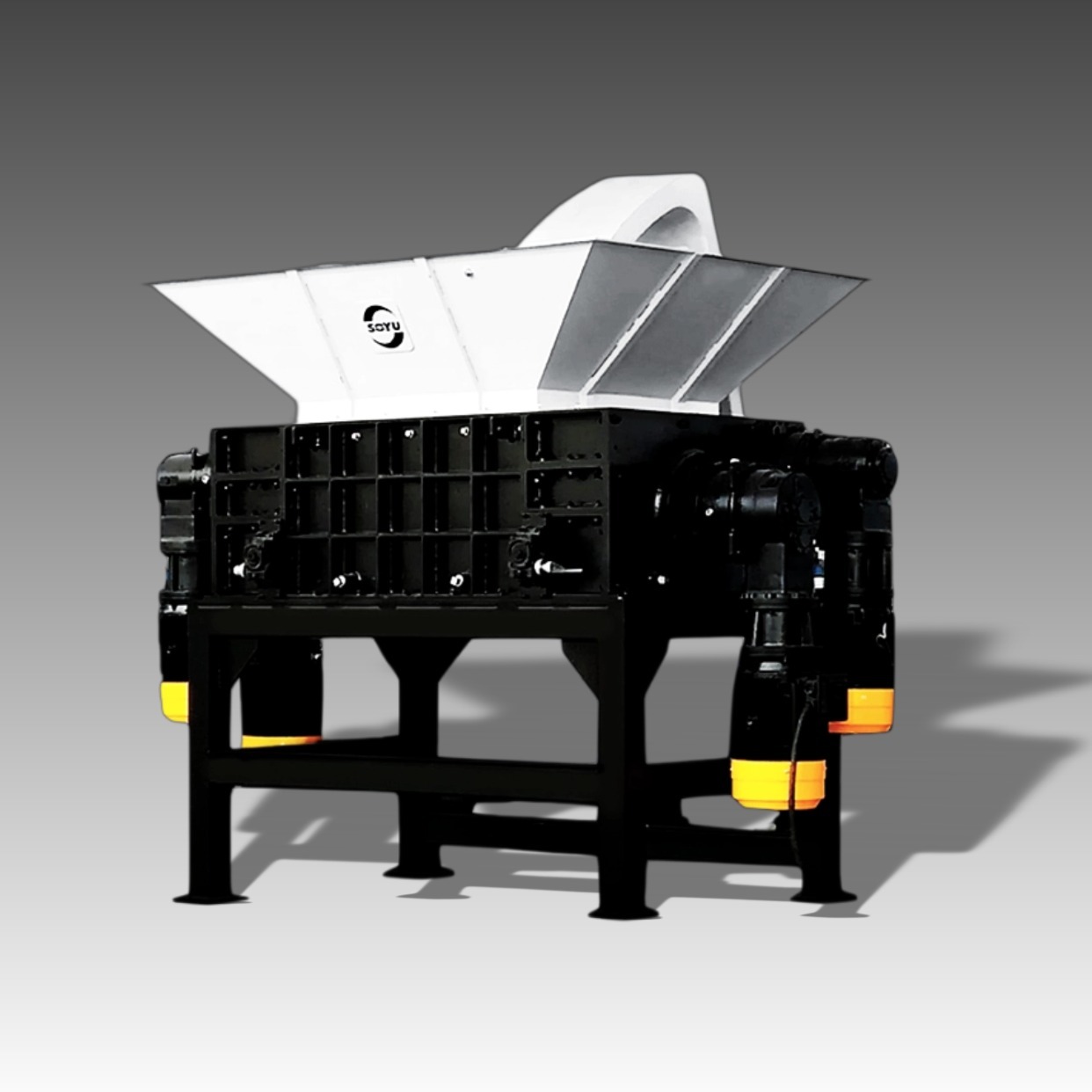
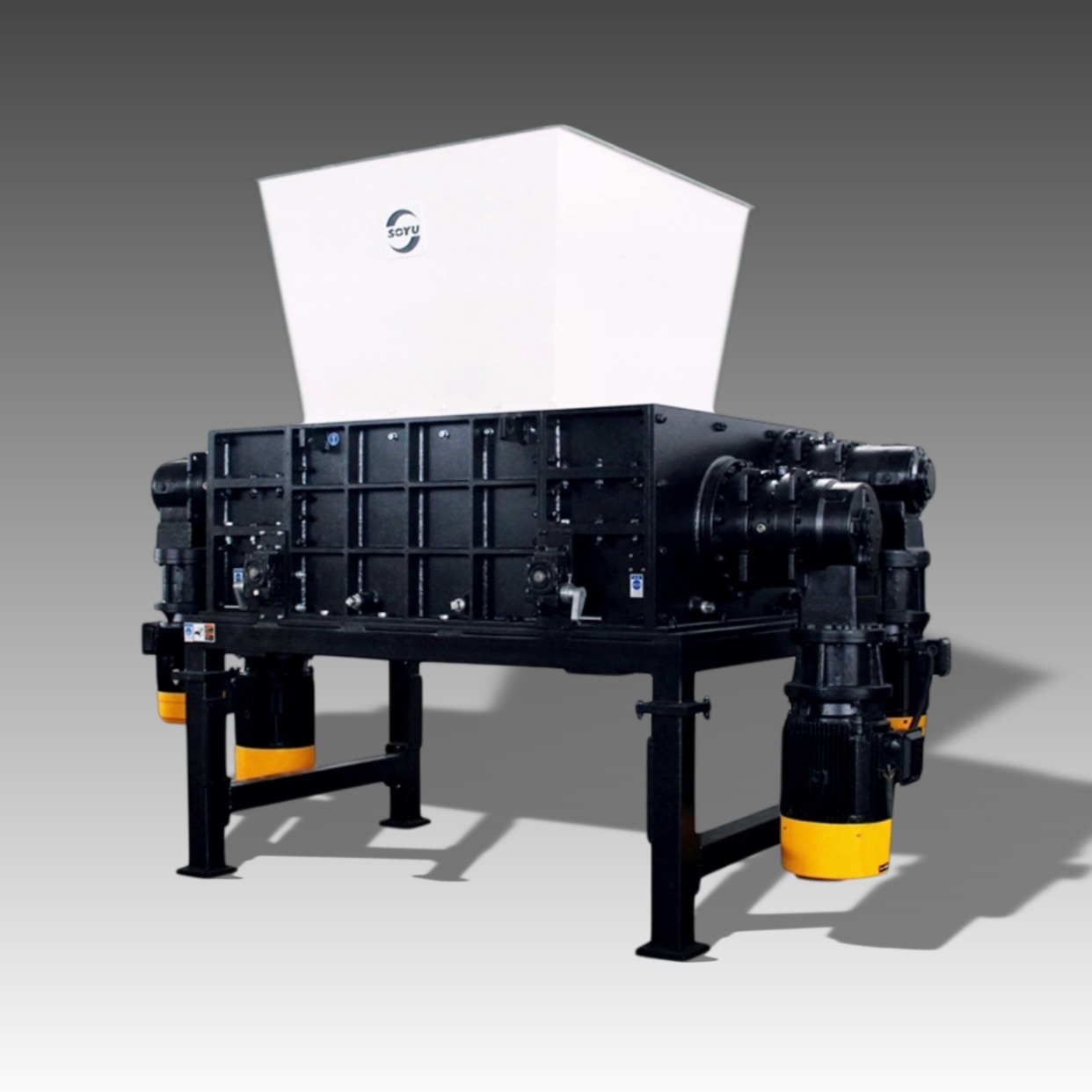
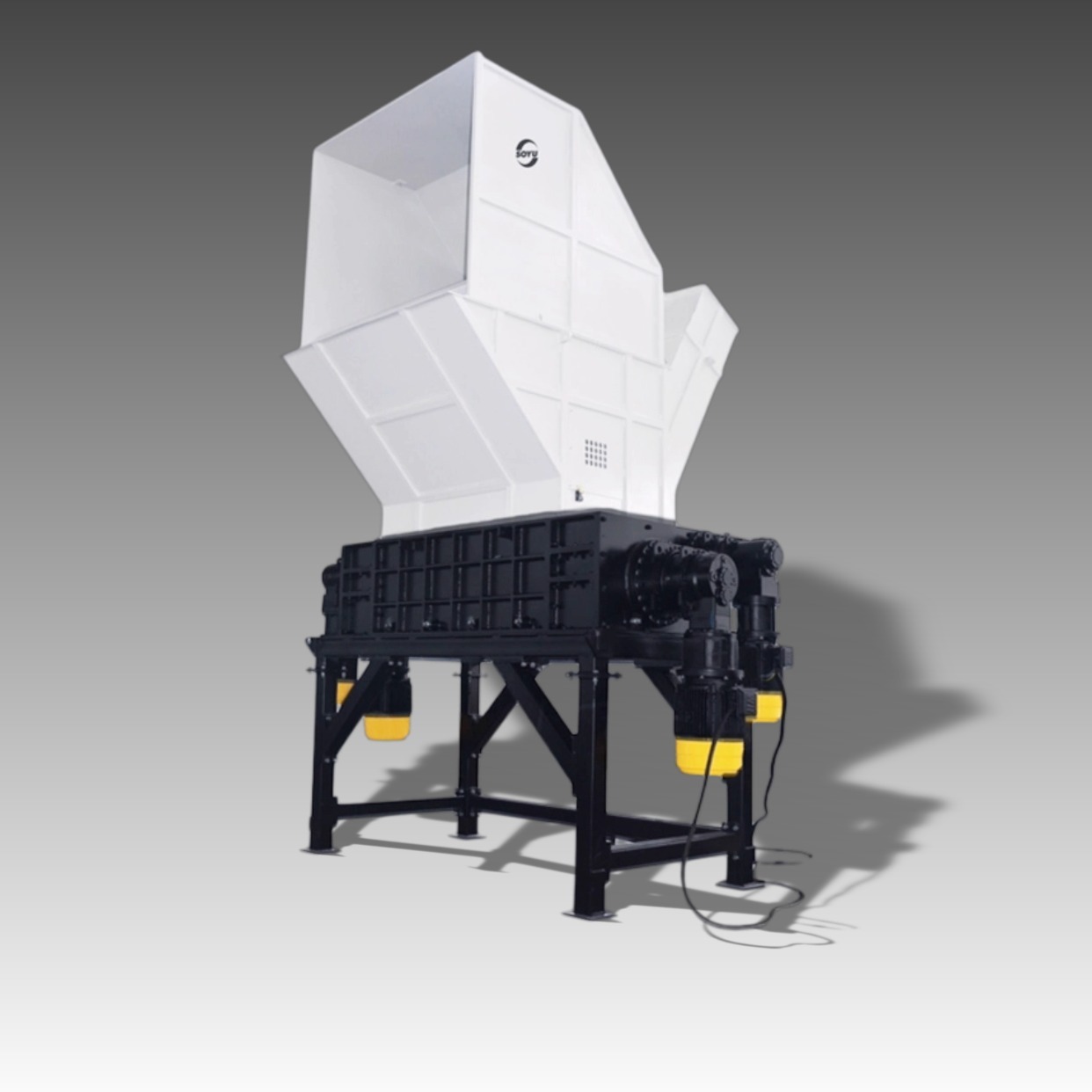
Bulky industrial scrap demands size reduction that fits both the material and the maintenance routine. Designed and manufactured by CHANGSHU SHI SHOUYU MACHINERY CO., LTD. (SOYU), this heavy-duty four shaft shredder series belongs to our 3E technology platform. Our work as a four shaft shredder manufacturer brings together material intake, controlled cutting and serviceable construction for recycling plants and solid-waste operations. The following details cover the cutting assembly, operating controls, application range and individual machine variants, helping you match the proposed equipment to the work it will perform.
Rotor & Modular Construction
- The four shaft shredder's standardized modules and interchangeable components support maintenance at component level. Maintenance teams can work directly with SOYU as their four shaft shredder manufacturer to match the assembly version, mating dimensions and installed component before replacement.
- High-strength special-alloy steel gives the main cutters wear-resistant working surfaces.
- Tracking changes in cutting performance and cutter condition helps distinguish routine wear from damage caused by unsuitable feed.
- V-spiral cutter placement distributes shredding forces across the rotor.
- Auxiliary blades automatically clean the main blades during operation, helping clear material from the cutting assembly.
- Four motors and heavy-duty planetary gearboxes drive the main shafts at differential speeds.
- The intermediate gear arrangement supports automatic material intake, limits tangling and promotes more uniform size reduction through repeated shearing.
- HARDOX wear-resistant steel liners protect both sidewalls of the cutting chamber.
- During service, inspect these wear surfaces alongside the cutters so deterioration around the chamber does not go unnoticed.
- CNC machining gives the integral cutter box precise assembly geometry.
- The extended main shaft and external bearing seats reduce wear associated with material leakage around the cutting area.
- Multi-component sealing resists dust and water ingress, while imported high-load bearings support demanding operation.
- Seal condition and signs of leakage belong in routine inspections; protective construction does not replace application-appropriate maintenance.
- Maintenance records should distinguish cutter work, liner condition, bearing observations and drive servicing. Recording these separately makes it easier to understand recurring stoppages and assess maintenance effort over the machine's working life.
FS Family Model Specifications
| Model | Motor Power | Main Blade Thickness | Cutting Diameter | Cutting Chamber | Overall Dimensions, L × W × H | Weight |
|---|
| FS4030 | 1.5 kW | 18.5 mm | 180 mm | 400 × 300 mm | 850 × 600 × 1,650 mm | 1,600 kg |
| FS6650 | 7.5 kW | 18.5 mm | 230 mm | 660 × 500 mm | 1,600 × 800 × 1,940 mm | 1,000 kg |
| FS8040 | 2 × 11 kW | 18.5 mm | 245 mm | 800 × 400 mm | 1,940 × 1,200 × 2,065 mm | 1,600 kg |
| FS8060 | 2 × 11 kW | — | — | 800 × 600 mm | 2,130 × 1,200 × 2,065 mm | 1,800 kg |
| FS8080 | 2 × 11 kW | — | — | 800 × 800 mm | 2,360 × 1,200 × 2,065 mm | 2,000 kg |
| FS9080 | 2 × 22 kW | 25 mm | 290 mm | 900 × 800 mm | 2,690 × 1,450 × 2,450 mm | 3,500 kg |
| FS90100 | 2 × 22 kW | — | — | 900 × 1,000 mm | 2,890 × 1,450 × 2,450 mm | 4,200 kg |
| FS10080 | 2 × 30 kW | 40 mm | 320 mm | 1,000 × 800 mm | 2,620 × 1,800 × 2,500 mm | 5,000 kg |
| FS100100 | 2 × 30 kW | — | — | 1,000 × 1,000 mm | 2,820 × 1,800 × 2,500 mm | 5,500 kg |
| FS100120 | 2 × 30 kW | — | — | 1,000 × 1,200 mm | 3,020 × 1,800 × 2,500 mm | 6,000 kg |
| FS100140 | 2 × 30 kW | — | — | 1,000 × 1,400 mm | 3,220 × 1,800 × 2,500 mm | 6,500 kg |
Siemens PLC Controls
Siemens PLC control and touchscreen operation bring machine operation and automatic overload detection together. Operators use the control interface to manage the four shaft shredder according to its operating instructions, rather than treating the cutting assembly as a manually controlled process.
Integrated video monitoring supports observation of the working area. Remote monitoring also supports technical review, with the connection and functions matched to the supplied electrical configuration.
Mechanical torque limitation and electrical overload protection act through different parts of the machine. When a foreign object creates an overload, automatic reversing helps relieve the obstruction and reduce the risk of equipment damage.
Repeated overload events call for investigation of the incoming material and feeding conditions. Reversing is a protective response, not a substitute for removing unsuitable objects or correcting an overloaded feed stream.
Before cleaning or entering a maintenance area, isolate the machine and stored energy in accordance with the operating manual. The touchscreen, monitoring system and emergency controls support operation; physical access to the cutting chamber requires the prescribed isolation procedure.
Feed & Screen Setup
- Large hollow products can be guided into the cutting area with the hydraulic arm, improving material engagement and supporting throughput.
- Match the feeding method to the shape of the incoming item rather than forcing oversized pieces into the hopper.
- Screen structures and mesh-hole sizes are selectable to suit the material and subsequent processing requirements.
- For a heavy duty plastic shredder machine handling different waste forms, the screen arrangement needs to suit both the discharge target and the way the material passes through the cutting area.
- A side-pull screen can be provided for easier maintenance.
- Allow space for its withdrawal and for the handling equipment used during removal; the installed machine footprint alone does not describe the full service area.
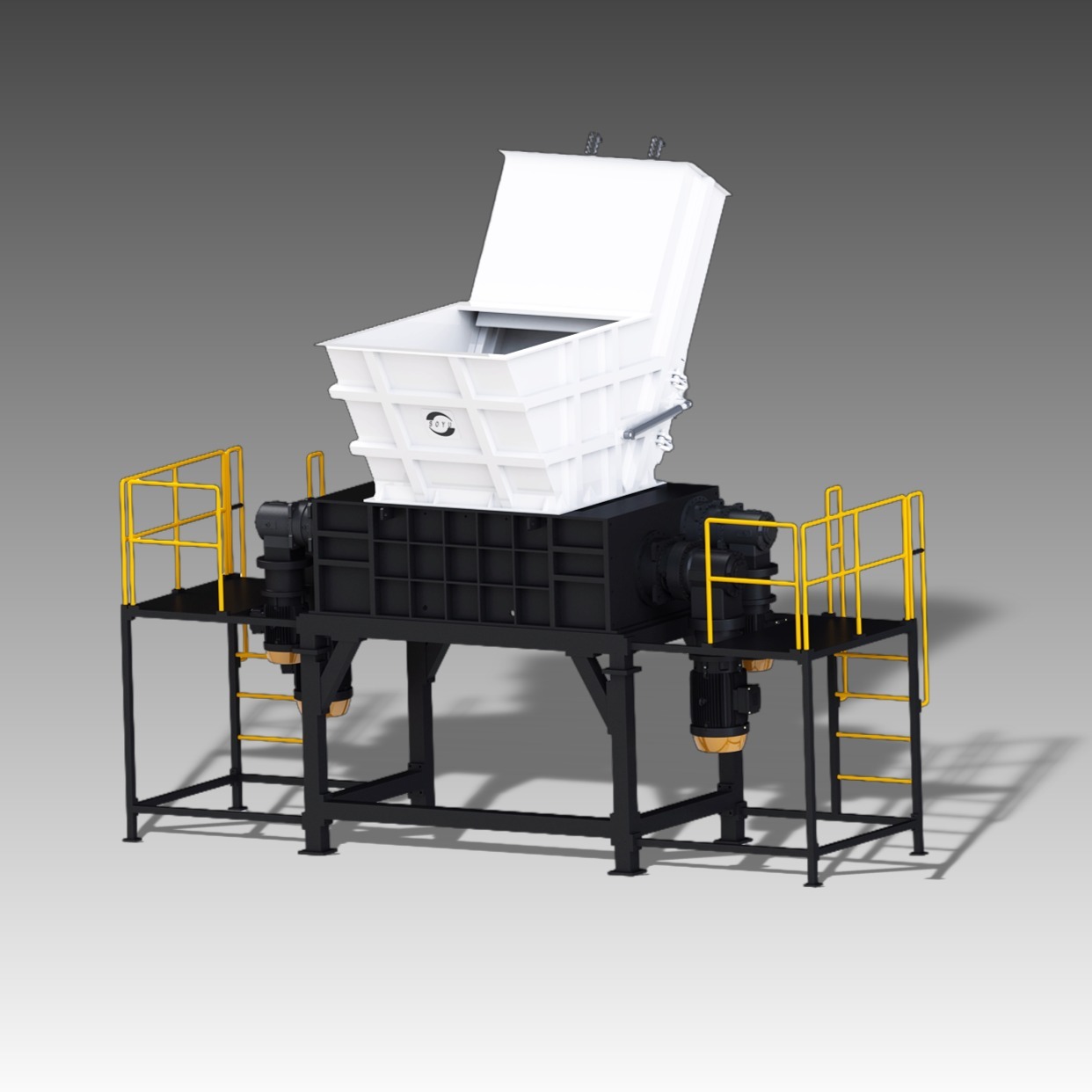
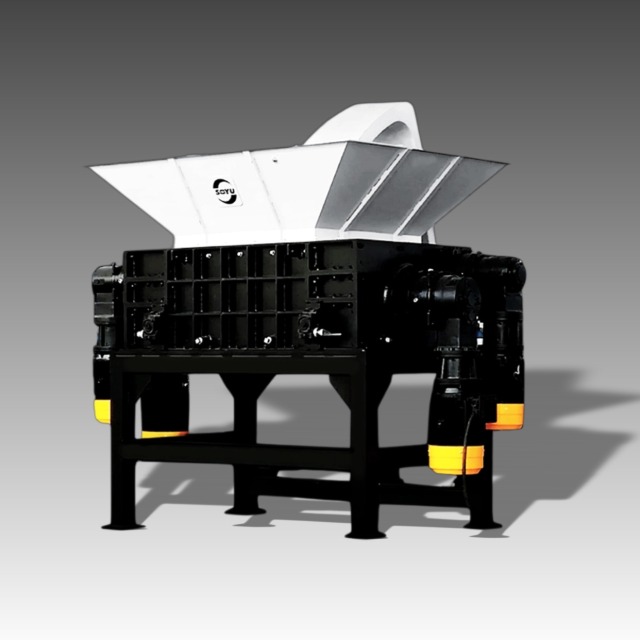
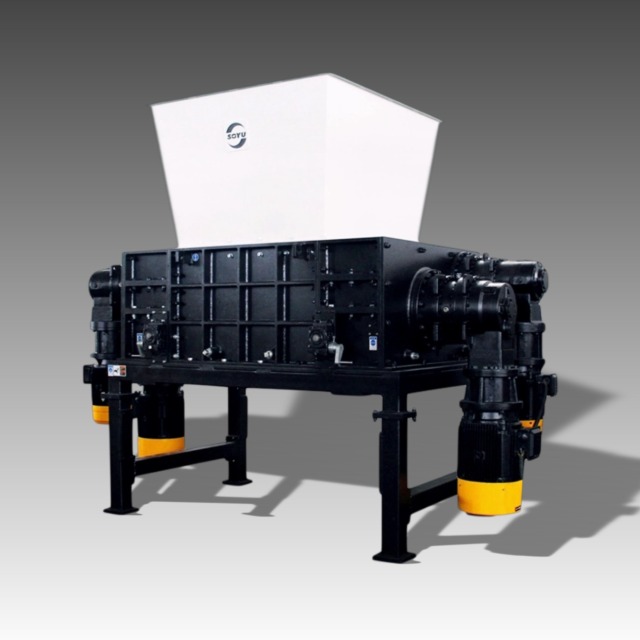
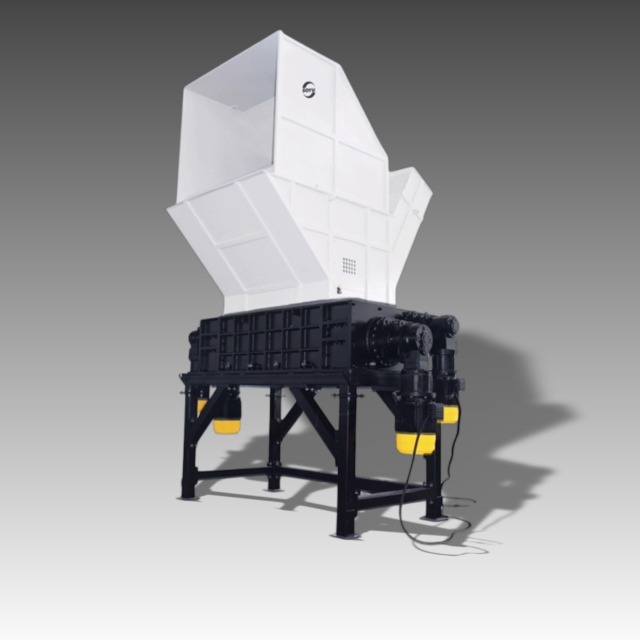
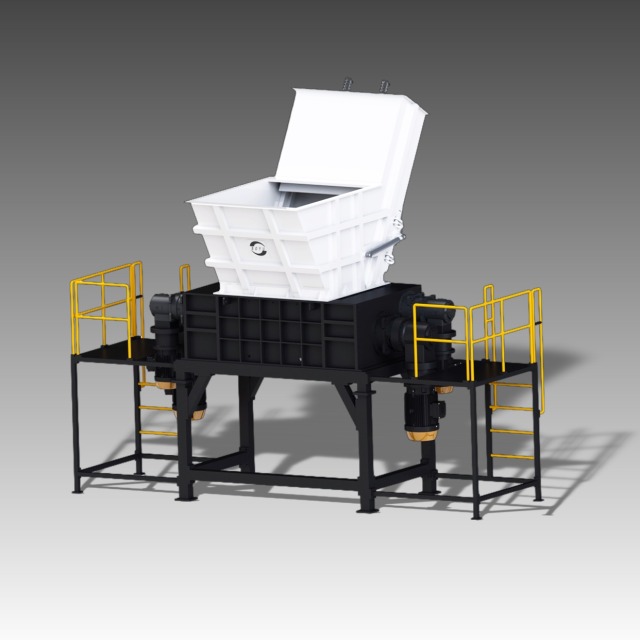
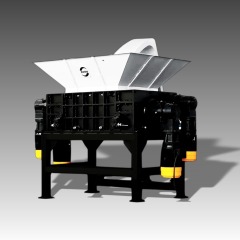
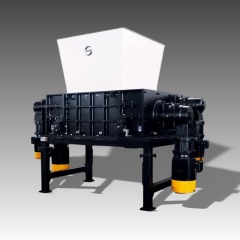
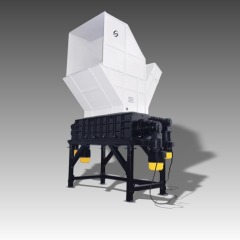
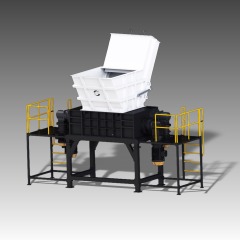
- The flared, open-top hopper and raised support arrangement need clear feeding and discharge routes.
- External drive assemblies also require accessible inspection space, so the layout should account for the complete installed arrangement.
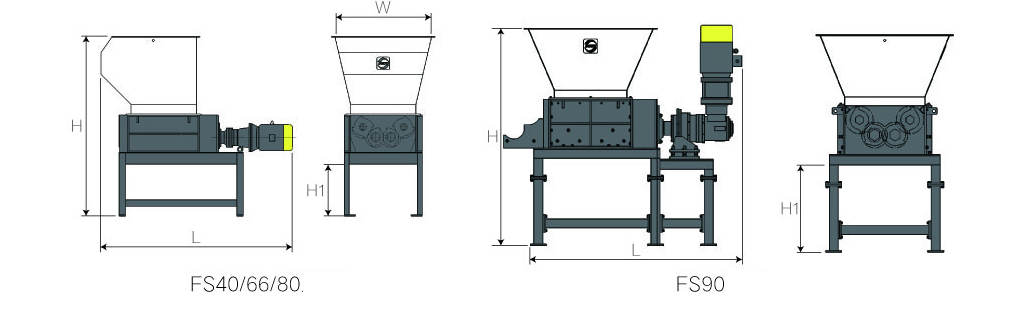
- Dimensional drawings use L, W and H for length, width and height, with H1 as a separate drawing dimension.
- Drawings marked FS40/66/80 or FS90 apply to those machines; use the drawing for the exact machine being installed and check the meaning of H1 there.
- Blade thickness and cutting-diameter entries marked with a dash in the technical tables require confirmation in the agreed machine specification.
- During commissioning, check feeding, discharge clearance and screen access against the assembled equipment before beginning routine processing.
Material Applications
- Metal and metal-chip applications include metal drums, paint buckets, aluminum profiles and car shells within the FS range.
- For projects requiring a heavy duty metal shredder supplier, the proposed cutting arrangement must suit the actual section thickness, material form and attached components.
- Plastic blocks, plastic film, buckets, barrels, IBC tanks and dustbins cover both solid and hollow feed forms.
- A heavy duty plastic shredder machine working with these materials needs an application-specific setup; a thin-walled container and a solid block do not load the cutters in the same way.
- Paper and cardboard applications include paper-mill waste as well as dry packaging materials.
- Moisture, entrained debris and the form in which the waste reaches the hopper affect handling and should be considered with the intended recycling route.
- Electronic scrap includes circuit boards and dismantled electrical products.
- Refrigerators, television sets and washing machines are also named FS-series applications, with feed preparation appropriate to their components and contents.
- Wood and wood-pallet processing covers bulky timber-based waste.
- Attached hardware and other mixed components need to be considered as part of the feed, rather than assuming that every load contains wood alone.
- RDF and municipal solid-waste applications cover preparation for wider waste-processing systems.
- Household waste, kitchen waste and industrial solid waste require a setup suited to their changing composition and the requirements of the following process.
- Bulky-waste applications include furniture, while tires and textile waste extend the range to resilient and flexible materials.
- Their shape and tendency to bridge or bunch make controlled presentation to the cutters especially relevant.
Product Videos & Cases
Metal and paper, plastic barrels and pallets, IBC containers, bulky waste, paper-mill waste and e-waste are covered in our product demonstrations. Each subject offers a different view of material presentation and cutting behavior; a demonstration of one feed form should not be treated as a rating for every load in that category.
During playback, watch how the item enters the cutting area, whether it needs repositioning and how material leaves the machine. Observing a complete processing sequence is more useful than judging the machine from a brief view of the cutters alone.
Comparable feed is especially useful when discussing a project with a heavy duty metal shredder supplier. Material testing can record actual processing capacity, energy consumption and particle-size results, with video helping connect those measurements to the tested feed conditions.
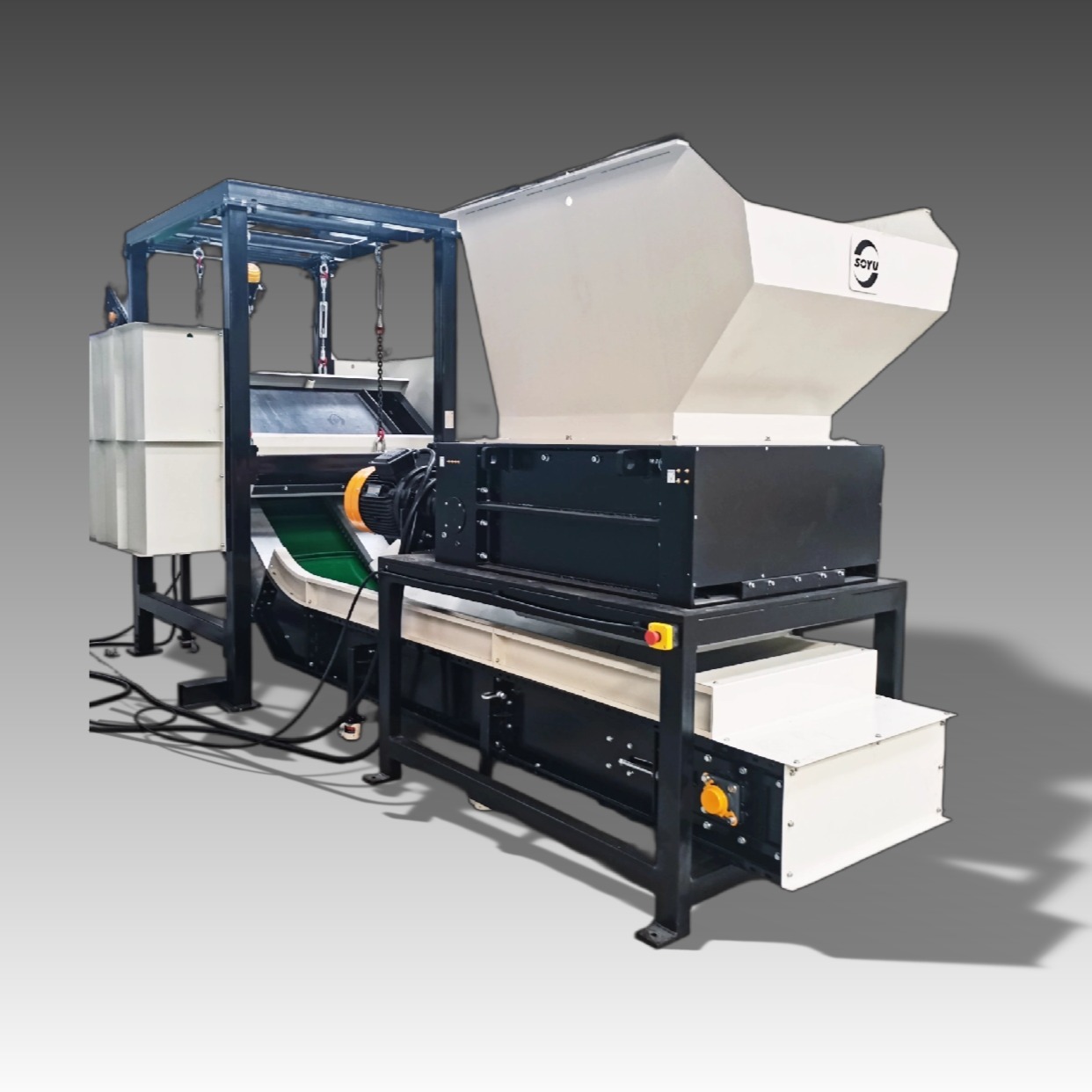
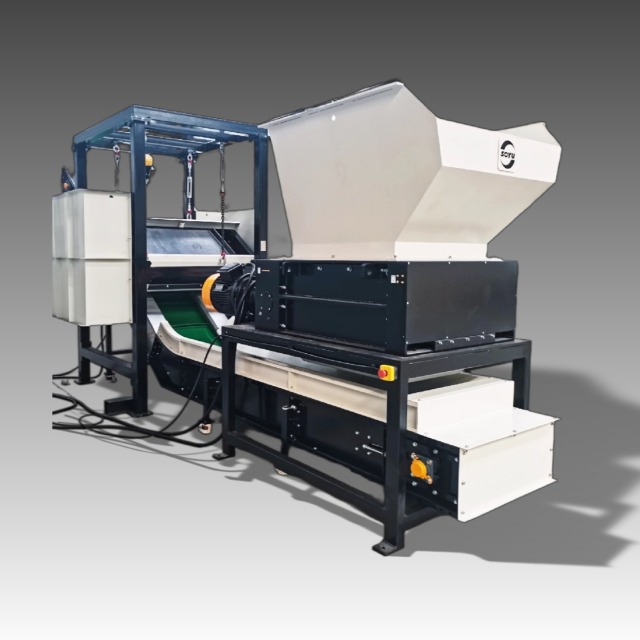
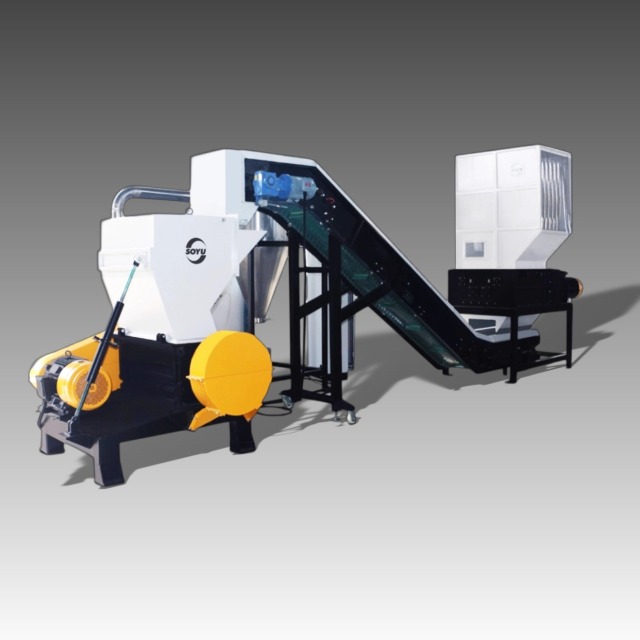
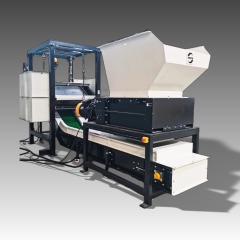
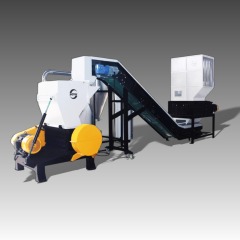
Our installation examples include frame-mounted shredders and conveyor-linked processing arrangements. Some examples also show a separate granulating machine, connecting pipework and collection equipment; these illustrate complete arrangements rather than a universal list of items supplied with the shredder.
For an existing-line replacement, compare the illustrated arrangement with the equipment already on site. Conveyor interfaces and downstream machines need to be considered together, without assuming that every example follows the same processing sequence.
Ordering & Spare Parts
Original spare parts remain available at cost after the warranty period ends. For a parts order, provide the machine identification and the component description or drawing reference so the requested item can be matched accurately. Keep the agreed parts list and the applicable supply terms with your maintenance records.
Professional Certification
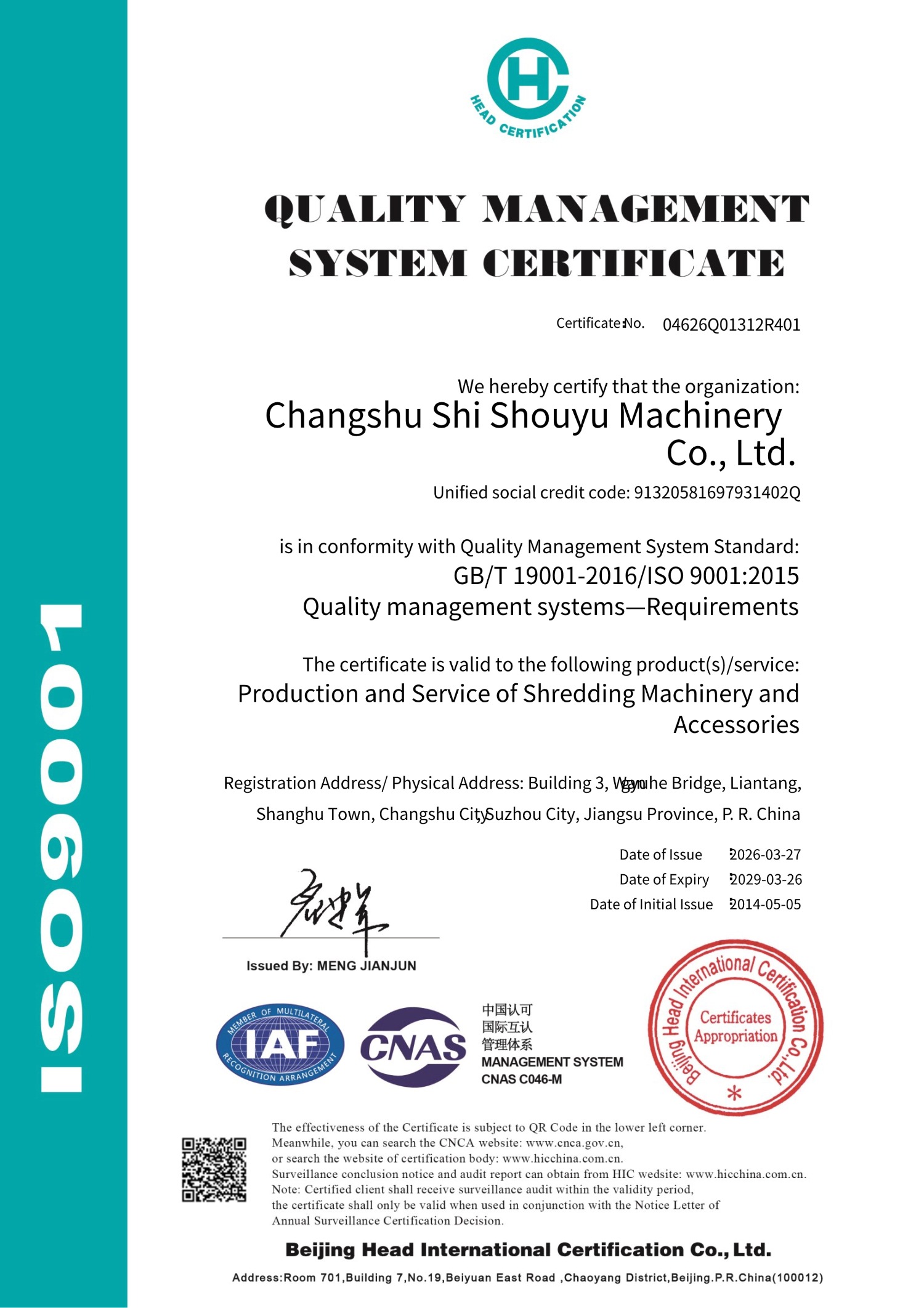
- ISO 9001 certification covers SOYU's quality-management system. It supports manufacturing process control and should be distinguished from the conformity documents for an individual machine.
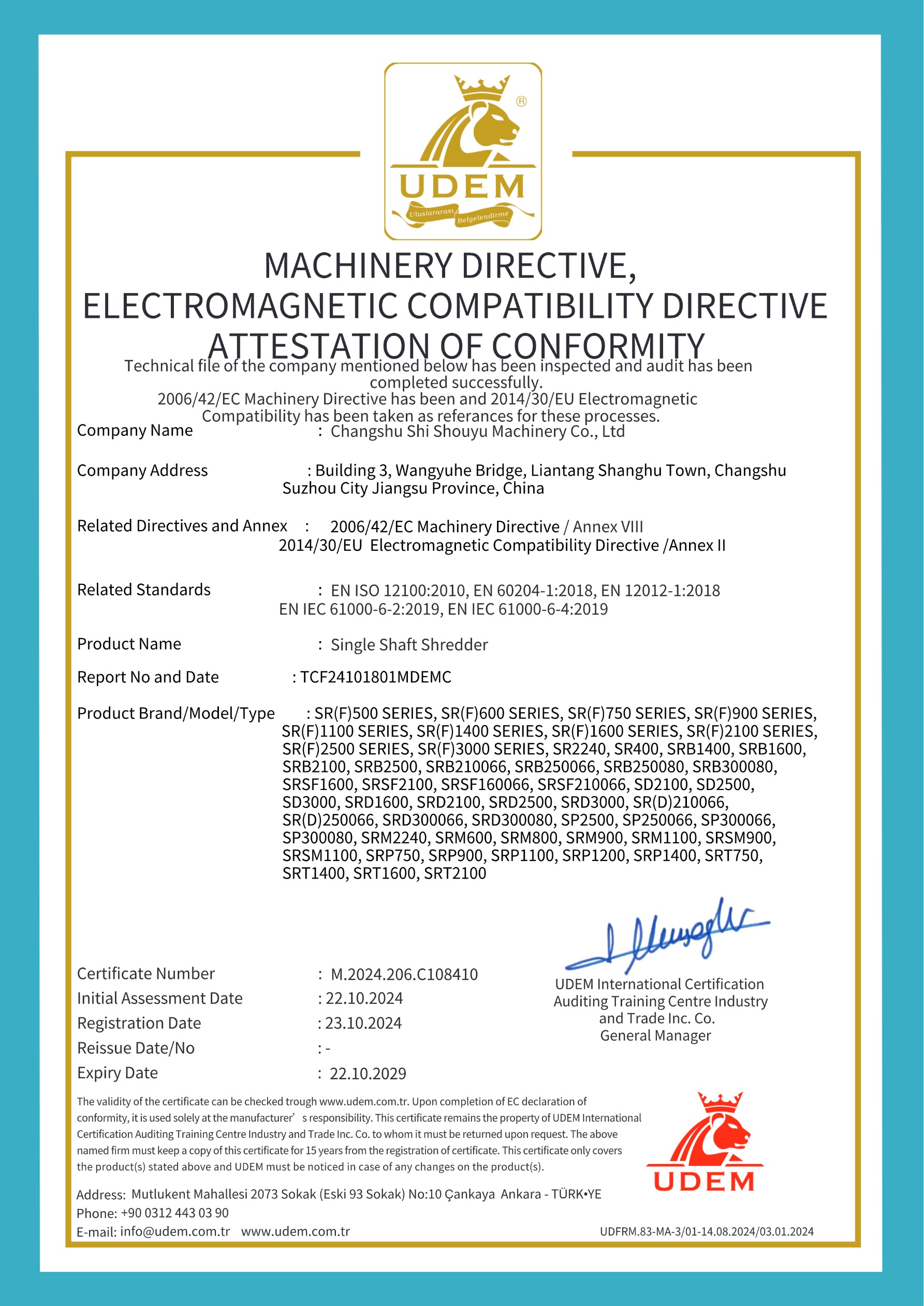
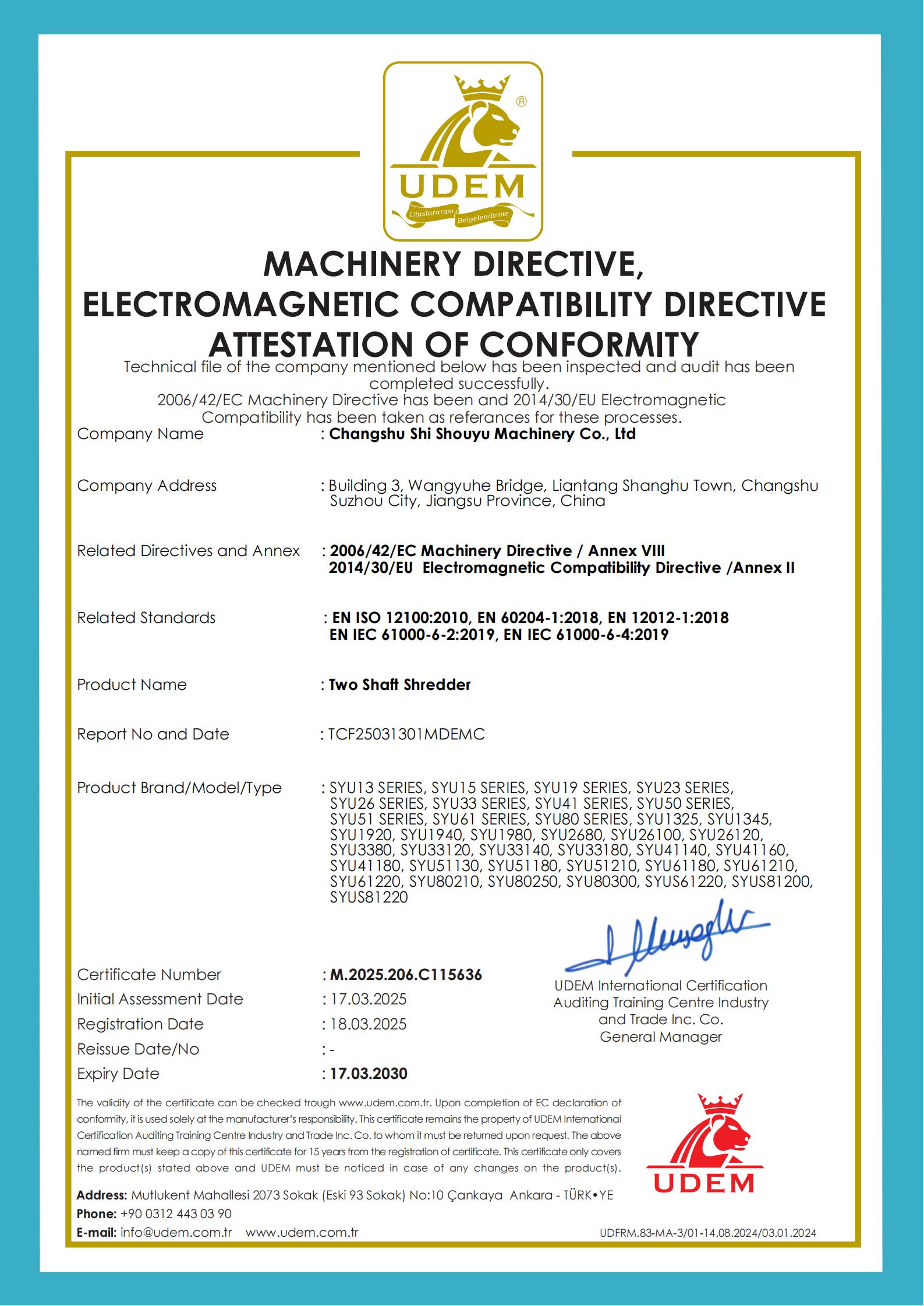
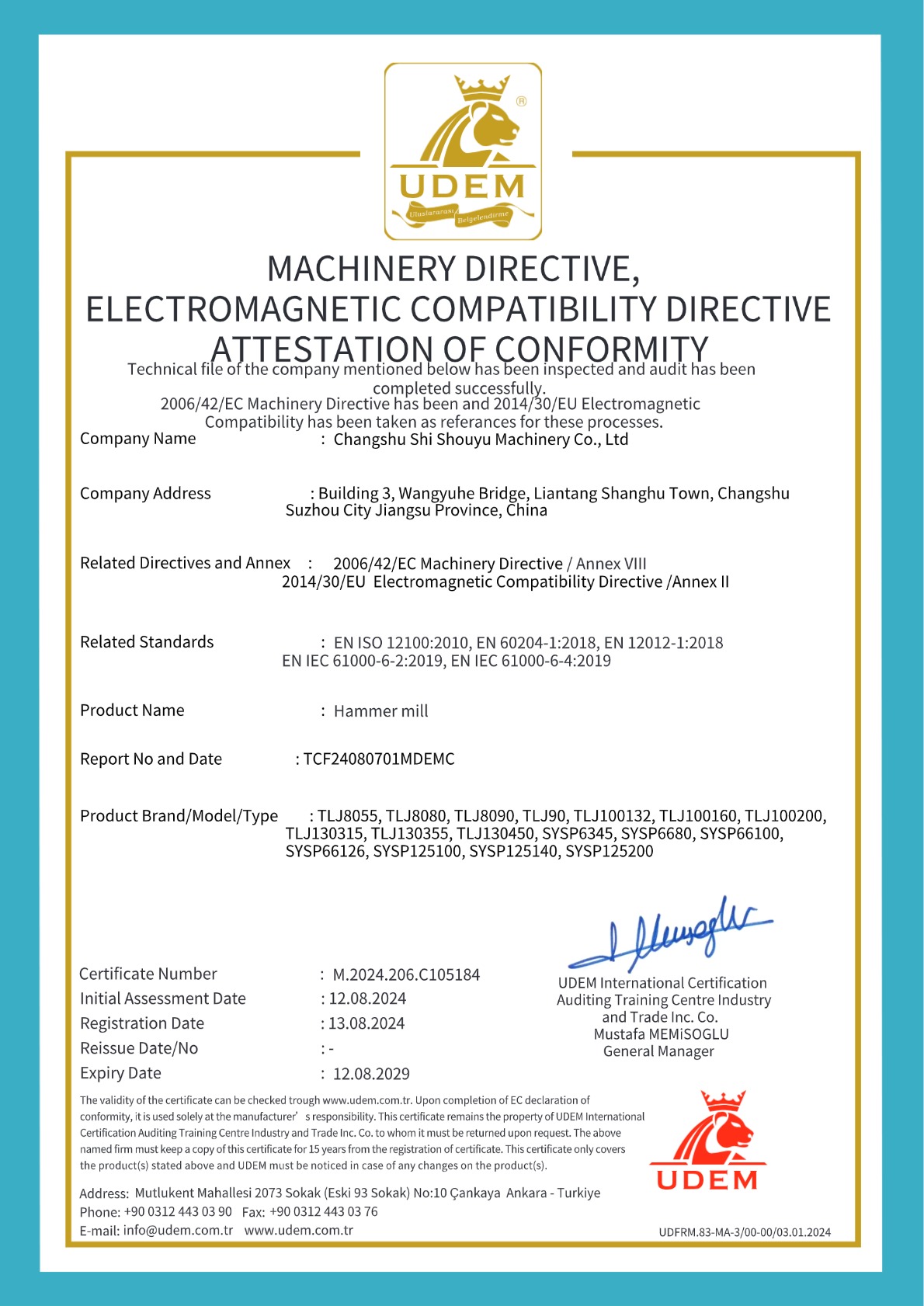
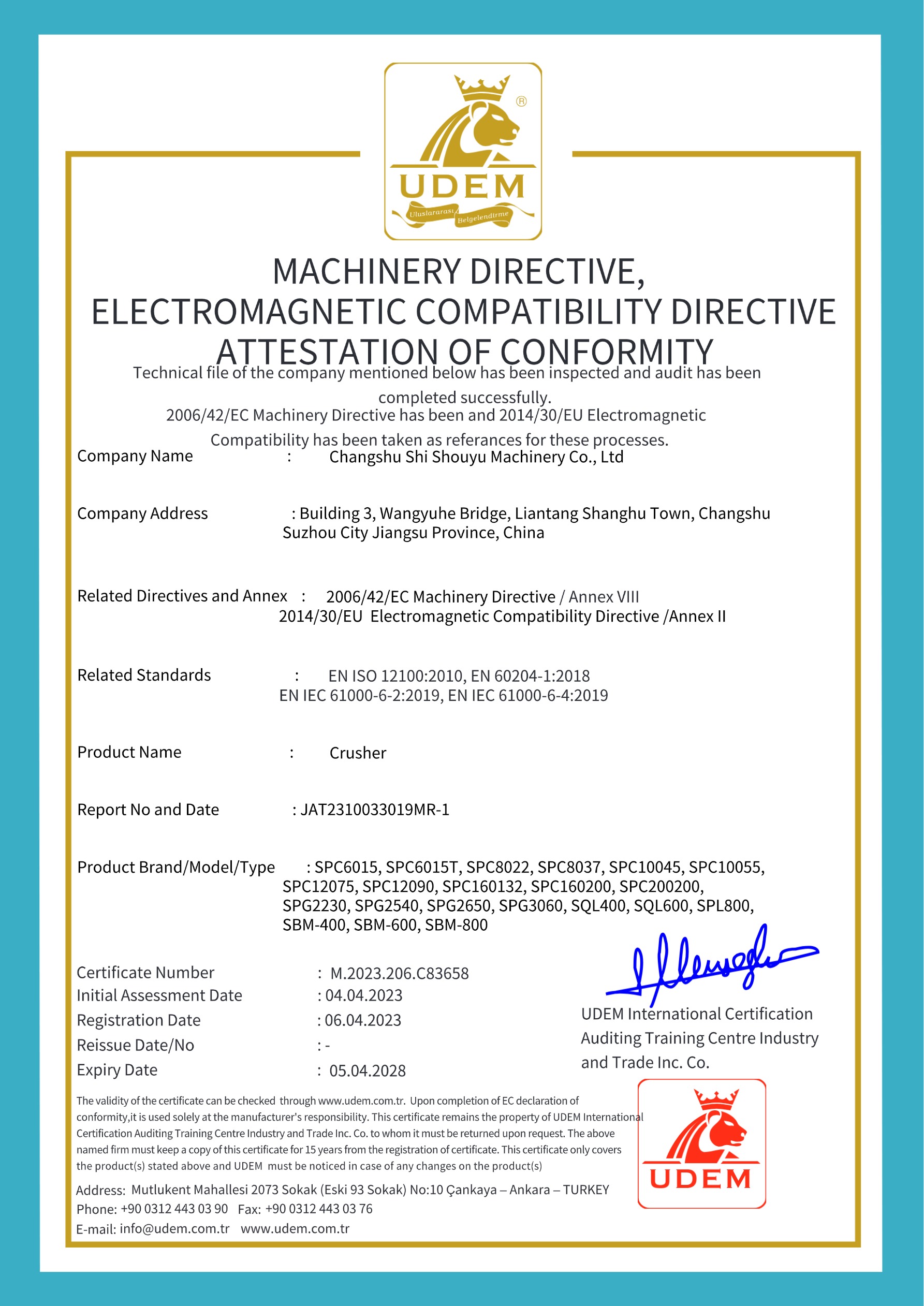
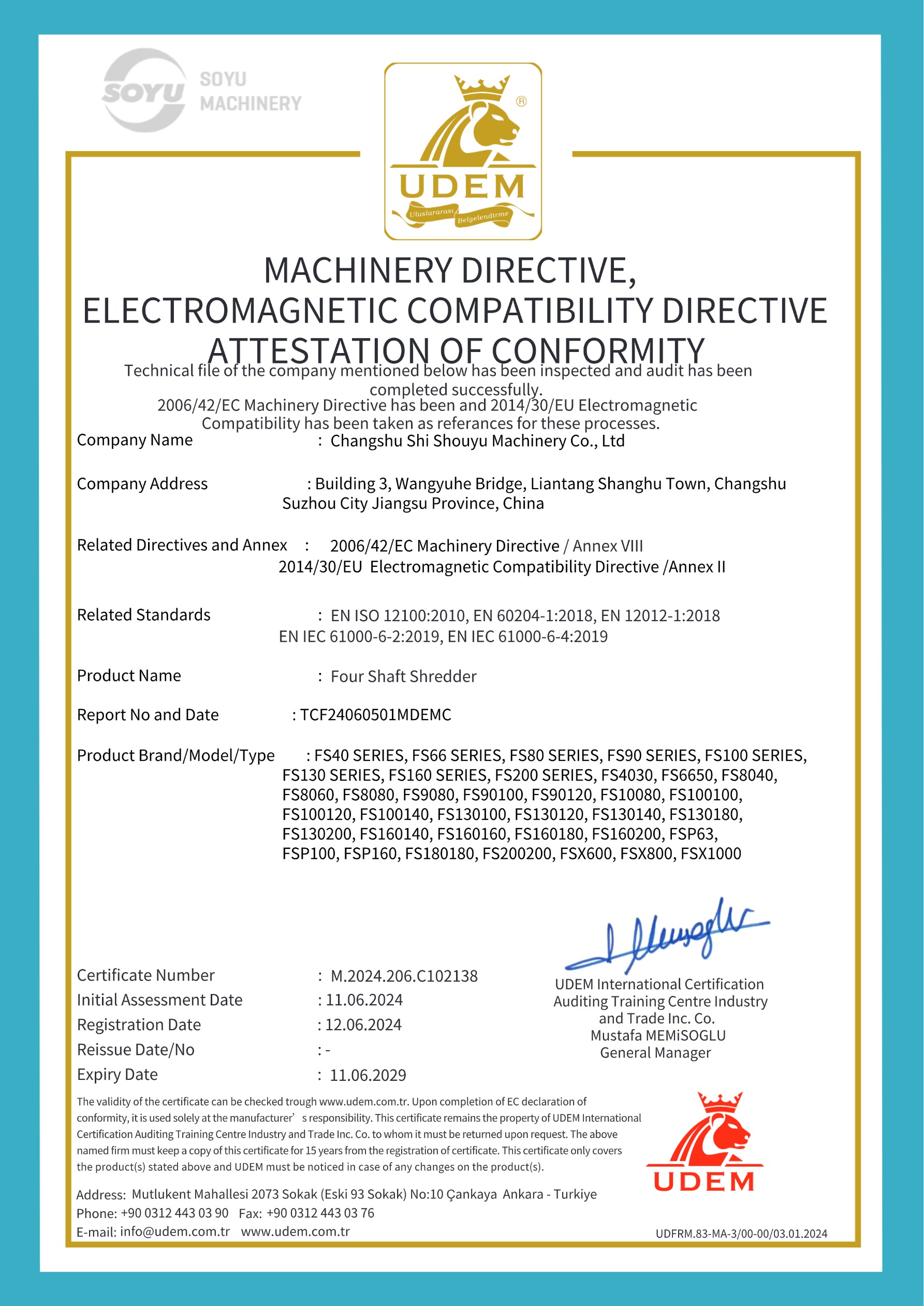
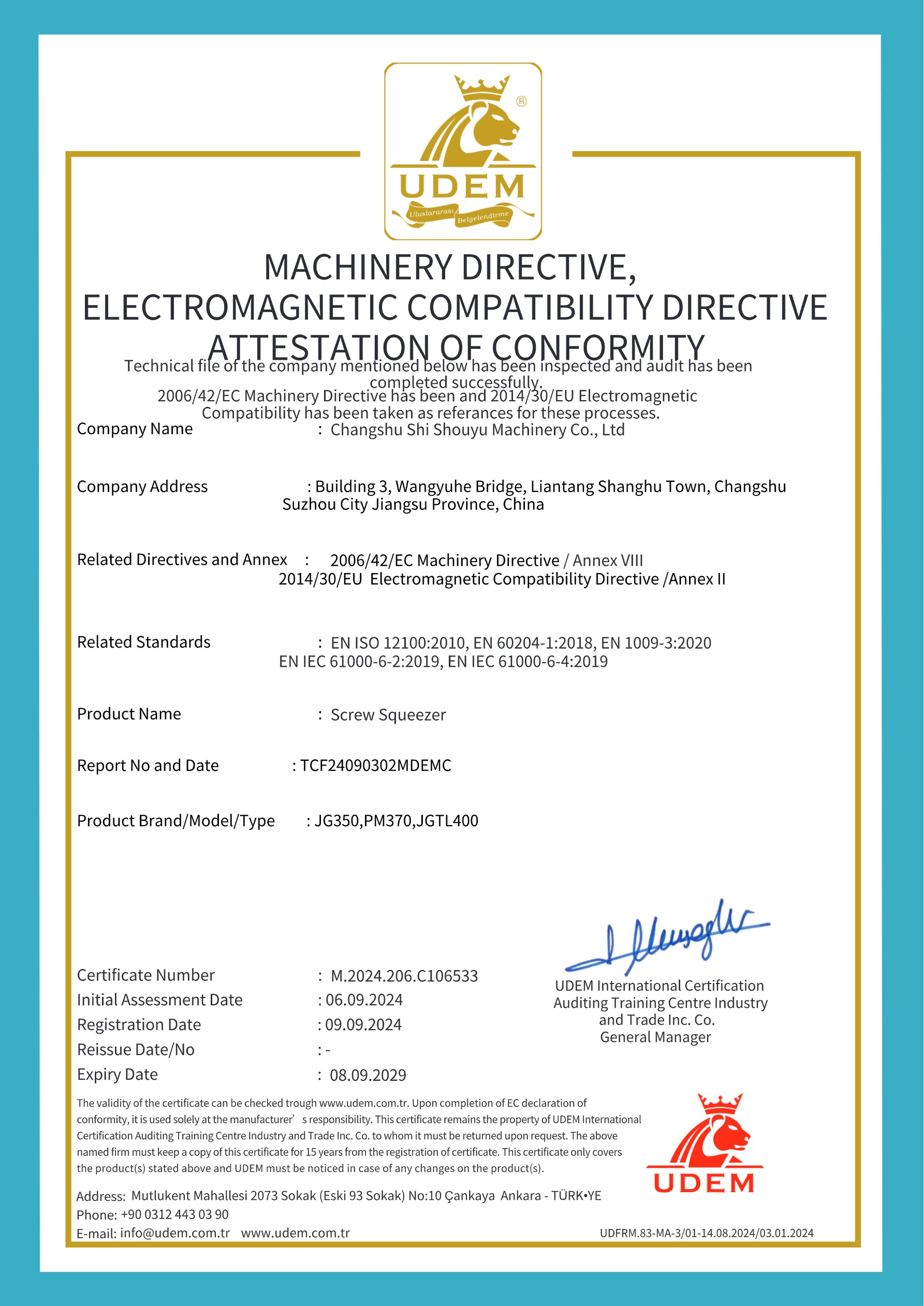
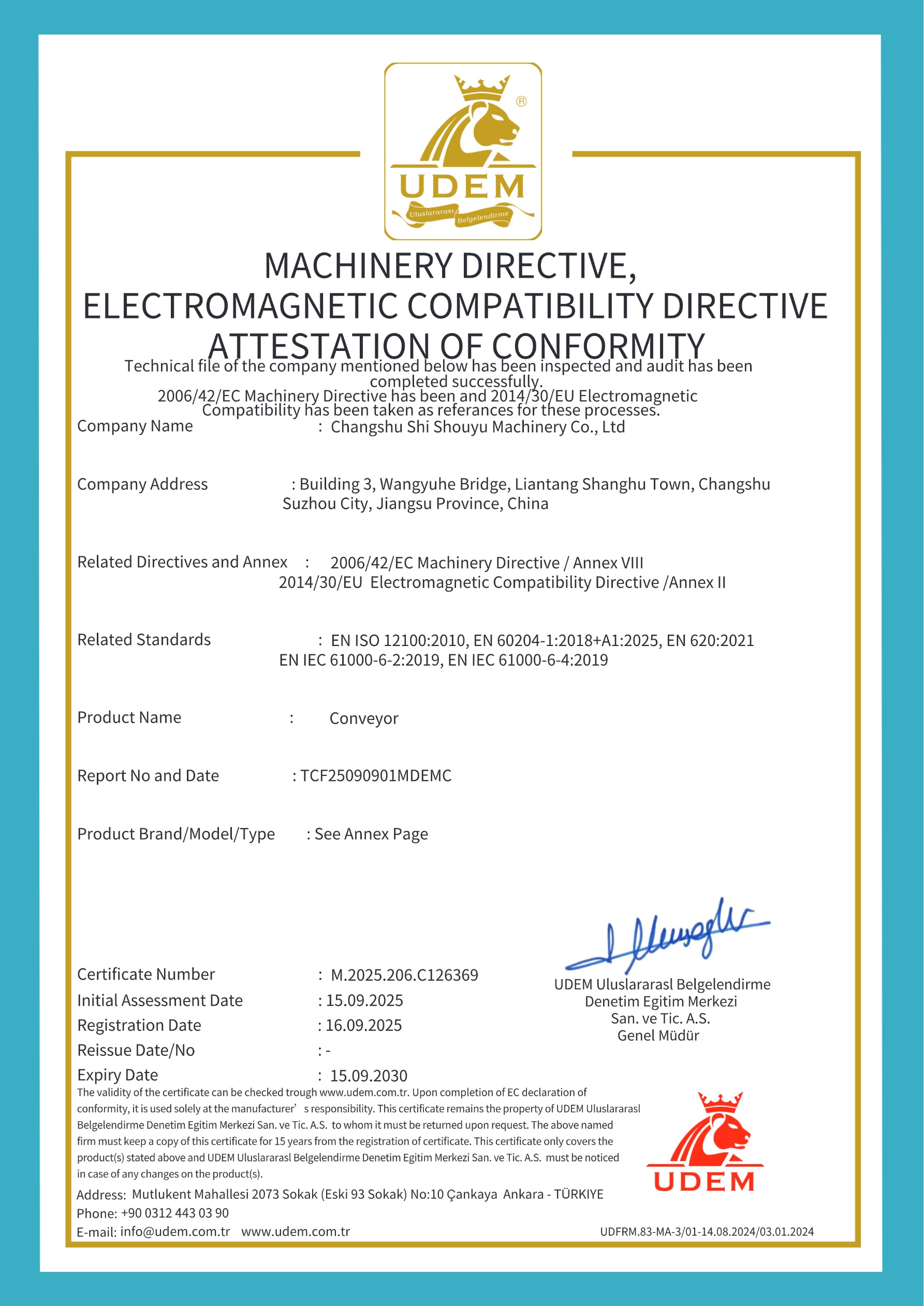
- Our shredding and separation equipment is manufactured in compliance with CE standards.
- The applicable declaration, machine identification and supplied configuration need to correspond to the equipment and its destination.
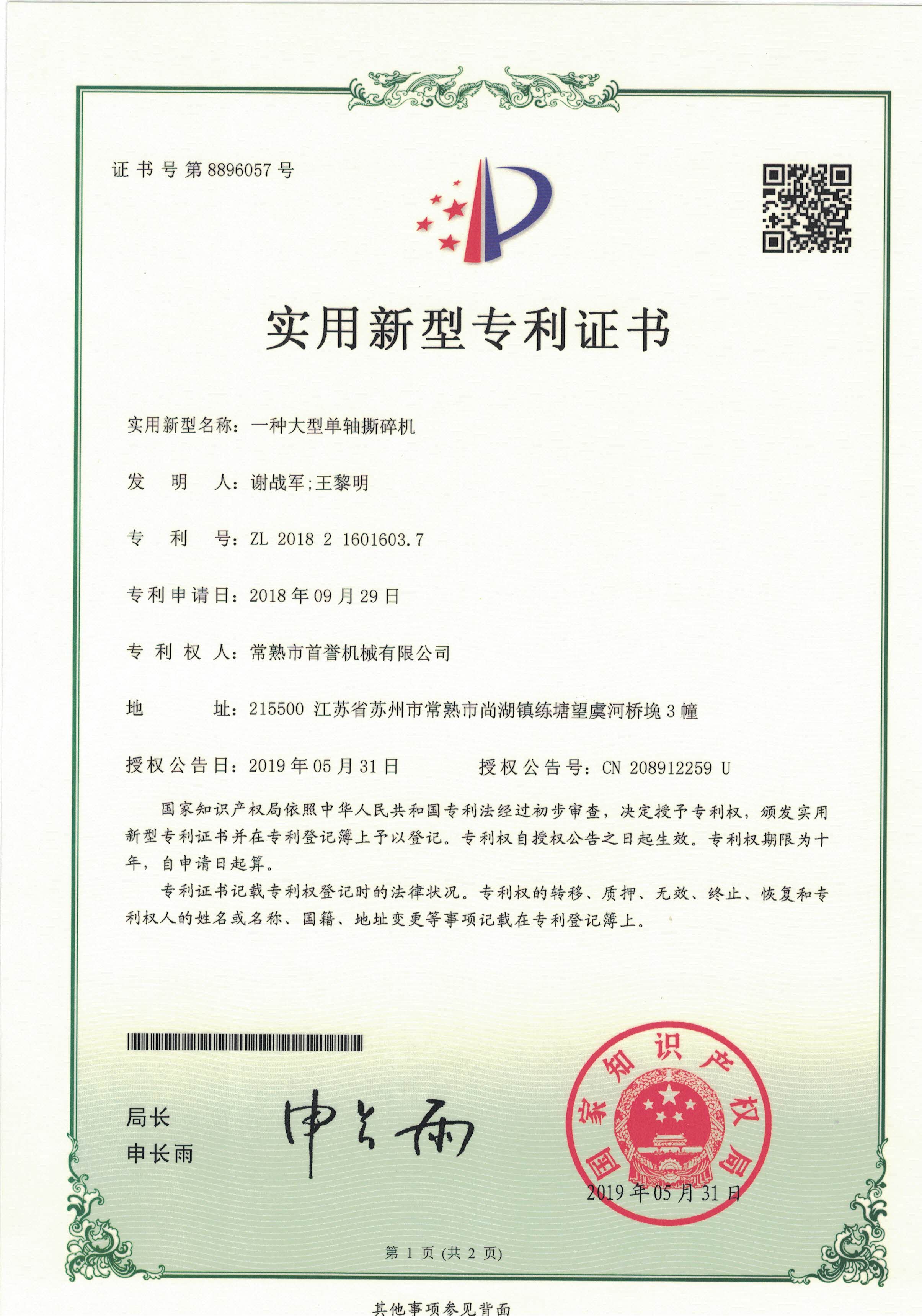
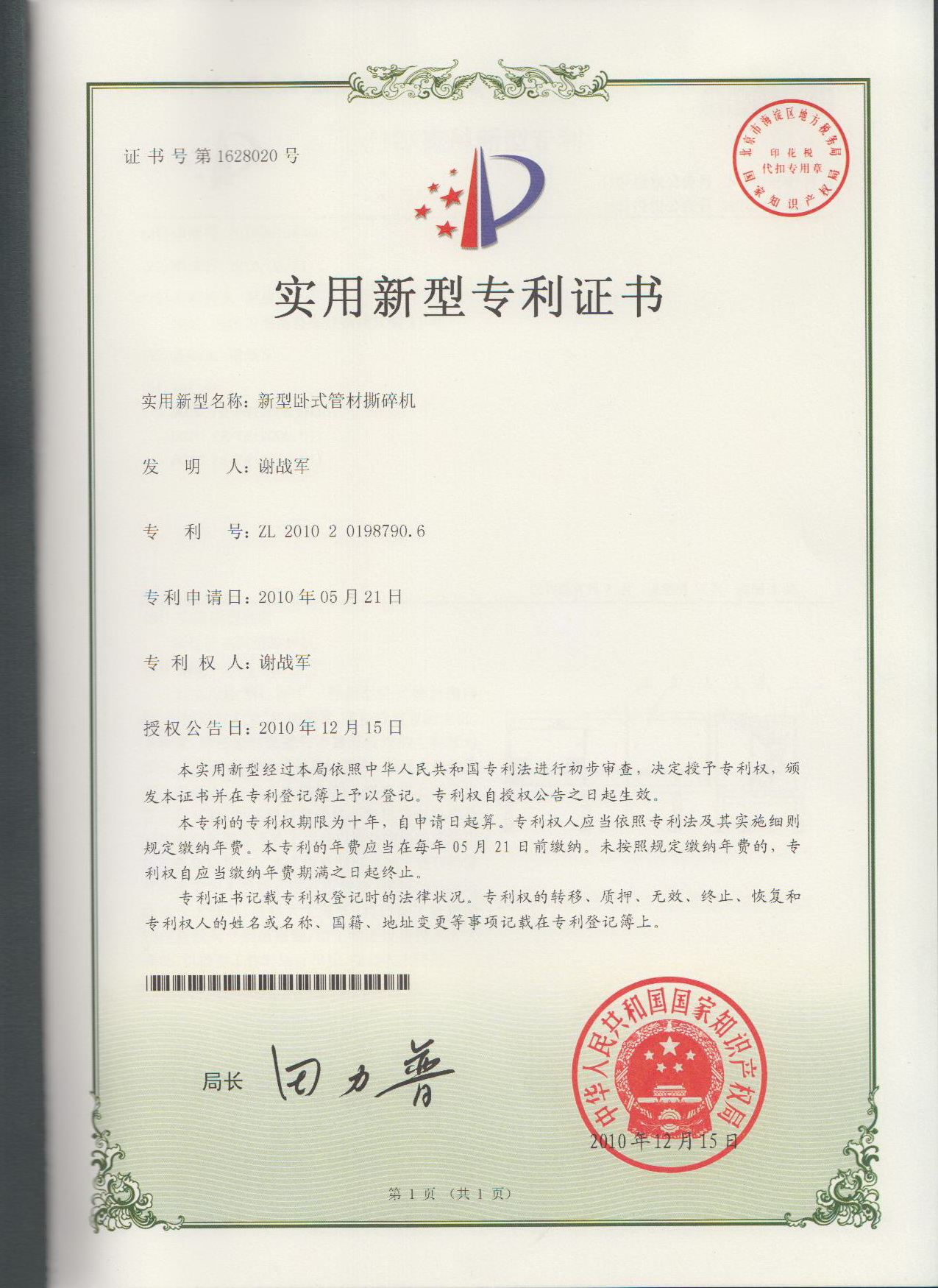
- More than 80 national patents have been granted for our core technologies.
- These relate to our broader shredding and separation development, rather than establishing that every patented feature is fitted to every model.
- Technical documents from your four shaft shredder manufacturer should identify the machine actually supplied.
- Retain the operating instructions, electrical documentation and applicable conformity documents together for installation and future maintenance.
- Destination requirements remain part of the machine-specific technical review when choosing SOYU as a heavy duty metal shredder supplier. A company quality certificate and an individual machine's conformity documentation serve different purposes.
Technical Support & Model Matching
Choose equipment matched to your operating requirements with technical support from SOYU. We review your material characteristics, target throughput, site conditions and environmental requirements to recommend suitable models and configurations. Our support covers installation, commissioning and operator training to help your team prepare for operation. Overseas customers can access remote technical assistance for troubleshooting, while maintenance and original spare parts support continue after delivery. Original spare parts remain available at cost after the warranty period ends.
FS130 series
The FS130 series is our range of four shaft shredders.
FAQ
Can worn cutters be repaired instead of replaced?
The special-alloy cutters are designed with reparability as well as wear resistance. Repair suitability depends on the remaining material and the condition of the working surfaces; cracked, severely damaged or excessively worn cutters need assessment before further use.
Does a heavy duty plastic shredder machine separate mixed materials?
Mixed feed remains a mixture after shredding unless a separate sorting process removes the different materials. For plastic scrap containing metal fasteners or inserts, magnetic separation may recover ferrous pieces, while non-ferrous metals require a different recovery method.
Mixed plastics present another challenge: reducing them to smaller pieces does not sort them by polymer type. If the recovered plastic will be reused in production, define the required polymer composition and acceptable contamination before choosing the sorting process. Bonded or layered products also need attention, because shredding may leave different materials attached to one another; smaller fragments do not necessarily mean complete separation.
Food residue, oils and other surface contamination may require washing or additional treatment, depending on the intended use of the recovered material. Where washing is involved, drying requirements should also be considered before storage or further processing. Assess representative feed and the resulting recovered fractions against the receiving recycler’s requirements, including material composition and residual contamination, so the complete line is selected around a usable output.
Does medical-waste shredding provide sterilization?
Shredding medical waste does not establish that it has been sterilized. Cutting changes its physical form; a separate, validated treatment process is needed to achieve the required biological treatment outcome.
The position of the shredder in the treatment sequence matters. Whether shredding takes place before or after treatment should be determined by the treatment method and the facility’s approved operating procedure. If untreated infectious waste will enter the machine, loading, discharge and material transfer need appropriate containment and exposure controls; these arrangements must be assessed for the complete installation.
Medical waste streams can include sharps, pharmaceutical residues, chemicals and pressurized containers, each requiring its own acceptance or exclusion decision. Inclusion of medical waste in an application range does not mean every healthcare waste category can be fed into the machine. Cleaning and decontamination procedures must also address access to areas that may retain contaminated material before servicing begins. For an operating project, establish the applicable treatment validation, monitoring and recordkeeping requirements with the responsible specialists and local authorities; shredded appearance alone cannot demonstrate successful treatment or authorize final disposal.
Can components be exchanged directly with other FS-series machines?
Direct exchange between FS-series machines should not be assumed from the series name alone. Before ordering a spare, provide the machine serial number and the part number from the original parts list so we can identify the required replacement.
Keep any earlier replacement records available, especially if the machine has been modified or repaired since delivery. A component currently fitted to the machine may differ from the one listed in its original documentation. Photographs of identification markings and the complete part can help resolve an unclear description, but visual similarity alone is not sufficient grounds for substitution.
For electrical replacements, check the supply requirements, connections and control-system settings before installation. For a proposed alternative part, obtain confirmation of its suitability and any associated changes before fitting it; avoid modifying a replacement simply to make it fit. Installation should follow the relevant isolation and assembly procedures, followed by the prescribed functional checks before returning the machine to production. Retain the replacement reference in the machine’s service records to make future orders easier to identify.