Product Overview
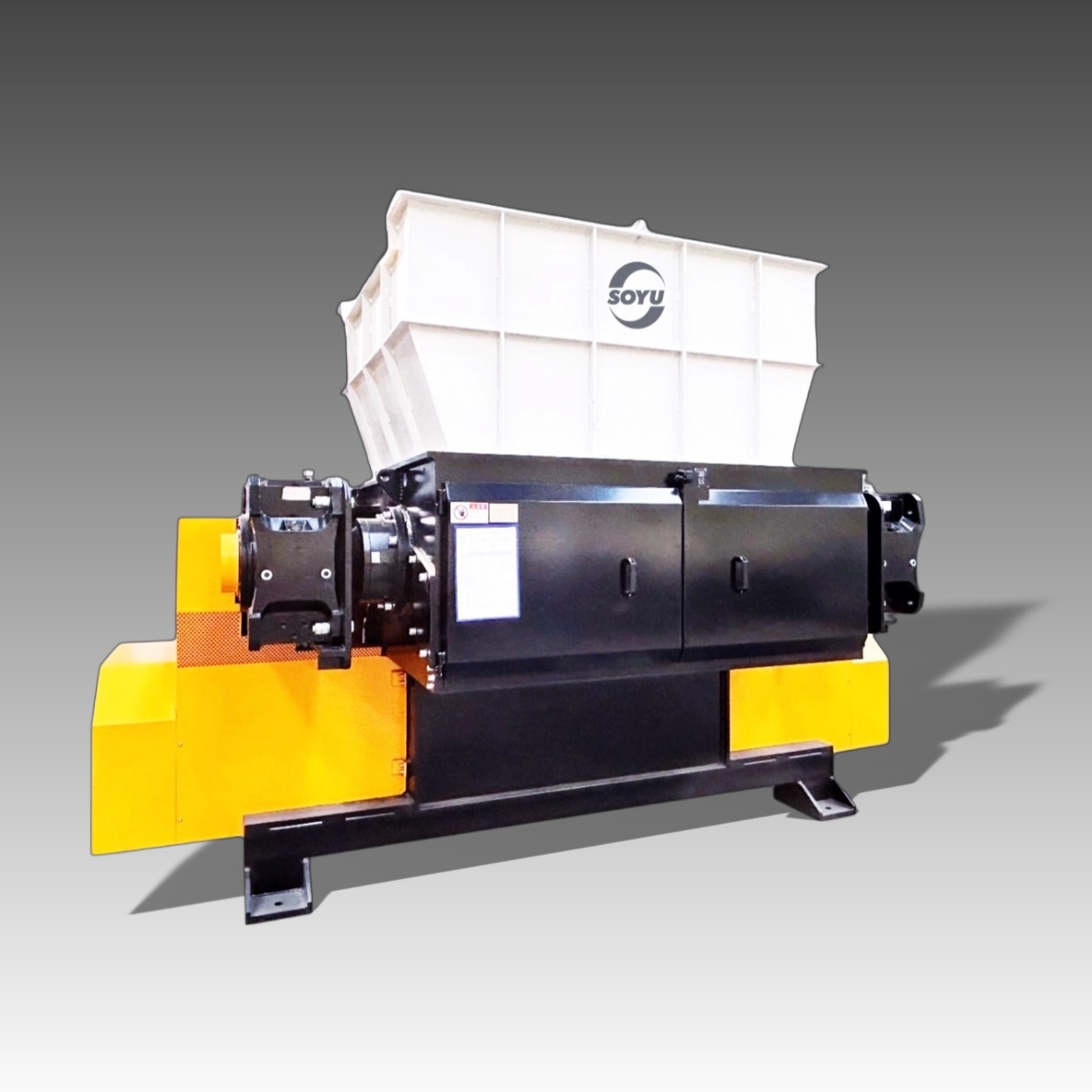
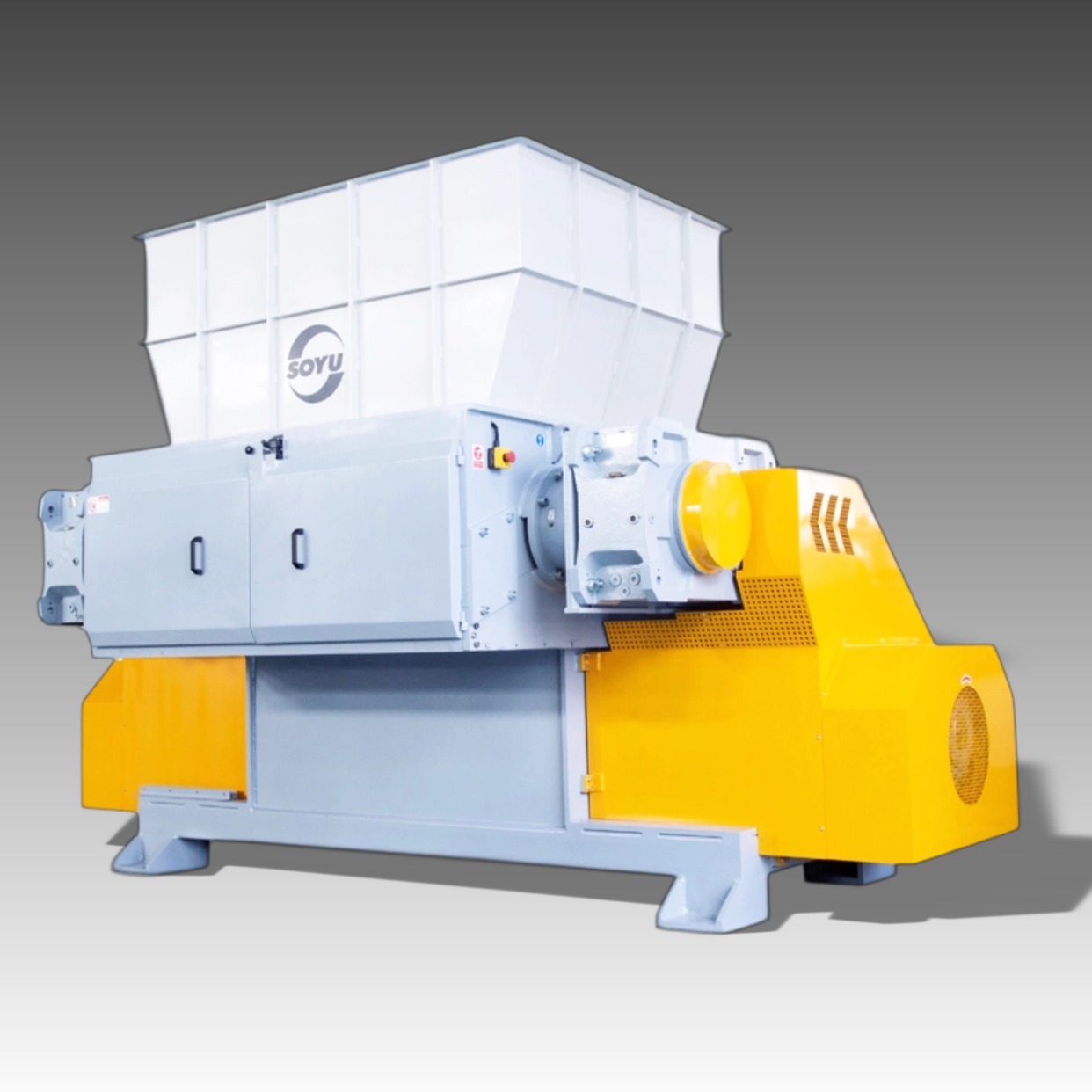
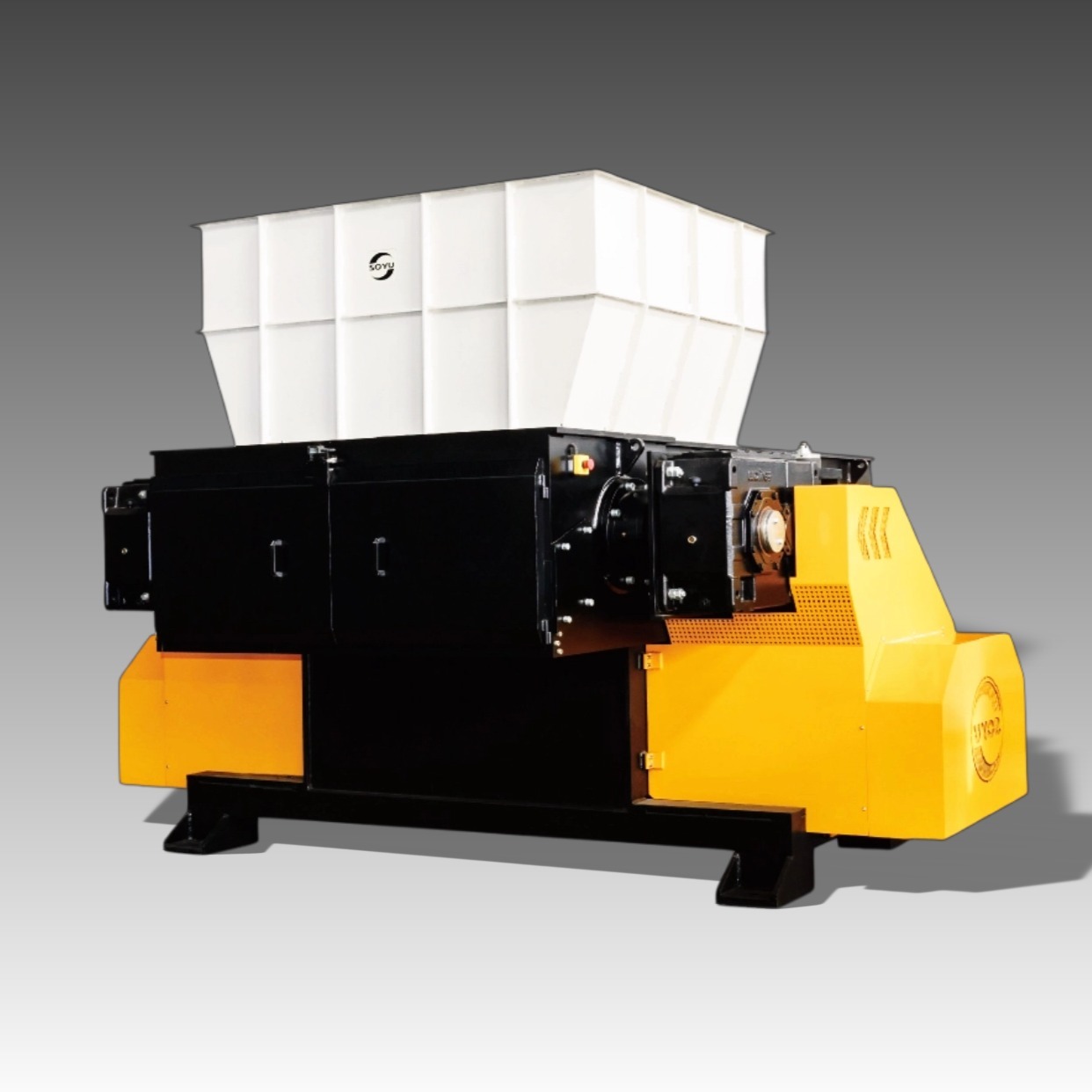
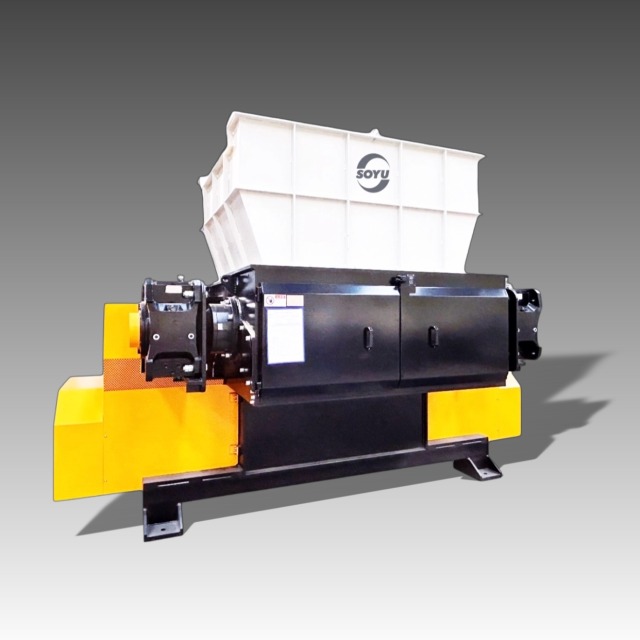
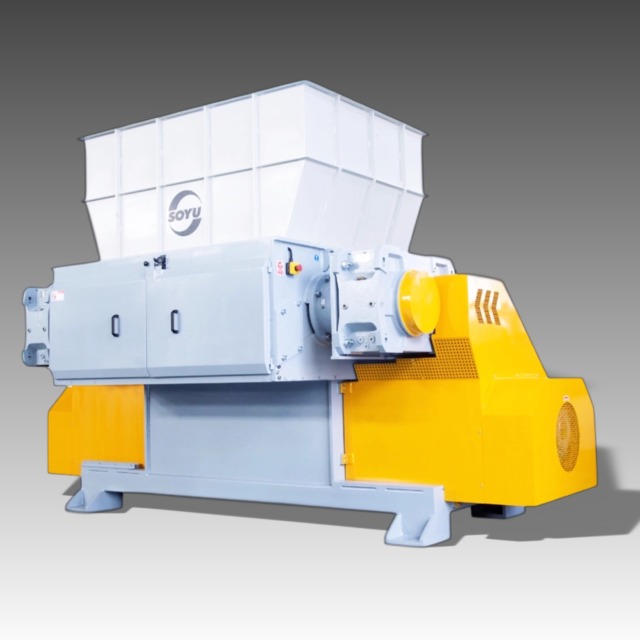
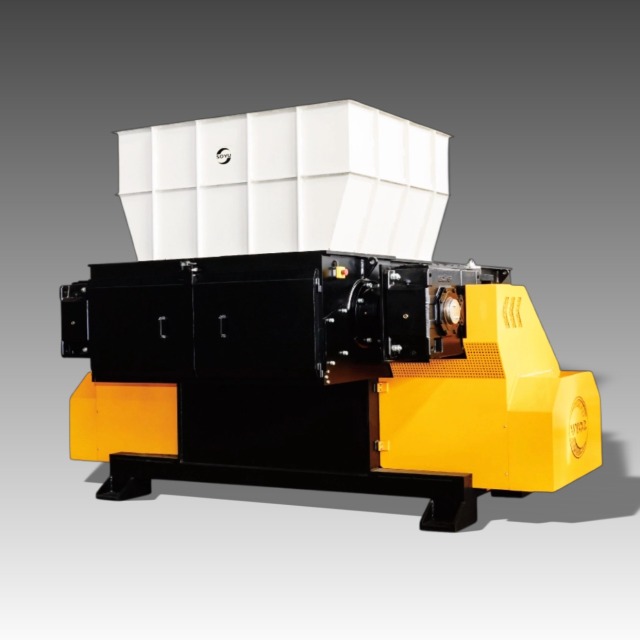
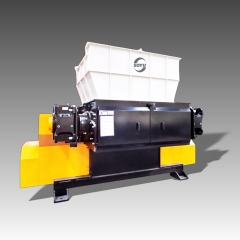
A high-count rotor arranged in a V on a heavy main shaft defines this industrial waste single shaft shredder, and the interchangeable screen behind it sets the output across a broad range of particle sizes. Bulky plastic, pallets, paper stock and cable insulation go in; a high-torque main motor and a hydraulic ram keep the chamber fed at a pace the material allows. SOYU builds it for recycling plants, wood yards and manufacturing sites that need one dependable reduction stage ahead of granulators, screens or balers.
Industrial Volume Reduction Role
- Volume comes first: bulky scrap is cut down before it reaches a baler or granulator, so the equipment behind it runs on a steady feed instead of peaks and gaps.
- Particle size is set by the screen rather than by luck, which is what makes the shredded fraction market-ready or feedable to the next stage.
- One rotor covers a mixed non-metallic intake — a plastics recycler that also takes pallets, or a print works that also bales cardboard — instead of two separate machines.
- The discharge feeds secondary production: flake for granulation, chip for board or biomass, fibre for repulping, insulation for separation.
- Fewer unprocessed loads leave site, and a measured output size is easier to document for environmental reporting and customer specifications.
- Build orders are specified around your feedstock, target particle size and available floor space, so a custom SR1400 industrial shredder arrives matched to the material you actually run rather than to a catalogue assumption.
Rotor & Cutting Chamber
The cutting chamber is wide enough for pallet sections, drum bodies and bundled film to enter without a pre-cutting step. Inside it, a V-pattern rotor works against 10 fixed counter-blades, so material is drawn down into the cut instead of riding on the surface, and the load is spread across several edges rather than landing on one point. Cutters are machined from CrMoV high-alloy wear-resistant steel with a double cutting edge, and a worn edge can be turned before the part is replaced. Blade configuration and steel composition are selected at build stage, which is where abrasive or fibrous feedstock is either handled well or turns into a maintenance problem. The shredder suits plastic, wood, paper, and composite waste streams, helping reduce volume and prepare material for downstream recycling and repulping. It handles plastic scrap, wood waste size reduction, and insulation recovery from cables. Its design is aligned with ISO 9001 and CE standards for reliable operation in demanding industrial environments.
Specifications
| Specification | Value |
|---|
| Model | SR1400 |
| Main shaft speed | 73 rpm |
| Ram travel | 820 mm |
| Rotor diameter | 400 mm |
| Rotor blades | 80 |
| Fixed blades | 10 |
| Cutting chamber | 830 x 1302 mm |
| Screen hole diameter | 40 mm standard; interchangeable meshes give 40-100 mm output |
| Motor power | 75-90 kW |
| Hydraulic power | 5.5 kW |
| Discharge height | 610 mm |
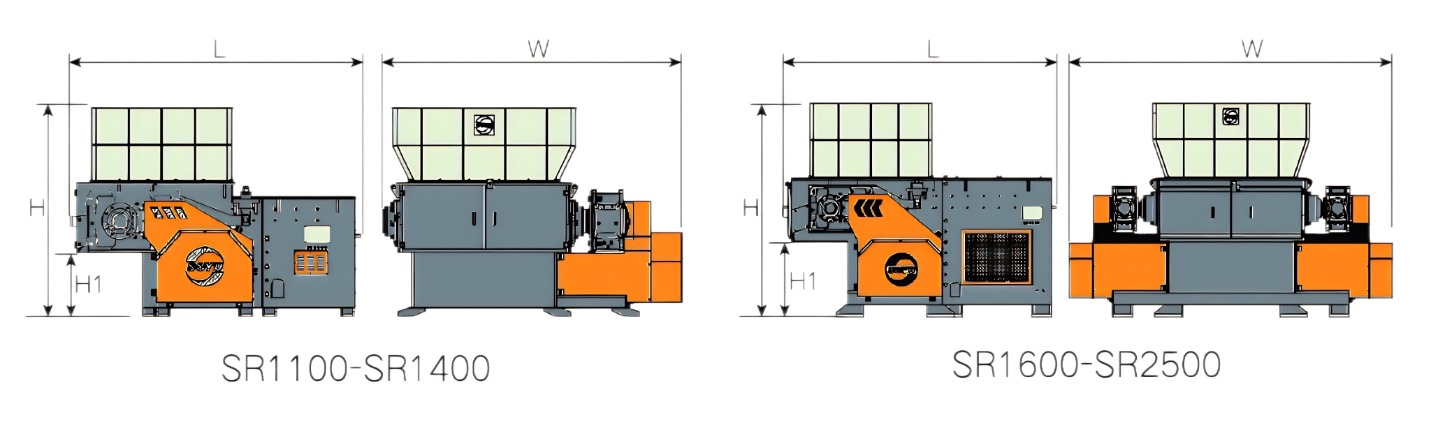
| Overall dimensions (L x W x H) | 2810 x 2890 x 2115 mm |
| Weight | Approximately 6200 kg |
Screen Unit & Output Control
- Screen frames are replaceable and come in a range of mesh sizes, so the same machine can move between coarse chunks and a finer particle without a second shredder.
- The screen is the ceiling on particle size: material stays in the chamber until it fits through the holes, which is what holds the output steady from one shift to the next.
- Opening the screen unit stops the rotor automatically, so clearing a blockage or swapping a frame cannot be done with the shaft still turning.
- Choose the mesh from the process behind the shredder rather than from the shredder itself — granulators usually want a tighter, more uniform feed, while biomass, RDF and bulking work tolerate coarser material.
- Keep one spare frame in each size you run, and a screen change costs minutes instead of a production day.
- Screen wear is gradual and visible, so inspect the frame at every blade check and replace it once the holes round out and the output starts drifting coarse.
Hydraulic Pusher & Drive Train
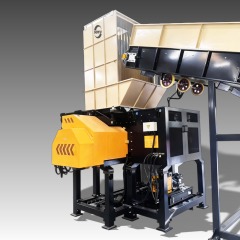
- Material drops into the hopper and a hydraulic ram advances it into the rotor, so the ram rather than gravity sets the feed rate.
- When the chamber is loaded with brittle material, the cylinder runs at maximum speed to keep throughput up.
- When the load turns tough or stringy, ram speed drops so the rotor keeps cutting instead of stalling or snapping a blade.
- When the chamber empties, the ram retracts and the cycle repeats, which keeps the rotor from running starved or choked.
- Cutting torque and pushing force come from separate sources: the main motor drives the rotor and a dedicated hydraulic motor drives the pusher, so feed force is never borrowed from cutting power.
- Overload protection sits in the same loop, reducing the risk of damage when an unexpected lump enters the chamber.
- The electrical control system coordinates the ram, the rotor and the screen interlock, so the sequence stays inside its operating limits through the shift.
Material Coverage
| Material family | Typical feedstock |
|---|
| Plastics | PET bottles, HDPE drums, plastic films, and injection molding scrap |
| Paper & Cardboard | Corrugated boxes, office waste, and pulp residues |
| Wood | Pallets, lumber offcuts, sawdust lumps, and furniture waste |
| Wires & Cables | Non-metallic sheaths and insulation materials |
| Additional Materials | Fiberglass, agricultural residues (straw, husks), textile waste, and non-hazardous composite materials |
| Outside the intended range | Feedstock with substantial metal content or hazardous waste, which needs a two- or four-shaft machine instead |
Application Streams
- Plastic & Film: film bales, drums and rigid mouldings are reduced to a size a washing line or granulator can accept, which removes the re-baling step that usually sits in front of the shredder.
- Wood & Wood Pallet: pallets, offcuts and furniture waste become a consistent chip that a biomass boiler, board press or mulch yard can take.
- Paper & Cardboard: corrugated bales, office waste and pulp residues are opened up and sized for repulping, or for a baler that needs a denser feed.
- Metal & Metal chip: the machine suits light chip and low-metal mixed loads; heavier plate, drums and dense scrap belong with a two- or four-shaft machine.
- Electronic scrap: housings, keyboards and cable offcuts are reduced after batteries and bulky metal have been pulled, keeping the fraction that carries the recoverable plastic.
- RDF & MSW: commercial and household fractions are sized through this industrial waste single shaft shredder before separation and densification, so the fuel or the recyclate meets a particle specification rather than a rough guess.
- Field installations follow the same pattern — the unit sits at the head of the line, replaces manual pre-cutting and feeds a process that needs a predictable particle size.
- Plastic recyclers usually meet this machine at the front of the line, where bales, purge lumps and drum bodies are cut down to a size a granulator or extruder can accept.
- The screen sets that size, so a plant running two product grades can switch frames instead of switching machines.
- Hydraulic control keeps cutter pressure sensible when the feedstock moves between HDPE, PP and film, which is where blade wear usually accelerates.
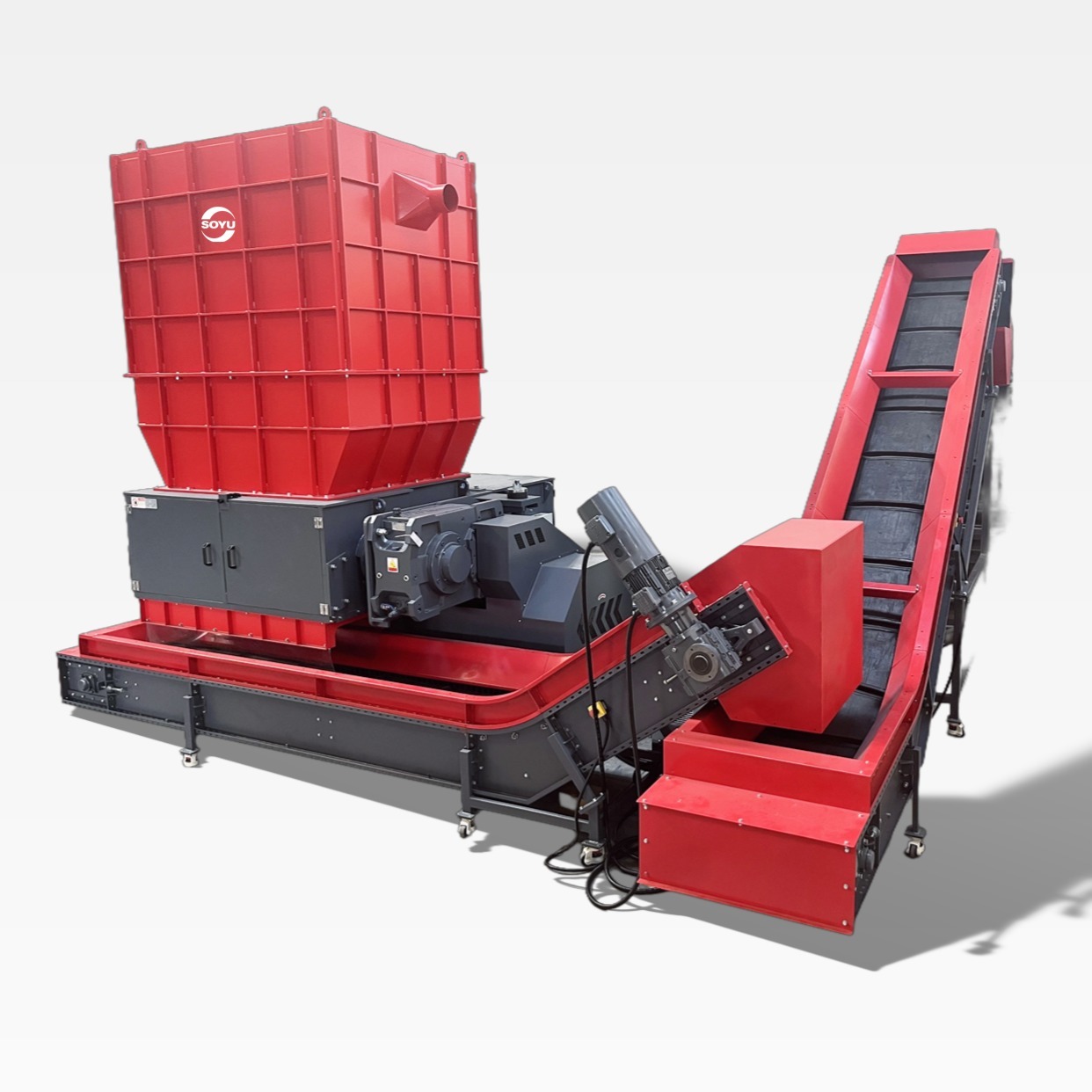
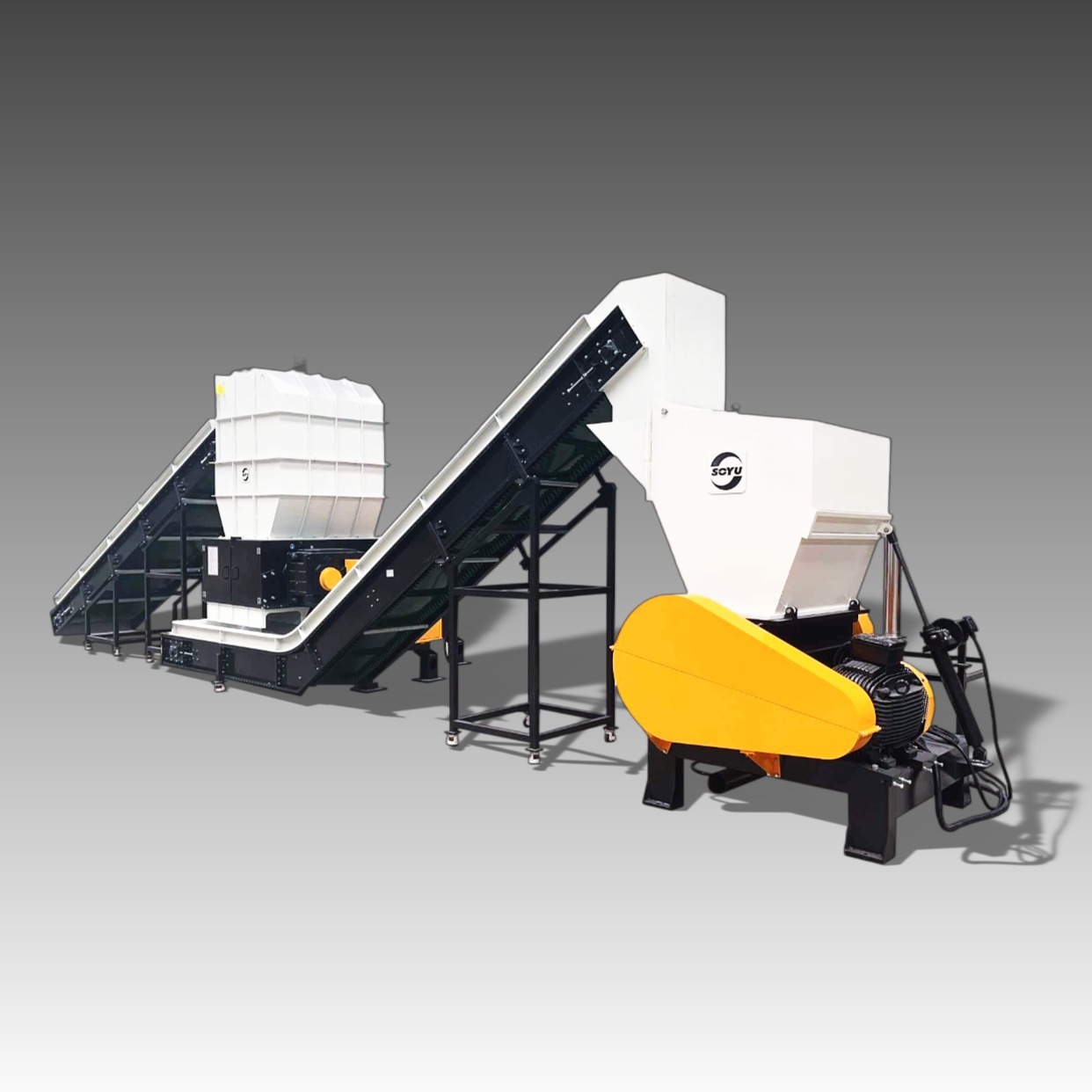
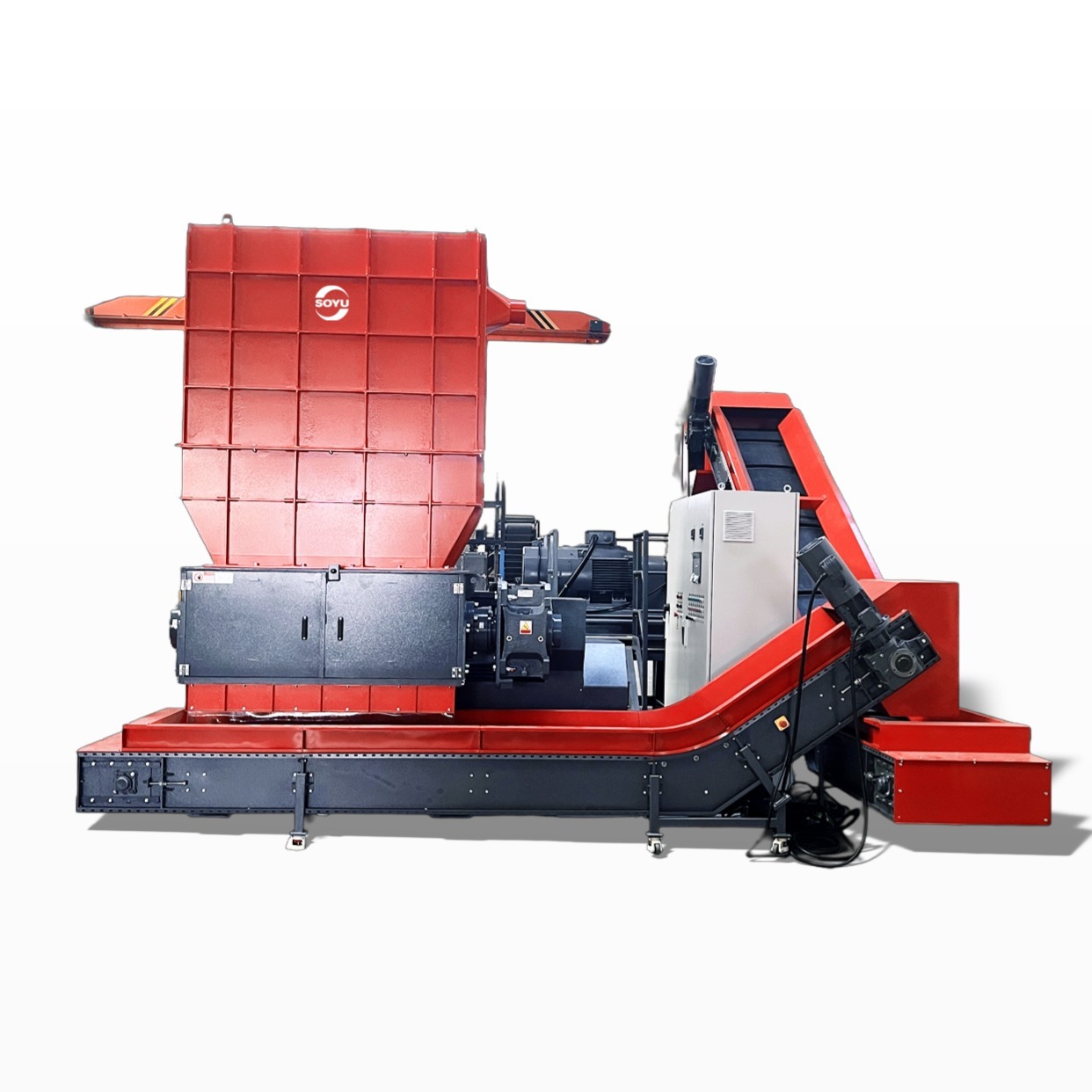
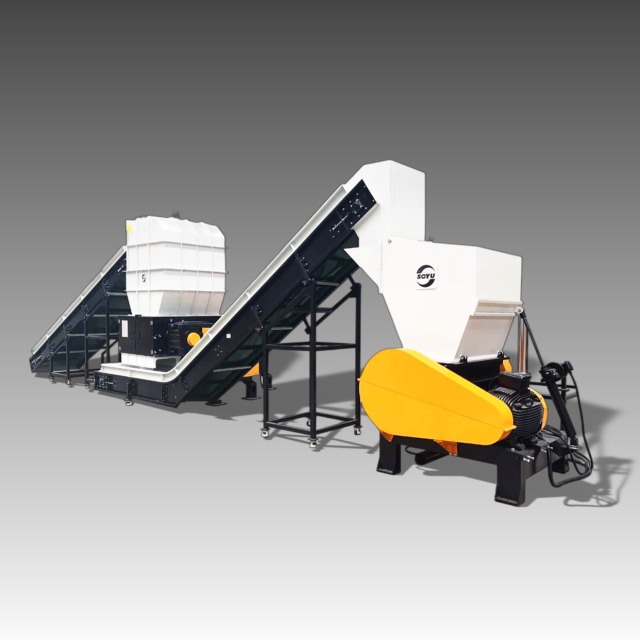
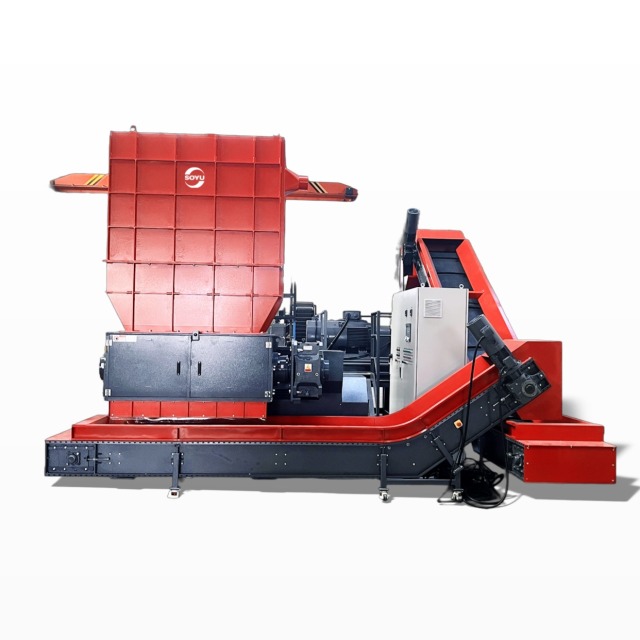
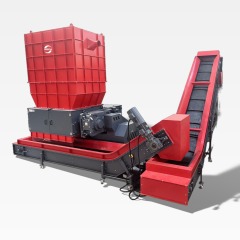
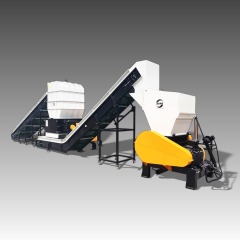
- Conveyor-fed installations keep throughput continuous and let the sorting crew work at a steady pace instead of chasing batches.
- The shredded fraction handles better in downstream washing, and a measured particle size makes it easier to show that a load meets the specification the buyer asked for.
- Biomass fuel: pallets, offcuts and furniture waste come out as a consistent chip that a boiler or pellet mill can accept without a second pass.
- Composite panel and mulch production: a stable particle size keeps the blend predictable from one shift to the next, which is what quality control actually depends on.
- Variable moisture and fibre density are handled by the hydraulic pusher and the wear-resistant blades, so a wet load slows the feed instead of stalling the rotor.
- Pallets arrive with nails and staples, so put a magnet or a metal detector ahead of the chamber and pull the hardware before it reaches the blades.
- Integration is straightforward: the discharge lines up with a conveyor, screening or sorting stage, and the shredded wood moves on without re-handling.
- Sawdust lumps and furniture waste, the materials that bridge and jam in a hopper, are pushed into the rotor rather than dropped onto it.
Structural & Design Benefits
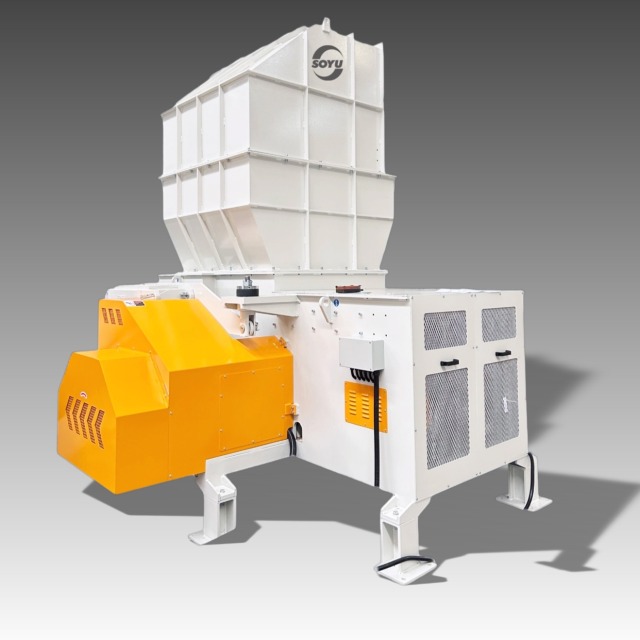
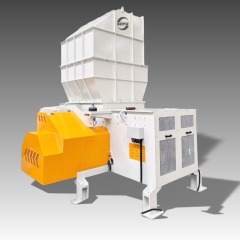
- A wide, open feed hopper takes pallet sections and drum bodies without pre-cutting, which removes a handling step ahead of the shredder.
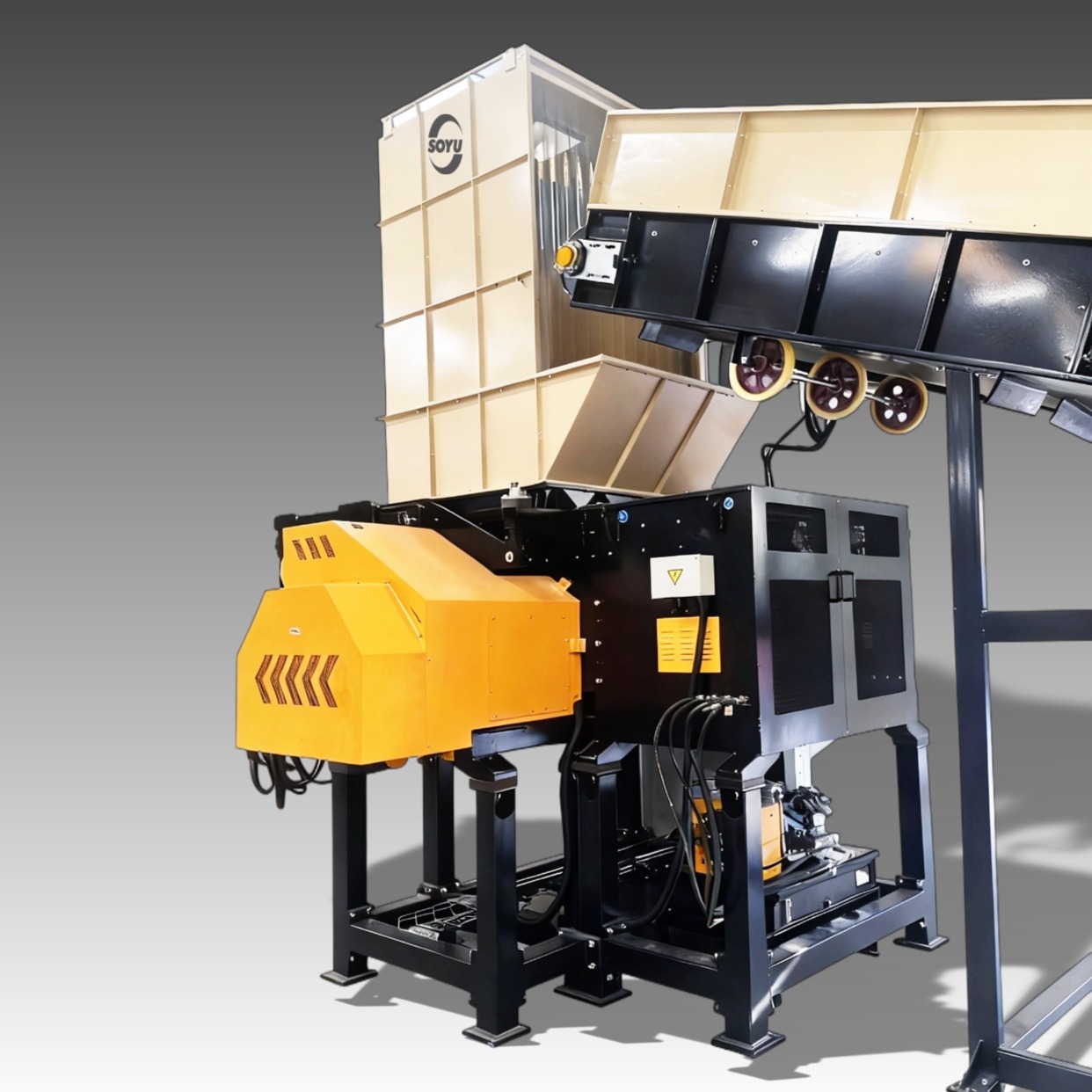
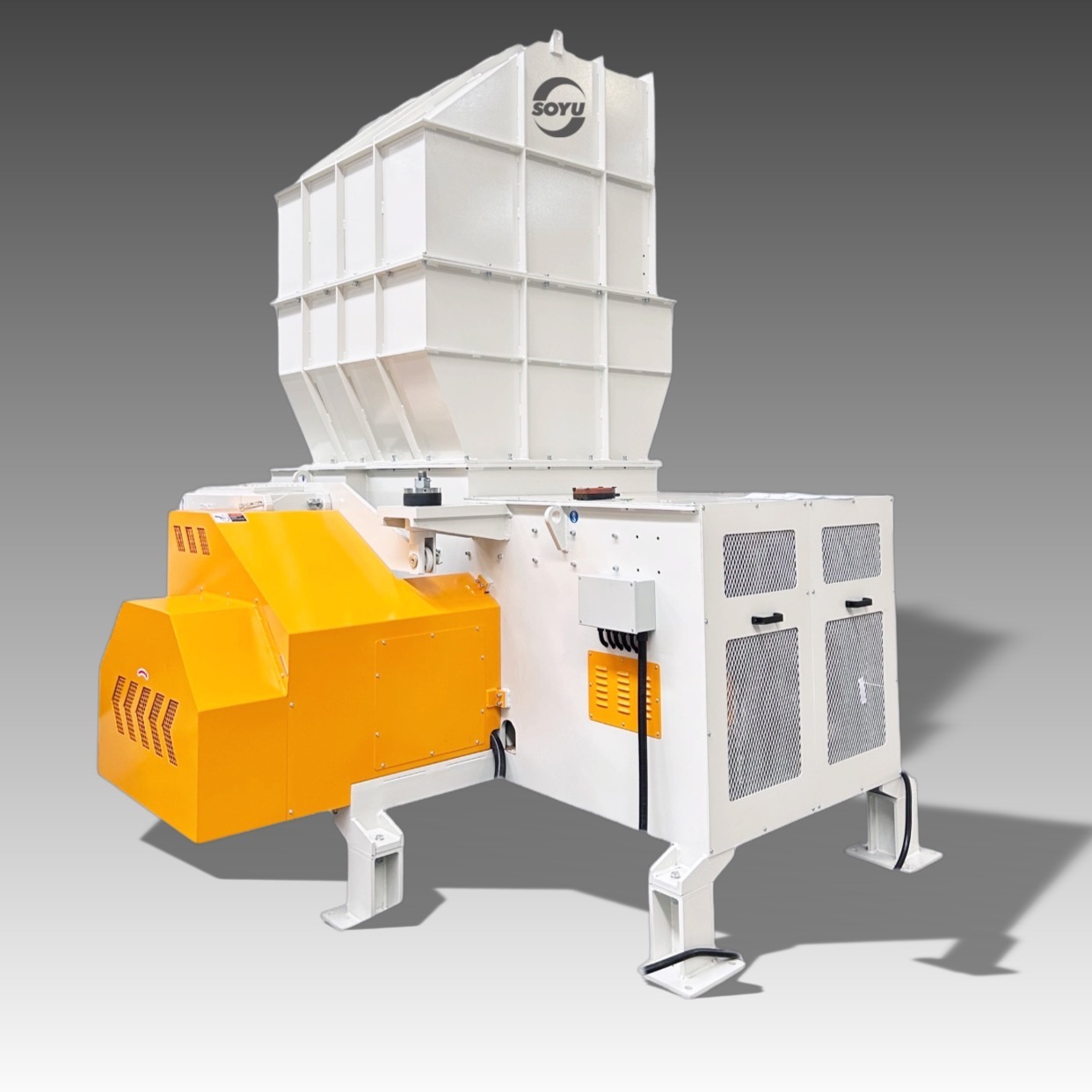
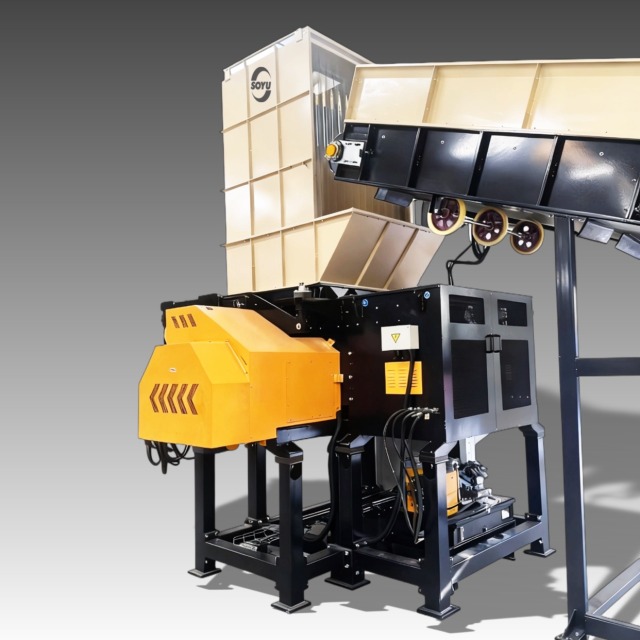
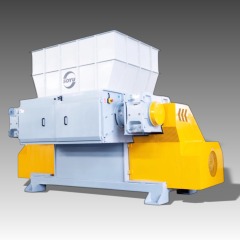
- The cutting chamber sits inside an enclosed housing with front access doors, so blade and screen work happens from the front of the machine rather than over the top of it.
- The drive is mounted to the side behind guarded covers, keeping the working area around the hopper clear for a loader or a feed conveyor.
- A discharge height set to line up with a standard conveyor or a bunker lip simplifies the layout behind the machine.
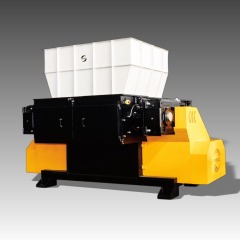
- The frame stands on integrated support feet, and the overall dimensions let the footprint be checked against an existing bay before delivery.
- Demo clips cover plastic, wood pallets, plastic lumps, paper, wood and glass fibre, which is the quickest way to see how the hopper accepts different shapes and how the discharge runs.
Operational Performance & Reliability
The main shaft turns at 73 rpm, slow enough to develop torque rather than hammer material through the chamber. Parameters stay adjustable, so a plant that changes feedstock between campaigns does not have to change machines. Wear appears in a known order — cutter edges first, then screens — which lets a maintenance team plan blade turns and screen swaps around production instead of during a breakdown. Output stays consistent enough that downstream sorting, washing or baling equipment can be set once and left alone. A team that has run one slow-speed shredder will recognise the routine here: check the blades, check the screen, clear the chamber, restart.
In-Plant Use Scenarios
- A standalone reduction station: material is tipped or loaded by a handler into the hopper, shredded and discharged into a bunker, which is the pattern at transfer stations and smaller recyclers running a single shift.
- The first stage of a washing or granulation line: shredded material leaves at a size the next machine can meter, so the line runs continuously rather than in batch campaigns.
- A yard machine at a manufacturer: a pallet and crate build-up is cleared once a week, and the unit idles between campaigns without a complicated start-up routine.
- A paper or print site: bales and trim are opened and sized for repulping, or for a baler that needs a denser, more predictable feed.
- A cable or e-scrap shop: sheaths, insulation and housings are reduced before separation, which is the step that makes the downstream sorting worthwhile.
- A retrofit into a sorting hall: the unit drops into a spare bay with conveyor feed and discharge, provided the floor carries roughly 6200 kg and the site can supply the motor.
Ordering & Spare Parts Supply
- Feedstock detail comes first: material type, typical piece size, moisture and contamination decide the blade configuration and the screen range.
- Set the output target from the process behind the shredder, then pick one or two screen sizes rather than the whole range.
- Check the site supply against the drive — a 75-90 kW main motor plus a 5.5 kW hydraulic pack — before a delivery date is fixed.
- Send representative samples if you want the configuration run on a test machine before the build is released.
- Agree the spare set with the order: rotor blades, fixed blades and a spare screen frame in each size you plan to run.
- Keep the parts list in the machine file, because original spare parts continue to be supplied at cost price after the warranty period ends.
- Ask for the current lead time and delivery terms when the order is placed, since both vary with configuration.
Certification & Quality Control
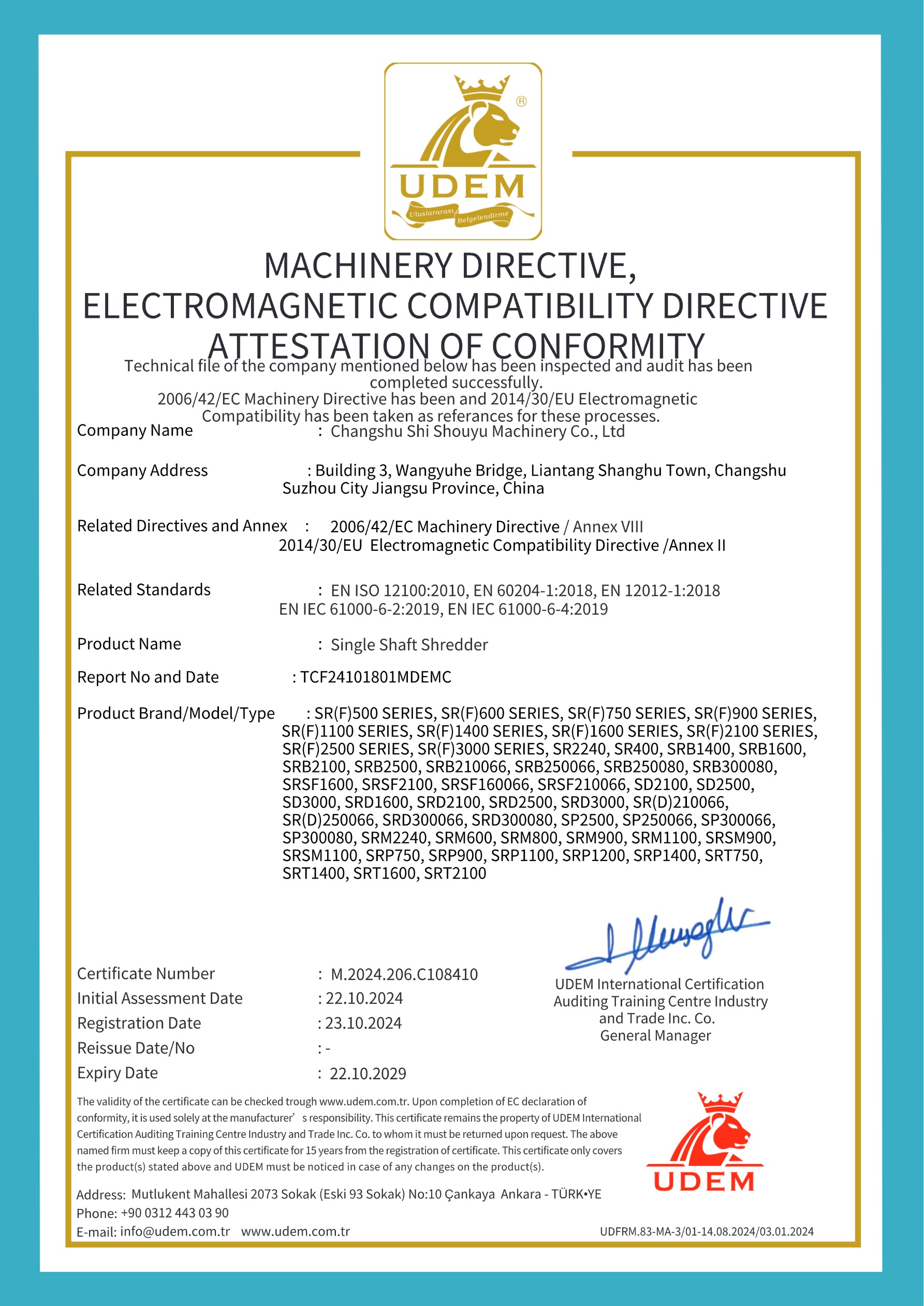
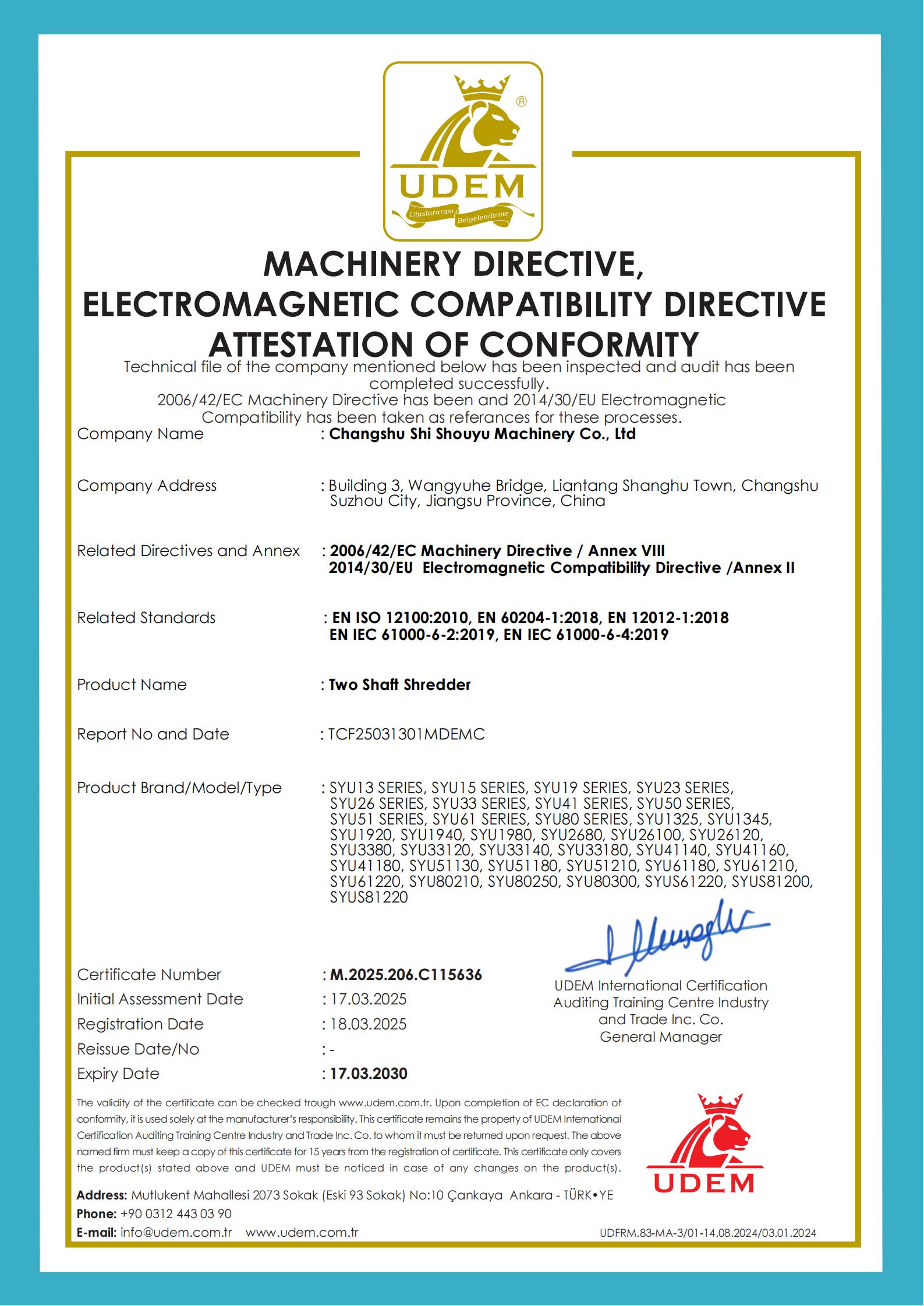
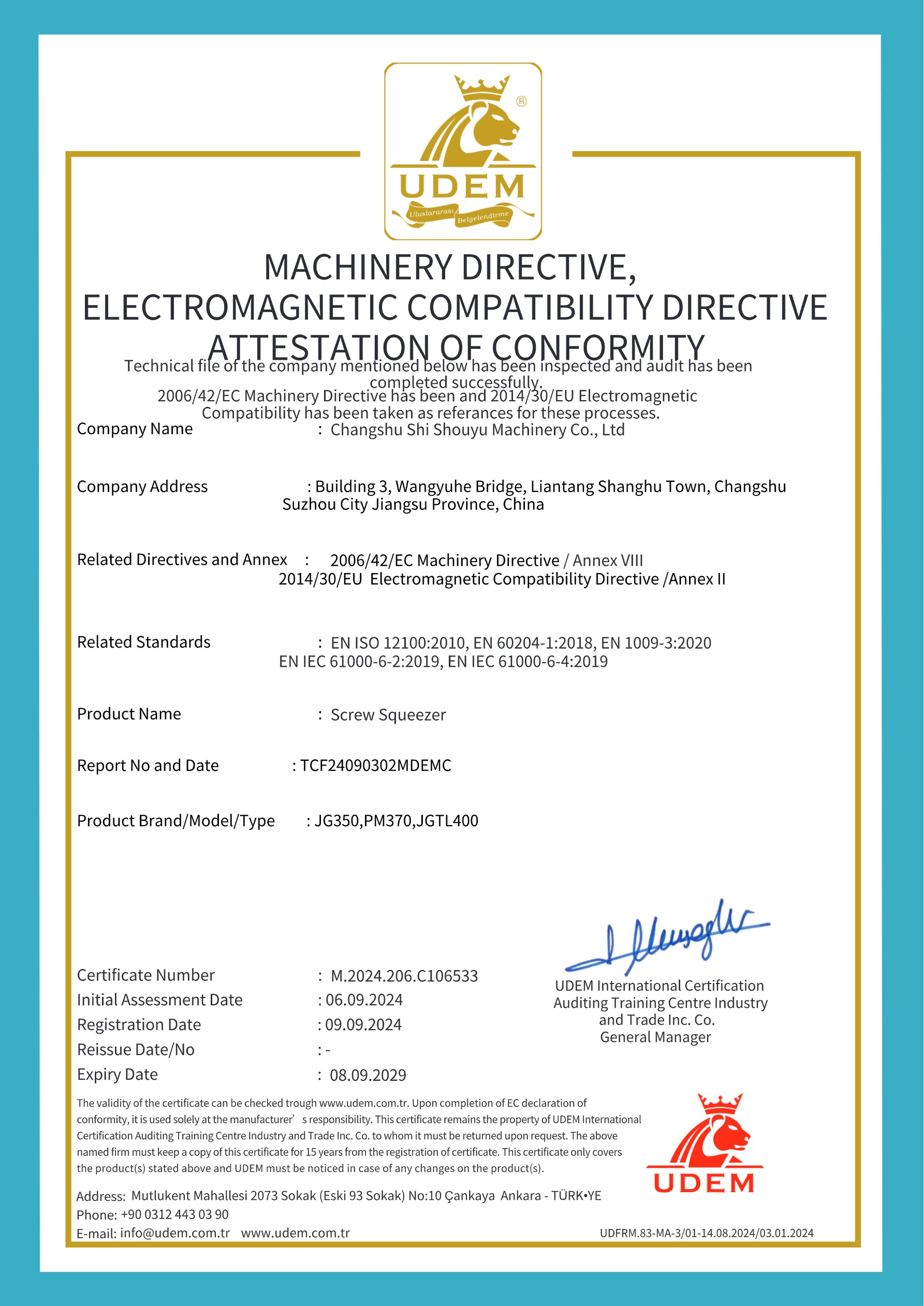
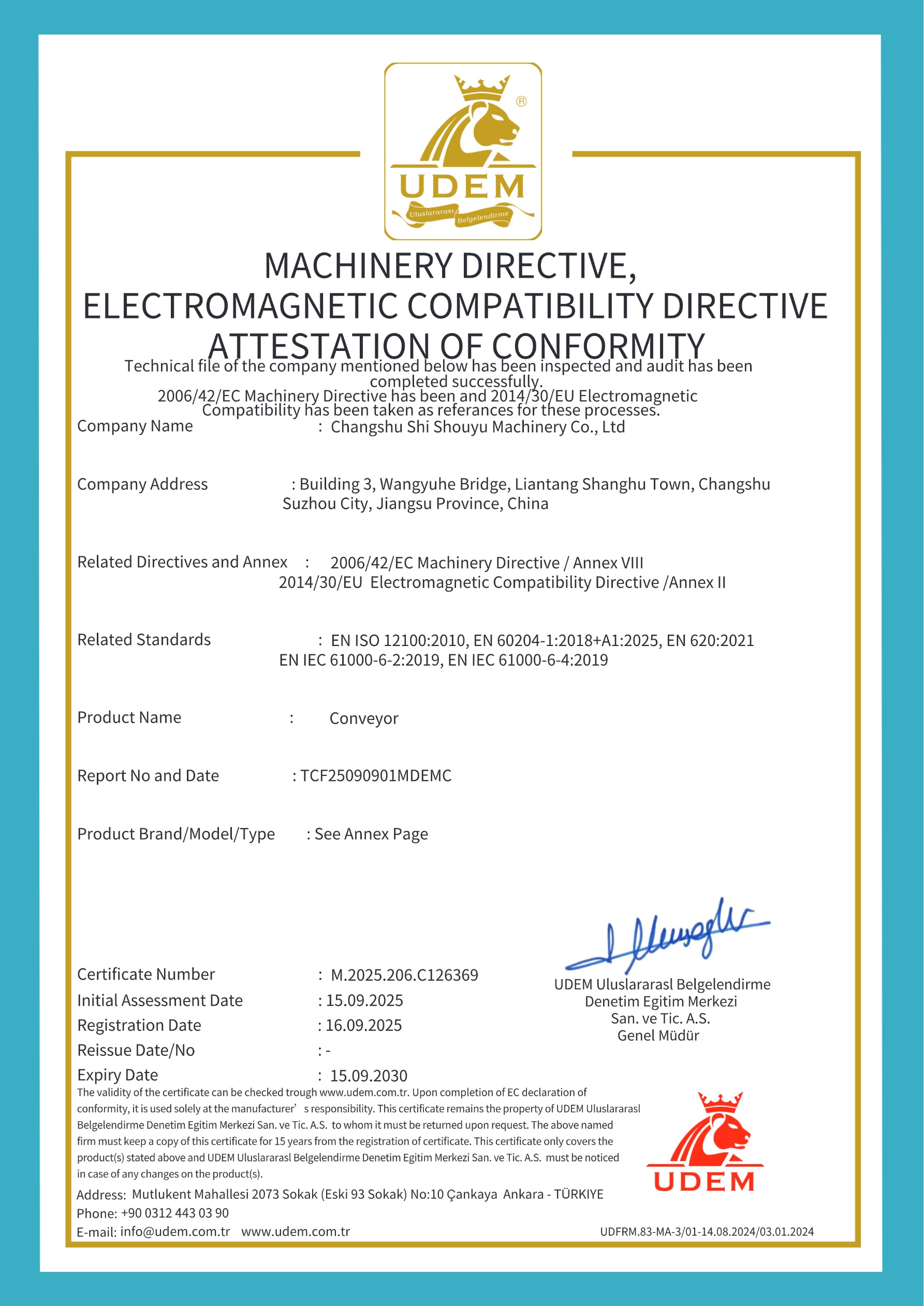
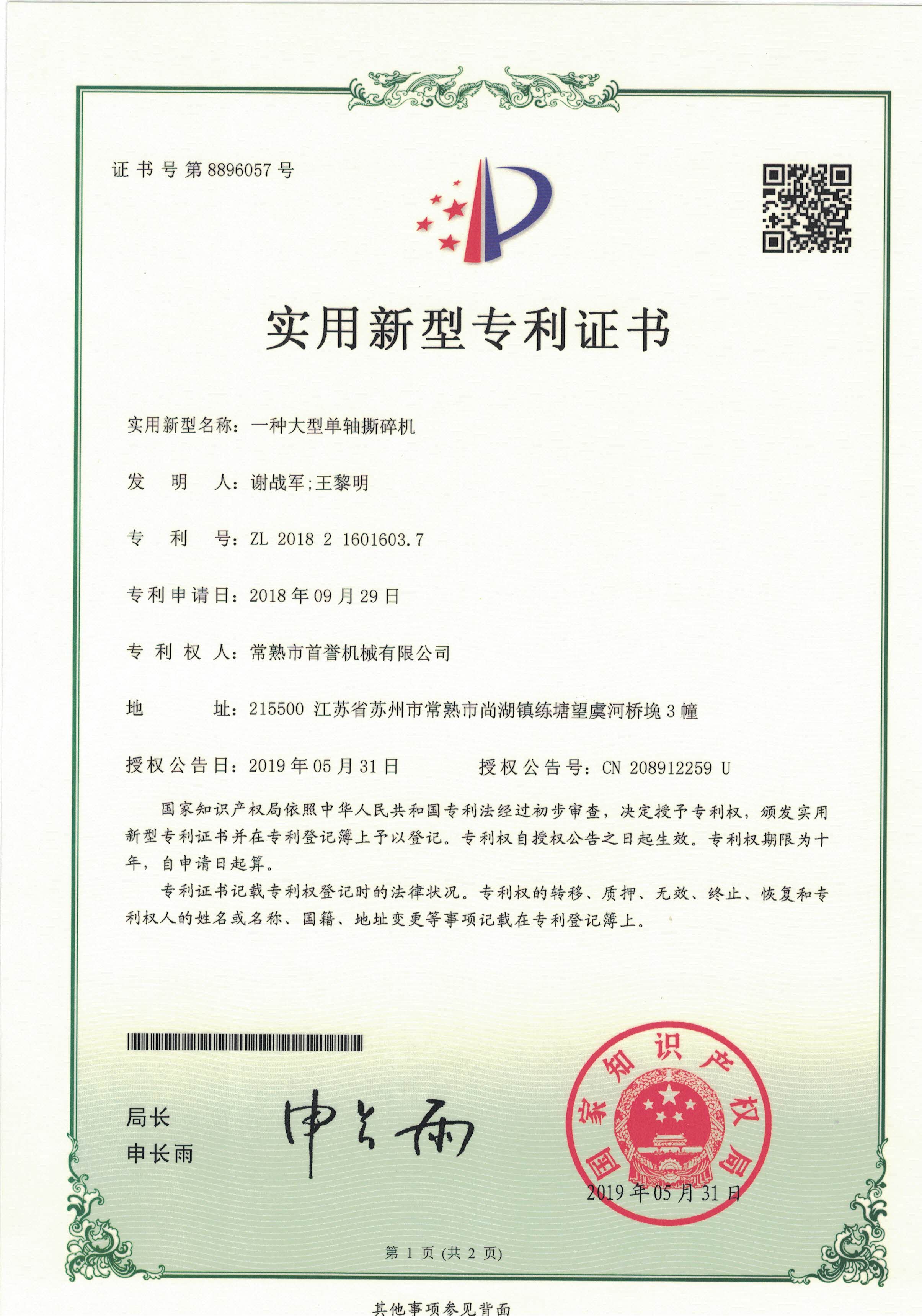
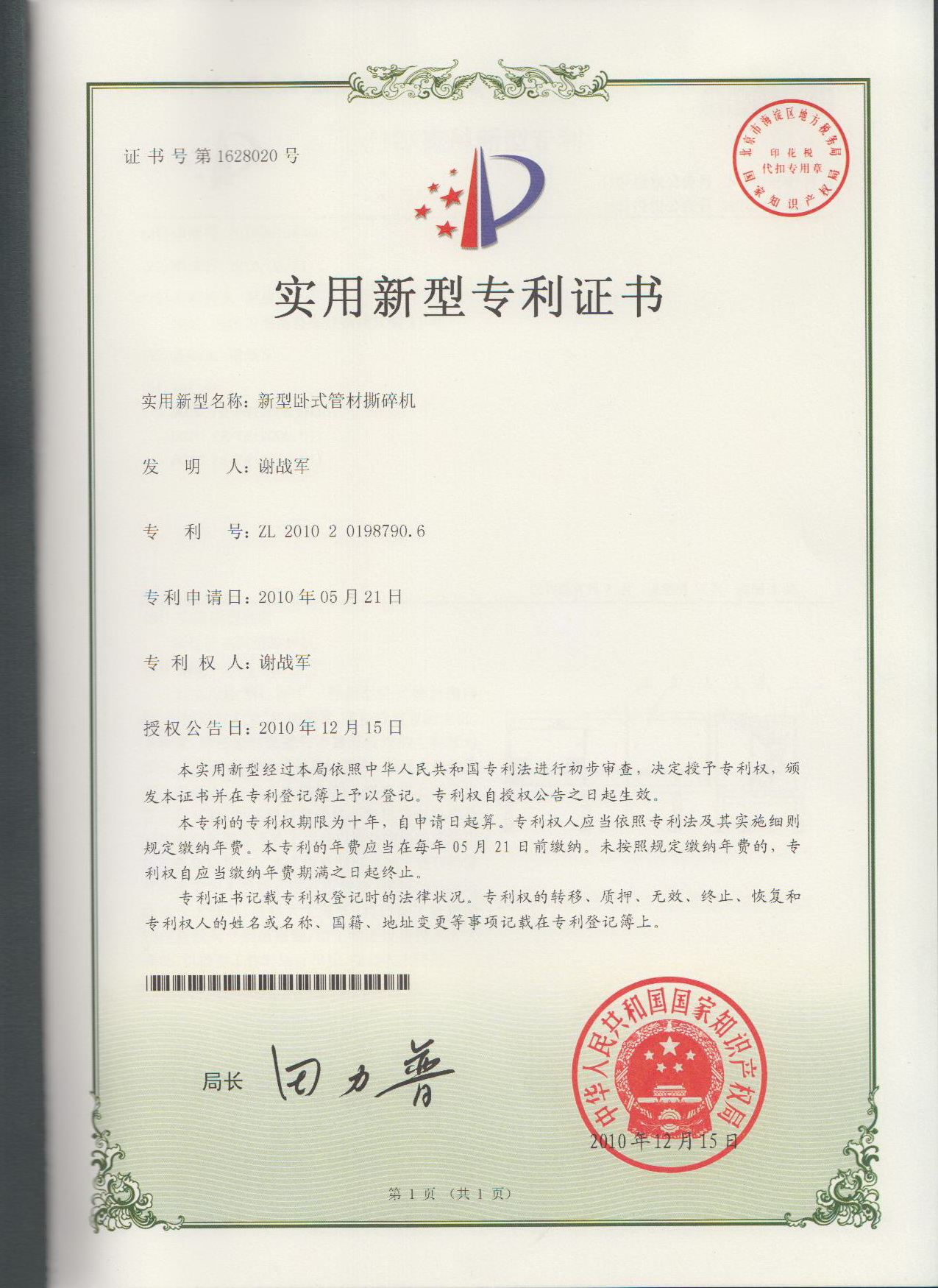
Every unit is assembled under an ISO 9001 quality system, and the shredders are built to CE standards. Compliance with ISO 9001 and CE standards underscores its reliability in rigorous industrial environments. Behind that sit more than 80 national patents covering the company's core shredding technologies. Inspection runs through fabrication and final assembly, so a machine configured for a specific feedstock is checked against the same routine as a standard build. For a buyer, the practical value is a documented machine: the certification a plant needs for its own compliance file comes with the unit, not after a separate request.
Technical Support & Model Matching
Choose equipment matched to your operating requirements with technical support from SOYU. We review your material characteristics, target throughput, site conditions and environmental requirements to recommend suitable models and configurations. Our support covers installation, commissioning and operator training to help your team prepare for operation. Overseas customers can access remote technical assistance for troubleshooting, while maintenance and original spare parts support continue after delivery. Original spare parts remain available at cost after the warranty period ends.
FAQ
Which materials can the SR1400 single shaft shredder process?
It handles plastics such as PET bottles, HDPE drums, film and injection molding scrap, along with corrugated boxes, office waste, pulp residues, pallets, lumber offcuts, sawdust lumps and furniture waste. Non-metallic cable sheaths and insulation are also in range, as are fiberglass, straw, husks, textile waste and non-hazardous composites. Feedstock should carry minimal metal content, because heavy metal and hazardous waste need a different shredder type.
Can the output particle size be changed?
Yes. The screen mesh sets the upper particle size, and interchangeable meshes cover a range of sizes. Choose the mesh from what happens next: granulation usually wants a tighter, more uniform feed, while biomass and RDF work tolerate a coarser cut. Screens are replaceable parts, so one machine can serve more than one output specification.
Do you provide installation and maintenance support?
Technical guidance and support cover installation, operation and routine maintenance, with help on troubleshooting once a machine is in service. Setup support covers the practical points: feed arrangement, discharge, screen choice and the ram response for your material. Maintenance support focuses on keeping the machine running, from blade checks to screen changes and the parts that wear first.
How does the machine protect operators during operation and maintenance?
The rotor stops automatically when the screen unit is opened, so a blockage can be cleared or a frame swapped without the shaft turning. The hydraulic system reduces ram speed when the load turns tough, which lowers the risk of an overload reaching the rotor. Together, the two protections mean routine maintenance happens with the machine stopped rather than beside a running one.
How do I know the cutting chamber suits the material I feed?
The chamber sets the largest piece that can enter, so pallet sections, drum bodies and bundled film pass without pre-cutting, while oversized hollow items may need a first pass or a different machine. Rotor diameter and blade configuration also shape how the machine takes a lumpy or stringy feed. Measuring your bulkiest item against the hopper opening is the quickest check before settling on this model.