Product Details
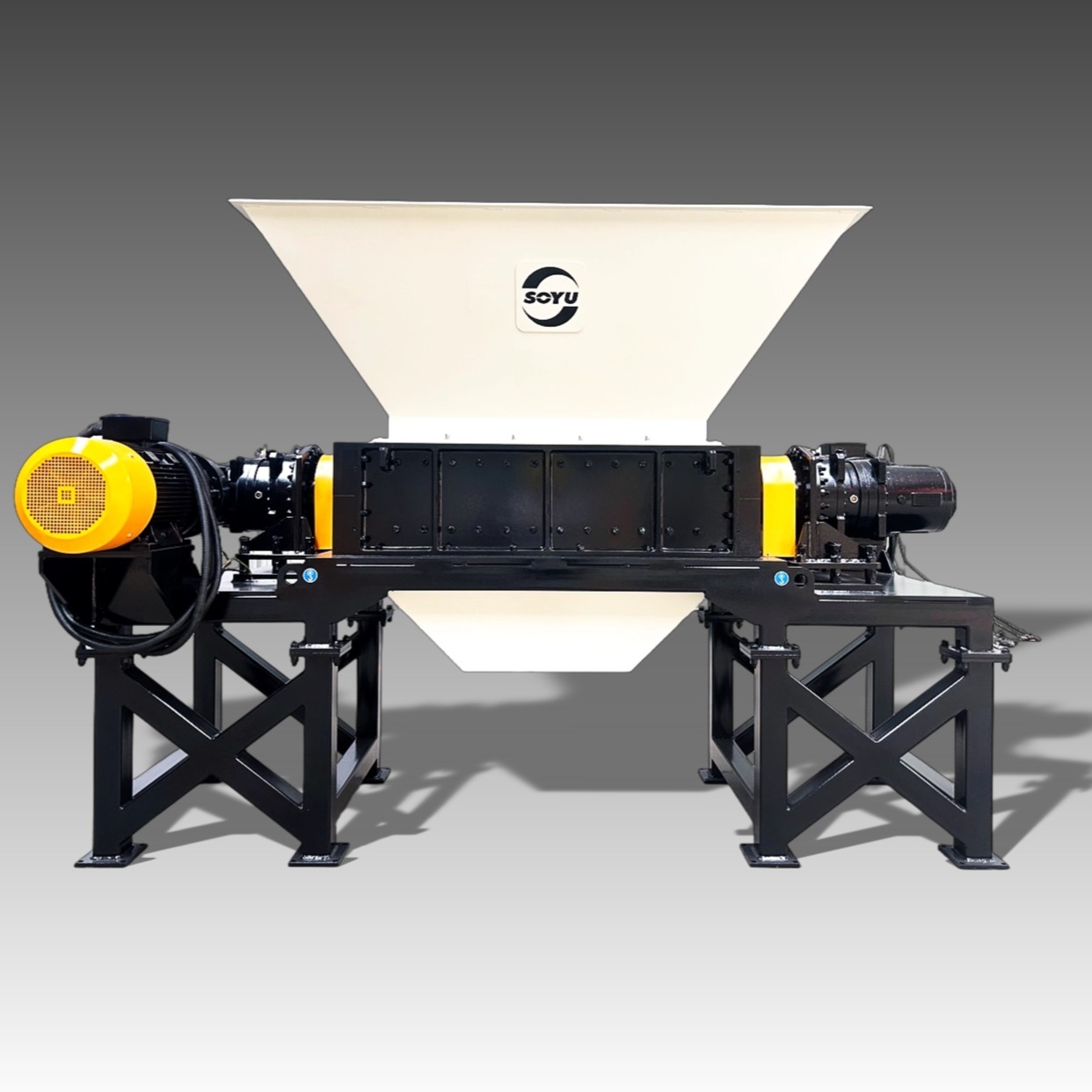
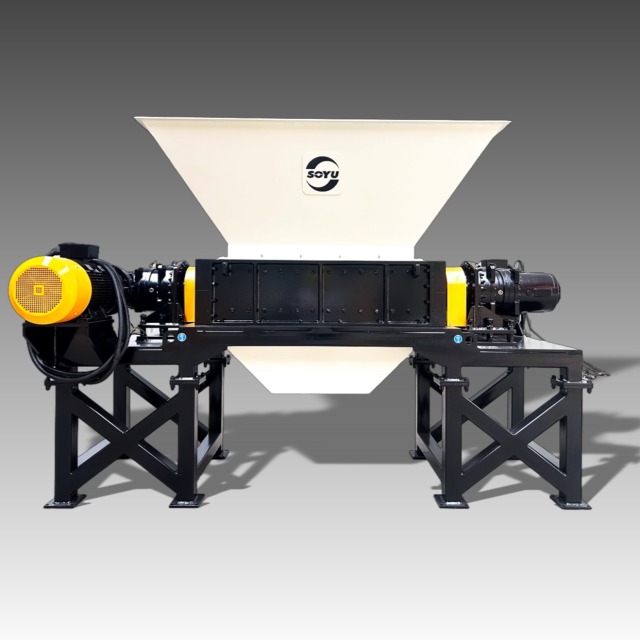
- Planetary reduction gives the industrial metal double shaft shredder its low-speed, high-torque cutting action.
- The gearbox reduces rotational speed while increasing torque at the cutting shafts, applying a strong, even tearing force to material that resists being pulled apart.
- V-arranged rotor blades distribute cutting engagement along the rotor rather than concentrating every cut at the same point.
- CrMoV alloy steel cutters and DC53/D2 high-alloy wear-resistant cutters are available within the SYU range; the cutter grade and configuration depend on the application, rather than all grades being fitted together.
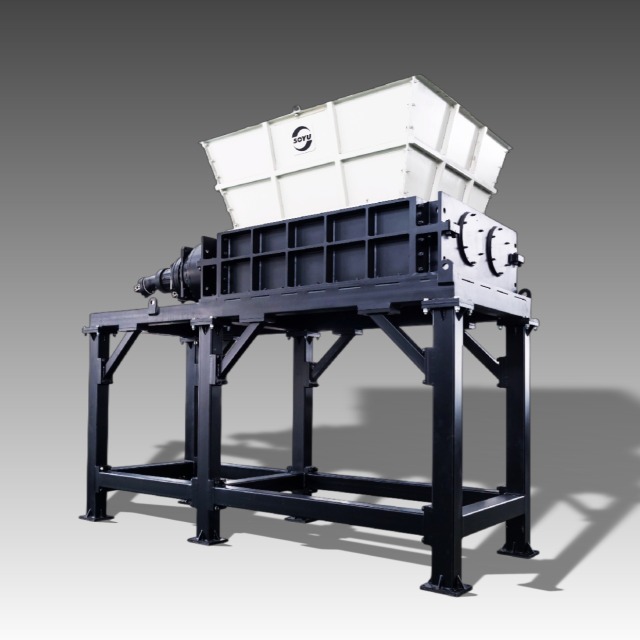
- HARDOX™ wear-resistant steel side walls protect the cutting chamber against abrasion, while the thickened frame supports the reaction loads generated during difficult cuts.
- For a heavy duty plastic shredder machine handling tough molded scrap, wear resistance and structural rigidity address different stresses and both deserve attention.
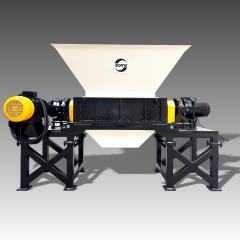
- Electric motor and hydraulic drive arrangements support different operating requirements.
- DIN 5480 splined connections between the reducer and rotor provide a defined torque-transmission interface; the drive arrangement must match the proposed machine configuration and duty.
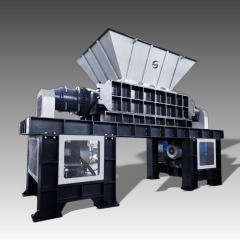
- Split bearing seats make bearing disassembly and assembly more accessible, and the hydraulic flap door provides access for cutter work and removal of trapped foreign objects.
- Maintenance still requires isolation of electrical and hydraulic energy before the chamber or drive components are accessed.
- Regrindable moving blades support restoration of multiple cutting faces, and suitable tools can be refurbished after wear.
- Sectional replacement of screen meshes, where fitted, allows worn sections to be addressed individually; the service method should follow the actual cutter and screen assembly supplied.
SYU Technical Data
| Property | SYU1940 | SYU1960 | SYU1980 | SYU2360 | SYU2380 | SYU23100 | SYU2680 | SYU26100 | SYU26120 | SYU3380 | SYU33100 | SYU33120 | SYU41100 | SYU41140 | SYU41160 | SYU50130 | SYU50180, 2 × 55 kW | SYU50180, 2 × 75 kW | SYU61210 | SYU80210 | SYU80250 | SYU80300 |
|---|
| Motor power | 7.7 kW | 2 × 7.5 kW | 2 × 11 kW | 18.5 kW | 22 kW | 22 kW | 18.5 kW | 22 kW | 22 kW | 2 × 22 kW | 2 × 30 kW | 2 × 30 kW | 2 × 30 kW | 2 × 37 kW | 2 × 45 kW | 2 × 55 kW | 2 × 55 kW | 2 × 75 kW | 2 × 90 kW | 2 × 225 kW | 2 × 225 kW | 2 × 225 kW |
| Additional blade dimension | 18.5 mm | 18.5 mm | 18.5 mm | 25 mm | 25 mm | 25 mm | 40 mm | 40 mm | 40 mm | 40 mm | 50 mm | 50 mm | 50 mm | 50 mm | 50 mm | 50 mm | 50 mm | 75 mm | 100 mm | 150 mm | 150 mm / Ø980 mm | 150 mm |
| Main blade rotation diameter | Ø245 mm | Ø245 mm | Ø245 mm | Ø290 mm | Ø290 mm | Ø290 mm | Ø320 mm | Ø320 mm | Ø320 mm | Ø430 mm | Ø430 mm | Ø430 mm | Ø534 mm | Ø534 mm | Ø534 mm | Ø650 mm | Ø650 mm | Ø800 mm | Ø800 mm | Ø980 mm | Ø980 mm | Ø980 mm |
| Main blade quantity | 20 | 30 | 42 | 24 | 32 | 40 | 20 | 25 | 30 | 16 | 20 | 24 | 20 | 28 | 32 | 32 | 36 | 24 | 21 | 14 | 17 | 20 |
| External dimensions | 1860 × 900 × 1800 mm | 1950 × 900 × 1800 mm | 2180 × 900 × 1800 mm | 2300 × 1000 × 1950 mm | 2500 × 1000 × 1950 mm | 2700 × 1000 × 1950 mm | 2410 × 1100 × 2050 mm | 2810 × 1100 × 2050 mm | 3010 × 1100 × 2050 mm | 3000 × 1250 × 2150 mm | 3000 × 1250 × 2150 mm | 3000 × 1250 × 2150 mm | 3660 × 1700 × 2650 mm | 3660 × 1700 × 2650 mm | 3660 × 1700 × 2650 mm | 4200 × 2100 × 3000 mm | 4200 × 2100 × 3000 mm | 5400 × 2400 × 3700 mm | 5400 × 2400 × 3700 mm | 7100 × 2900 × 4200 mm | 7100 × 2900 × 4200 mm | 7100 × 2900 × 4200 mm |
| Equipment weight | 1400 kg | 1600 kg | 1800 kg | 3000 kg | 3500 kg | 4000 kg | 4200 kg | 4600 kg | 5000 kg | 4700 kg | 5200 kg | 5700 kg | 9000 kg | 10000 kg | 11000 kg | 13000 kg | 14000 kg | 20000 kg | 23000 kg | 26000 kg | 29000 kg | 32000 kg |
Material Applications
- Metal and metal chips require attention to section thickness, alloy, hardness and the form of the incoming scrap.
- An industrial metal double shaft shredder reduces material size for subsequent handling or recovery; cutting does not itself establish recovered-metal purity or produce the impact densification associated with a hammer mill.
- Electronic scrap often combines metal, plastic and other components in the same item.
- Shredding opens and reduces assemblies for subsequent separation, while batteries, stored energy and hazardous components require an appropriate preparation procedure before feeding.
- Paper and cardboard can enter as loose sheets, folded cartons or compacted material, each with different feeding behavior.
- Moisture, coatings and unwanted inclusions affect the process, so a representative feed description should distinguish clean production scrap from mixed recovered material.
- Plastic and film call for different feeding arrangements even when the polymer is the same.
- A heavy duty plastic shredder machine working with rigid sections faces a different cutting load from one handling loose film, where bulk density and the tendency to gather around rotating parts become more significant.
- Refuse-derived fuel preparation and municipal solid waste processing involve variable mixtures rather than a uniform raw material.
- Shredding can form part of that treatment route, with sorting, removal of unsuitable objects and downstream fuel or recovery requirements addressed in the overall process design.
- FRP and fiberglass combine reinforcing fibers with a resin matrix, creating a different wear and dust-management task from unfilled plastics.
- The reinforcement type, laminate construction and incoming shape help determine the cutting arrangement and the local extraction measures needed at the installation.
- Wood and wood pallets vary with timber section, moisture and attached hardware.
- Pallet fasteners and other embedded objects belong in the feed description, while the intended use of the shredded wood determines the next processing stage.
Bulky production scrap and tough recycling feedstock need controlled tearing before further recovery or treatment. SOYU supplies this two-shaft machine for industrial recycling and solid waste operations, with configurations matched to the material being processed. Manufactured by CHANGSHU SHI SHOUYU MACHINERY CO., LTD., it belongs to our 3E technology platform. Our expertise as a scrap metal double shaft shredder manufacturer brings cutting, structural design and application engineering together around the practical demands of your material stream.
Product Videos & Cases
- Metal drum demonstrations help you examine how a hollow metal item enters the cutters, collapses and leaves the chamber.
- For an industrial metal double shaft shredder, drum wall construction and the condition of the container are more informative than the material name alone; containers must be prepared under the applicable site procedure before processing.
- Tire demonstrations let you examine how an elastic, reinforced article engages with the cutters.
- Pay attention to the tire form being processed and the discharged pieces rather than assuming the same result for every tire construction.
- HDPE bottle demonstrations provide a view of lightweight hollow feed, while the separate plastic demonstration covers another plastic-processing example.
- When assessing a heavy duty plastic shredder machine, compare the demonstrated feed form with your own material and examine whether the discharged pieces suit the next operation.
- Scrap electric motorcycle demonstrations concern a complex assembly rather than a single homogeneous material.
- The preparation and dismantling steps used for a demonstration are essential context; an intact vehicle example must never be taken as permission to feed batteries or other hazardous components.
- The board demonstration, labeled PBC board, adds a sheet-like electronic-material example to the video range.
- Our engineers can help relate the demonstrated board construction to your own feed as your SYU41Series two shaft shredder supplier, without treating all boards as identical.
- Application cases are most useful when the incoming material, operating conditions and recovered output resemble your intended process.
- A material trial can record actual processing capacity, energy consumption and particle-size results, with video or live viewing available; compare those results under matching conditions rather than deriving throughput from motor power or assuming a fixed energy saving.
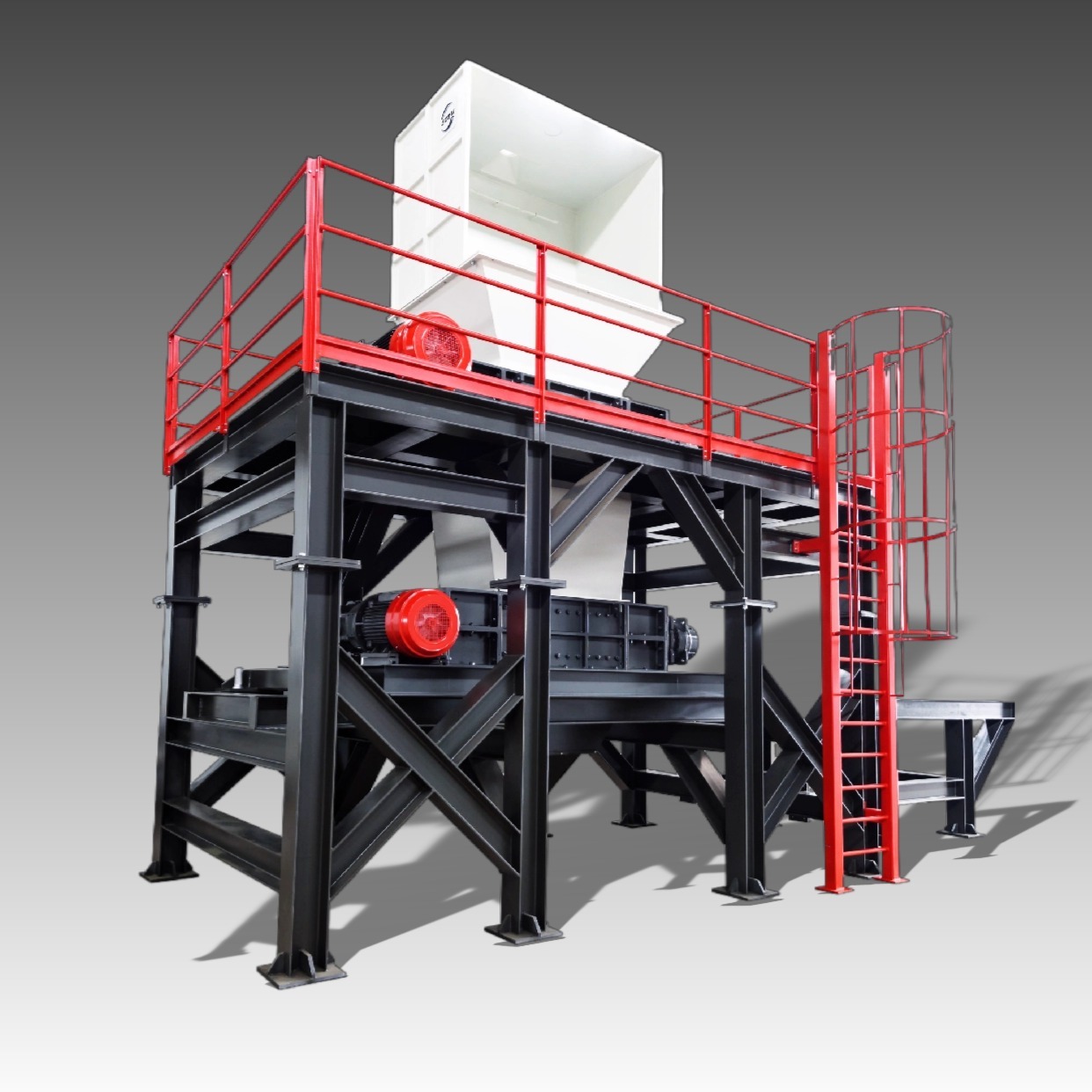
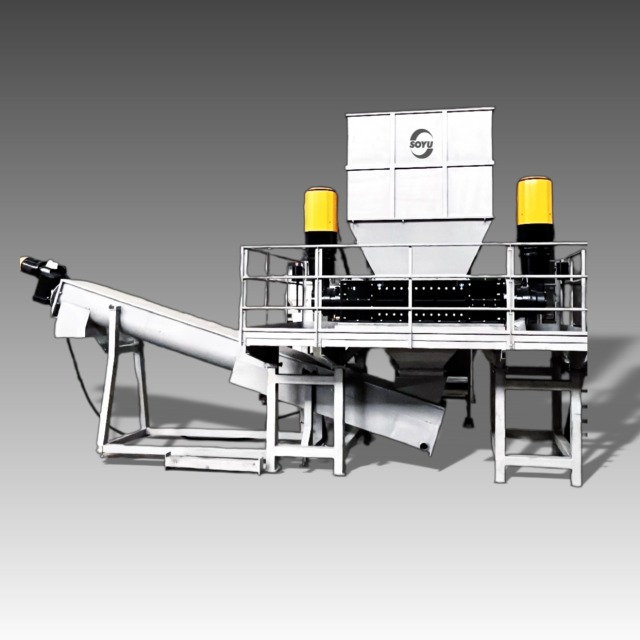
Feed & Access Assemblies
| Specification | Detail |
|---|
| Assembly | Example Arrangement |
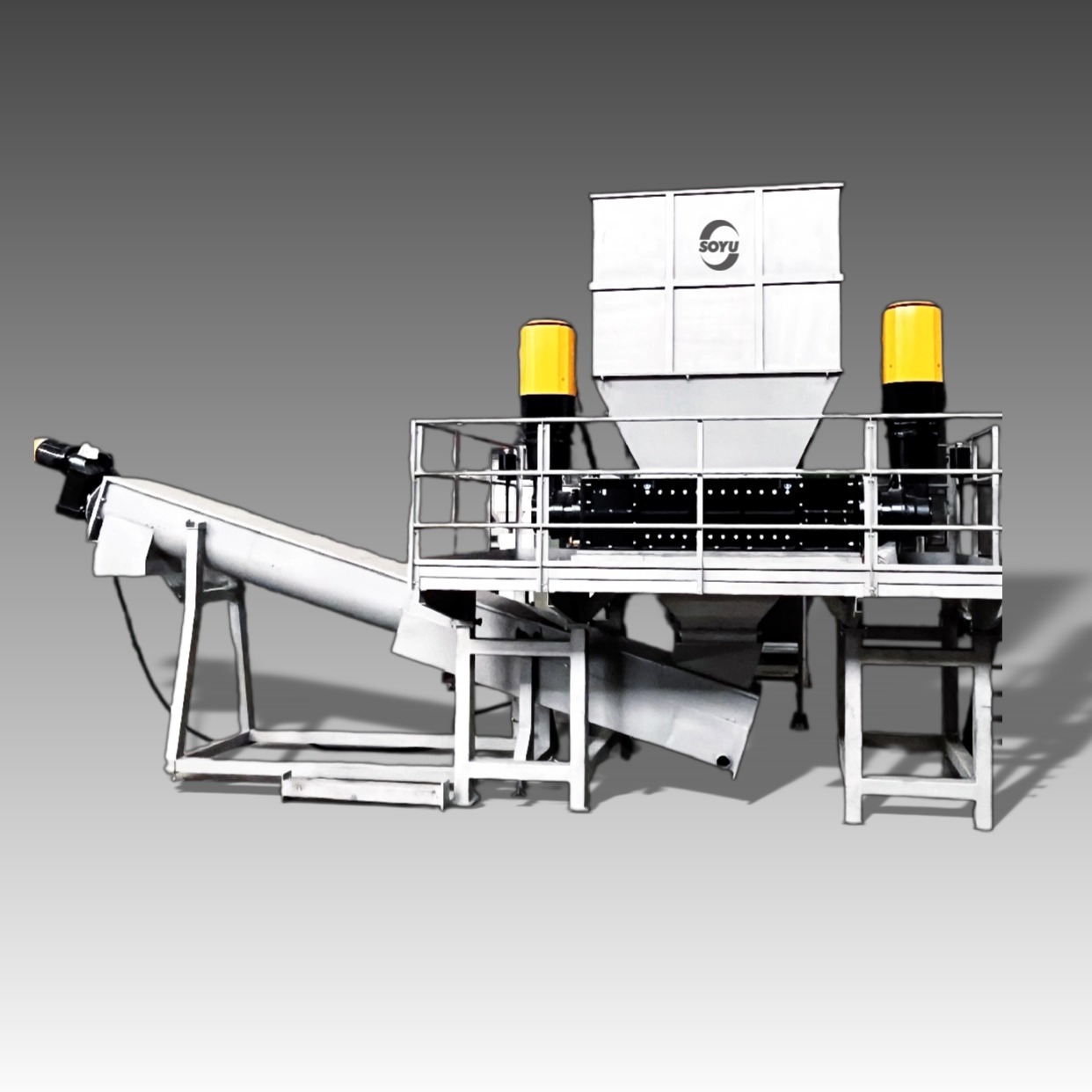
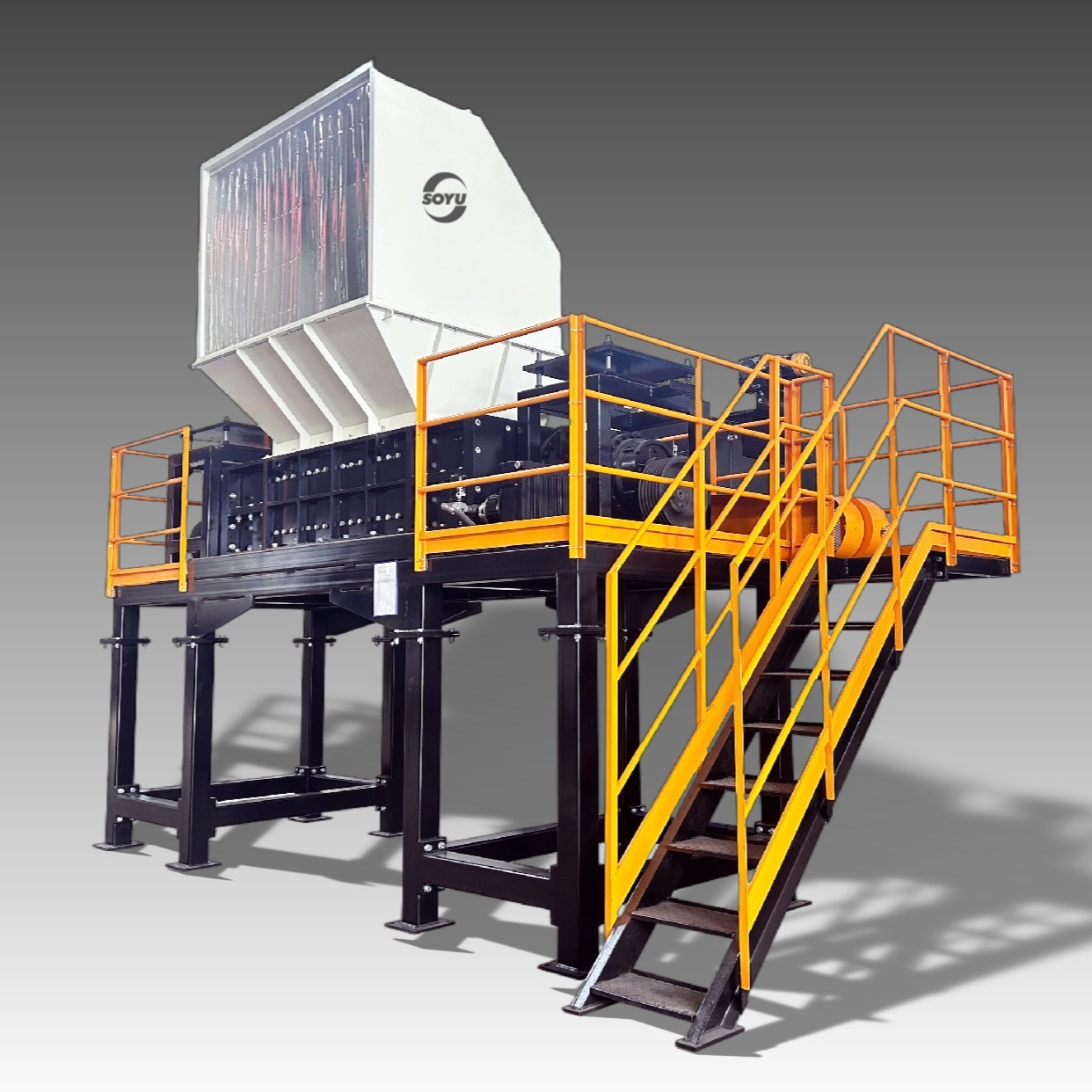
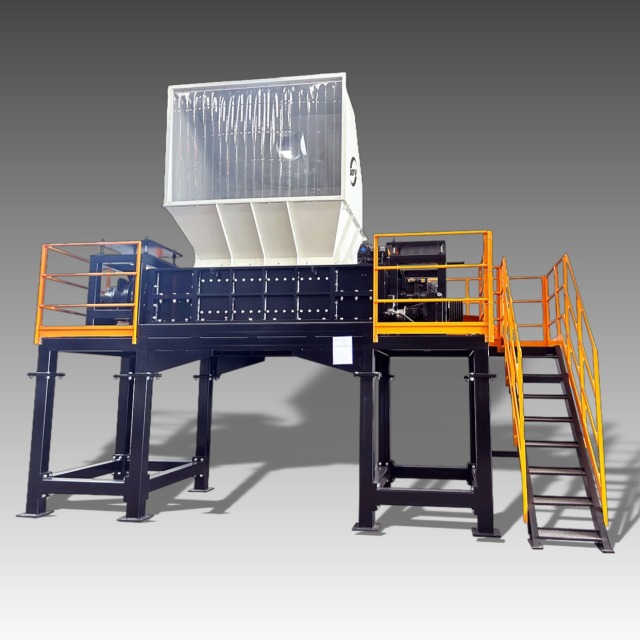
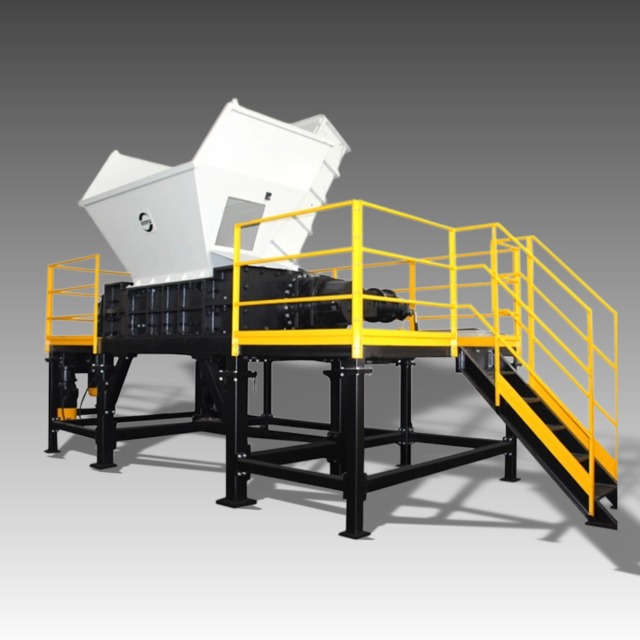
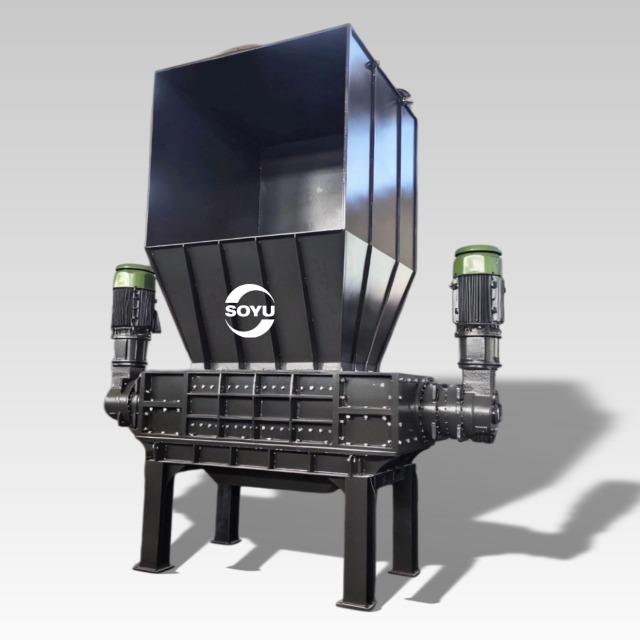
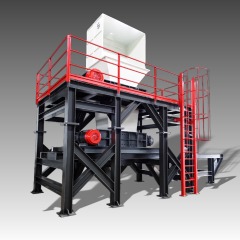
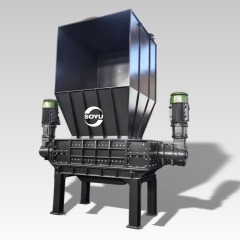
| Feed hopper | Large, open, flared upper hopper |
| Infeed handling | Inclined conveyor assembly |
| Inlet barrier | Transparent hanging-strip curtain |
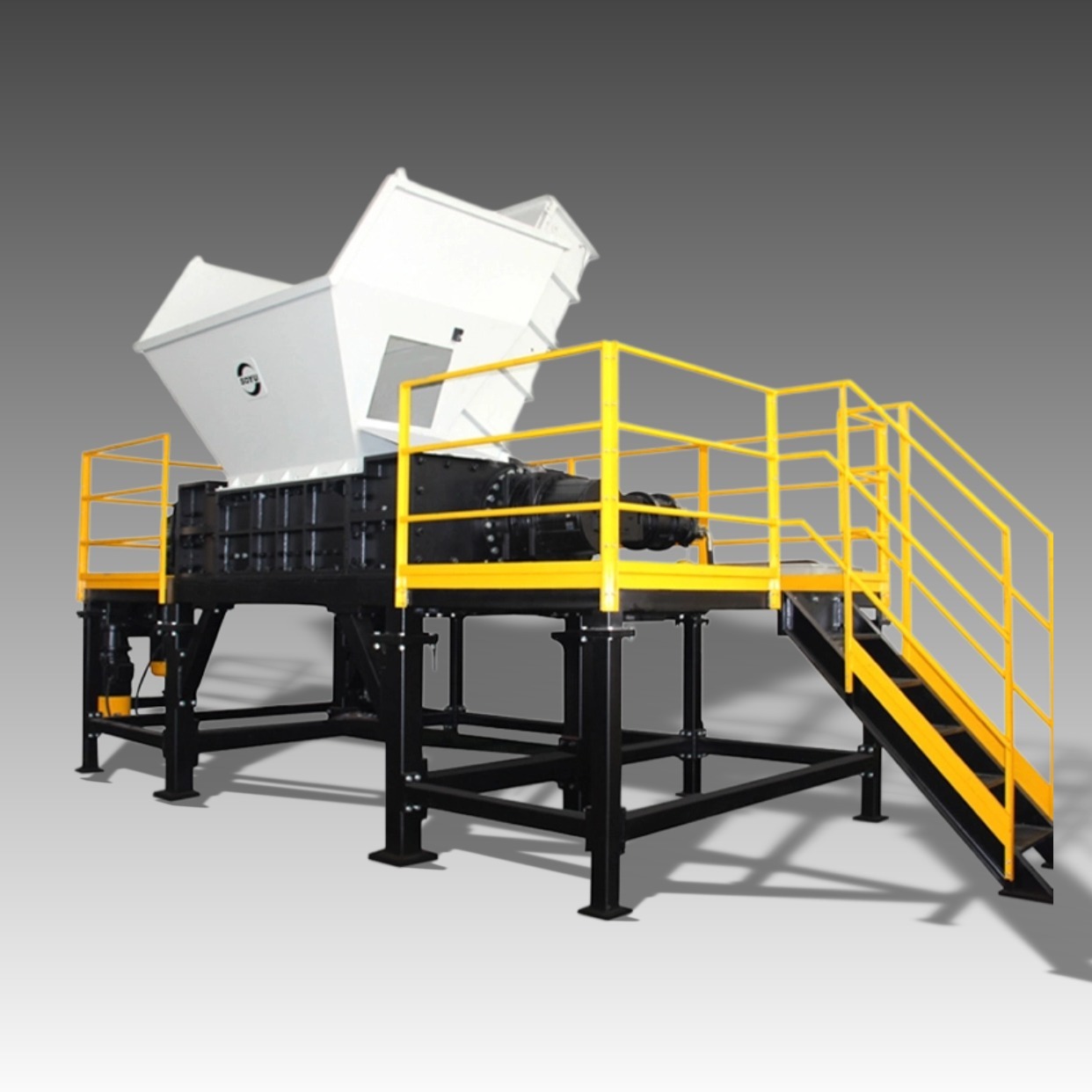
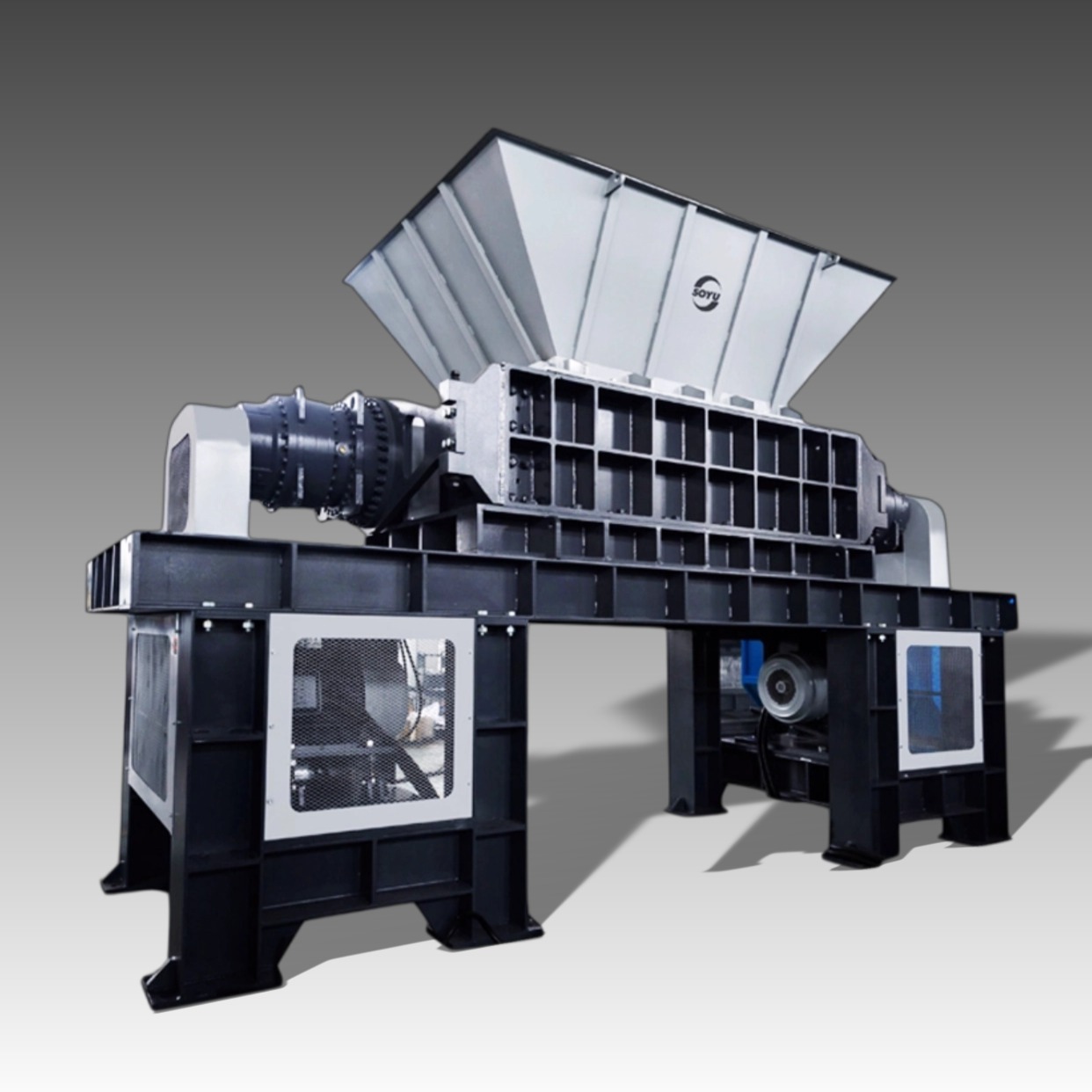
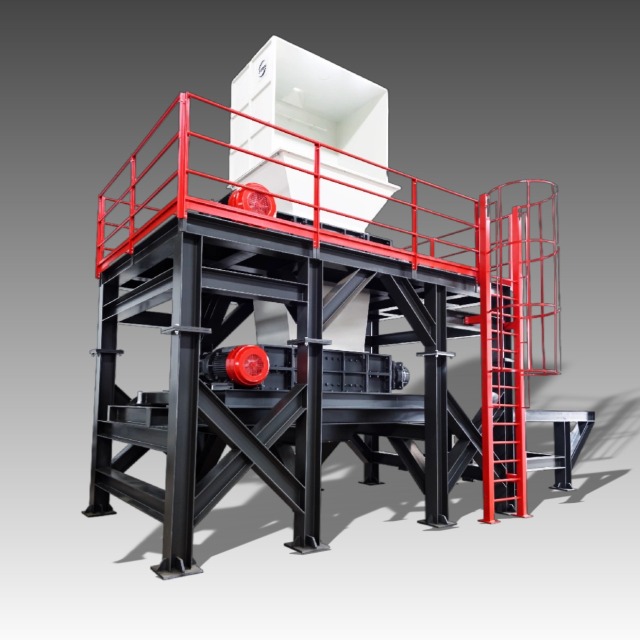
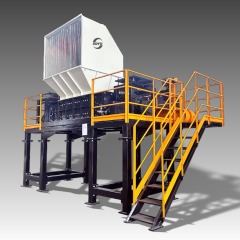
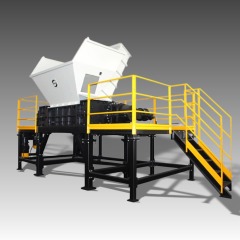
| Machine support | Elevated, braced frame with mounting foot plates |
| Drive location | Side-mounted drive assemblies |
| Personnel access | Staircase with safety railings; caged ladder in other assemblies |
| External guarding | Mesh guards and bolted access panels |
| Discharge | Chute beneath the processing housing |
Original Parts Ordering
- Original spare parts remain available at cost after the warranty period ends.
- Our support as a scrap metal double shaft shredder manufacturer continues beyond the original equipment purchase.
- The machine nameplate and serial number identify the installed build when requesting replacement components.
- Parts identification should follow that build rather than the series name alone.
- Existing component markings and clear photographs help distinguish the part being replaced.
- For modified equipment, include the details of the modification so the replacement matches the current assembly.
- The final assembly drawing should establish the meaning of the additional blade dimension, the required cutter grade and the complete installed arrangement before an equipment order is finalized.
- Feeding equipment, platforms and guards illustrated in example assemblies belong in the agreed supply scope rather than being assumed inclusions.
- Replacement quantities should reflect the intended repair and the condition of mating components.
- Keeping the relevant parts list with the maintenance records helps avoid ordering a mechanically similar component with a different fit.
Professional Certification
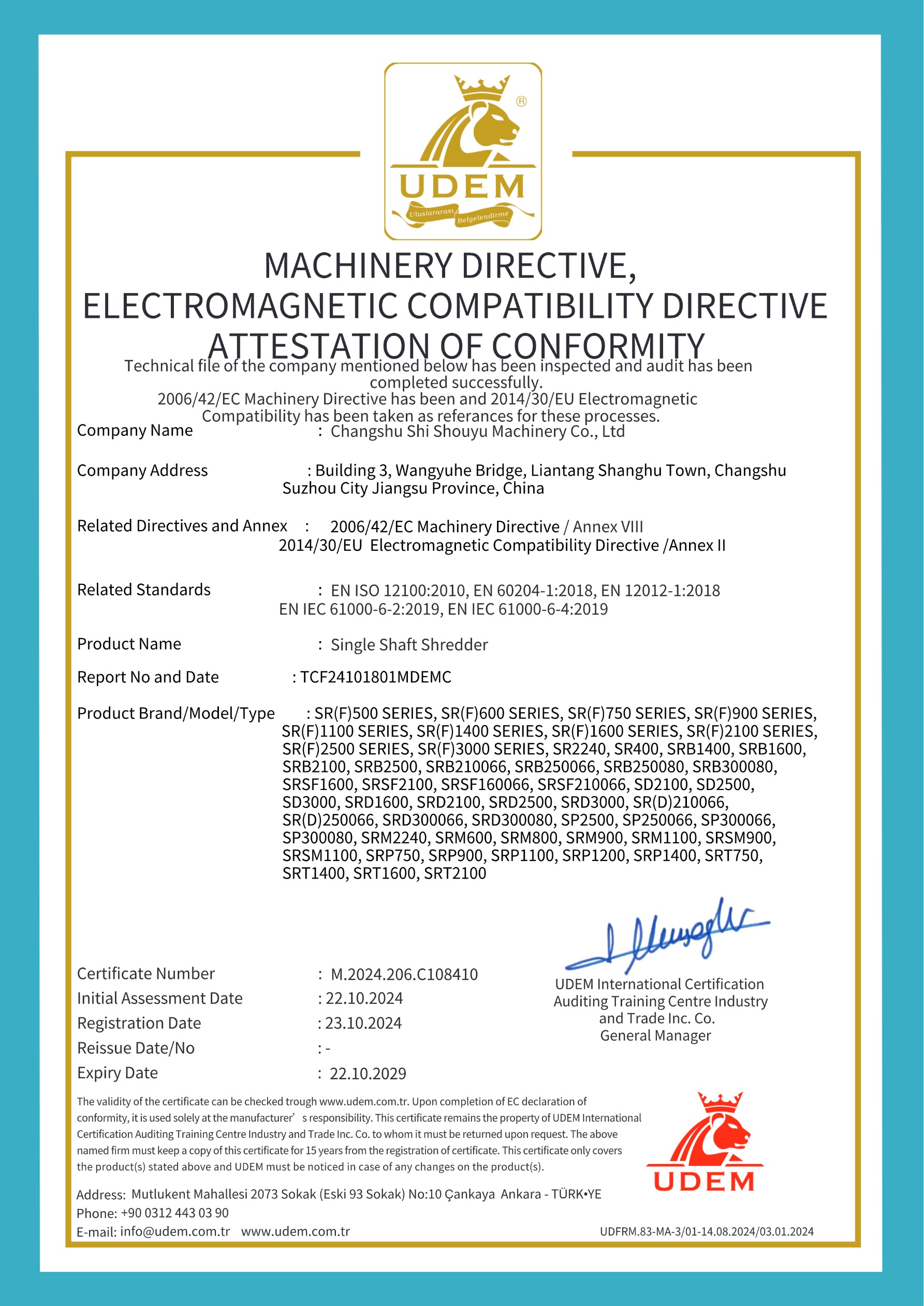
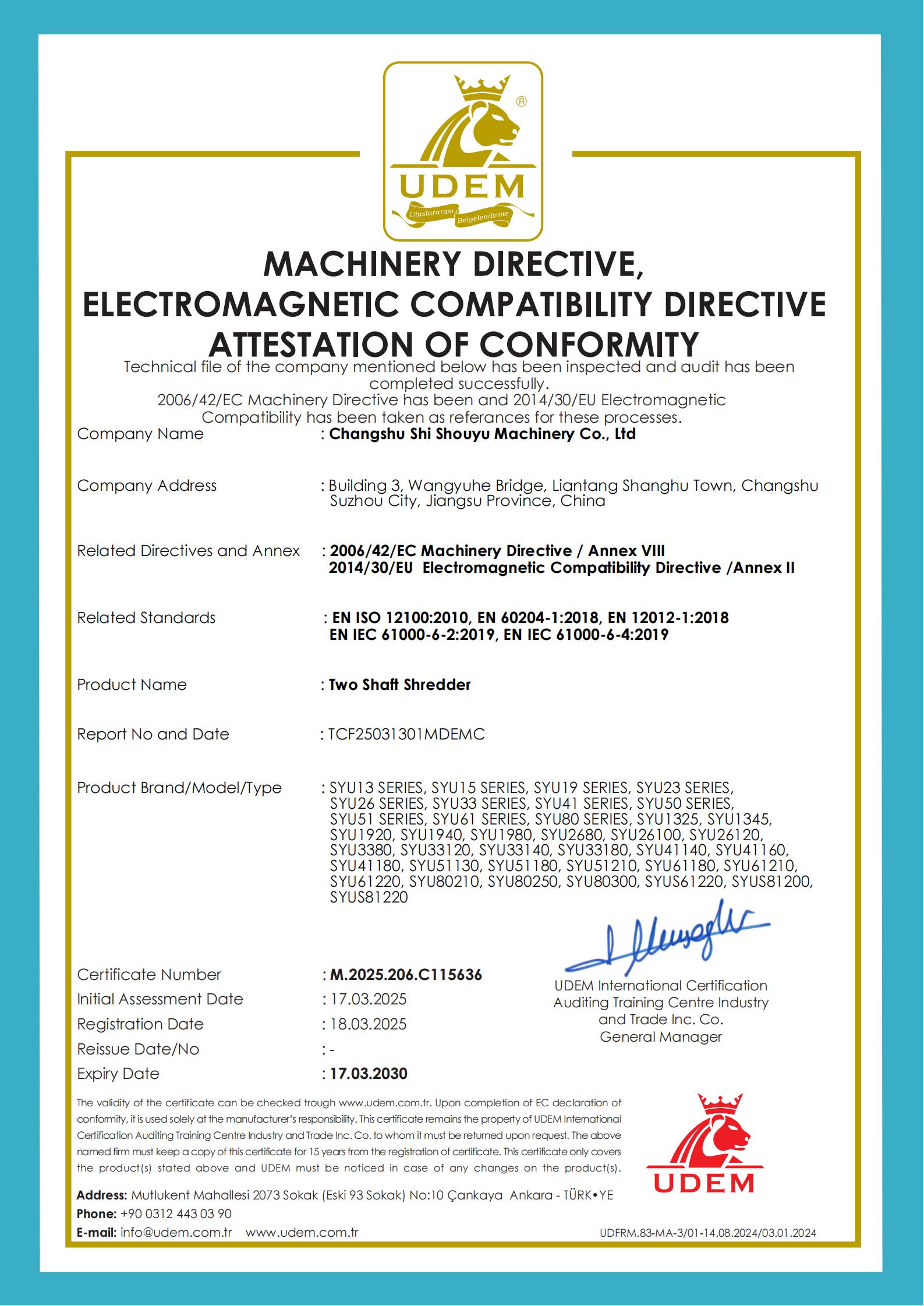
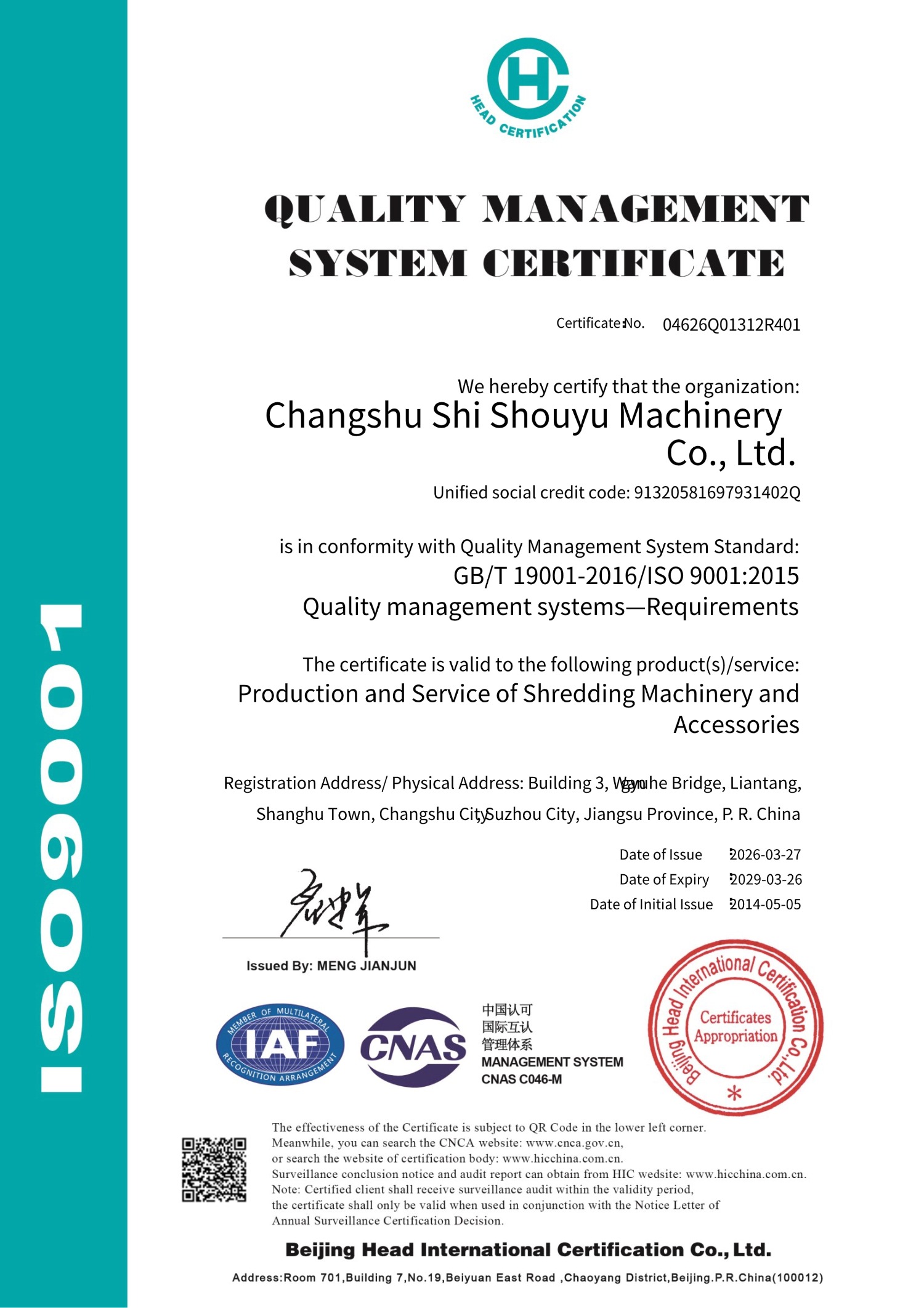
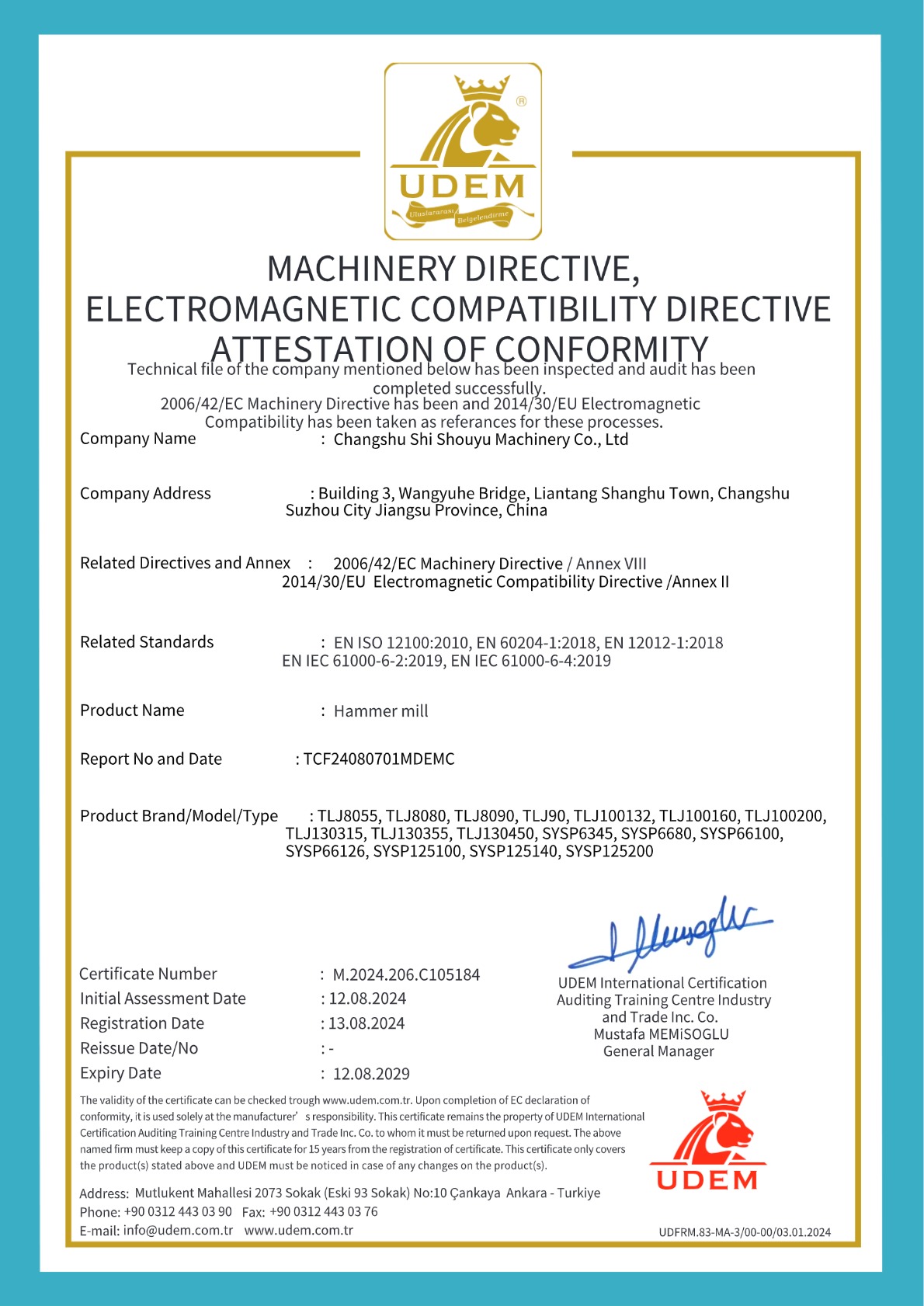
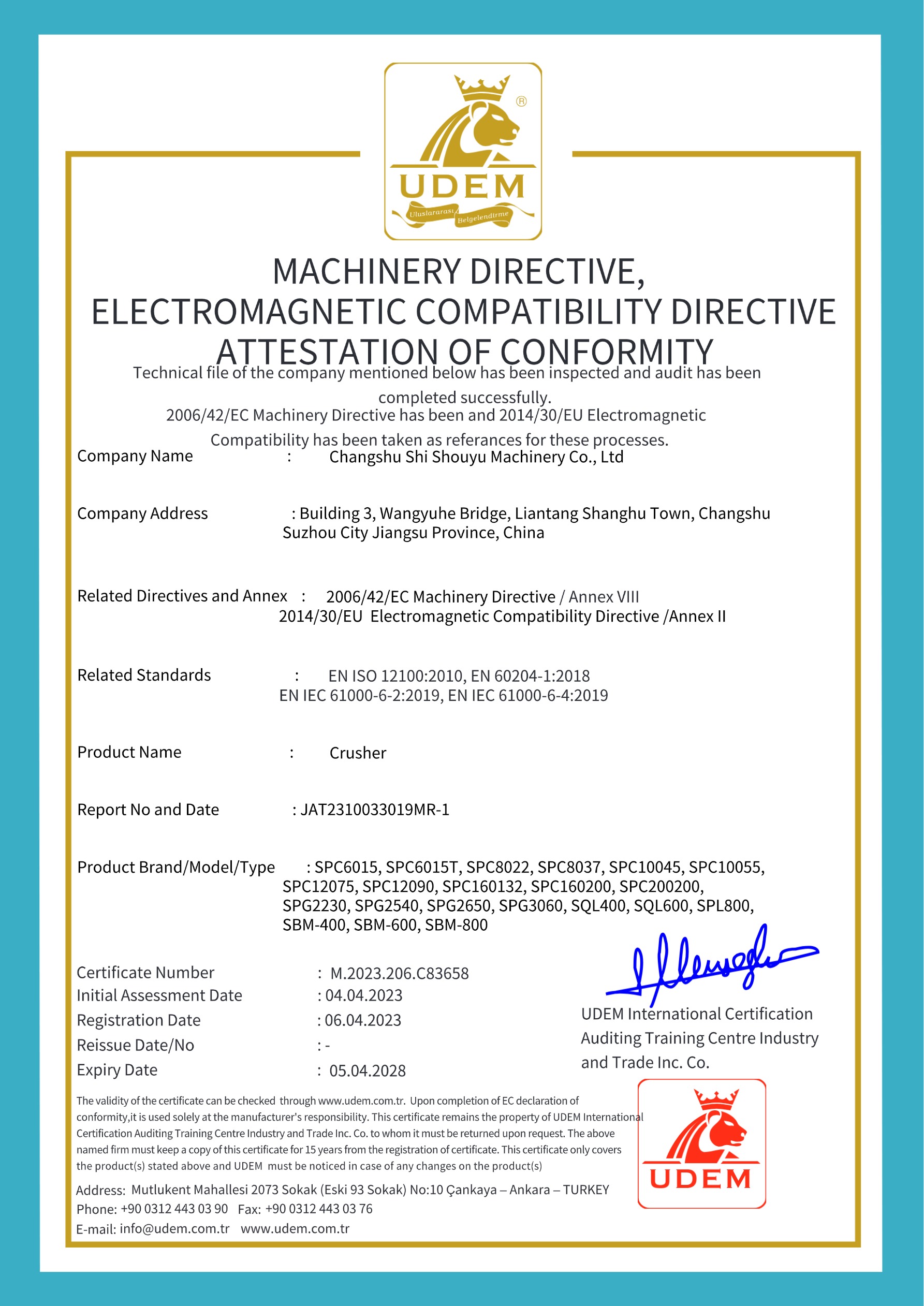
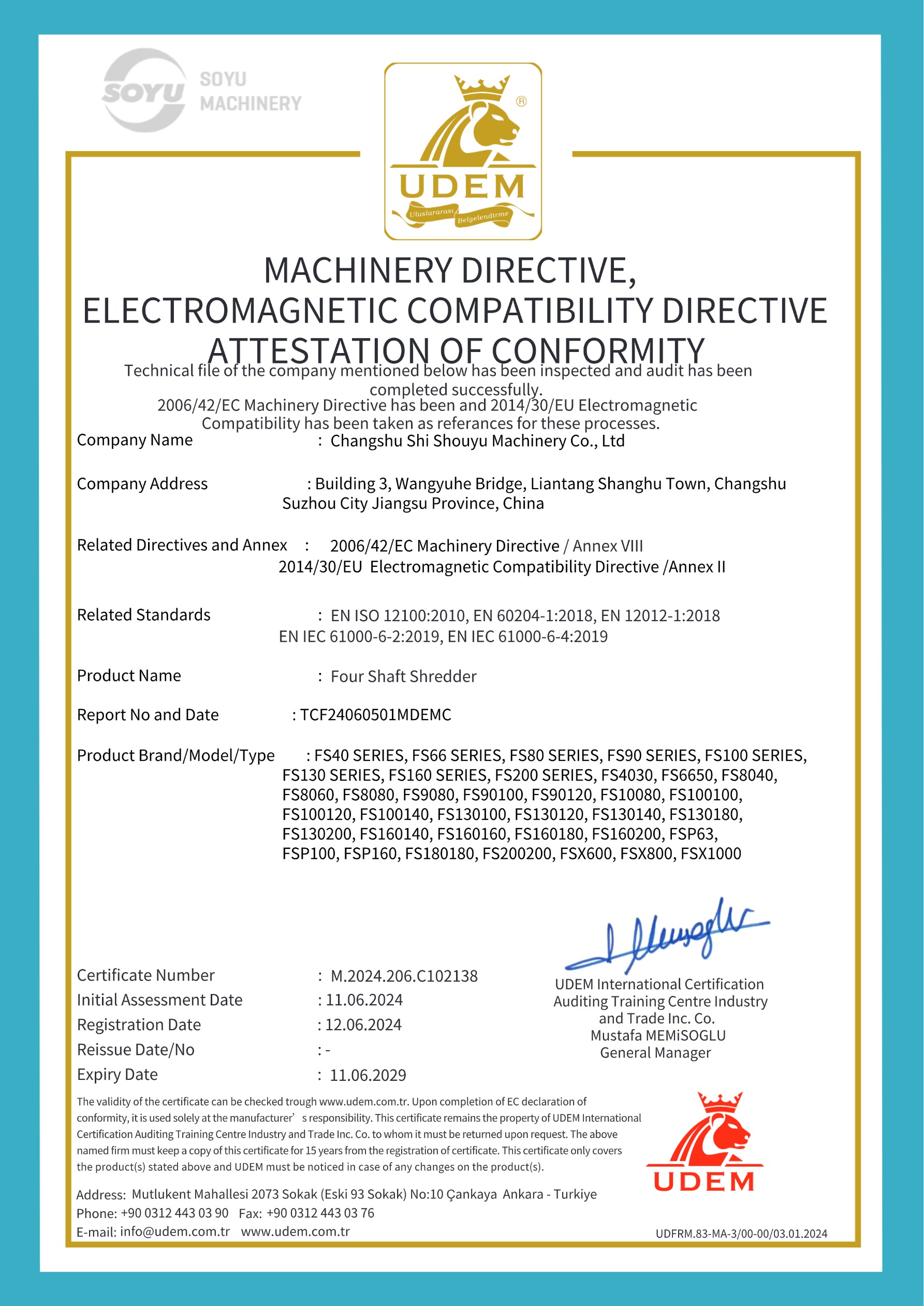
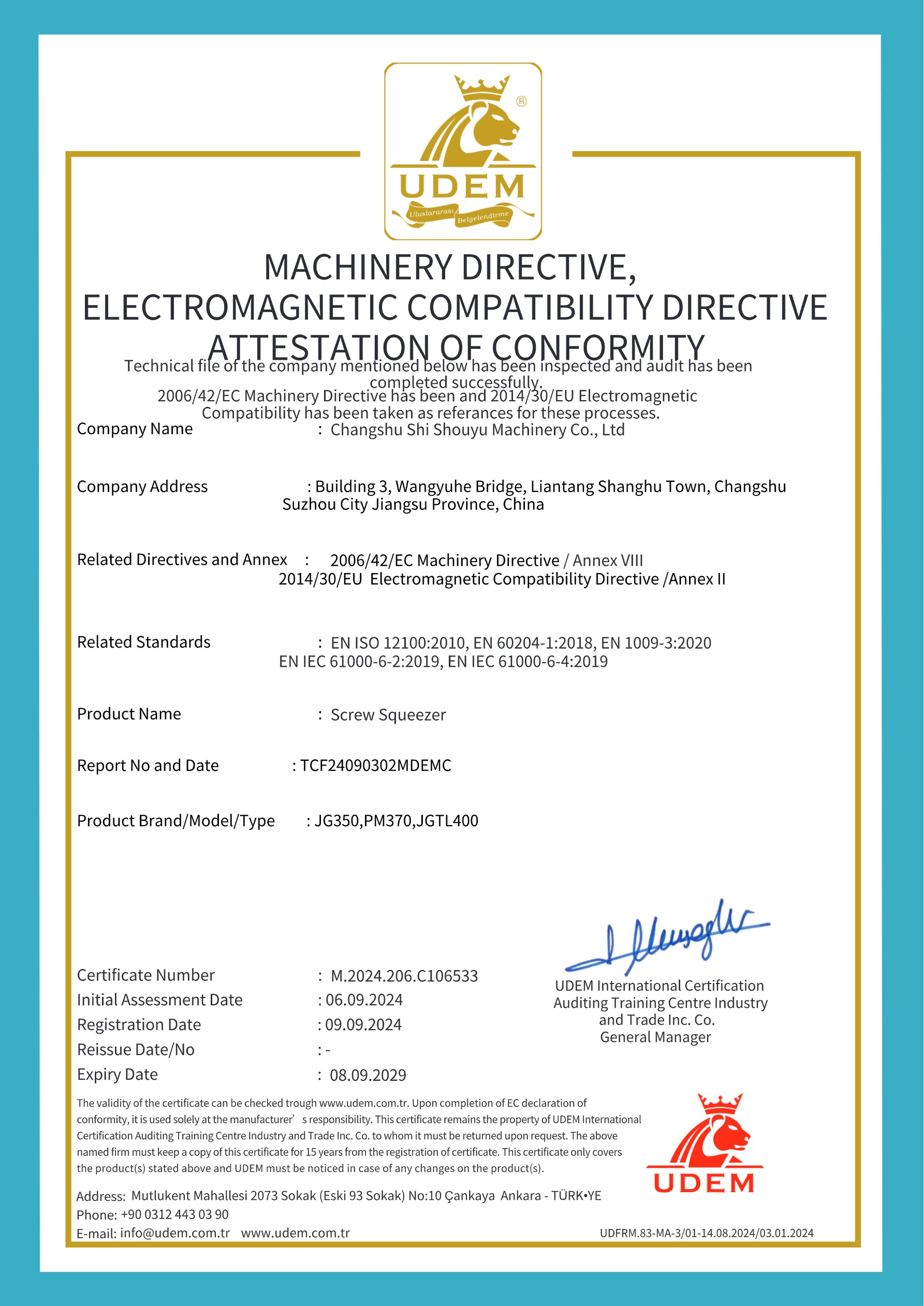
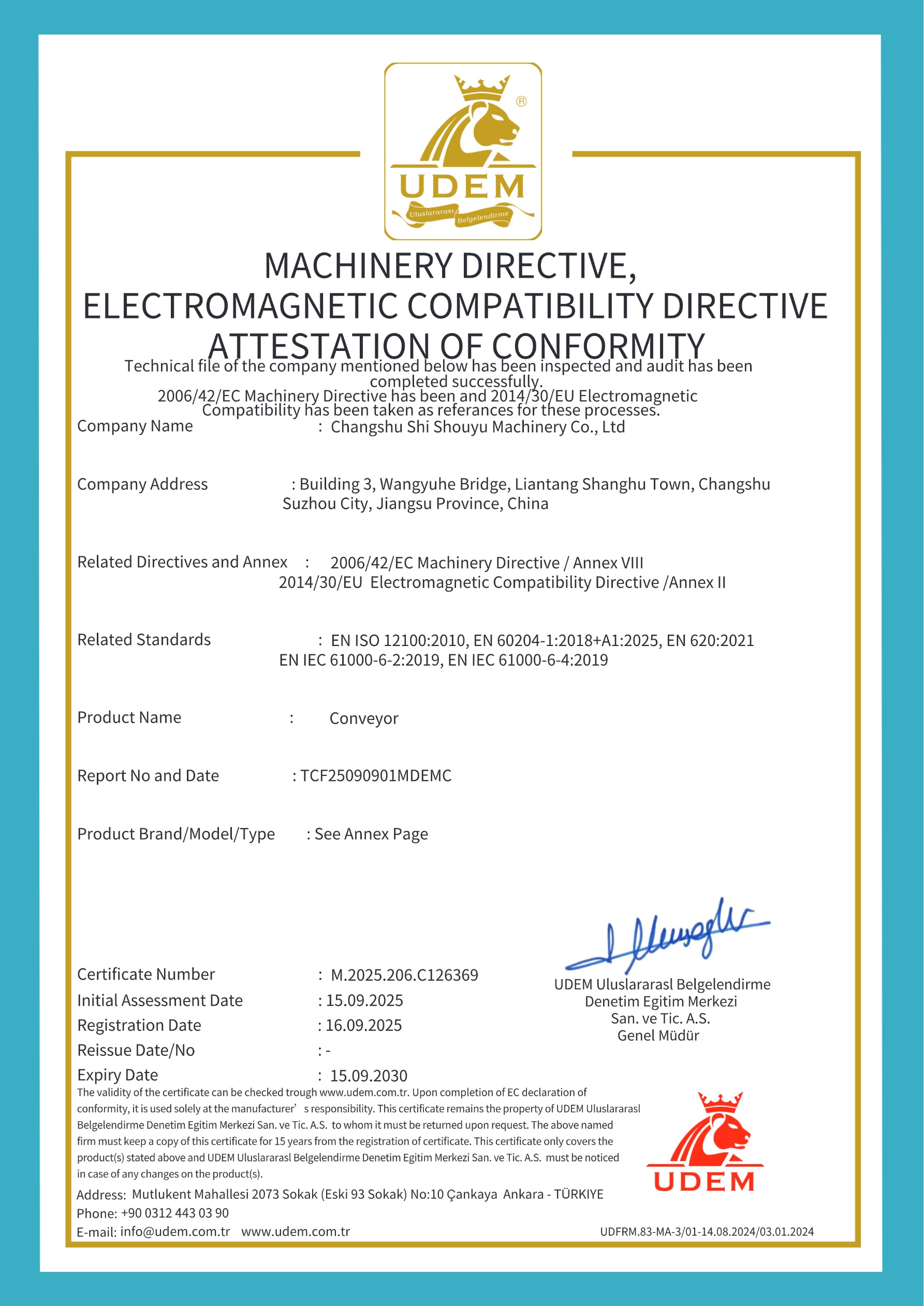
CE certification supports the machine's stated European conformity, while ISO 9001 certification concerns the quality management system used in manufacturing. These serve different purposes: machine conformity addresses the supplied equipment, and management-system certification addresses how production quality is controlled.
Our certification information includes the EU Machinery Directive 2006/42/EC and ISO 9001:2015. The applicable documents need to identify the supplied configuration and meet the requirements of its destination; a general certificate does not replace the documentation required for a particular installation.
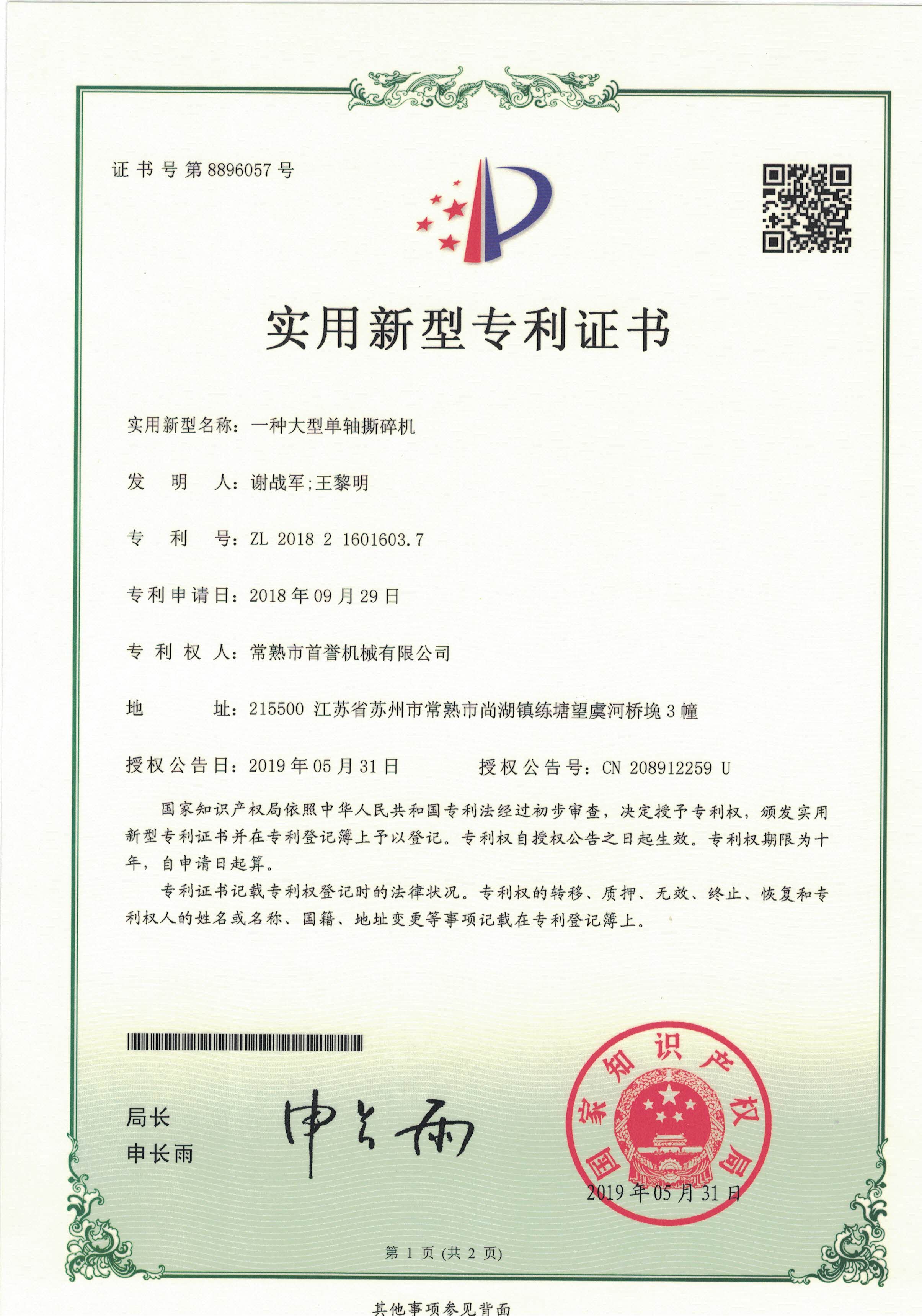
More than 80 national patents cover our core shredding technologies. Patents recognize technical inventions and remain separate from machinery conformity or operating-performance results.
Dust and noise requirements depend on the material, machine arrangement and surrounding installation. Local extraction, enclosure and operating conditions need to be considered against the site's applicable limits rather than treating the shredder alone as approval for the complete process.
Manufacturing quality control and technical conformity remain part of our responsibility as a SYU41Series two shaft shredder supplier. The final machine documentation should accompany the agreed mechanical and electrical configuration so the operating team can use the correct instructions.
Technical Support & Model Matching
Choose equipment matched to your operating requirements with technical support from SOYU. We review your material characteristics, target throughput, site conditions and environmental requirements to recommend suitable models and configurations. Our support covers installation, commissioning and operator training to help your team prepare for operation. Overseas customers can access remote technical assistance for troubleshooting, while maintenance and original spare parts support continue after delivery. Original spare parts remain available at cost after the warranty period ends.
FAQ
Which operating functions can the control system manage?
Siemens PLC and touchscreen control support automatic start-stop, reversing, fault detection and remote monitoring. The control arrangement supports operation by one person, while safe loading, observation and access procedures still depend on the complete installation.
How does the machine respond to excessive cutting load?
Mechanical torque limitation works alongside electrical overload protection to protect the machine against excessive load. These safeguards address different parts of the drive and control system; repeated overload events still require the cause in the feed or cutting conditions to be corrected.
What helps limit material wrapping around the shafts?
Differential operation of the two cutting axes and hexagonal blade-shaft geometry form the anti-entanglement arrangement. Material length and form still affect feeding behavior, so long flexible feed needs to be assessed in the intended operating condition.
Does the shredder include a hydraulic processing arm?
A hydraulic processing arm can be installed for special material-handling requirements; it is an optional arrangement rather than an automatic inclusion. It can help present difficult feed to the cutters and improve feeding capacity where the material otherwise does not engage consistently.