Product Overview
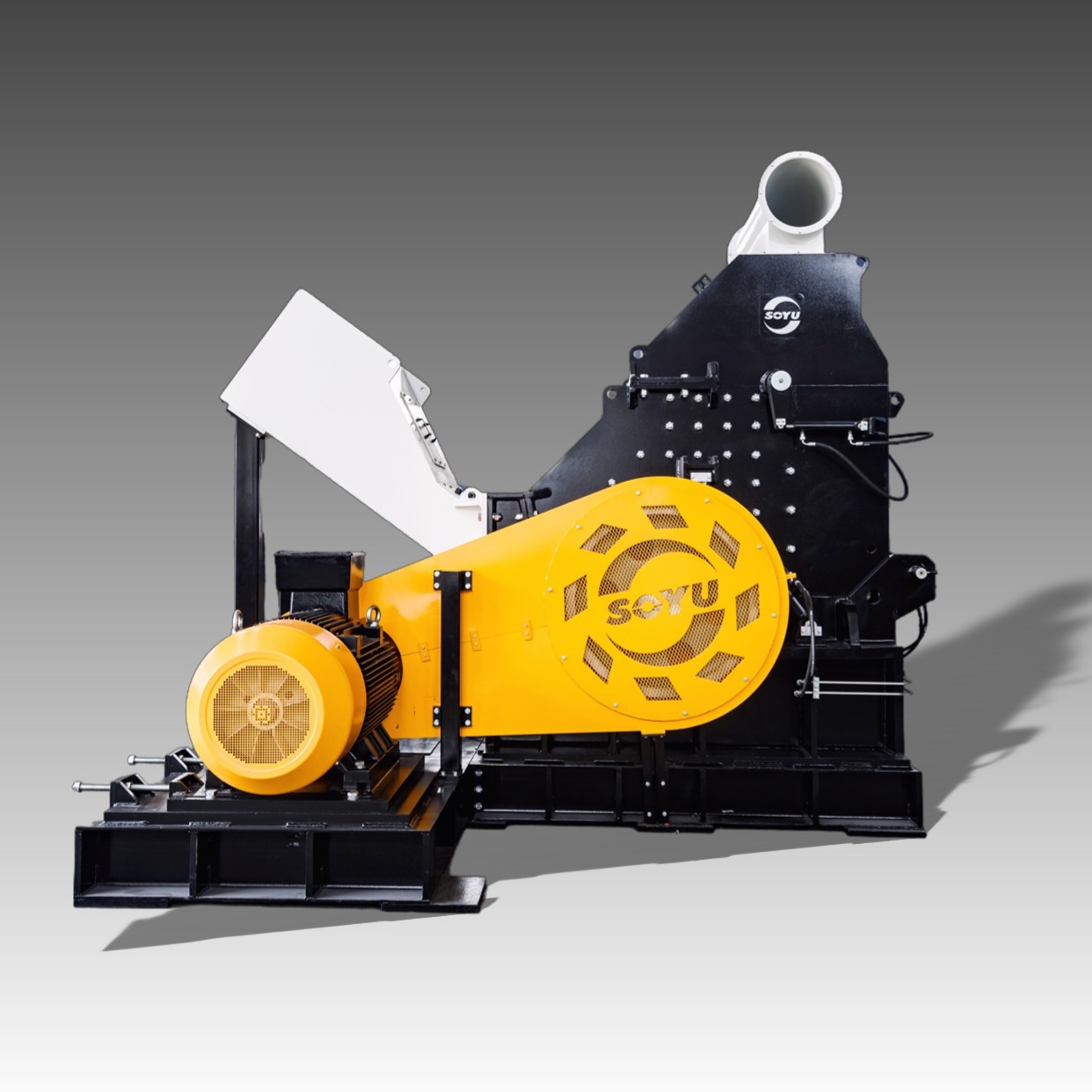
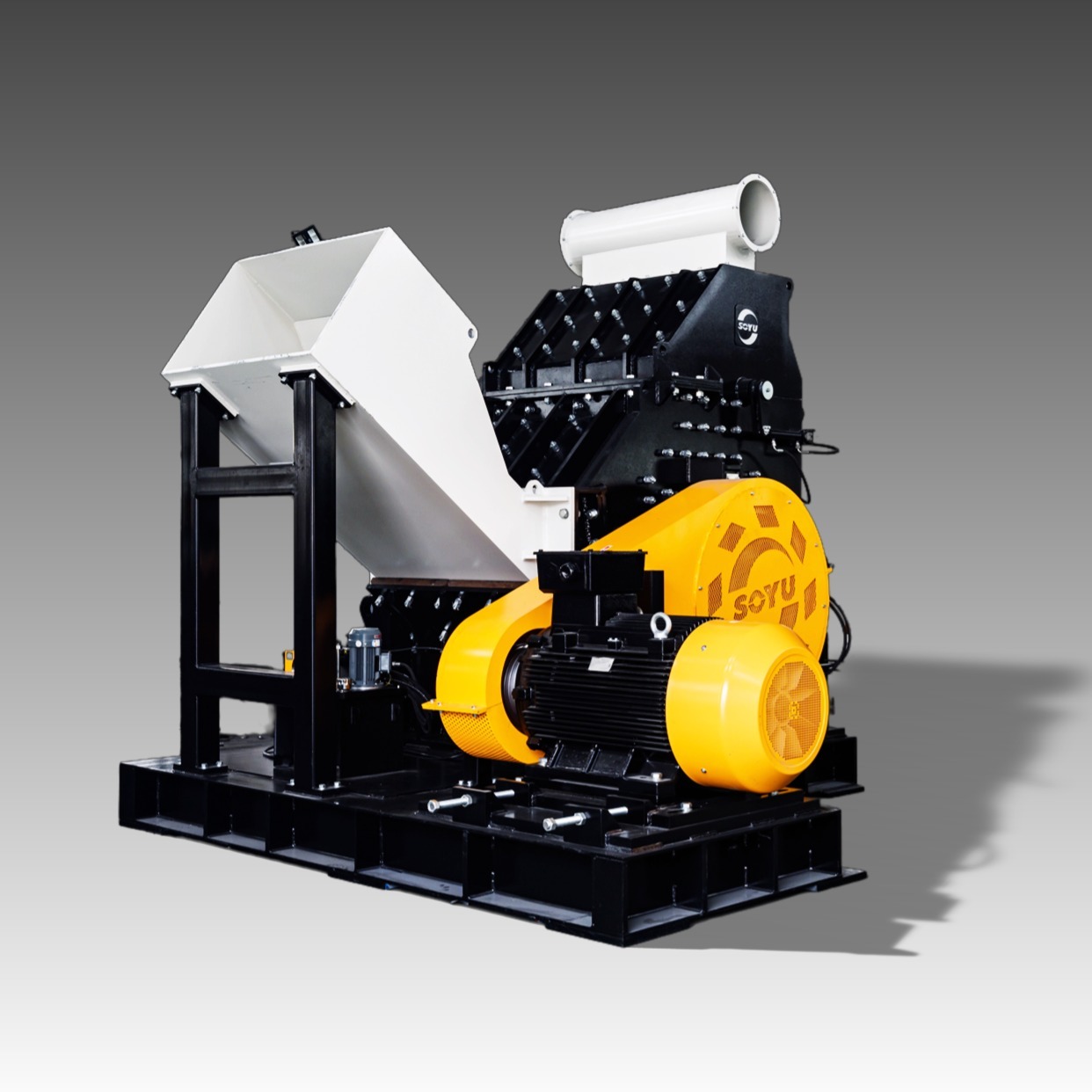
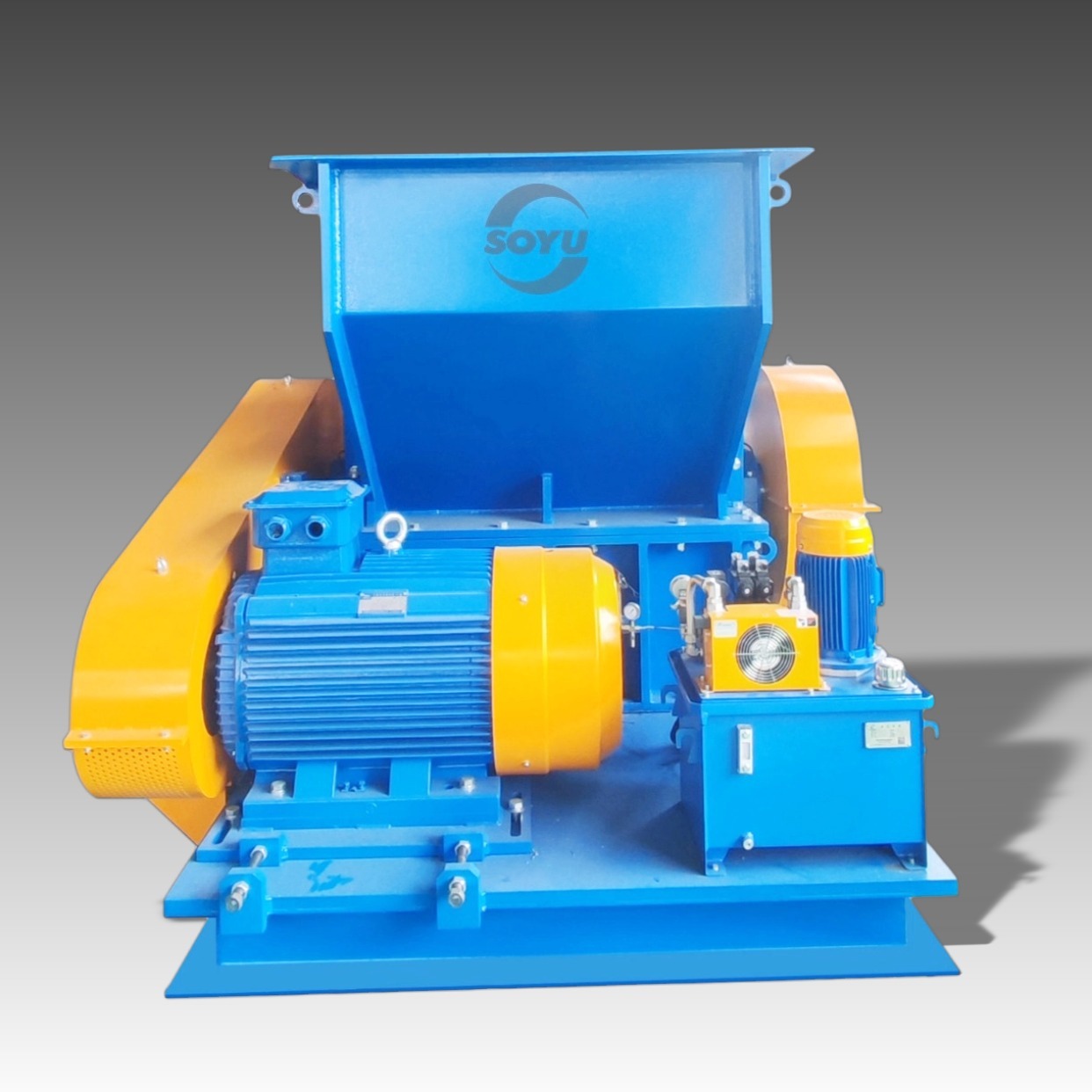
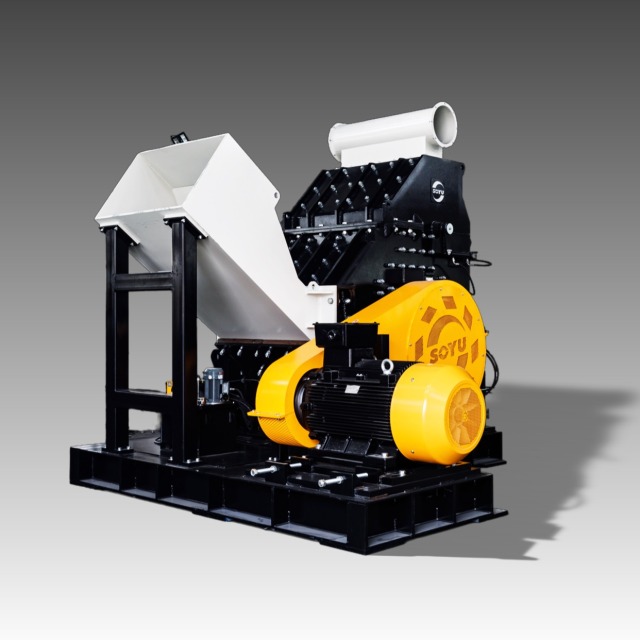
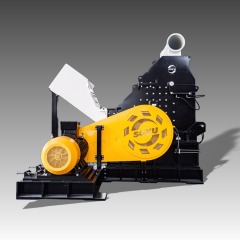
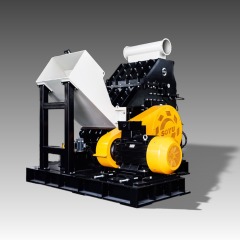
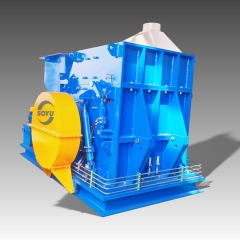
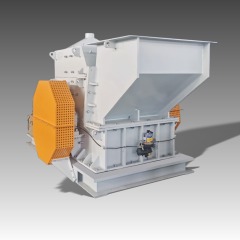
Loose steel scrap can be prepared for steelmaking through continuous impact crushing rather than shaft shearing. SOYU manufactures this heavy duty scrap metal crusher for high-intensity processing of metal scrap and bulky waste, combining impact reduction with practical access to working components. Designed and manufactured by CHANGSHU SHI SHOUYU MACHINERY CO., LTD. (SOYU), the unit belongs to our 3E Series, established in 2009. Our work as a scrap metal crusher manufacturer draws on more than 17 years of technical expertise in solid waste reduction.
Scrap Preparation Applications
- Loose steel scrap undergoes repeated impact to reduce bulky forms and improve bulk density.
- The resulting density depends on the incoming material and how it responds to crushing.
- Surface coatings can be loosened and removed during impact processing.
- Paint type, adhesion and scrap condition affect the result, so complete stripping should not be assumed.
- Bicycles and similar assembled metal items are among the intended feed streams.
- Their shape, attached components and material thickness influence preparation and feeding requirements.
- Metal containers are another supported application, provided their contents and condition are suitable for processing.
- Emptying, cleaning and any necessary decontamination belong in the preparation procedure before crushing.
- A hammer mill for appliance recycling handles the metal-scrap preparation stage of appliance recovery.
- Mixed appliance materials still require an appropriate recovery process around the mill.
- Steelmaking-charge preparation aims to produce denser, better-prepared scrap that can support efficient melting.
- Actual melting performance depends on scrap composition, remaining contaminants and furnace practice; comparable-feed performance checks should establish throughput and discharge characteristics for the intended operating conditions.
TLJ Series Specifications
| Model | TLJ80-55 | TLJ80-75 | TLJ80-90 | TLJ100-160 | TLJ100-200 | TLJ130-315 | TLJ130-450 |
|---|
| Motor power (kW) | 55 | 75 | 90 | 160 | 200 | 315 | 450 |
| Screen diameter (mm) | 40/50/60(optional) | 40/50/60 (optional) | 40/50/60 (optional) | 40/50/60 | 40/50/60 | 60/80/100 (optional) | 60/80/100 (optional) |
| Dimensions L × W × H (mm) | 2710 × 1950 × 1900 | 2710 × 1950 × 1900 | 2710 × 1950 × 1900 | 2710 × 1950 × 1900 | 3700 × 2500 × 2450 | 3900 × 3700 × 3770 | 3900 × 3700 × 3770 |
| Equipment weight (kg) | 6000 | 6100 | 6200 | 13500 | 14500 | 22000 | 28000 |
| Number of hammer heads (pcs) | — | — | — | — | — | 24 | 24 |
Equally Spaced Hammers
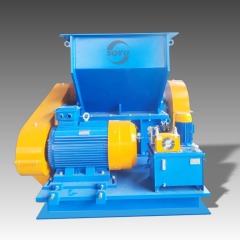
Equally spaced hammers distribute impact forces around the working assembly of this hammer mill for appliance recycling. The arrangement supports balanced loading and smooth operation as scrap enters the crushing zone.
Consistent spacing also helps avoid concentrating the crushing work in one part of the hammer arrangement. This supports steady impact action, although changes in feed composition will still change the load on the machine.
Balanced operation contributes to hammer service life by limiting uneven working conditions. Wear remains material-dependent: abrasive contamination and harder inclusions can alter how quickly individual working surfaces deteriorate.
Hammer inspections should compare wear across the complete arrangement, rather than examining only the most accessible component. Uneven wear, damaged mounting points or an unusual vibration pattern deserve attention before further operation.
Replacement work should preserve the specified hammer arrangement and assembly balance. Follow the maintenance instructions provided by the scrap metal crusher manufacturer for component matching and fastening, rather than mixing parts on appearance alone.
Hydraulic Cabinet Access
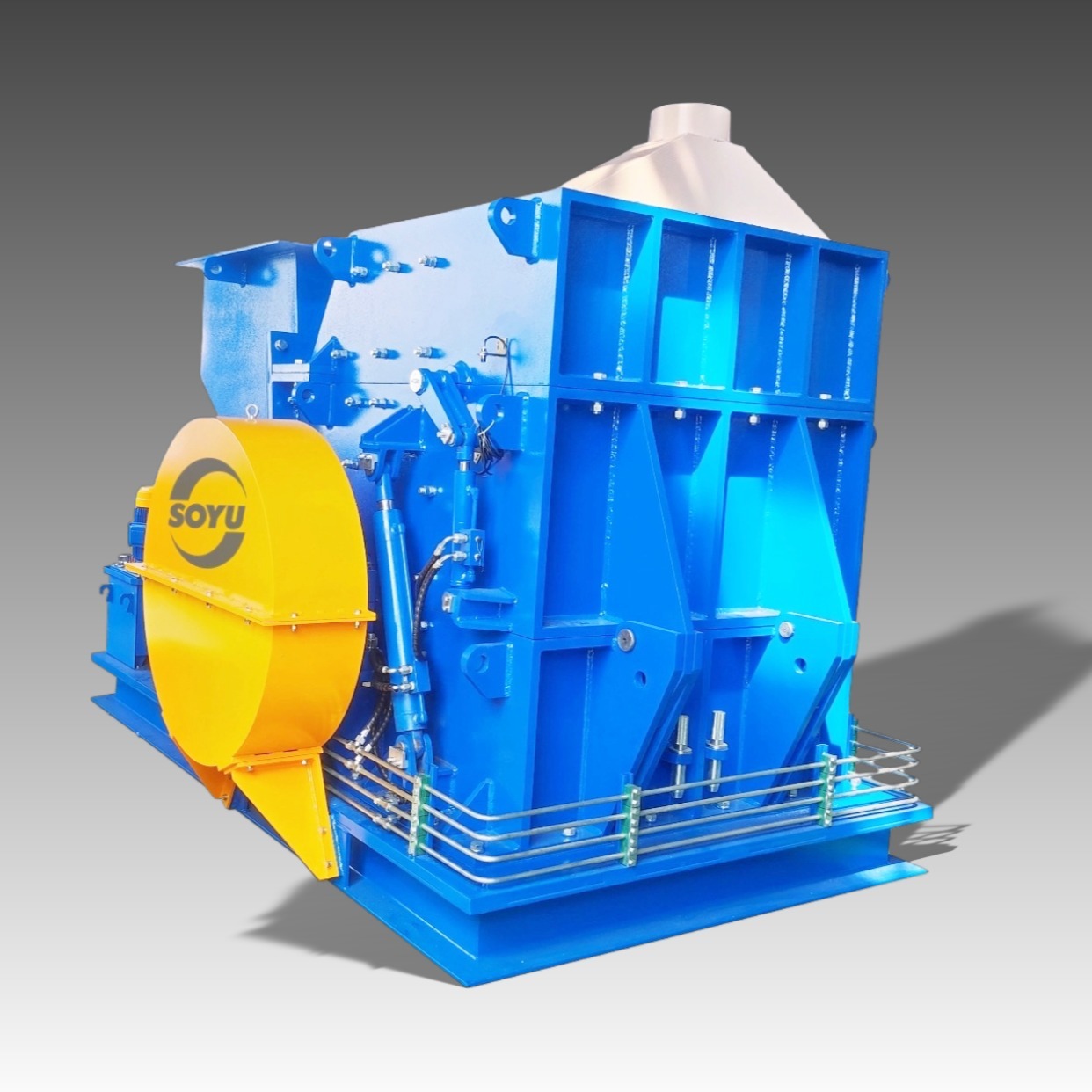
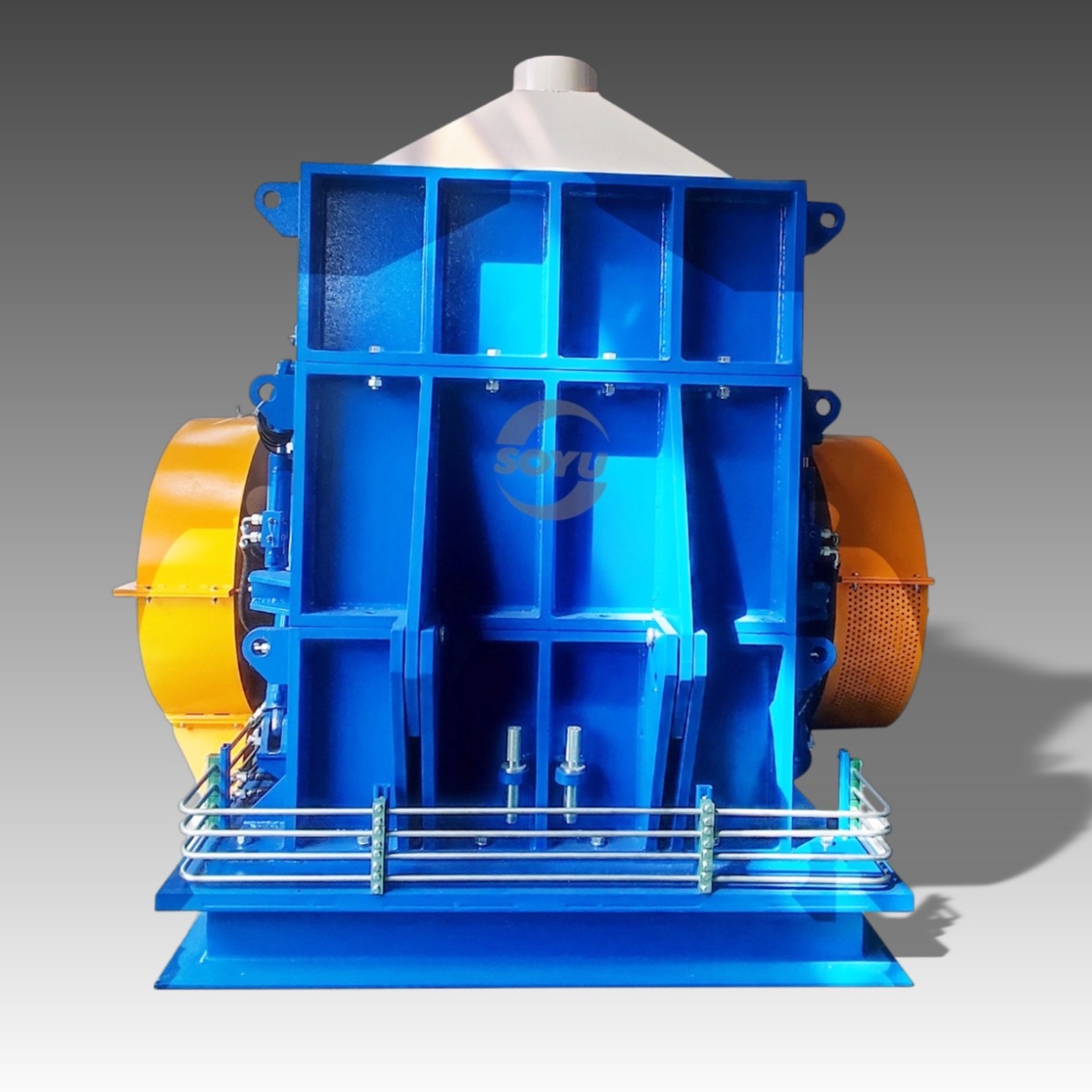
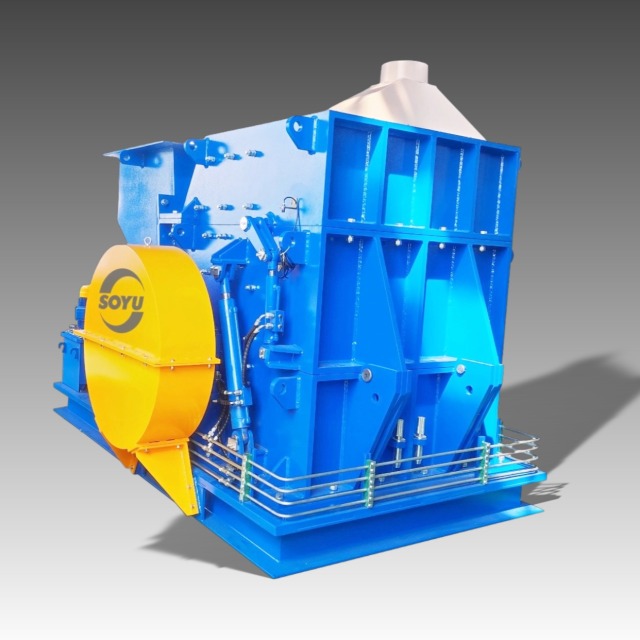
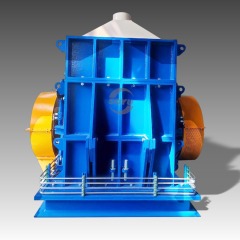
- Hydraulic cylinders open and close the cabinet to provide access for internal inspection and component replacement.
- The opening mechanism reduces the manual handling involved in reaching the crushing chamber.
- Electrical and hydraulic energy must be isolated before internal work begins. The cabinet-opening function provides access; it does not replace the machine's shutdown and isolation procedure.
- The cabinet needs a clear opening area, with room for technicians and the components being removed.
- Allow for its movement when arranging nearby walkways, conveyors and service equipment.
- Externally mounted cylinders and hydraulic piping require attention during routine checks.
- Leaks, damaged hoses or restricted movement should be addressed before operating the opening mechanism.
- Cabinet closing should follow a final check for tools, loose components and trapped material.
- The bolted housing and access points must be secured according to the operating instructions before restart.
Belt Drive System
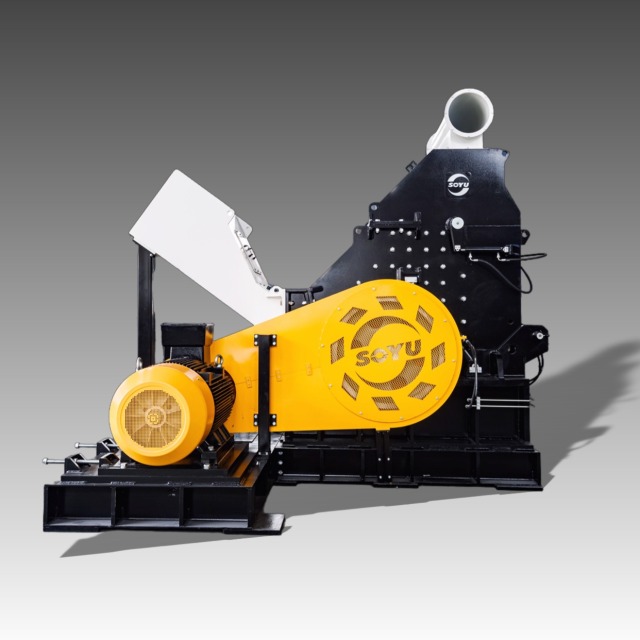
- A high-strength belt connects the motor and main shaft in this heavy duty scrap metal crusher.
- The compact transmission arrangement is designed for the impact loads encountered during scrap crushing.
- High rotational inertia supports stable running through changing crushing resistance.
- Irregular scrap loading still needs controlled feeding rather than repeated surges into the chamber.
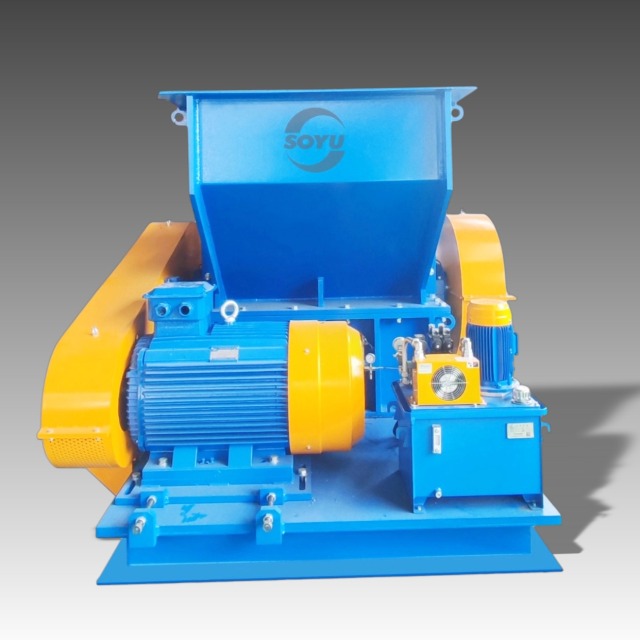
- The externally mounted electric motor provides a separate, accessible drive assembly.
- Space around its finned casing should remain clear for inspection and cooling airflow.
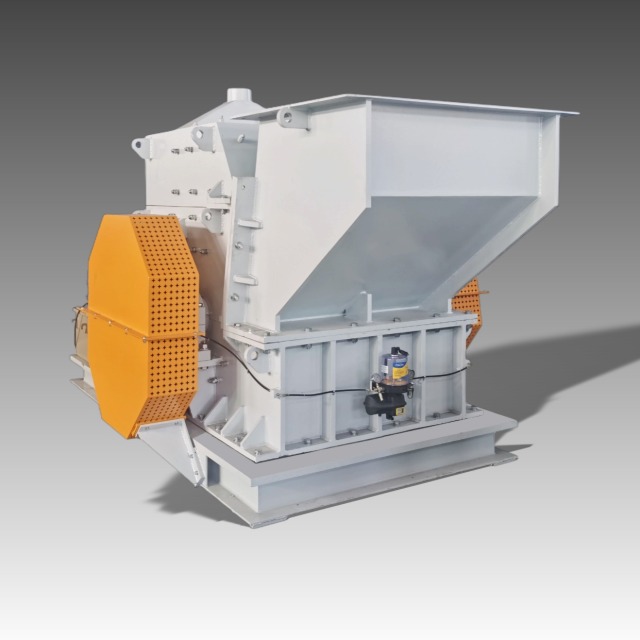
- Perforated drive guards cover the transmission on the illustrated machines.
- Guards should remain secured during operation, with belt inspection carried out only after the drive has been isolated.
- Belt condition, pulley alignment and tension are practical maintenance checks for this transmission.
- Follow the machine instructions for adjustment and replacement; an improvised setting can introduce slip or unnecessary drive loading.
Split Bearing Housings
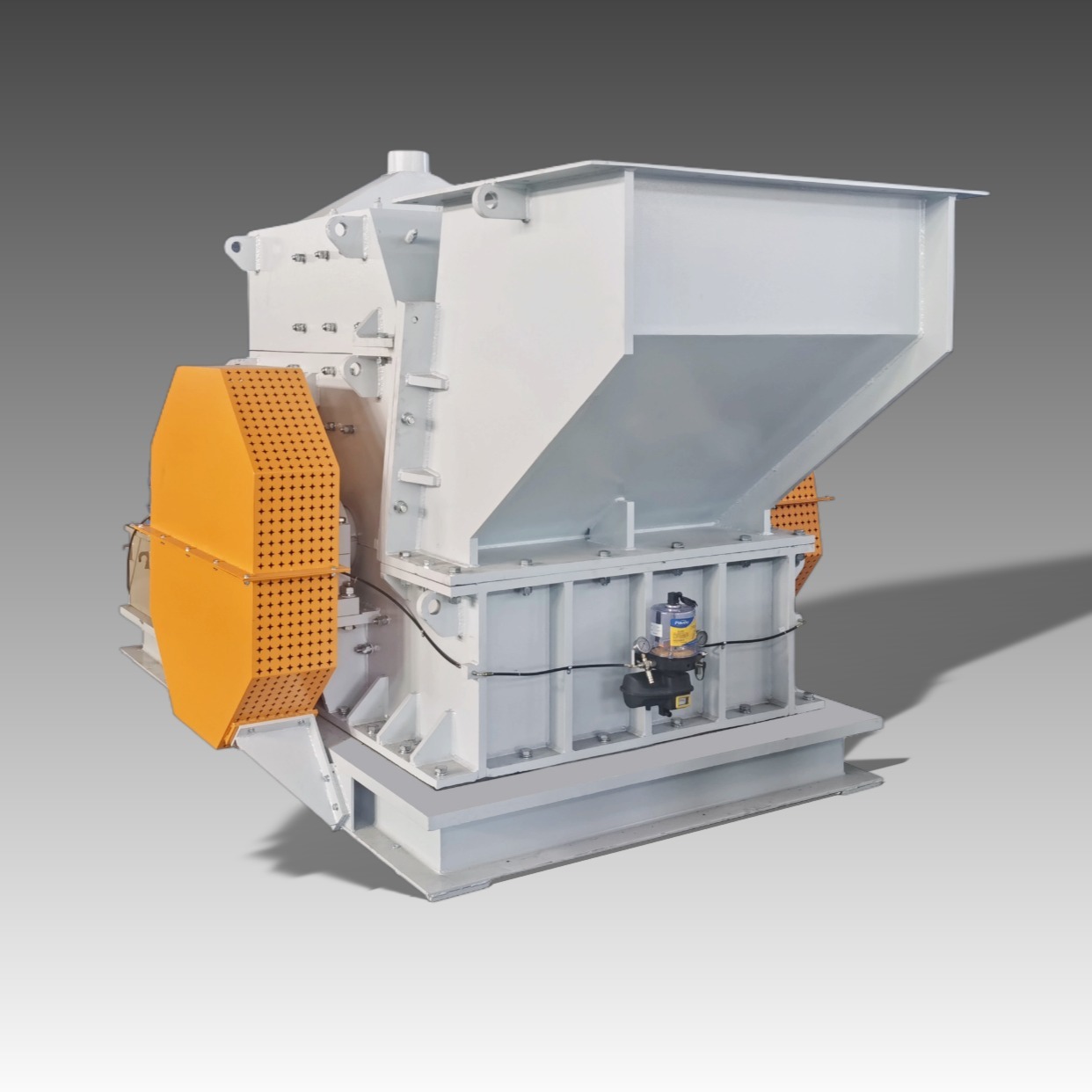
- Split-type bearing housings separate to simplify bearing disassembly and assembly.
- The design gives maintenance technicians a more direct route to the bearing than a housing that must be handled as one closed piece.
- Bearing work should begin with the shaft supported according to the maintenance procedure.
- Housing access alone does not remove the need to control the weight and position of connected components.
- Dismantled housing sections and mating surfaces need protection from scrap dust and workshop contamination.
- Clean assembly conditions help prevent debris from entering the bearing area during service.
- Bearing condition should be considered alongside seals, seating surfaces and lubrication condition.
- Replacing a bearing without addressing contamination or an assembly problem can leave the underlying cause unresolved.
- Reassembly requires the specified fit, alignment and fastening procedure.
- The split construction simplifies access and can reduce service effort, while careful workmanship remains essential to reliable operation.
PLC Overload Protection
Multi-layer overload protection uses the integrated PLC to manage abnormal crushing loads. The control system can automatically open and close the foreign-object discharge door during an overload event.
The discharge function gives difficult material a controlled route out of the crushing process. It supports recovery from an overload without turning every obstruction into an immediate internal maintenance task.
Variable incoming assemblies make load management particularly relevant in a hammer mill for appliance recycling. Protection helps manage abnormal conditions, but unsuitable feed still needs to be excluded before it reaches the machine.
Repeated protection events should prompt a review of what is entering the chamber. Continuing to feed the same troublesome material can create recurring interruptions even when the protection system operates correctly.
Operators should follow the specified recovery and restart procedure after an event. Automatic discharge-door movement does not establish that the chamber is ready for manual access or that the cause of the overload has been removed.
Programmable Logic Controller
- Feeding-system synchronization allows the PLC, or programmable logic controller, to coordinate material input with the mill's operating condition. Real-time automatic adjustment helps incoming material follow the crushing process rather than an unrelated fixed feed pattern.
- Control inputs communicate machine conditions to the controller, while programmed outputs operate connected functions.
- The exact signals and operating sequence need to match the supplied machine and its associated equipment.
- Our work as a metal recycling hammer mill supplier includes technical coordination around the intended feeding arrangement.
- Existing conveyors and other connected equipment need compatible control interfaces rather than an assumed plug-in connection.
- Manual operation, automatic operation and restart behavior should be understood by the operators responsible for the line.
- The electrical drawings and operating instructions should govern these actions rather than assumptions based on another machine.
- Screen diameter describes a machine configuration choice, not a guarantee that every discharged fragment has that dimension.
- Material shape and breakage behavior also affect the output, so downstream size requirements belong in the operating specification.
Ordering & Spare Parts
- Original spare parts continue to be supplied at cost after the warranty period ends.
- SOYU remains your metal recycling hammer mill supplier for original replacement components throughout subsequent maintenance.
- Replacement-part requests should identify the machine nameplate, component marking and relevant assembly.
- Photographs of the removed part and its mounting arrangement help distinguish components that look similar but belong to different configurations.
Downstream Scrap Separation
- Crushing reduces scrap size; separation divides the resulting material into recoverable fractions.
- Plan the TLJ mill together with the sorting stages your material needs rather than treating its discharge as a finished, separated metal product.
- Ferrous recovery requires a suitable separation arrangement.
- Discuss magnetic separation with us when planning the line, including how the crushed material will be presented to the separator and where the recovered steel will discharge.
- Nonferrous metals need a separate recovery route if you intend to collect them as saleable fractions.
- Identify the metals you want to recover so we can review the required sorting equipment; the hammer mill alone does not produce separate copper, aluminium or brass streams.
- Plastics, insulation and other nonmetallic material need designated collection routes.
- Include these fractions in the process design so removing them from the metal stream also leads to controlled handling and storage.
- Attached materials may remain joined after crushing.
- Review representative discharge samples for metal still attached to plastics or other components before deciding whether further liberation or sorting is needed.
- Recovered-metal purity and metal recovery rate answer different operating questions: how clean the collected fraction is, and how much of the incoming metal reaches it.
- Check both across the separated streams when assessing the complete line; a clean steel fraction can still leave valuable metal in another discharge.
Professional Certification
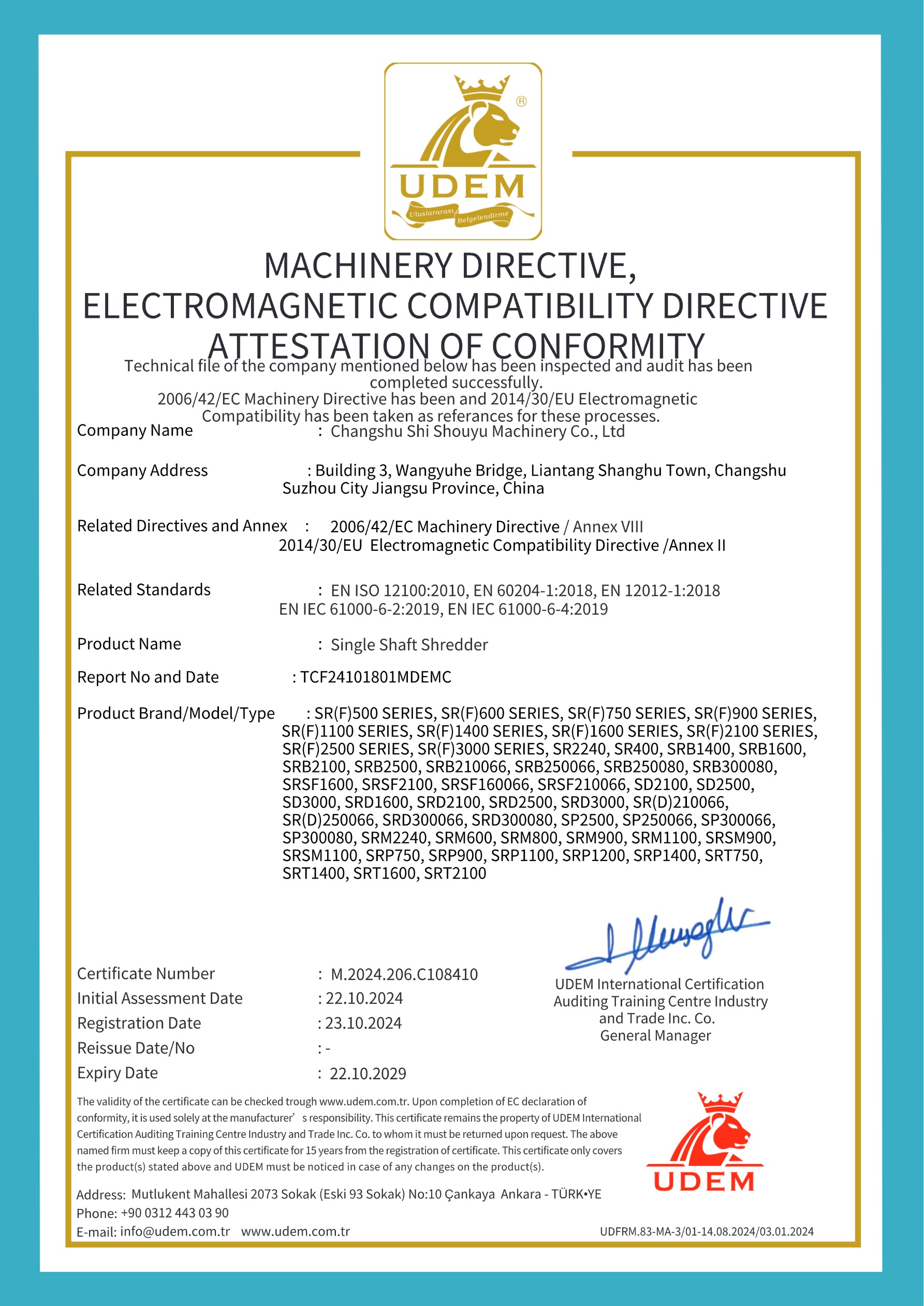
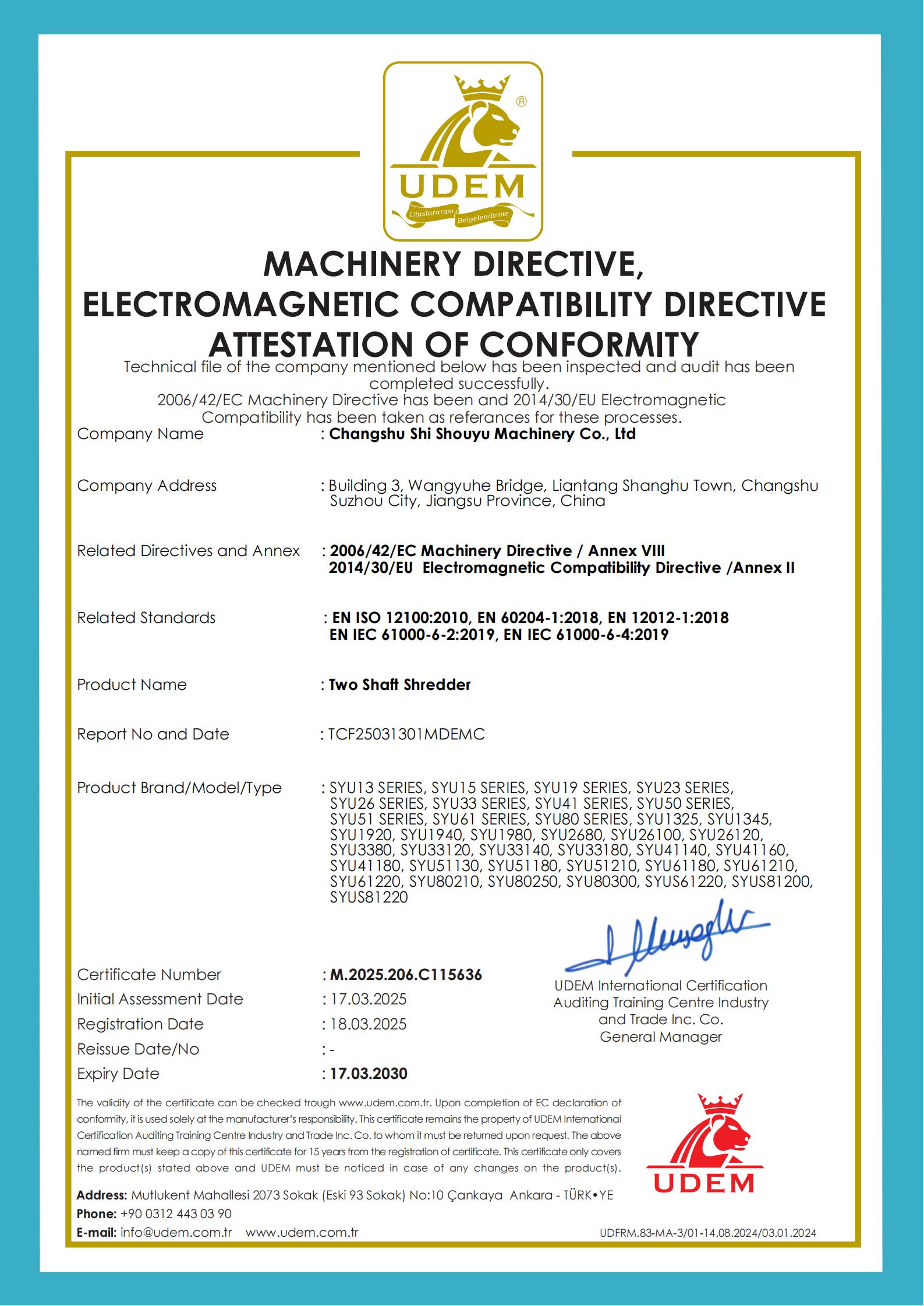
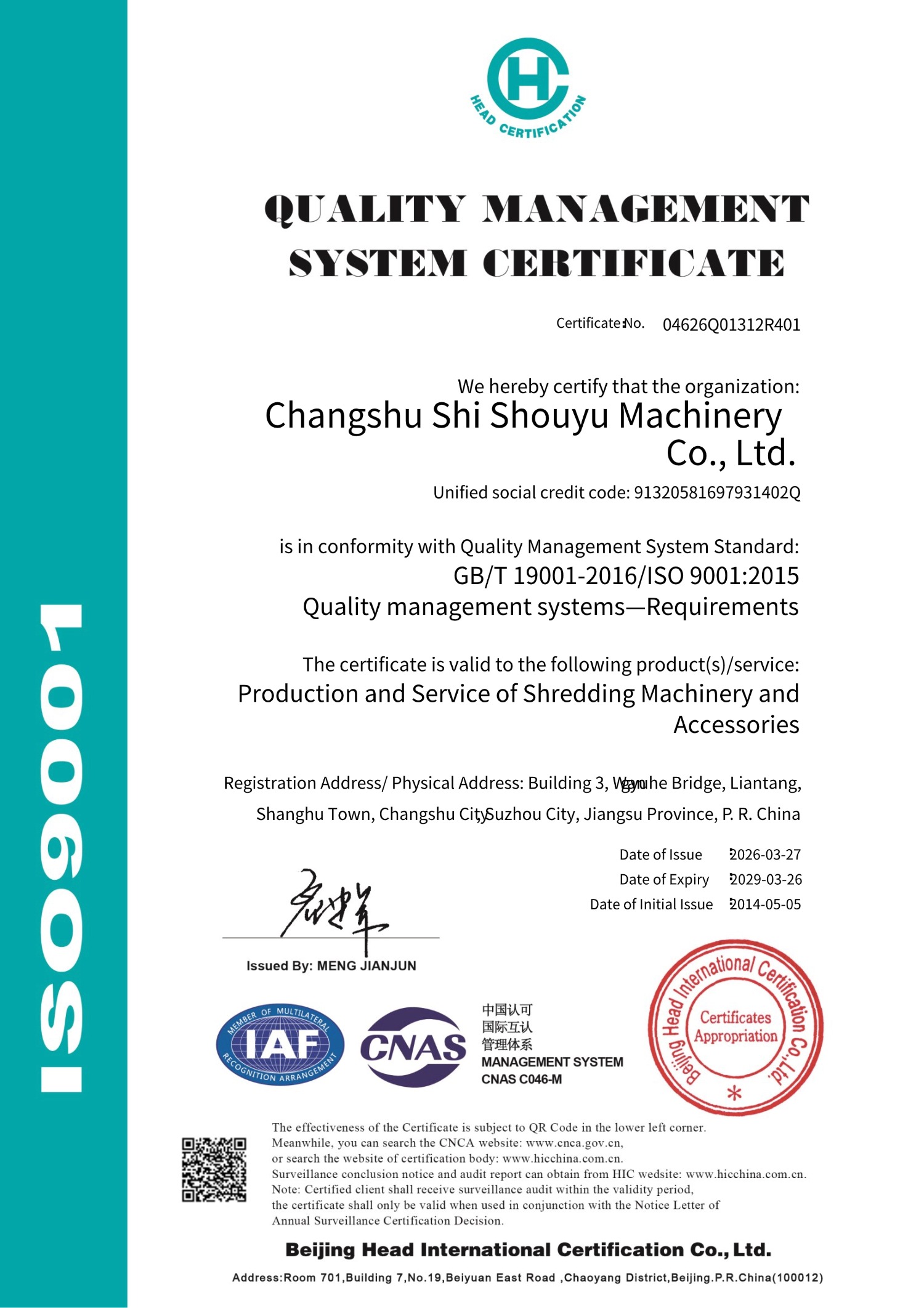
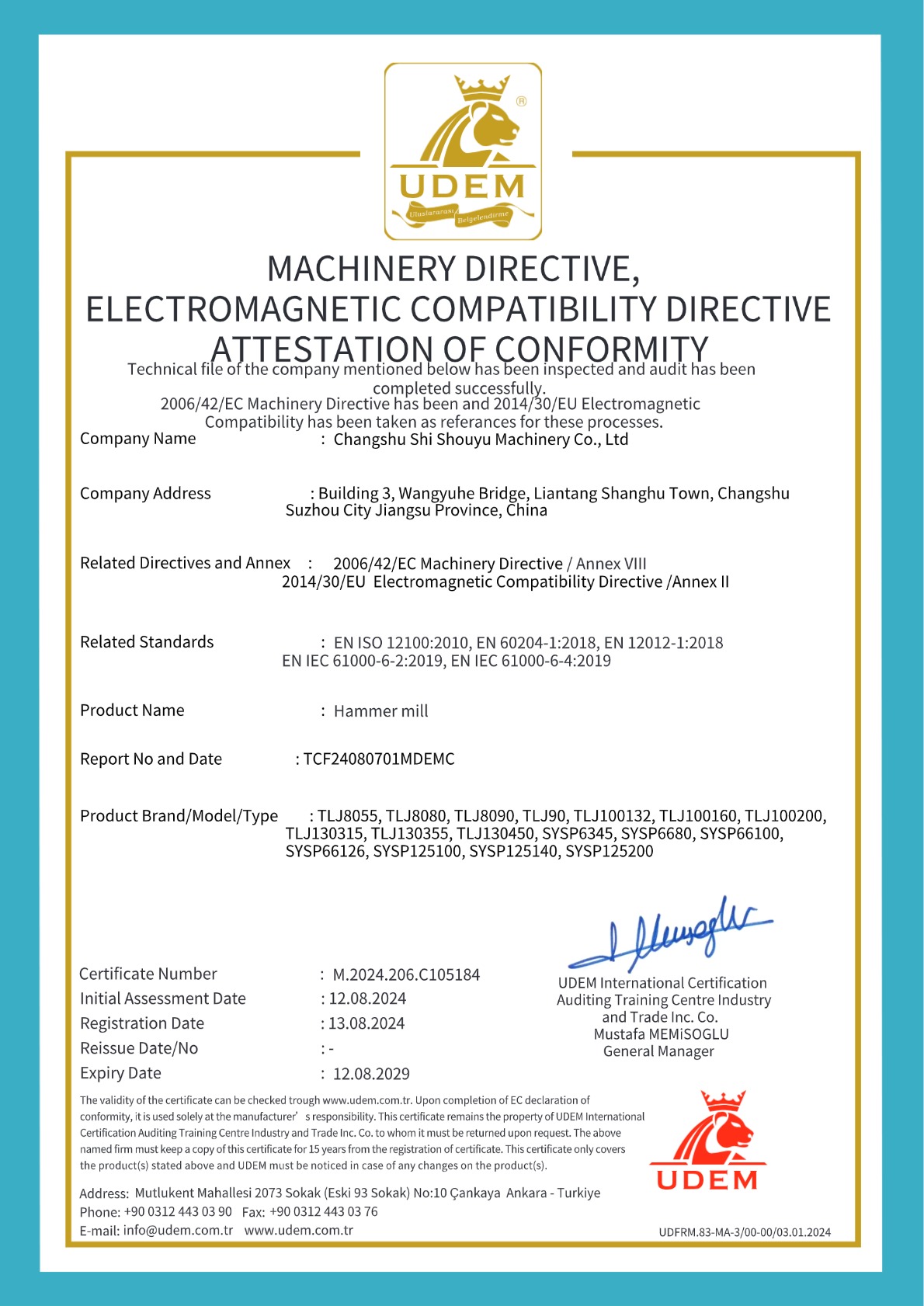
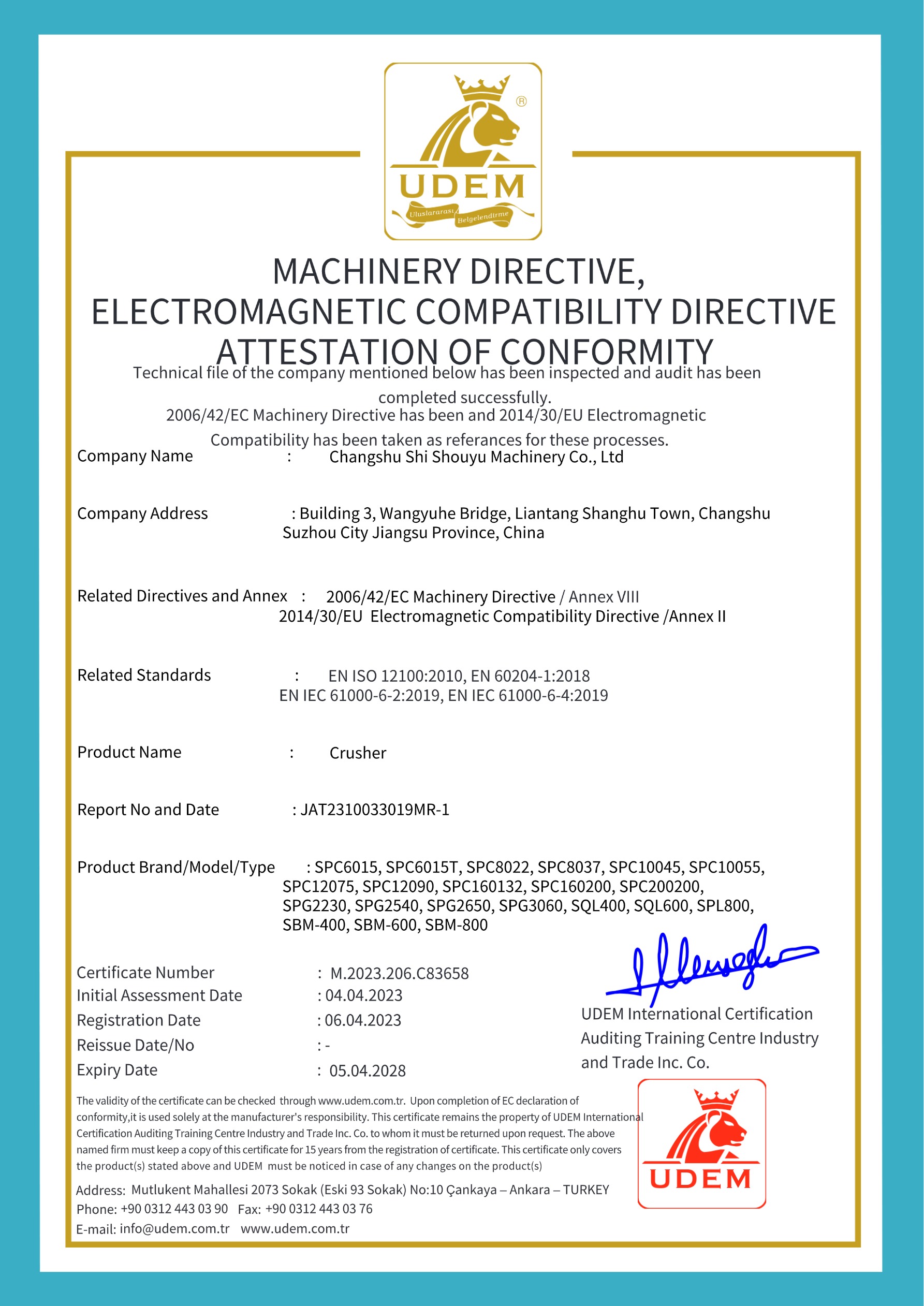
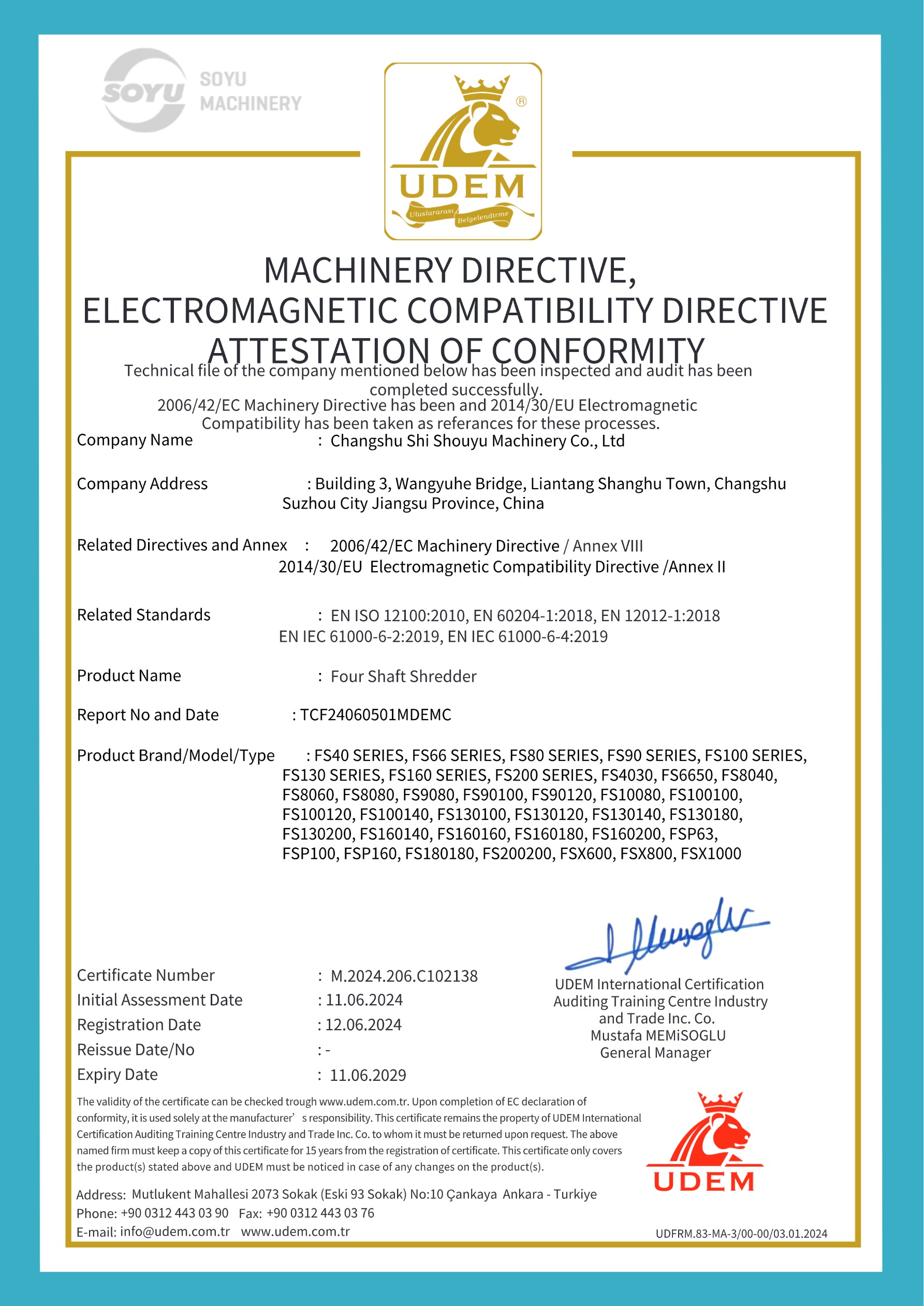
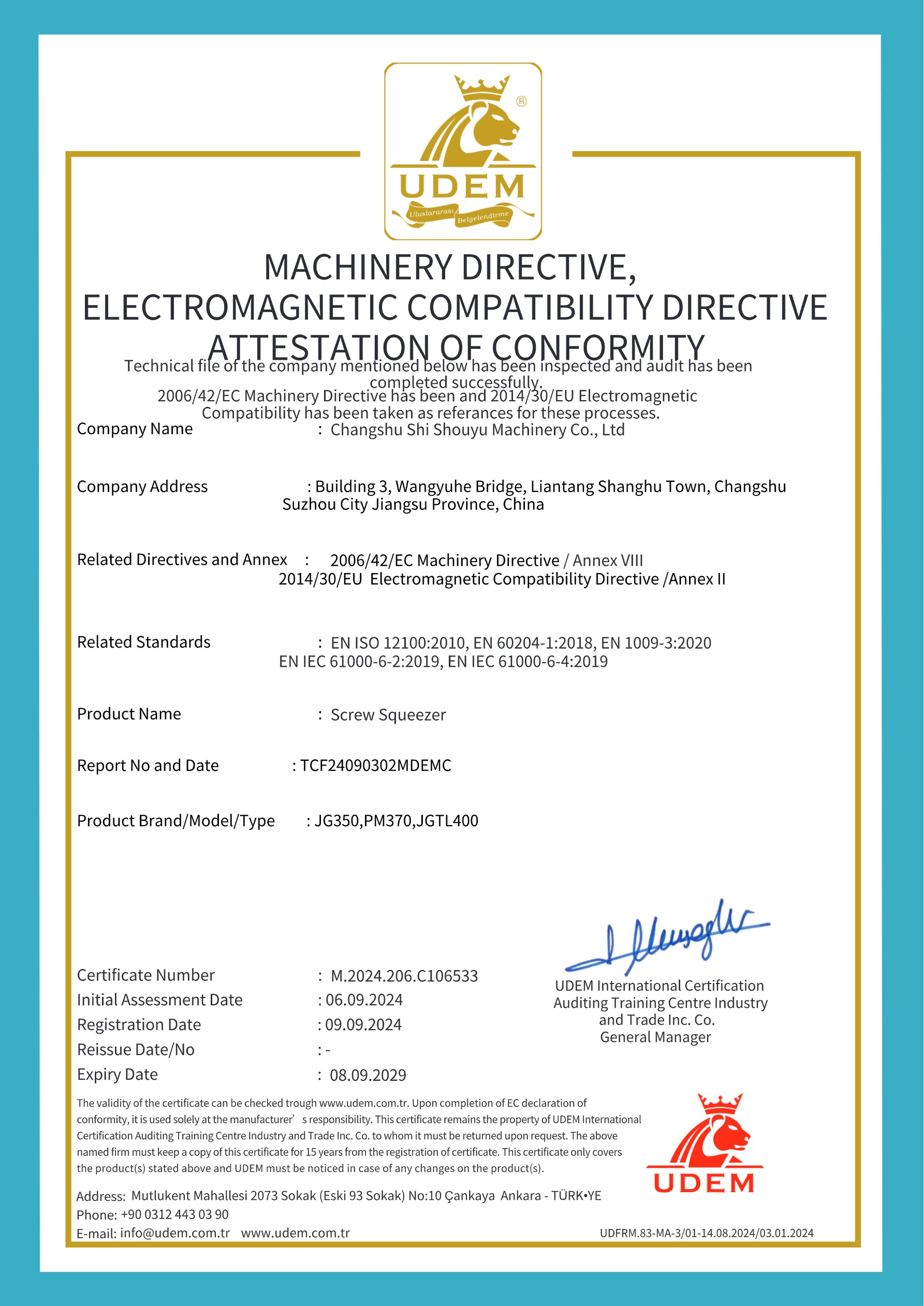
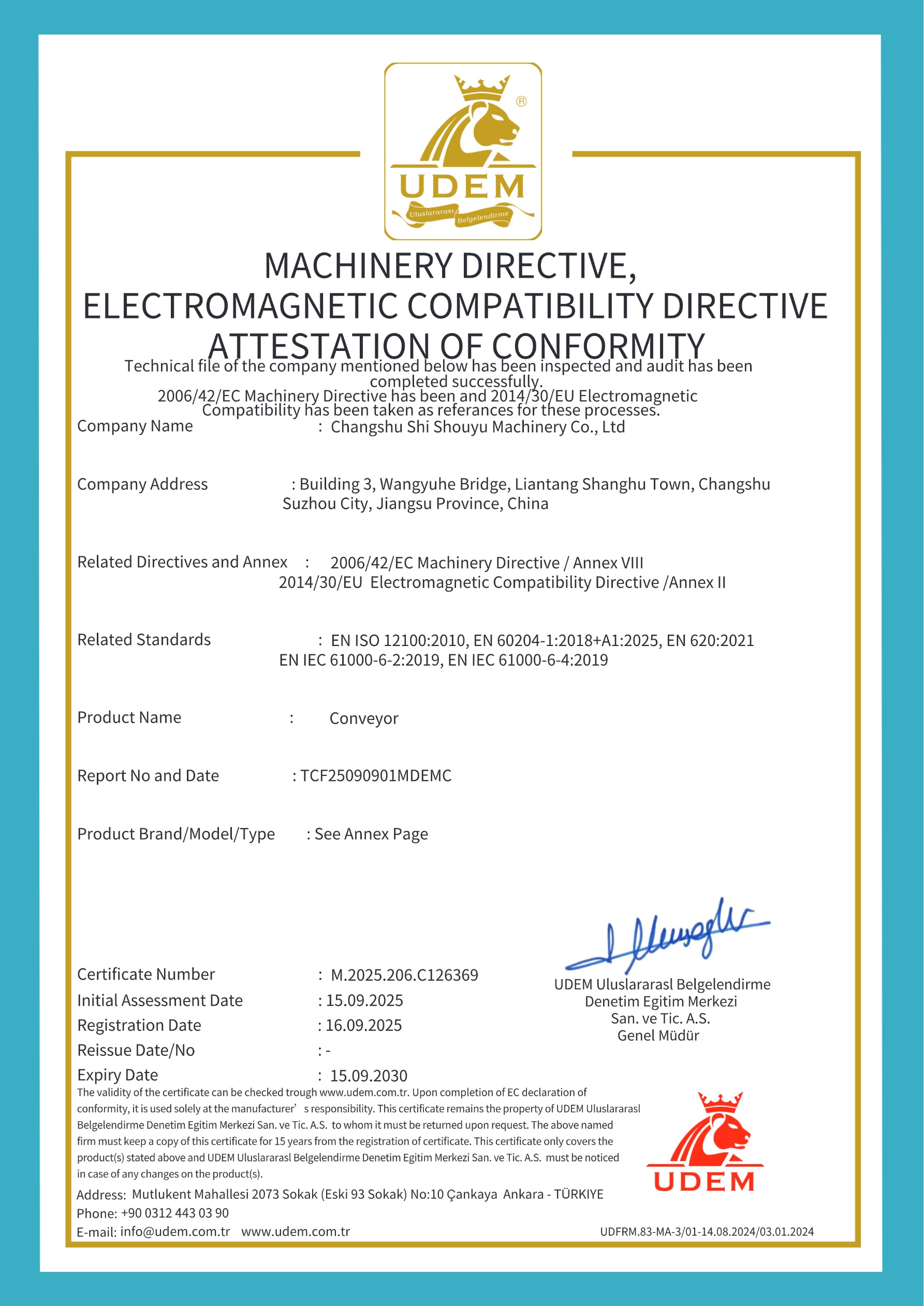
ISO 9001 certification covers SOYU's manufacturing quality-management system, and our shredding and separation equipment is manufactured in compliance with CE standards. These credentials address different subjects: manufacturing quality management and applicable equipment conformity.
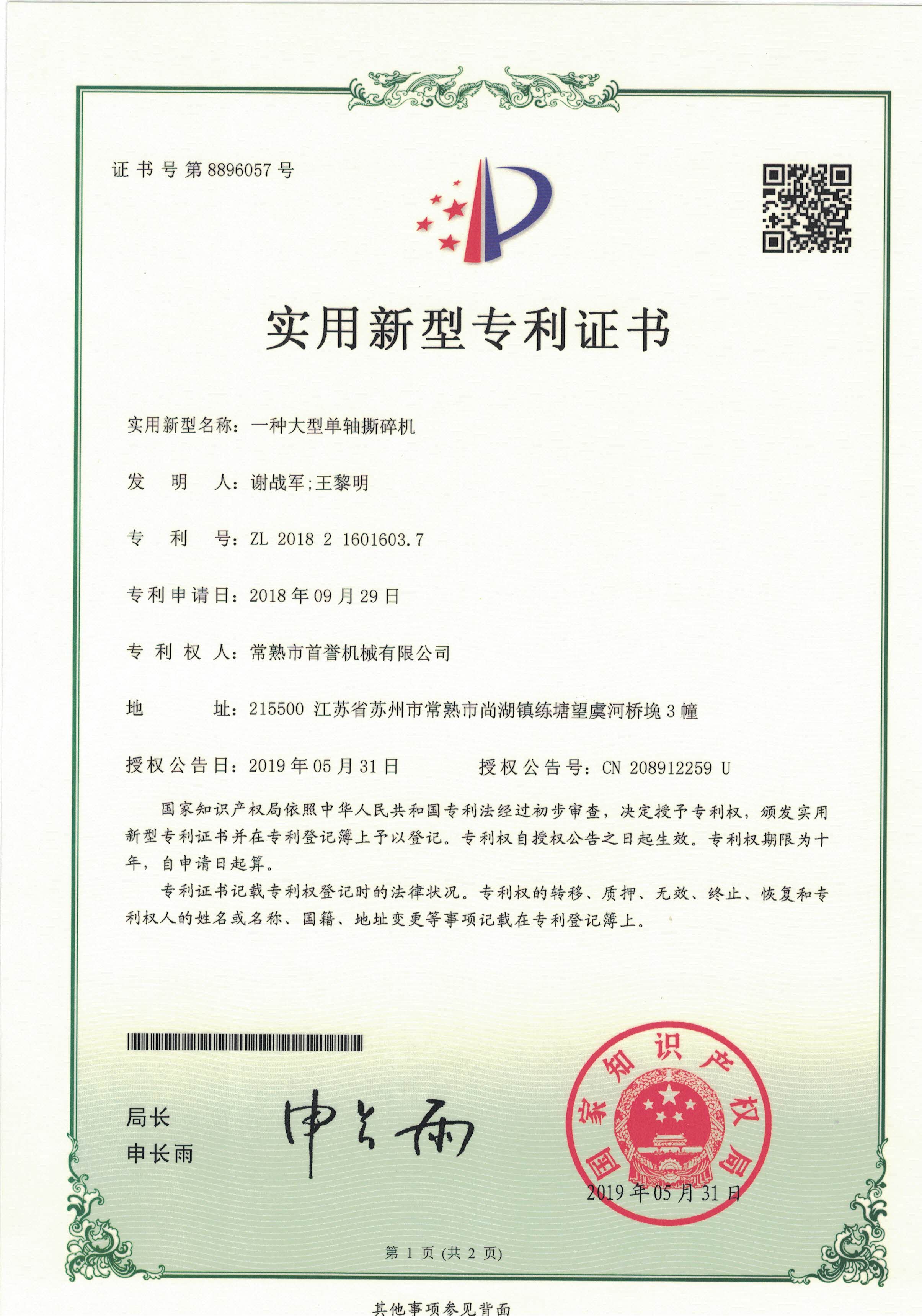
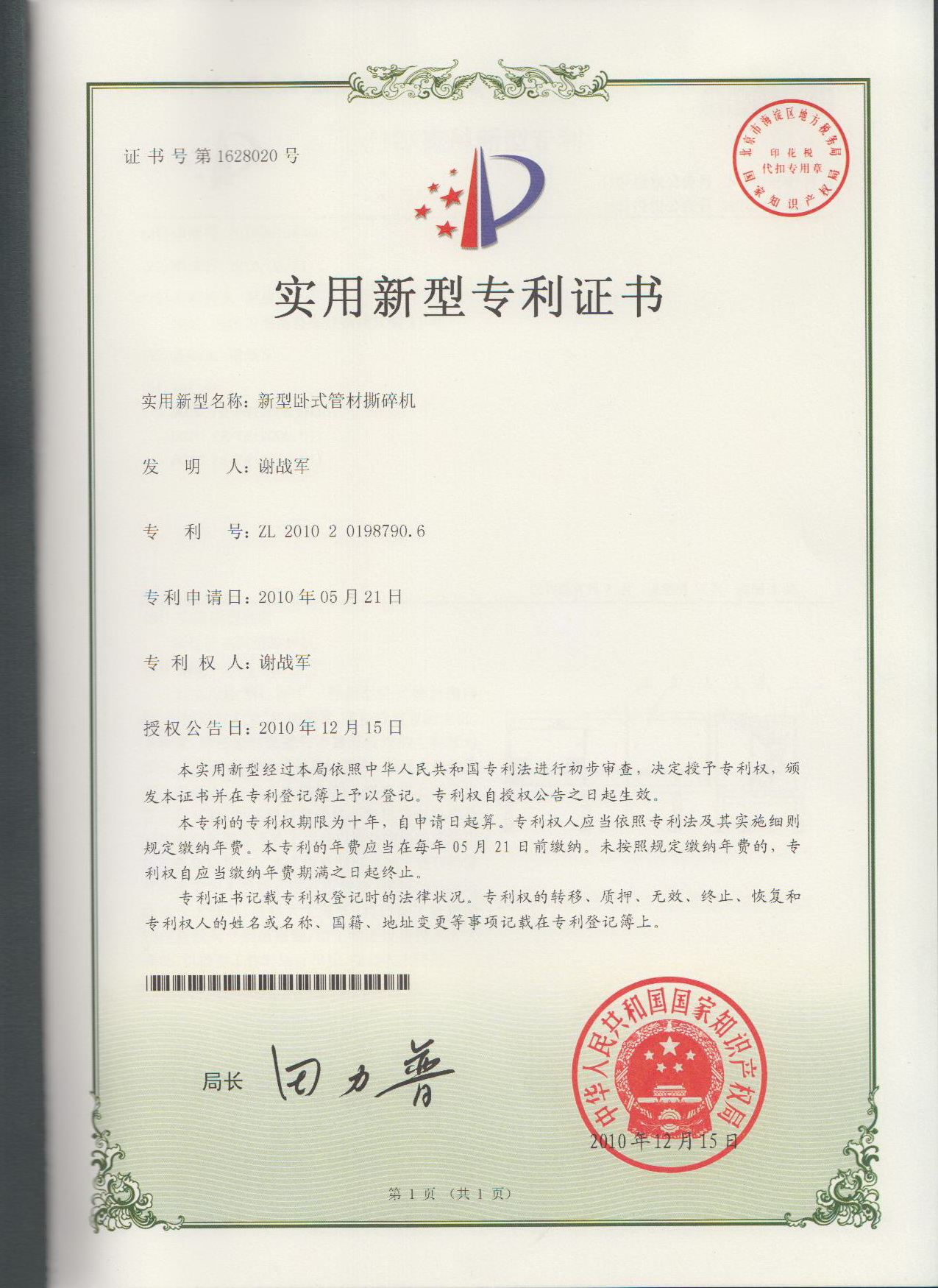
More than 80 national patents have been granted for our core technologies. The patent portfolio supports our development work across shredding and separation equipment; it does not represent a separate performance rating for each TLJ model.
Machine-specific conformity documents should identify the supplied configuration and relevant destination requirements. Use those documents together with the machine identification, electrical drawings and operating instructions when preparing the installation.
Site arrangements also affect safe use. Feeding equipment, access routes and surrounding machinery need to be considered alongside the mill's own documentation, rather than treating a company credential as approval of an entire processing installation.
Technical Support & Model Matching
Choose equipment matched to your operating requirements with technical support from SOYU. We review your material characteristics, target throughput, site conditions and environmental requirements to recommend suitable models and configurations. Our support covers installation, commissioning and operator training to help your team prepare for operation. Overseas customers can access remote technical assistance for troubleshooting, while maintenance and original spare parts support continue after delivery. Original spare parts remain available at cost after the warranty period ends.
FAQ
Can whole appliances be fed directly into the mill?
An intact appliance should not be treated as ready to feed simply because it fits the inlet. The preparation procedure needs to account for the appliance type and any components concealed inside its casing.
Batteries must be identified and removed, including backup batteries in electronic controls. Refrigeration equipment requires refrigerant recovery by appropriately qualified personnel before the cooling circuit is dismantled; insulation may also need specialist handling, depending on its composition.
Pressurized components need to be safely depressurized and removed through a suitable dismantling procedure. Compressors and other oil-bearing assemblies require controlled fluid recovery to prevent leakage during handling and crushing.
Capacitors can retain an electrical charge after an appliance is disconnected, so electrical dismantling should follow an appropriate discharge procedure. Loose cables and detachable accessories should also be assessed for removal before feeding.
After these steps, whether the remaining casing can enter whole depends on its dimensions, construction and the selected machine's feed arrangement. Provide representative appliance details so we can review whether additional dismantling or preliminary size reduction is needed.
Does a higher motor rating mean lower energy consumption per tonne?
The TLJ range includes several motor-power ratings for this heavy duty scrap metal crusher. Installed power alone does not establish energy use per tonne; that requires measured power consumption and processed output under comparable feed conditions.
Does crushing make mixed scrap ready for any steel furnace?
A receiving steel mill's charge specification determines whether processed scrap is acceptable for its furnace. Crushing alone cannot establish compliance with that specification.
Copper wiring and brass fittings deserve particular attention because copper carried into the steel fraction can restrict its use for certain steel grades. Tin-bearing scrap may present a similar concern, so these sources should be considered when deciding which incoming streams to keep separate.
Stainless steel and other alloyed scrap should be identified before they are mixed into a general ferrous stream. Their alloying elements may be valuable in a dedicated grade but undesirable in another melt recipe.
Representative sampling and chemical analysis may be needed where the incoming scrap varies or its origin is uncertain. A visually clean batch does not establish its elemental content.
The receiving mill may also set acceptance conditions for moisture, attached nonmetallic material and prohibited inclusions. Obtain those conditions before agreeing on a supply specification.
Keeping batches traceable to their source helps investigate rejected loads and maintain a more consistent supply. Any proposal to blend different scrap grades should be agreed with the receiving mill.
Can existing pipework connect to the upper flanged opening?
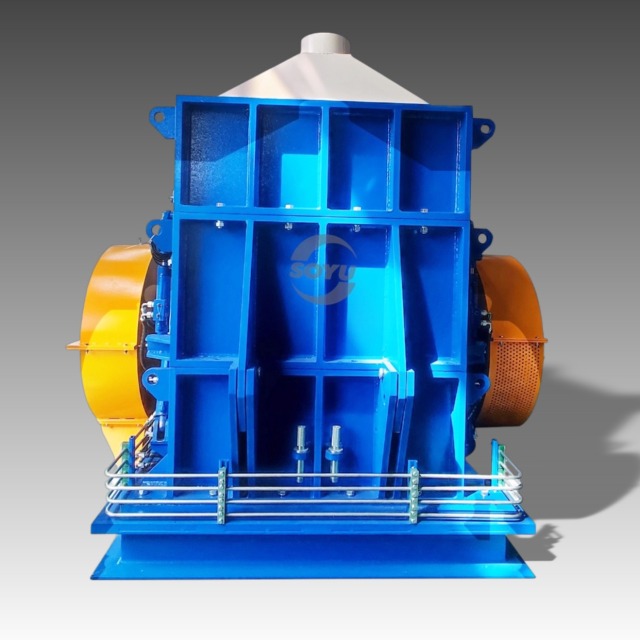
An upper flange is visible on the illustrated assembly, but its appearance alone does not establish what service it is intended to carry. Check the approved drawing for the supplied machine before assigning it to an existing duct or pipe system.
The mating connection needs matching flange dimensions, bolt pattern and sealing face. Nominal pipe diameter alone is insufficient to establish compatibility, and any adapter should be reviewed before fabrication.
The intended service also determines the connection requirements. For an extraction connection, for example, airflow, pressure conditions and the material being carried need to be assessed with the extraction-system designer.
Existing pipework should have suitable independent supports so its weight and alignment do not place unintended loads on the machine connection. Allowance for vibration or relative movement may require an appropriate flexible connection, subject to the approved installation design.
Routing must preserve access to inspection points and leave clearance for the cabinet to open during maintenance. Include those access spaces when checking overhead obstructions and nearby equipment.
Before operation, inspect the completed joint, supports and sealing arrangement, then verify performance for the intended service. Share the existing connection drawing and proposed route with us so the interface can be reviewed before installation.