Product Overview
Bulky plastic, wood and composite waste is reduced to a controlled, consistent particle size on this single shaft shredder, with a V-arrangement rotor and double-sided edge cutters that stop material building up on the shaft. A hydraulic pusher reads the load and slows for tough feedstock, so the rotor keeps turning instead of stalling. Output size follows the screen fitted at the time, which lets one machine serve several streams as long as the feed is low in metal content. Recycling centres, manufacturing plants and processing facilities run it as the first reduction stage before sorting, granulation or baling.
Rotor & Cutter Construction
The rotor carries its cutters in a V formation rather than a straight line, so each rotation pulls material into the cutting edge instead of letting it ride around the shaft. That geometry is what keeps bulky, uneven feedstock moving through a long shift without the material compacting between blades. Cutters are double-sided, with a cutting edge on both faces, so a dulled edge does not immediately take the cutter out of service. Blade material is CrMoV high-alloy wear-resistant steel, which holds an edge against abrasive plastic, dirty film and hard-filled composite. Cutters are supplied in different configurations and material compositions and are matched to the feedstock, because a glass-filled or fiberglass stream needs a different edge specification from soft PET bottles. The rotor runs inside an enclosed cutting chamber, and because the cutter arrangement is fixed at build stage, the specification should be agreed against your material before production rather than after delivery.
Screen Sizing & Hydraulic Feed
- Output size is set by the screen: the mesh aperture chosen determines the particle size, and the screen is changed to suit what the next stage can accept.
- Screens are replaceable and supplied in a range of configurations and mesh sizes, so a facility can run a coarse setting for bulk volume reduction and a finer one for granulation or pelletizing feed.
- The hydraulic pusher works against load: it runs at maximum speed through breakable material and slows for tough feedstock, which protects the rotor from overload instead of stalling the drive.
- An electrical control system manages the drive and the interlocks, and the machine stops automatically when the screen unit is opened for inspection or a mesh change.
- Screen choice also defines the machine's working role — a coarse, open mesh when the unit serves as an industrial wood shredder machine on pallet scrap, a tighter aperture where plastic is being sized for washing.
Specifications
The adjustable screen mesh supports straightforward particle-size control and consistent downstream processing. Safety protocols include automatic shutdown when the screen unit is accessed, meeting strict occupational health standards. Reliable operation helps increase uptime, reduce maintenance interruptions, and support return on investment for plastic and wood shredding tasks. The machine's adaptability supports workflow integration, process automation, and throughput optimization. The SR series single-shaft shredder is a versatile size reduction machine.
| Property | Value |
|---|
| Machine type | Single shaft shredder with hydraulic pusher feed |
| Rotor configuration | V-arranged rotor with double-sided edge cutters |
| Cutter material | CrMoV high-alloy wear-resistant steel |
| Cutter options | Multiple blade configurations and material compositions |
| Output particle size | 40-100 mm, set by the screen mesh aperture |
| Screen type | Replaceable screens in a range of configurations and mesh sizes |
| Feed control | Automatic hydraulic pusher, speed follows material hardness |
| Safety interlock | Automatic stop when the screen unit is opened |
| Control system | Automatic electrical control system |
| Suitable feedstock | Plastics, paper and cardboard, wood, cable sheathing, fiberglass, textiles, agricultural residues, non-hazardous composites |
| Metal content | Built for feeds with minimal metal content |
Materials Processed
Plastics
PET bottles, HDPE drums, plastic films and injection molding scrap make up the largest share of what this machine handles; thin-walled containers and film reduce quickly once the pusher has them under the rotor, and the output is sized for the wash line or granulator that follows.
Paper and cardboard
Corrugated boxes, office waste and pulp residues break down cleanly, which suits facilities that bale the output or feed it into a pulping process rather than granulating it.
Wood
Pallets, lumber offcuts, sawdust lumps and furniture waste are reduced without wrapping the shaft, and the chip can be sized for biomass fuel or board production.
Wires and cables
Non-metallic sheaths and insulation materials are within scope; cable with a heavy metal core belongs with a different configuration, because this series is built for feeds with minimal metal content.
Additional materials
Fiberglass, agricultural residues such as straw and husks, textile waste and non-hazardous composite materials can be run where the cutter specification is matched to how abrasive the stream is.
Application Sectors
- Plastic and film: bottles, drums, moulded parts and film bundles are reduced to a screen-set size ready for washing, granulation or pelletizing, with the aperture chosen against the downstream equipment.
- Wood and wood pallet: whole pallets, offcuts and furniture parts are reduced for biomass fuel or composite board, where a coarse setting keeps long pieces moving.
- Paper and cardboard: corrugated boxes, office waste and pulp residues are reduced for baling or pulping, where volume reduction matters more than a fine particle size.
- Metal and metal chip: light-gauge components and machining chips can be handled where the metal content of the stream stays minimal; solid or heavy metal scrap belongs with a different configuration.
- Electronic scrap: plastic housings and mixed cases with minimal metal content reduce here, while metal-bearing fractions are separated upstream or downstream of the shredder.
- RDF and MSW: bulky pre-sorted municipal and commercial waste is reduced before separation or fuel preparation, with contamination and metal content checked before the stream is accepted.
- Recycling centres and material recovery facilities run this industrial waste single shaft shredder as the first reduction stage, taking bulky post-consumer plastic and mixed commercial waste down to a size that sorting, washing and granulation equipment can accept.
- Manufacturing plants reduce their own production scrap, rejects and offcuts at the source, so waste leaves the site compacted by volume instead of at full size.
- Operations handling several streams keep a single unit and change cutters and screens between campaigns, rather than buying a separate machine for every material.
- Uniform output is the point: the screen sets a consistent particle size, which is what downstream sorting, washing, granulation or baling equipment is built to receive.
- Where landfill is the remaining route for a reject stream, reducing volume first cuts the number of loads leaving the yard each month.
- Each machine is built to order by SOYU, an SR900 single shaft shredder manufacturer based in Changshu, Jiangsu, with rotor and screen configuration agreed against your material before production begins.
Structural & System Design
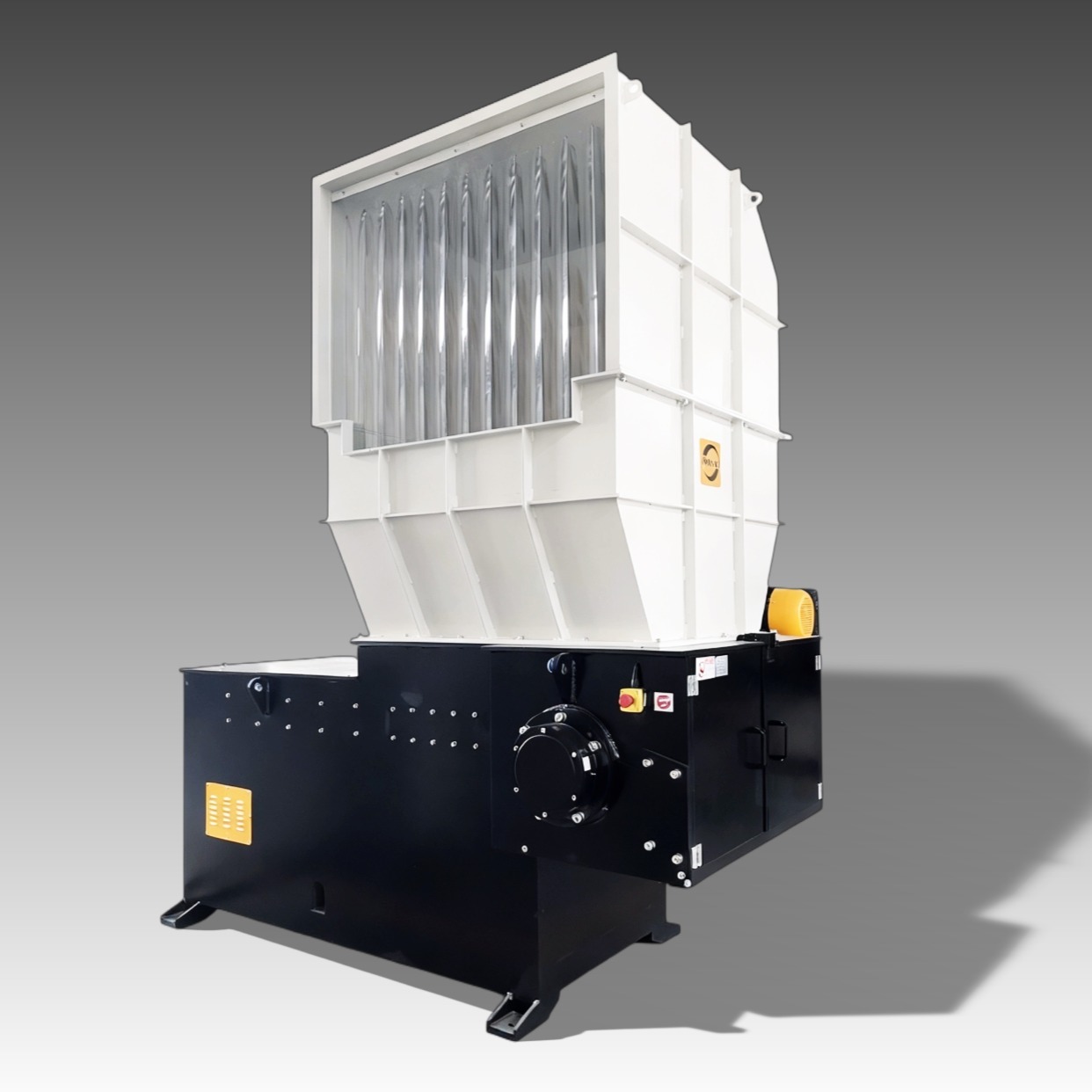
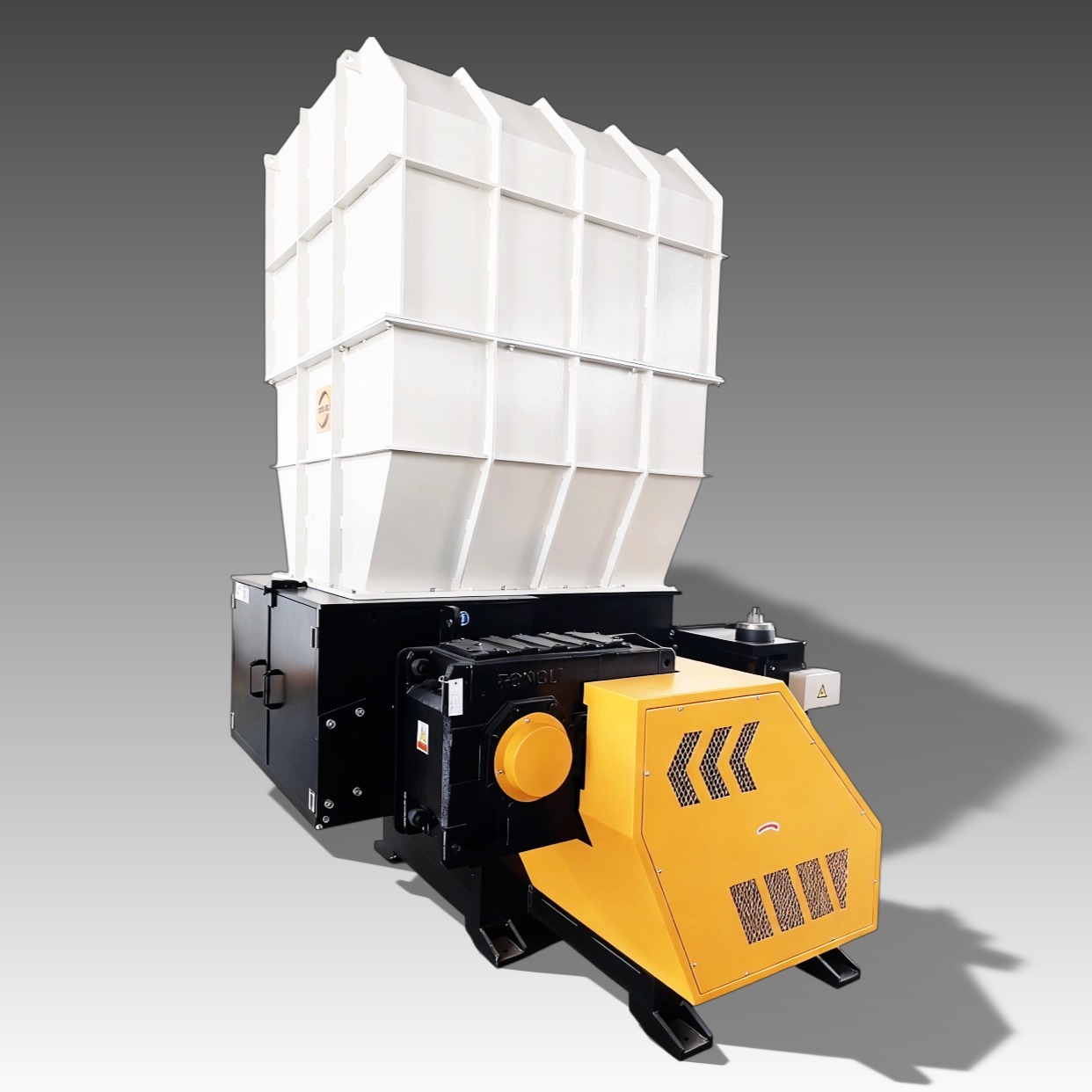
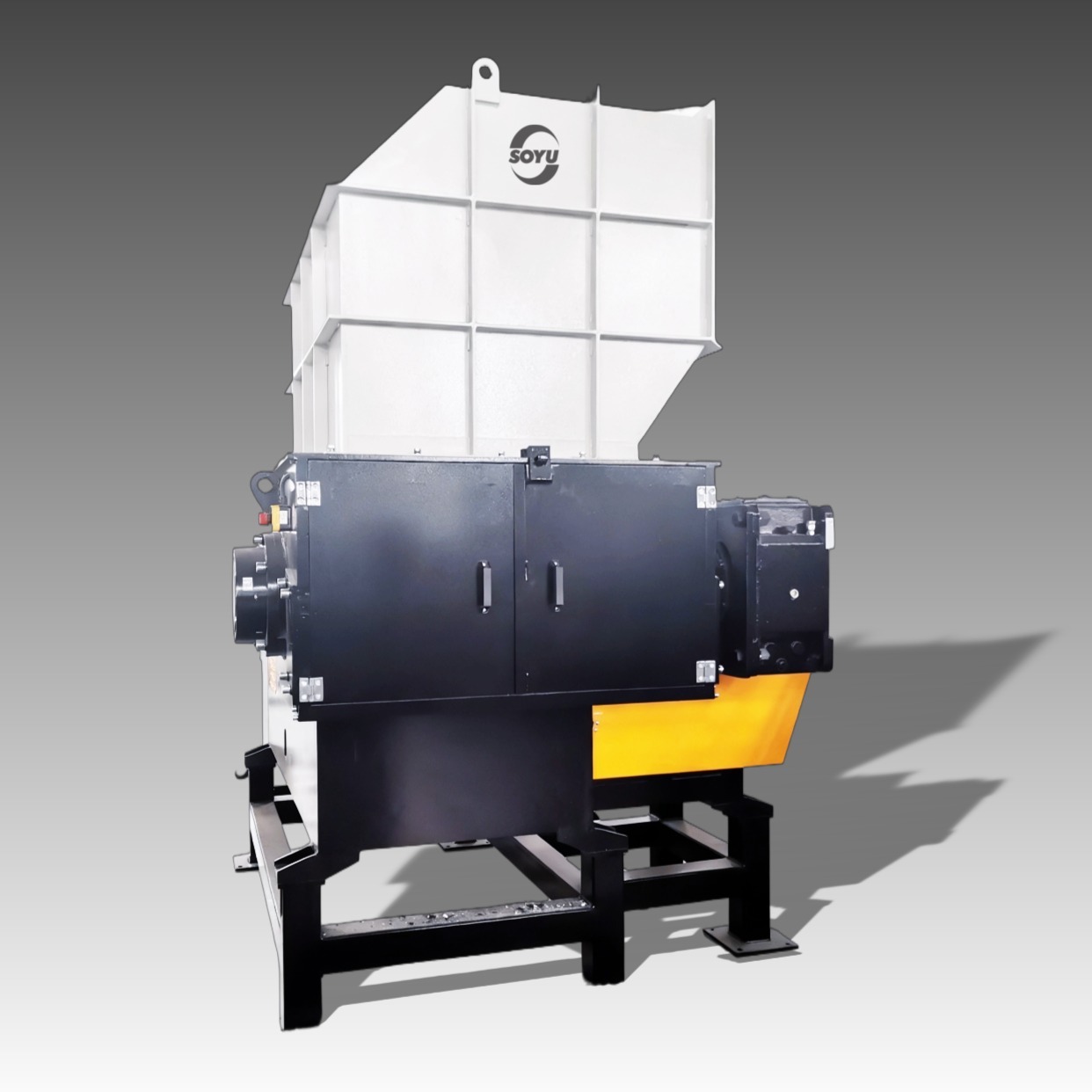
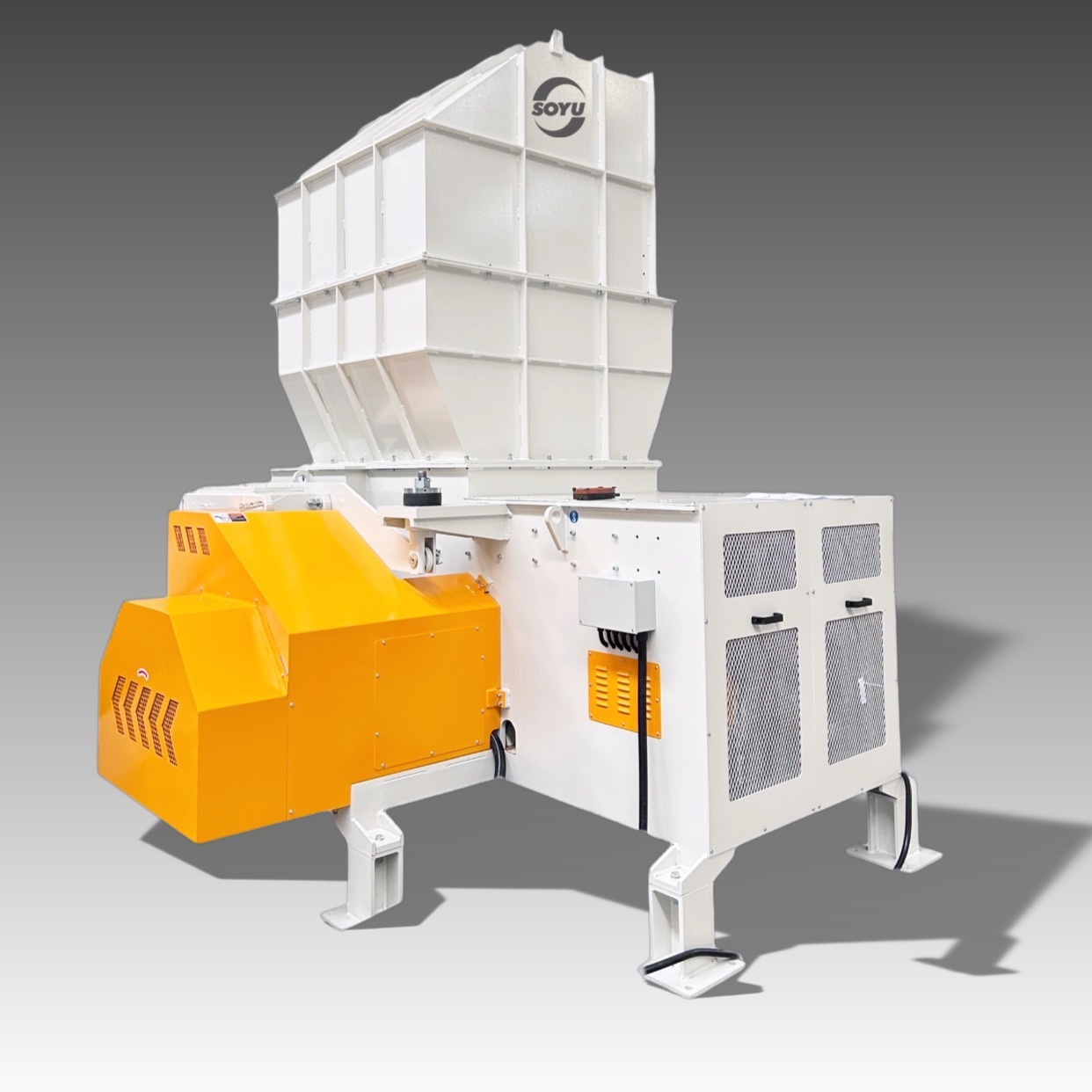
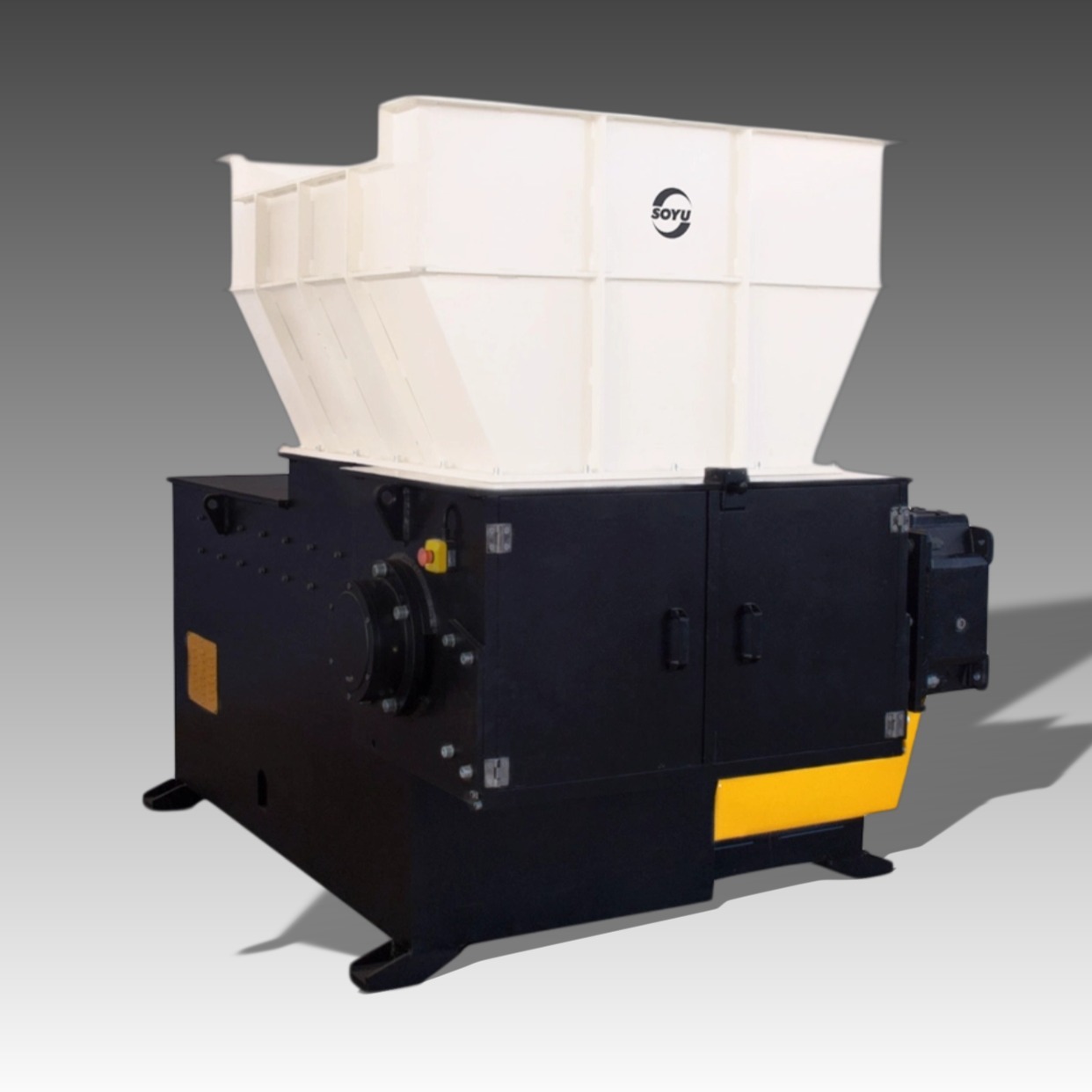
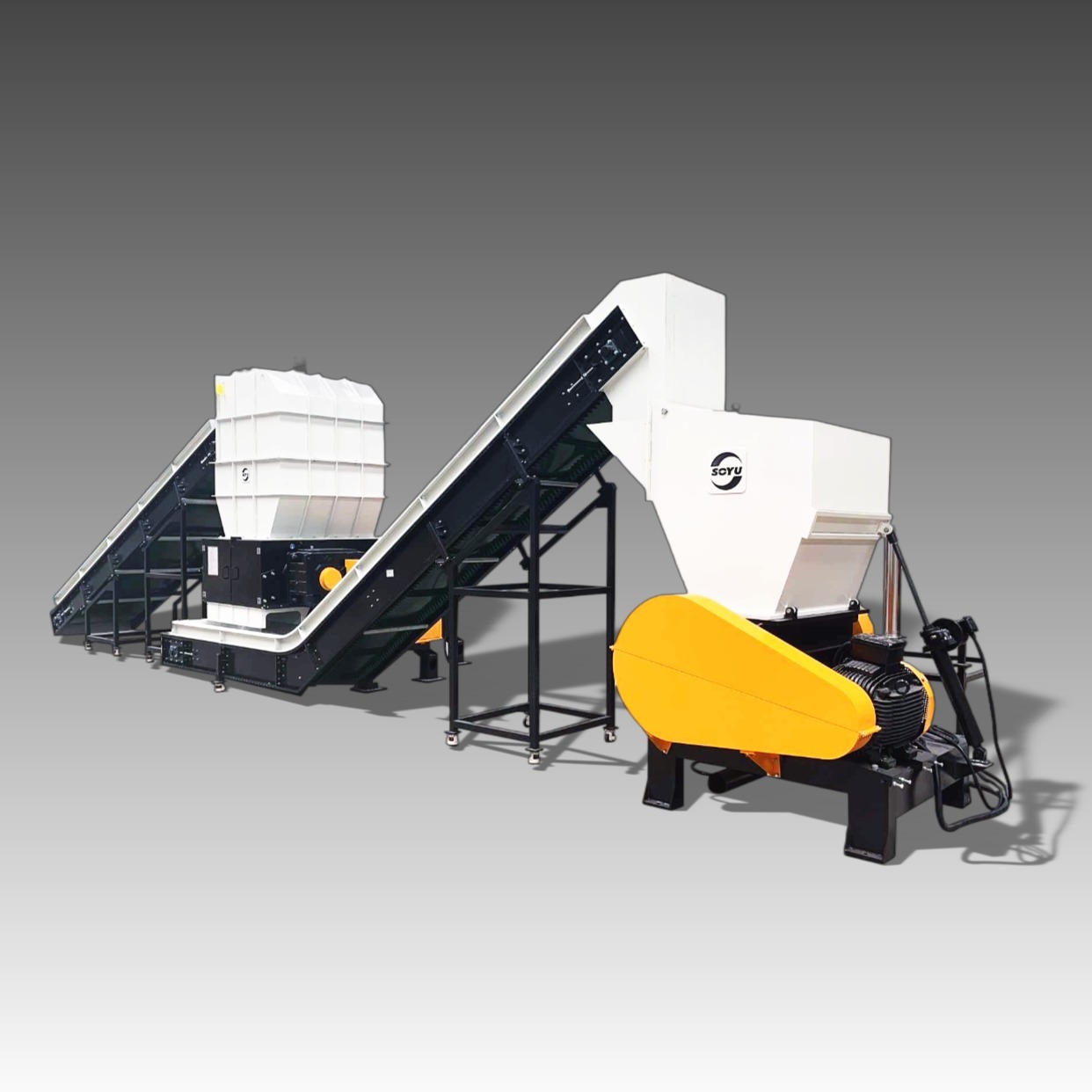
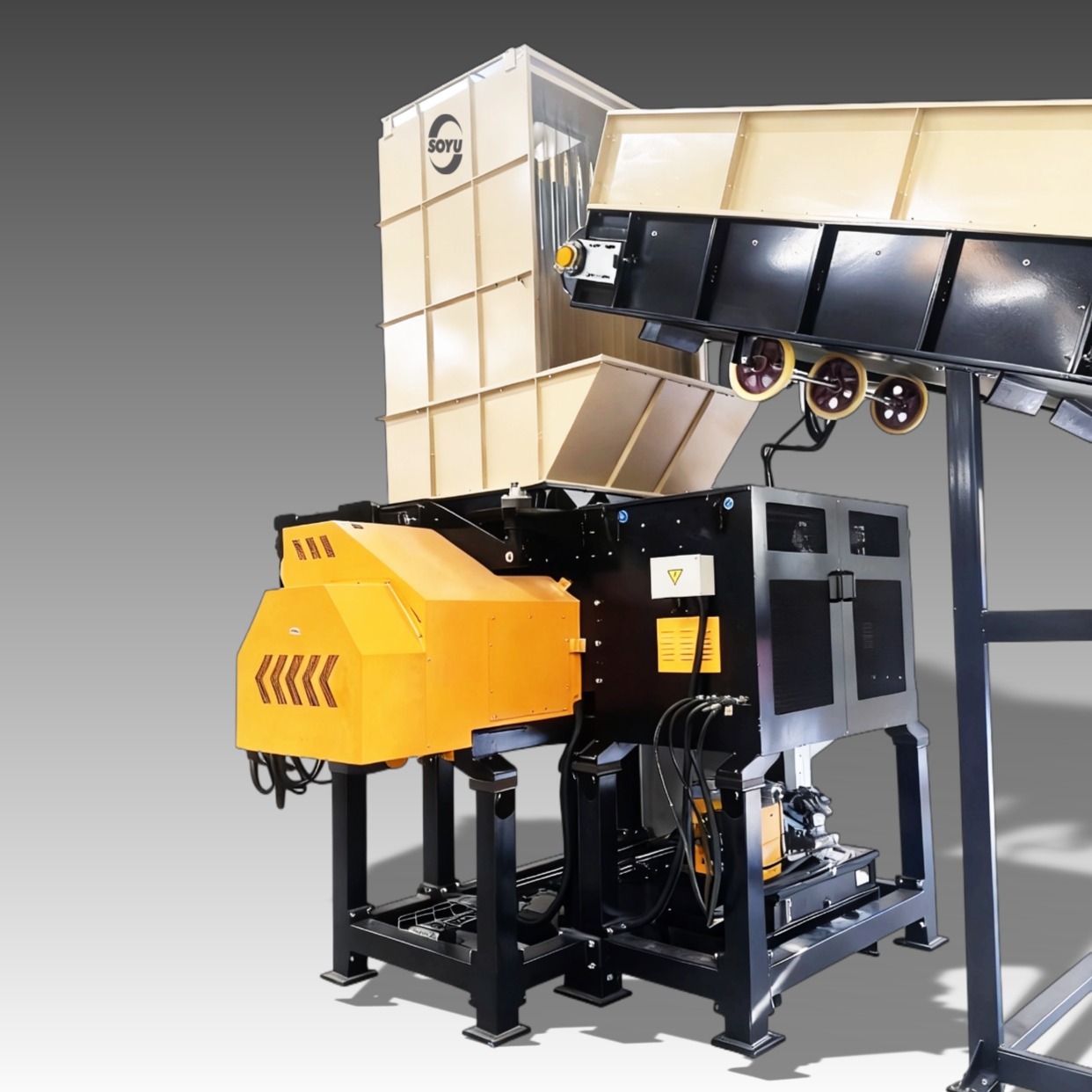
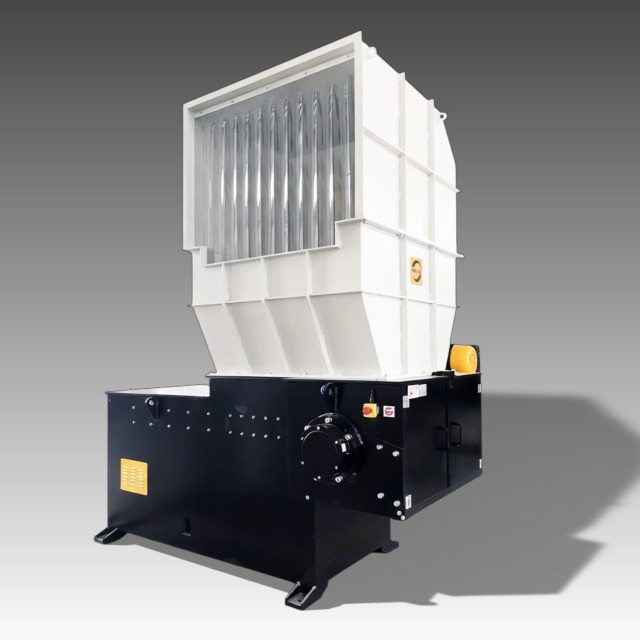
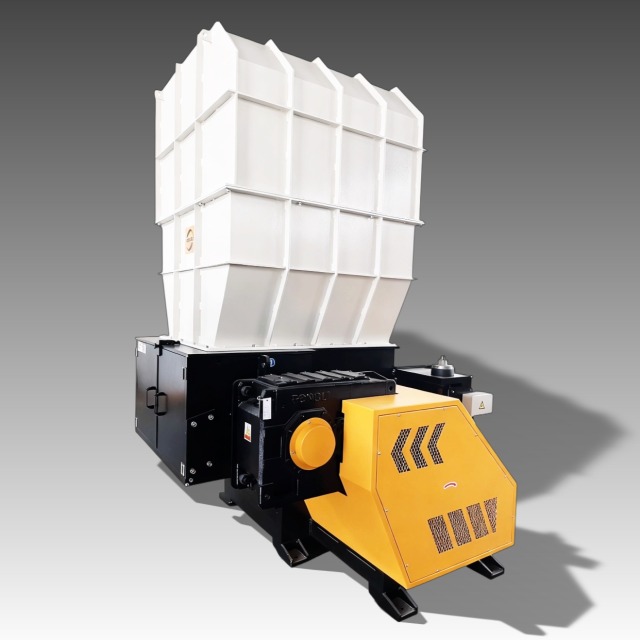
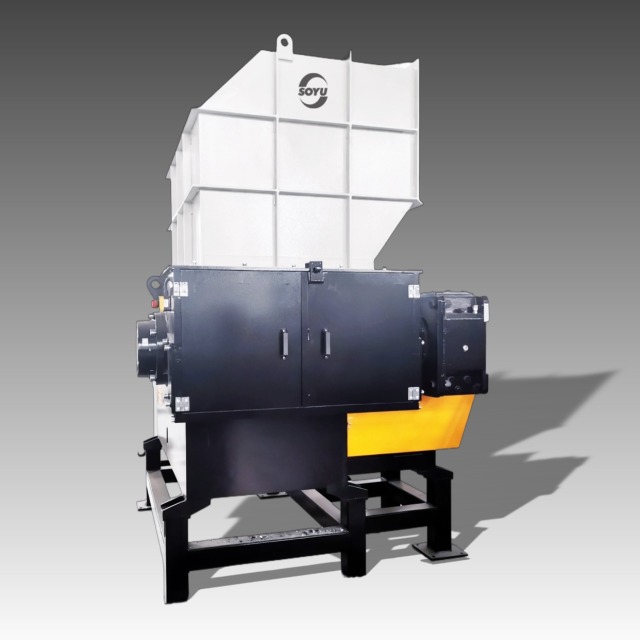
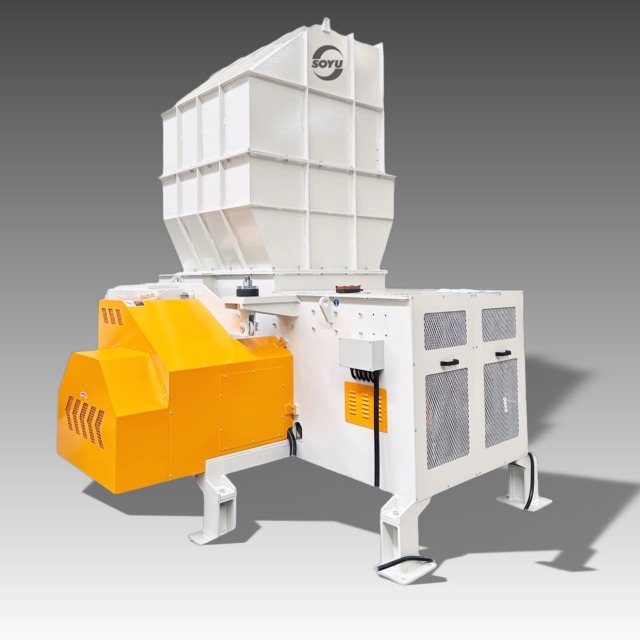
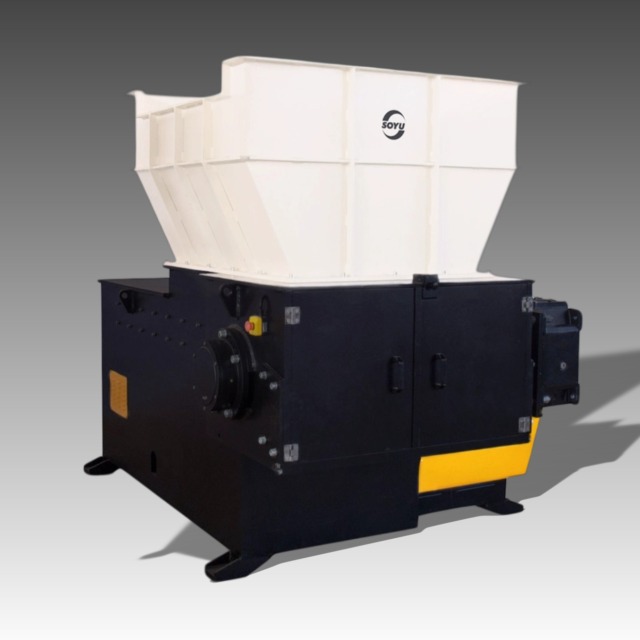
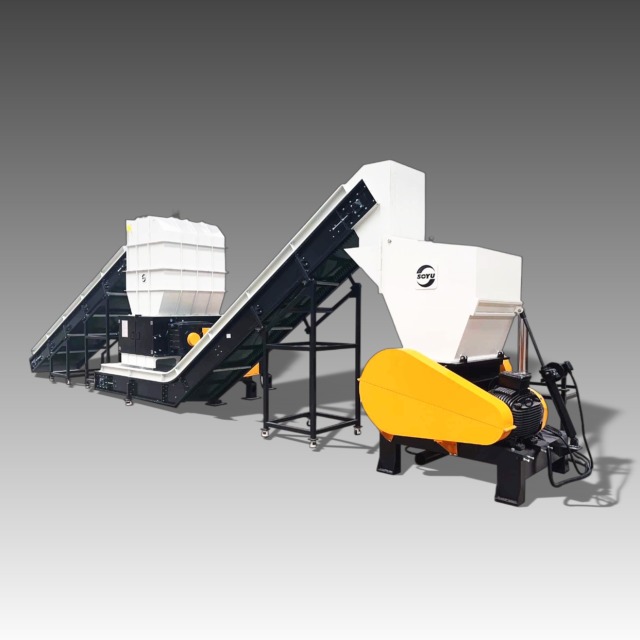
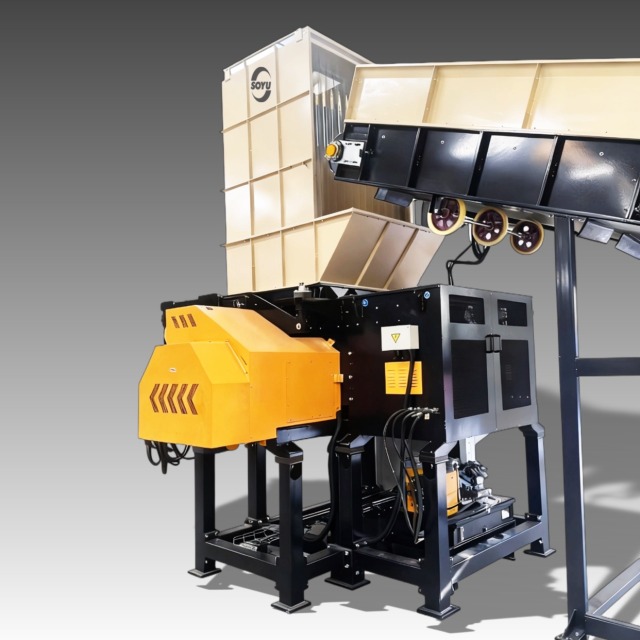
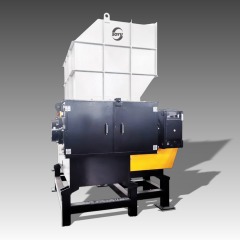
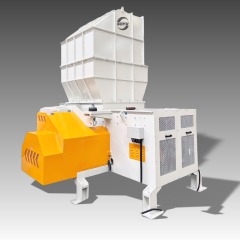
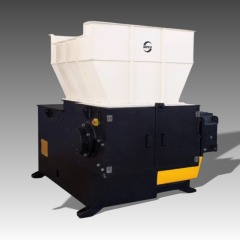
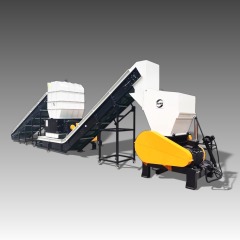
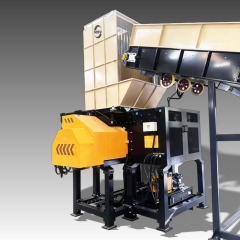
Keeping material moving is the design brief behind the machine's structure, and most of it is visible before you reach the rotor. The housing is fully panelled, with hinged access doors that open onto the rotor and screen area for blade and mesh work, and vented sections set into the panels. The drive train sits behind guarded covers on the side of the body, clear of the material path, so belts and cabling are not exposed to the waste stream. A large ribbed hopper guides bulky items down toward the rotor instead of letting them sit against flat sides. The whole assembly is carried on a fabricated frame with integrated mounting feet, so the unit is levelled and anchored directly on a prepared floor without a separate sub-frame being built. That frame also fixes the working height of the hopper and discharge, which is what the feed conveyor and take-away belt are planned around.
Operational Efficiency & Maintenance
- The pusher follows load, so mixed plastic and wood can run in the same shift without stopping to reset speeds, and a screen change is a planned task rather than a running adjustment.
- Maintenance is scheduled around cutter and screen condition: a drop in output quality or slower throughput usually means the cutting edges are worn, and renewing them at that point keeps particle size consistent for the next process.
- Holding a spare cutter set and a second screen on site turns a change into a job measured in hours rather than days.
- Because this industrial waste single shaft shredder sits at the head of a line, its uptime sets the pace for everything behind it — sorting, washing, granulation and baling all wait on the reduction stage.
- The control system manages the drive and interlocks, so the safety routine does not rest on an operator remembering a sequence.
Plastic Recycling Line Integration
- Bales, drums and film bundles that the sorting line cannot handle go to the shredder first, so the wash and granulation stages behind it receive a steady, sized feed.
- The pusher feeds material into the V rotor under load control, so a tight bale is taken apart gradually instead of hitting the cutters in one lump.
- Screen choice sets the handover size: a coarser aperture where the wash line tolerates bigger pieces, a finer one where the output goes straight to granulation or pelletizing.
- Cutter specification follows contamination level, because dirty post-consumer film and bottles carry abrasives that wear a soft edge quickly.
- Because the shredder rarely works alone, fix the particle size, discharge height and transfer points with an industrial plastic shredder machine supplier before the line layout is signed off.
Wood Waste in Production Plants
Pallets, furniture offcuts and lumber scraps are awkward to store and expensive to haul away at full size, which is where a shredder earns its floor space in a furniture, joinery or pallet plant. Fed into the hopper, pallet blocks and frame sections are pulled apart by the V rotor and reduced to a chip that can go to biomass fuel or composite board production instead of a skip. Variable input is normal in a plant — mixed species, moisture and odd lengths — and the pusher's load sensing absorbs that variation rather than passing it to the rotor. Where the unit is installed inside a material recovery system, it pairs with conveyors on the feed side and dust control on the discharge side, and the discharge size is chosen to match what the boiler or board press accepts. Running the same unit as an industrial wood shredder machine through the week and switching screens for occasional plastic or cardboard duty is practical, provided the cutter set suits both materials. Siting it close to where the waste is generated keeps handling to a minimum and releases yard space that stacked pallets were occupying.
Ordering & Delivery
Delivery typically runs 6 to 8 weeks from order, with the schedule set by order size and the custom options chosen — a non-standard screen set or cutter configuration adds time to the build. Support continues past shipment, from commissioning through to after-sales service. Once the warranty period has ended, original factory spare parts remain available at cost price, so the machine can stay in service over a long working life. Before the order is released, confirm the screen apertures, cutter configuration and any conveyor interface requirements so the unit arrives ready to install.
Certification & Quality
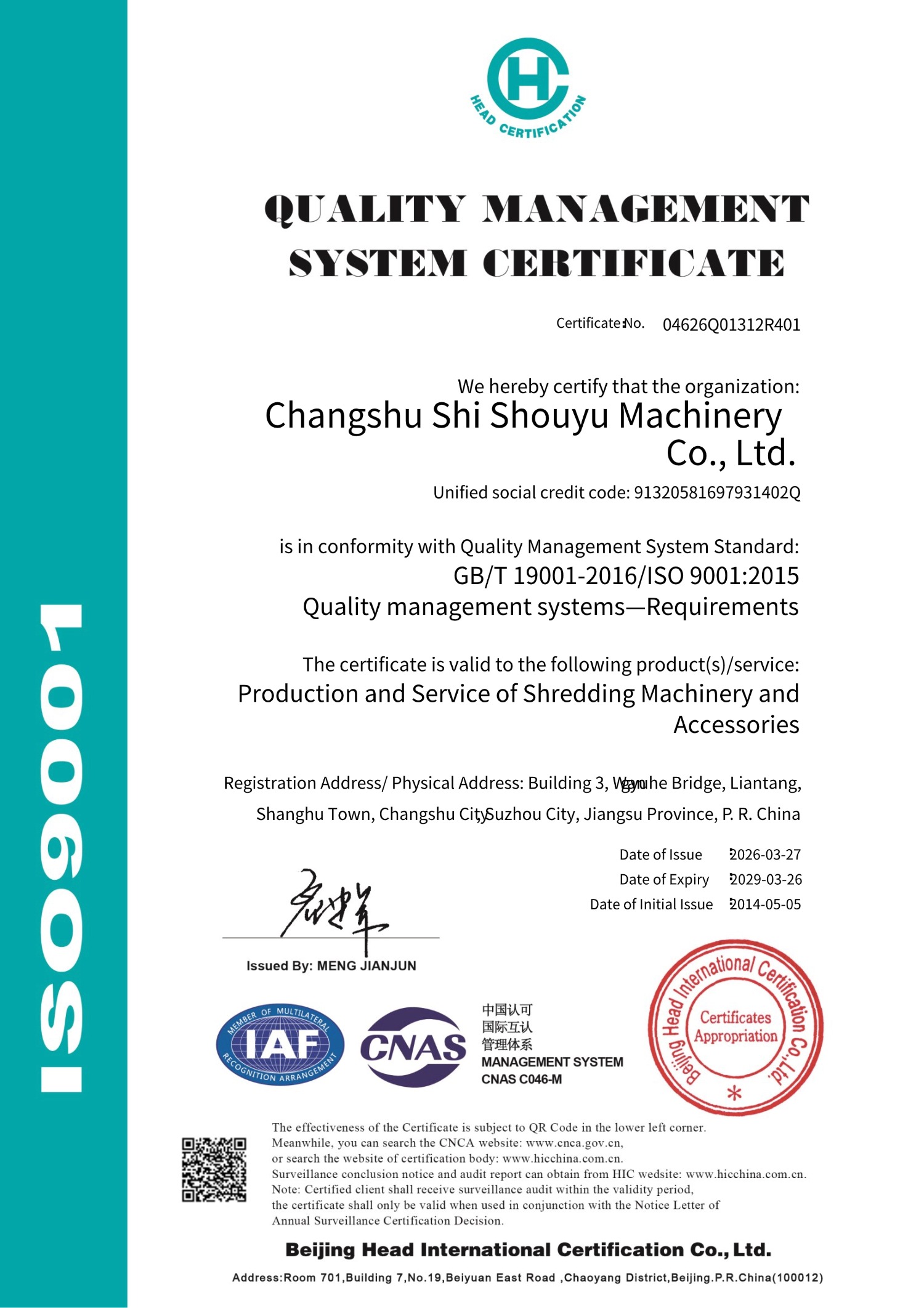
- ISO 9001 certification covers the quality system behind the shredding and separation equipment, with documented control through fabrication and assembly.
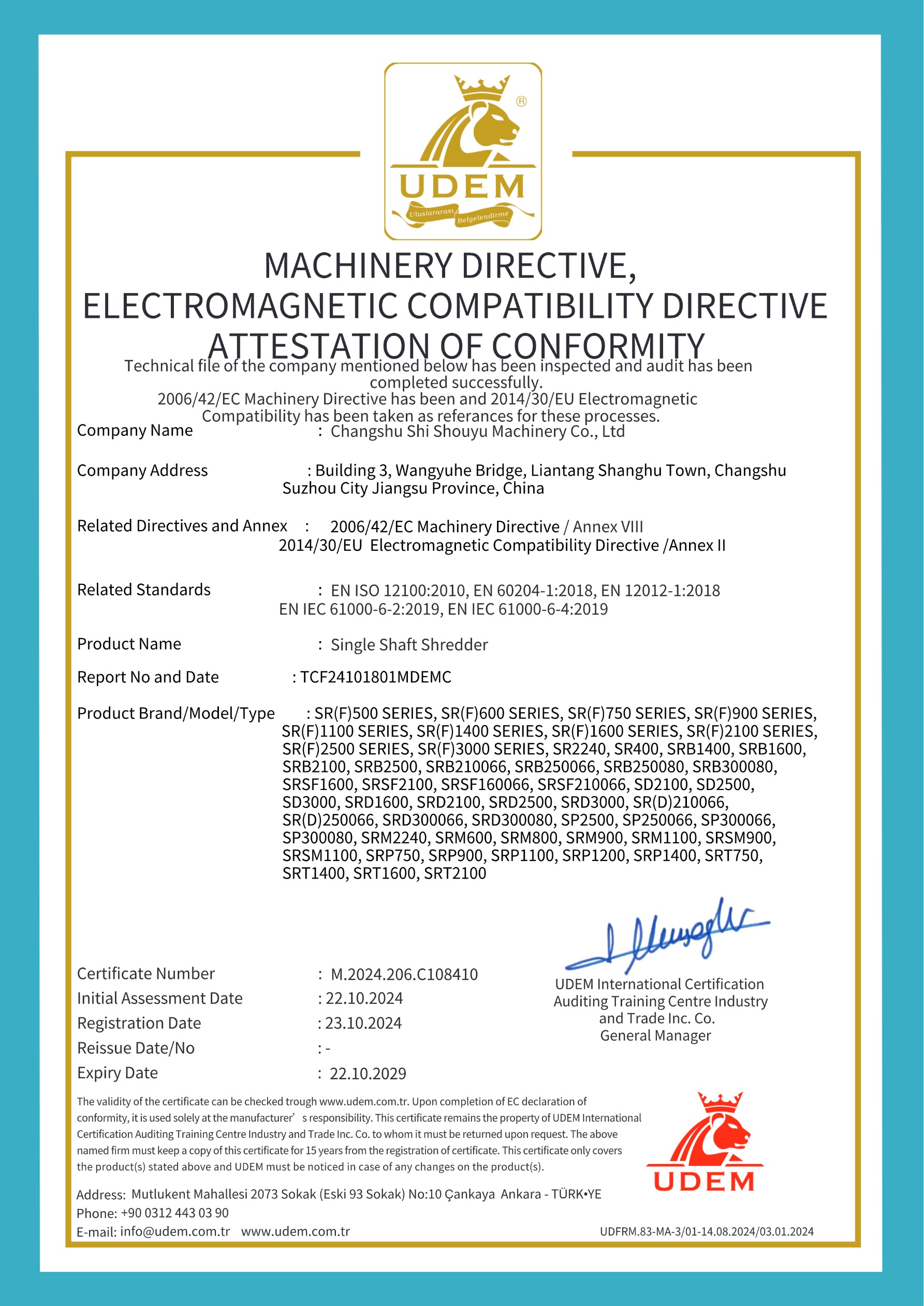
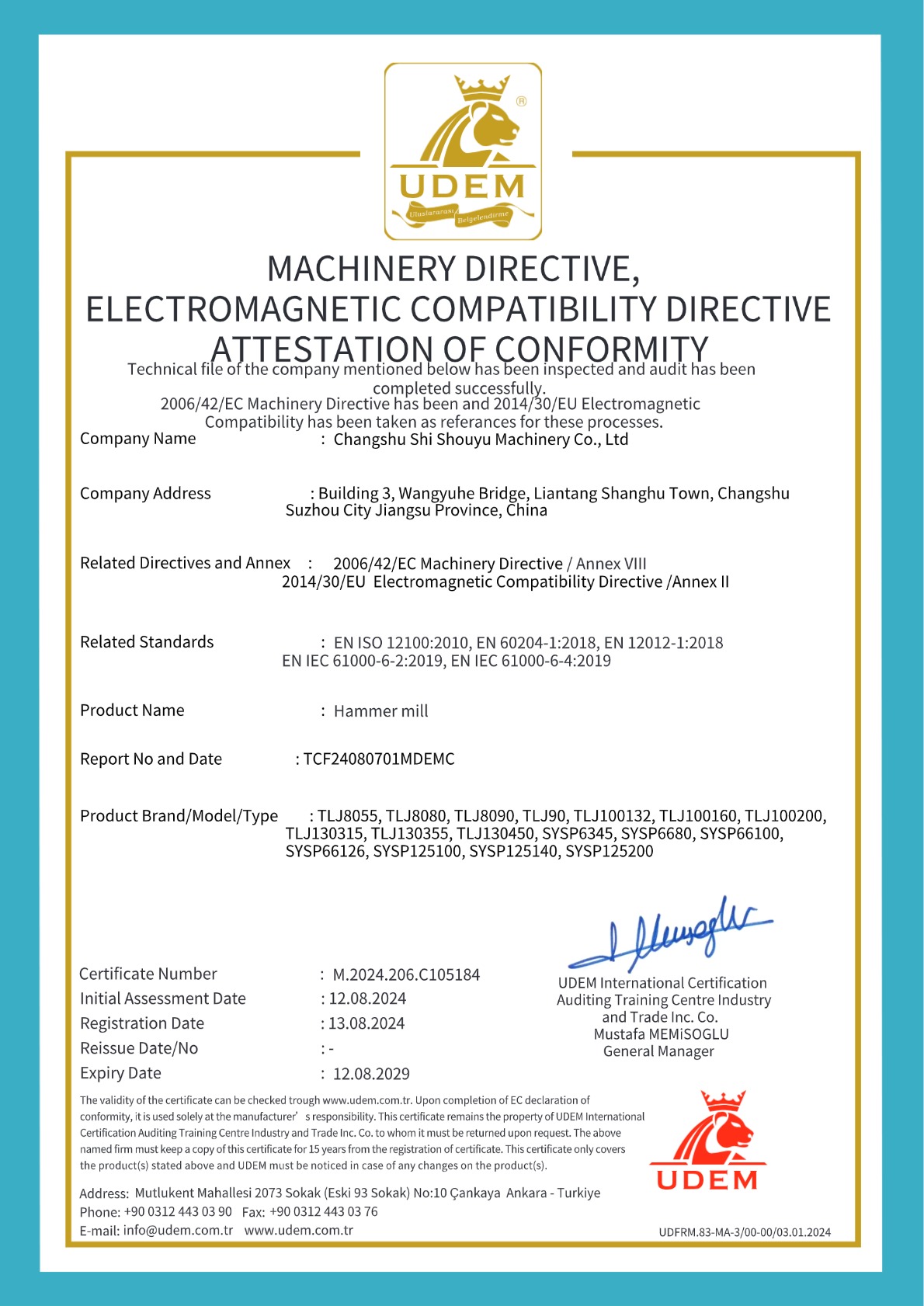
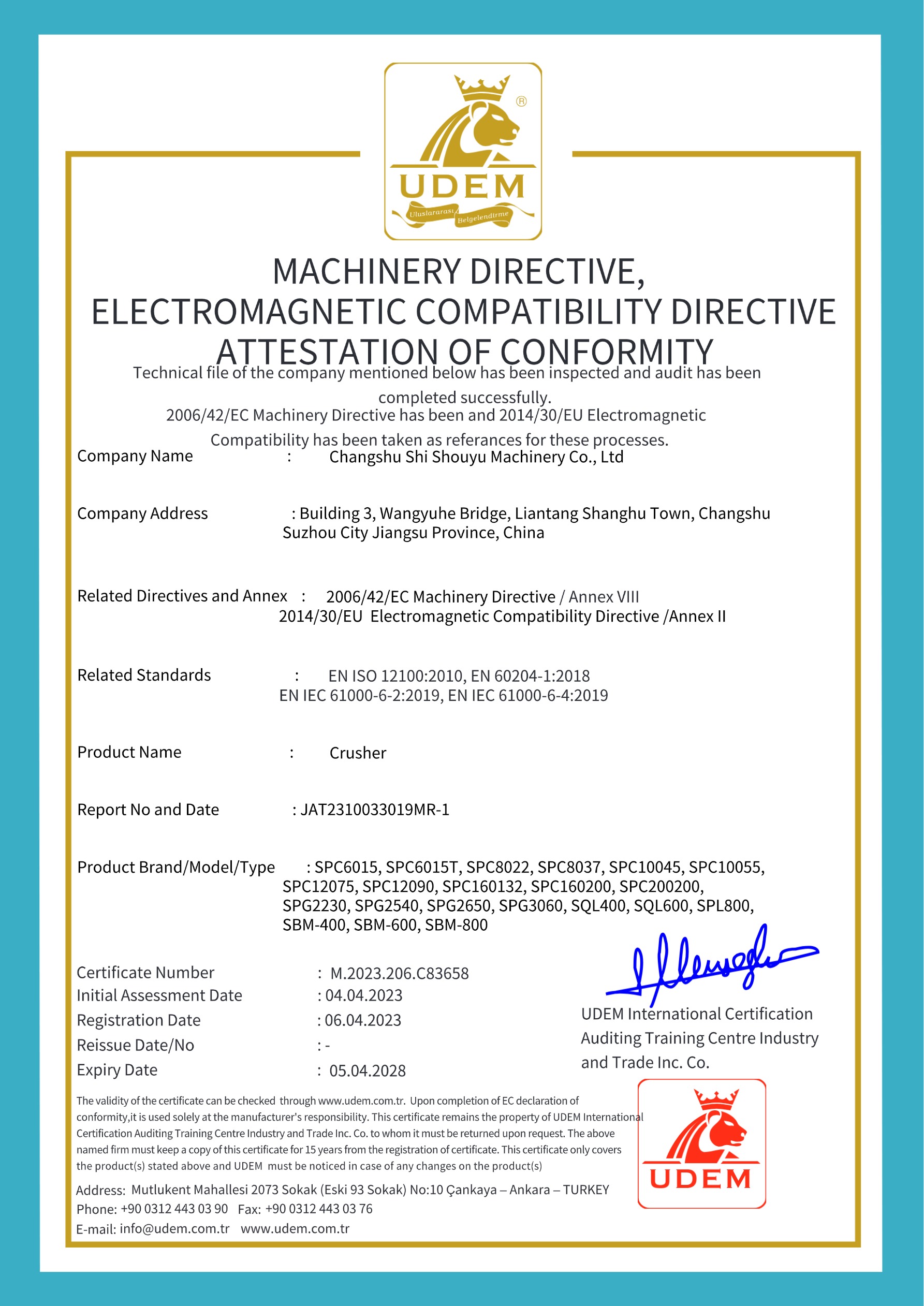
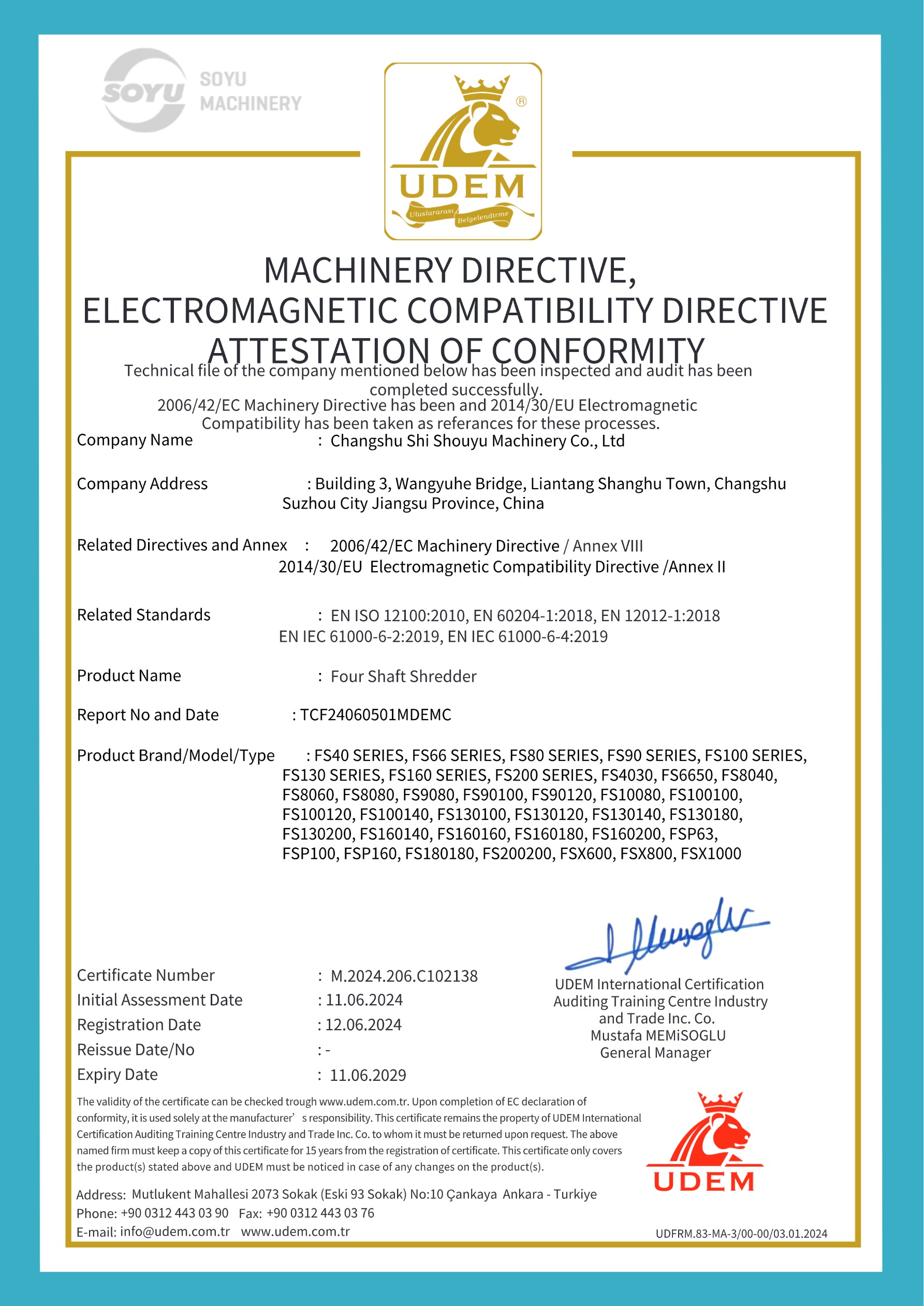
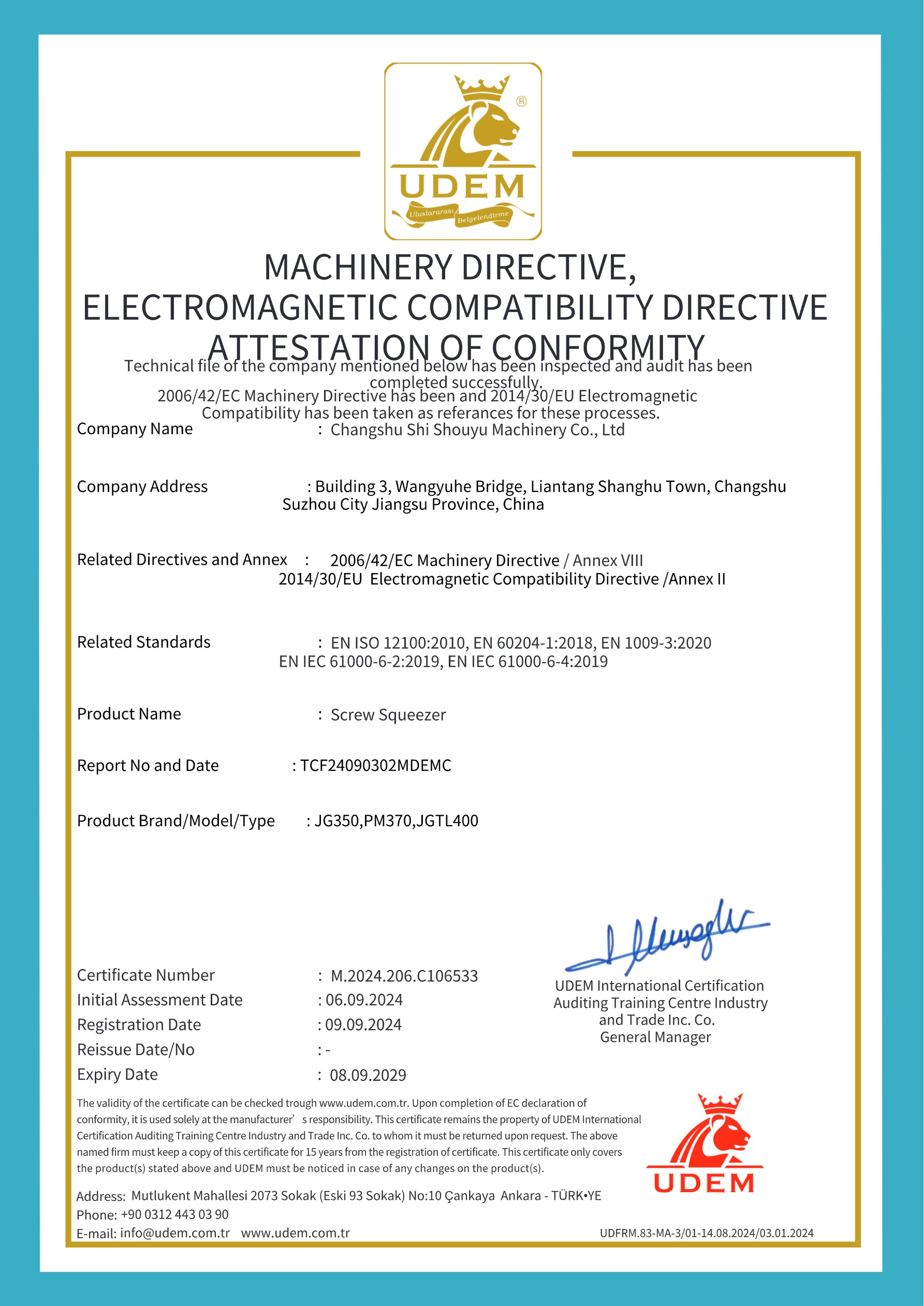
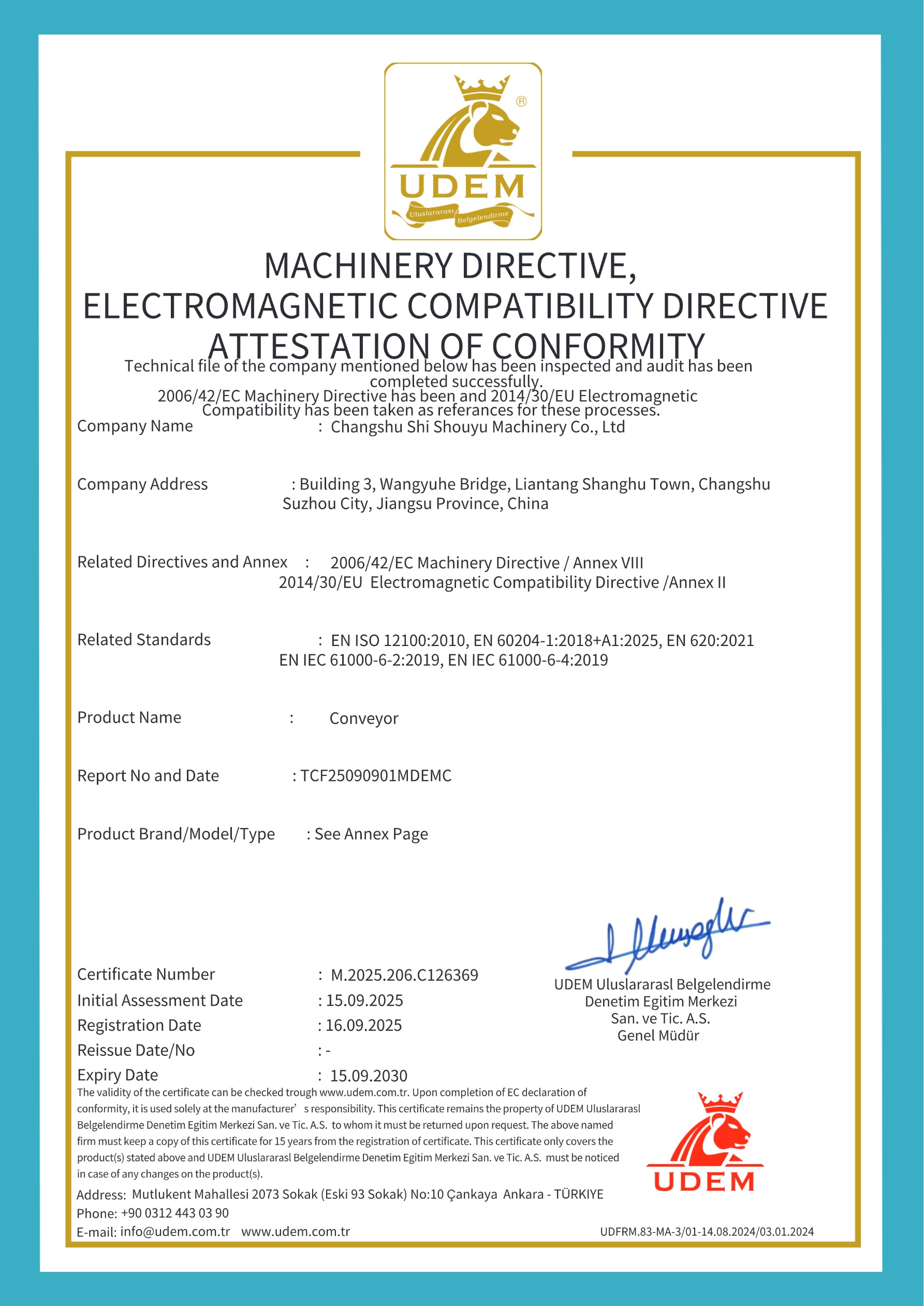
- Manufacture complies with CE standards, which matters where a project has to clear a conformity check before the machine is installed.
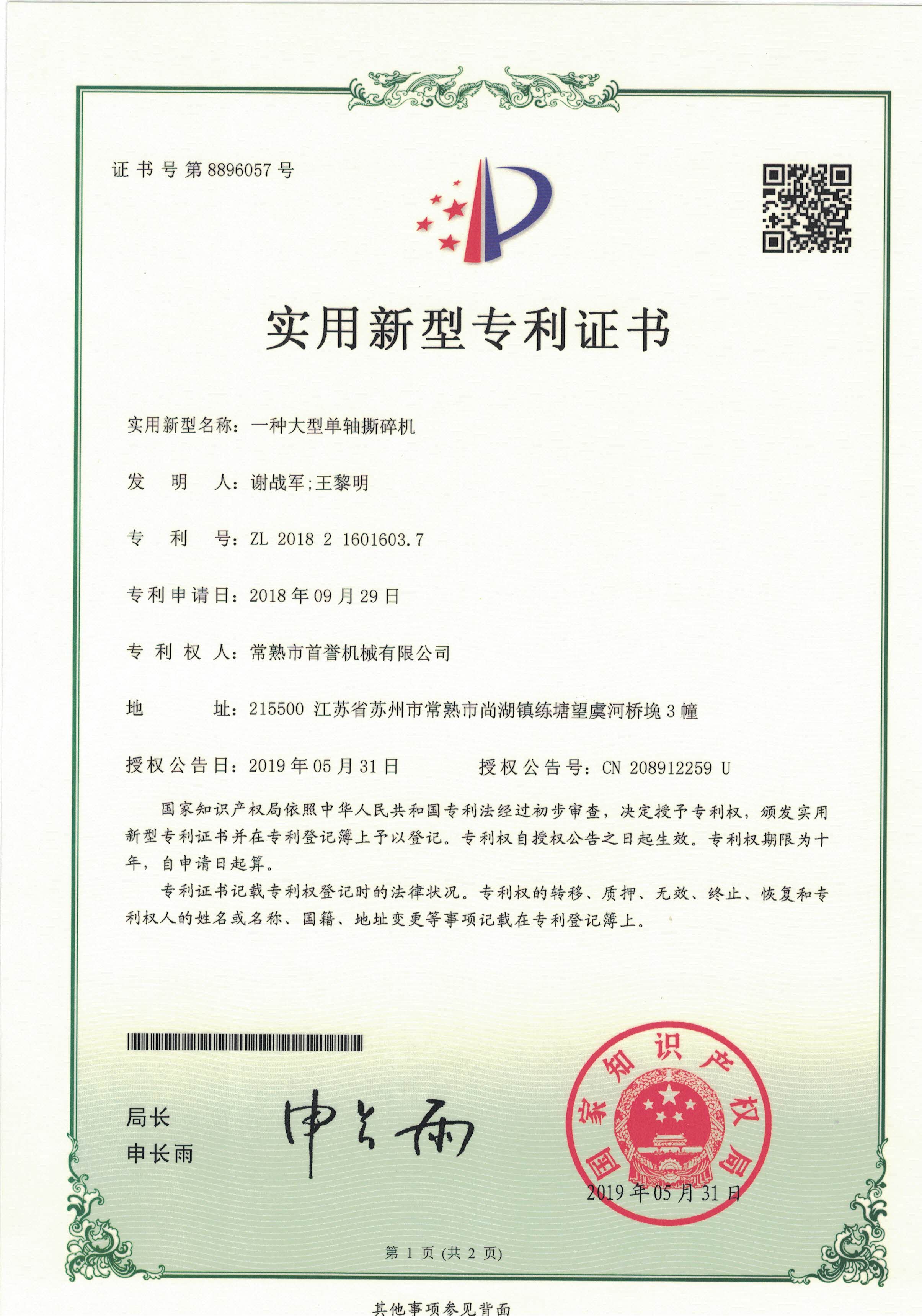
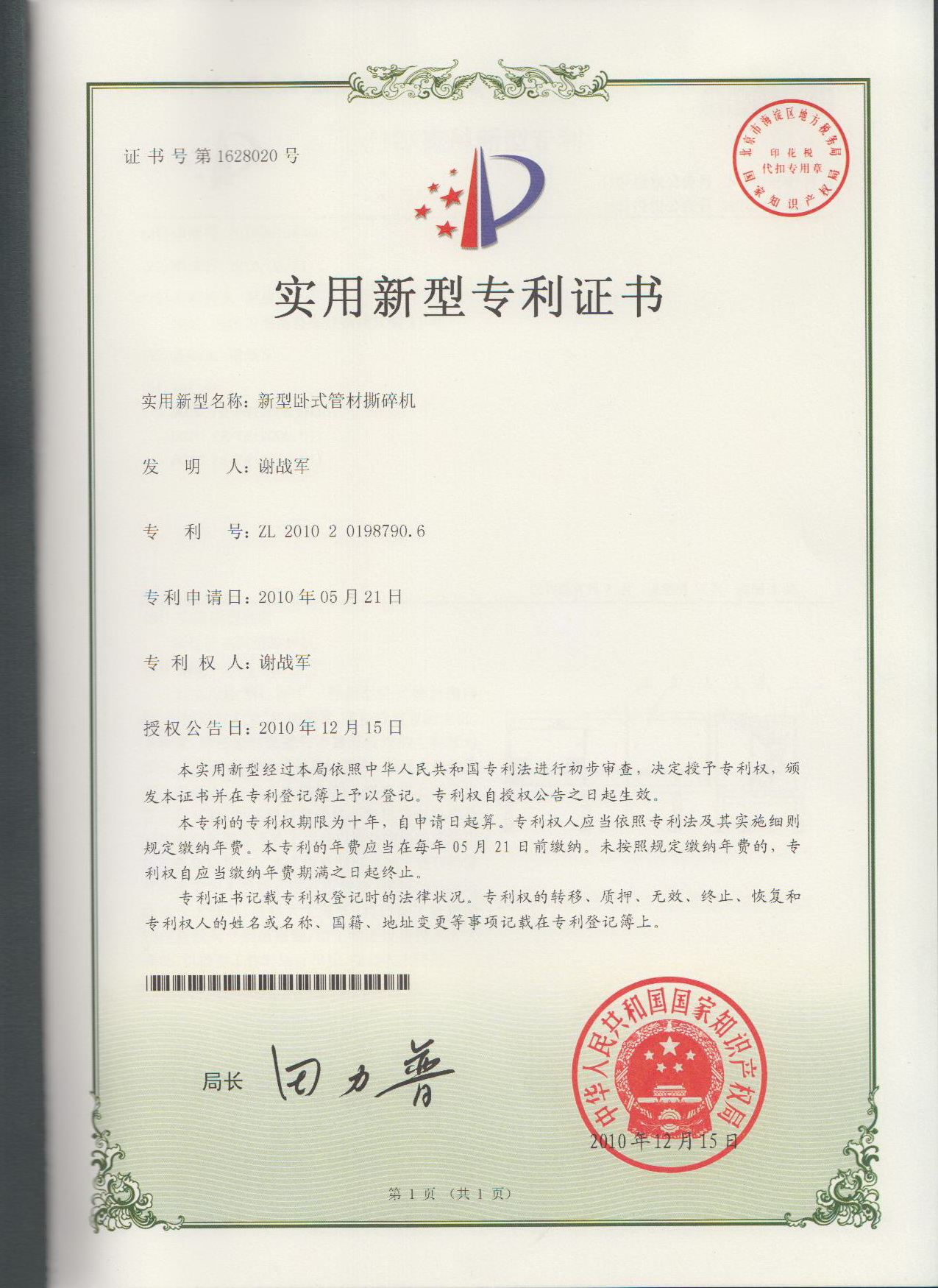
- The company holds over 80 national patents for its core shredding technologies, including rotor and cutter arrangements used across the range.
- SOYU equipment operates in more than 80 countries and regions, so export documentation and technical support are routine rather than exceptions.
- Material trials on your own feedstock can be arranged with the technical team before the cutter and screen specification is fixed.
Technical Support & Model Matching
Choose equipment matched to your operating requirements with technical support from SOYU. We review your material characteristics, target throughput, site conditions and environmental requirements to recommend suitable models and configurations. Our support covers installation, commissioning and operator training to help your team prepare for operation. Overseas customers can access remote technical assistance for troubleshooting, while maintenance and original spare parts support continue after delivery. Original spare parts remain available at cost after the warranty period ends.
FAQ
What materials can this single shaft shredder process?
It handles plastics such as PET bottles, HDPE drums, films and injection molding scrap, plus paper and cardboard, wood, cable sheaths and insulation, fiberglass, textiles, agricultural residues and non-hazardous composites. The machine is configured as an industrial waste single shaft shredder for feeds with minimal metal content, so heavy metal scrap or mixed waste carrying a high metal share needs a different configuration. Tell us what is in your stream and the cutter and screen specification is set against it.
Can the machine be customised for different shredding requirements?
Cutters are supplied in different configurations and material compositions, and screens come in a range of mesh sizes that set the output size. Every unit is built to order by SOYU, an SR900 single shaft shredder manufacturer, so the rotor, cutter and screen specification is agreed before production rather than adapted afterwards. Changing the screen alone is often enough to move between a coarse volume-reduction setting and a finer one for downstream processing.
How is the machine installed, and what protects operators during maintenance?
Installation and commissioning guidance is provided so the unit is levelled on its own frame, connected and run correctly from the first shift. The screen unit carries an automatic shut-off: opening it stops the machine, so inspection and mesh changes cannot be made with the rotor turning. Hinged access doors give reach to the rotor and screen area without dismantling the body.
What sets the output particle size?
The screen mesh sets it. Screens are replaceable and supplied in a range of configurations, so the same machine runs a coarse, open mesh when it serves as an industrial wood shredder machine on pallet scrap and a tighter aperture when plastic is being sized for washing or granulation. Choose the screen against what the next stage accepts rather than against one preferred size.
Can one machine handle both plastic and wood?
Both streams run on the same unit within the limits of the cutter and screen fitted. Pallet scrap and lumber offcuts generally want a coarse screen and a wood-duty cutter, while film and bottles want a finer aperture and an edge specified for abrasive or soft plastic. Sourcing the unit from an industrial plastic shredder machine supplier that also configures wood streams means the specification can cover both duties from the start, and the changeover is a screen and cutter set rather than a second machine.