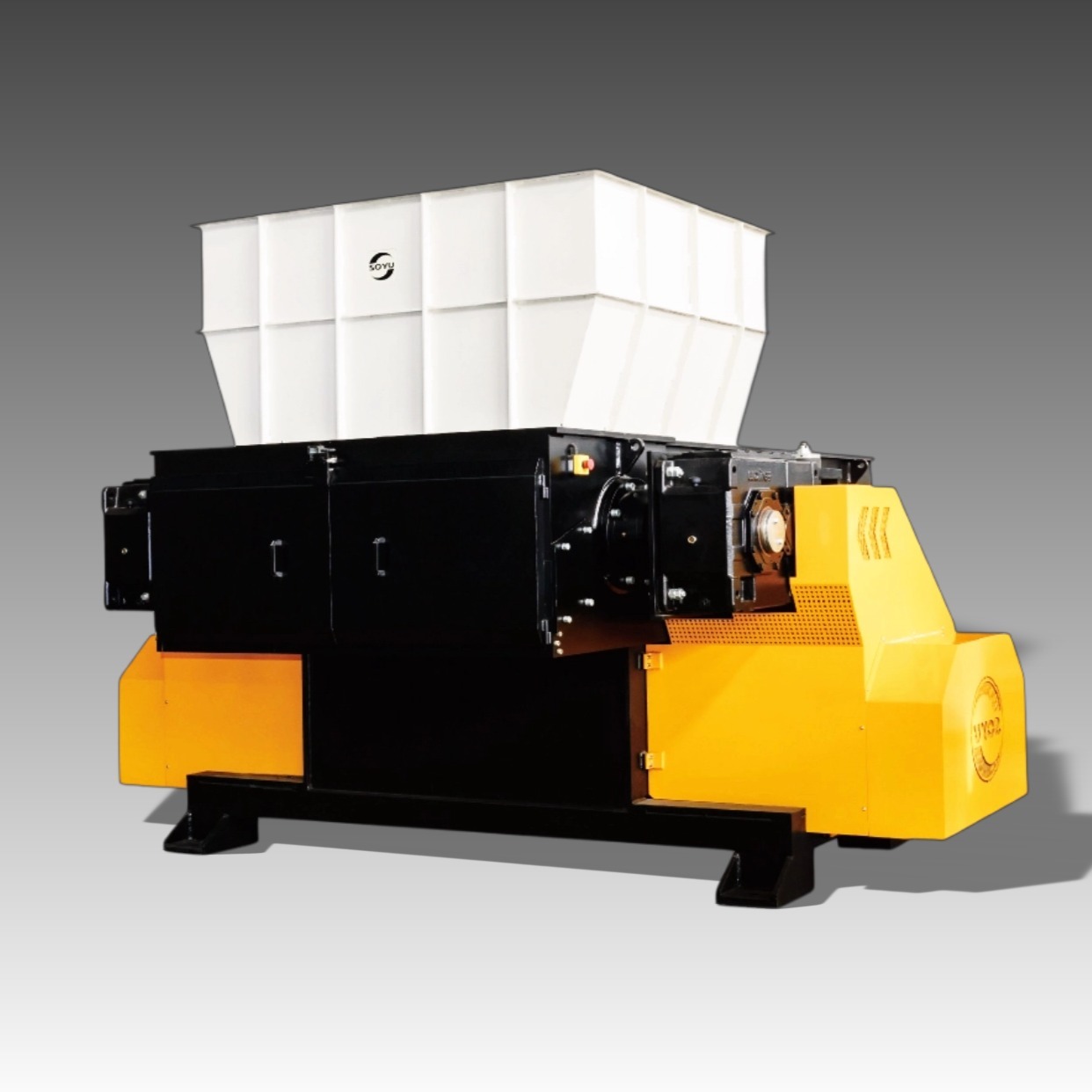
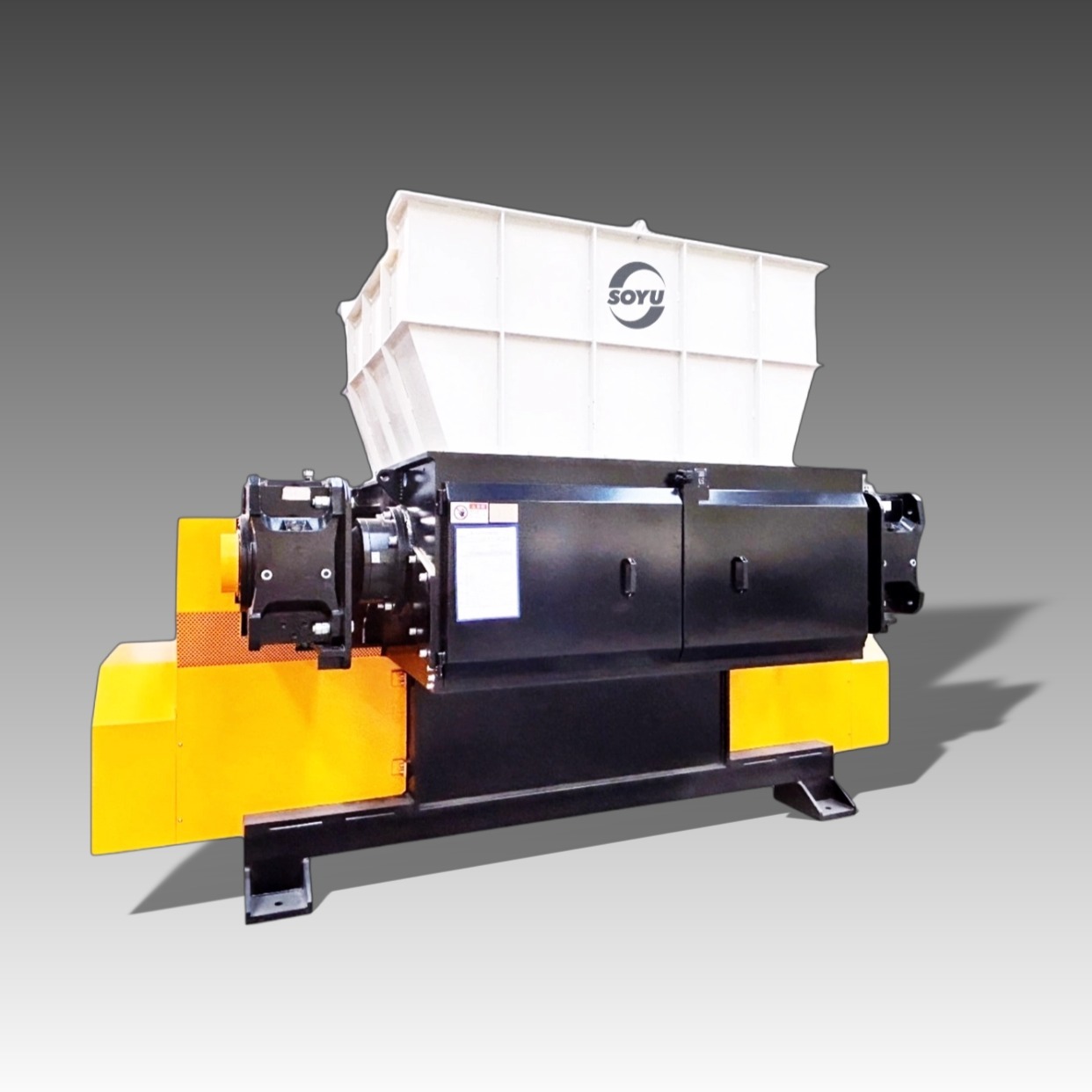
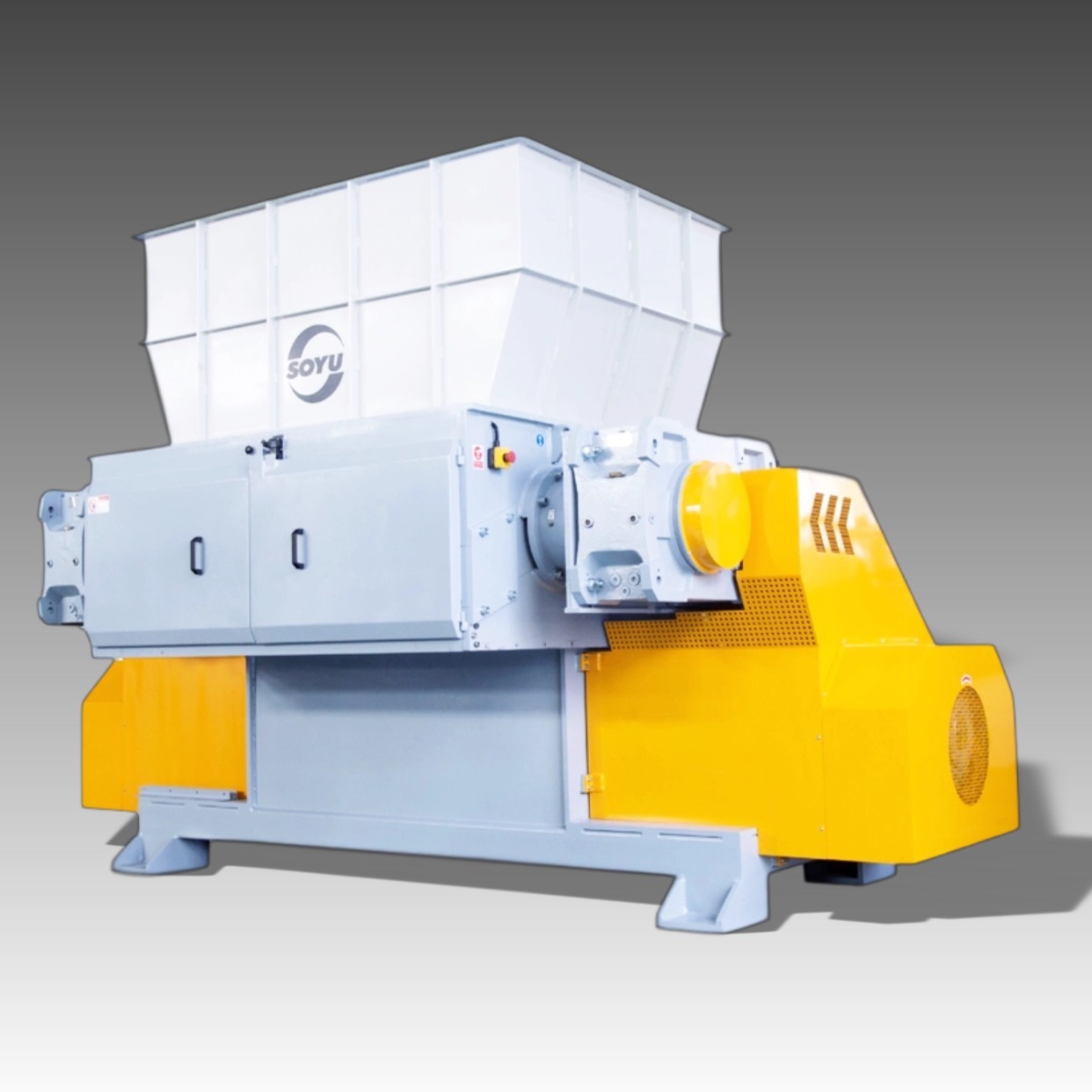
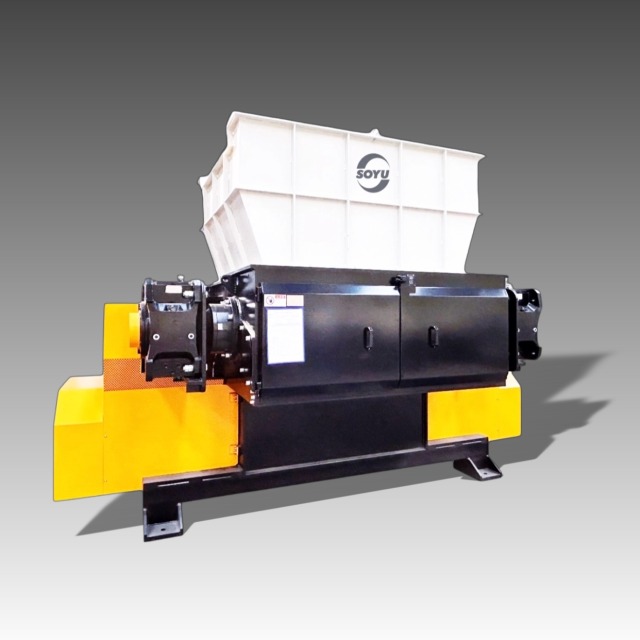
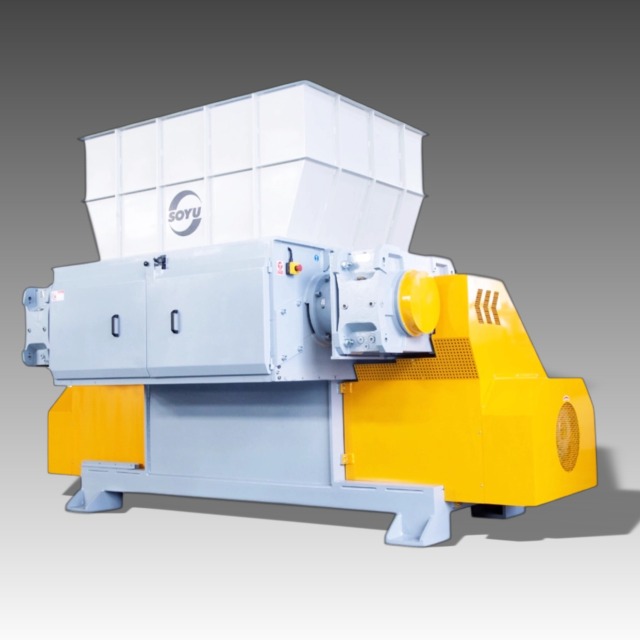
SR Series Specifications
| Parameter | SR600 | SR750 | SR900 | SR1400 | SR1600 single shaft shredder | SR2100 |
|---|
| Main shaft speed | 73 rpm | 73 rpm | 73 rpm | 73 rpm | 73 rpm | 73 rpm |
| Ram travel | 500 mm | 820 mm | 820 mm | 820 mm | 1000 mm | 1000 mm |
| Rotor diameter | Ø220 mm | Ø400 mm | Ø400 mm | Ø400 mm | Ø480 mm | Ø480 mm |
| Rotor blades | 23 | 44 | 52 | 80 | 94 | 122 |
| Fixed blades | 4 | 6 | 6 | 10 | 12 | 16 |
| Discharge height | 500 mm | 610 mm | 610 mm | 610 mm | 950 mm | 950 mm |
| Screen hole diameter | 40 mm | 40 mm | 40 mm | 40 mm | 40 mm | 40 mm |
| Motor power | 18.5 kW | 37 kW | 45 kW | 75–90 kW | 2 × 55–2 × 75 kW | 2 × 75–2 × 90 kW |
| Hydraulic power | 1.5 kW | 2.2 kW | 2.2 kW | 5.5 kW | 7.5 kW | 7.5 kW |
| Cutting chamber dimensions | 540 × 600 mm | 830 × 708 mm | 830 × 840 mm | 830 × 1302 mm | 1000 × 1533 mm | 1000 × 1995 mm |
| Overall dimensions, L × W × H | 1800 × 1350 × 1700 mm | 2810 × 2000 × 2115 mm | 2810 × 2100 × 2115 mm | 2810 × 2890 × 2115 mm | 3475 × 4100 × 2700 mm | 3475 × 4900 × 2700 mm |
| Approximate weight | 1600 kg | 4460 kg | 4560 kg | 6200 kg | 10800 kg | 13000 kg |
Rotor, Screen & Feeding
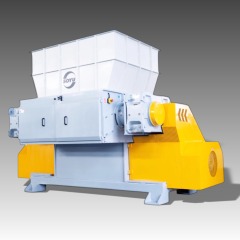
- The V-arranged rotor on the SR1600 single shaft shredder helps prevent material build-up during operation.
- Its cutter layout keeps the cutting action distributed along the rotor rather than concentrating material at one location.
- CrMoV high-alloy wear-resistant steel forms the rotating blades.
- Abrasive contamination and the condition of incoming scrap still influence wear, so cutter condition needs attention even when processing familiar materials.
- As an SR1600 single shaft shredder manufacturer, we offer different cutter configurations and material compositions to suit specific applications.
- Hardness, toughness and abrasiveness are separate considerations: a configuration suited to easily fractured scrap may need review when the feed changes to a tougher material.
- Replaceable screens provide different configurations and mesh sizes for production requirements.
- The specification table lists 40 mm holes, while the available aperture range extends from 40 to 100 mm; the fitted screen needs to match the agreed material and discharge requirement.
- Screen openings govern discharge sizing, but flexible strips and irregular fragments do not behave like rigid, uniformly shaped pellets.
- Match the aperture to the acceptance requirements of the following process, and inspect actual shredded material where fragment shape is important.
- A hydraulic pusher advances material toward the single-shaft rotary blades.
- Feeding and cutting work together, so changes in the form of the incoming scrap can affect how steadily material enters the cutting area.
Materials & Applications
| Specification | Detail |
|---|
| Material Category | Materials |
| Plastics | PET bottles, HDPE drums, plastic films, and injection molding scrap. |
| Paper & Cardboard | Corrugated boxes, office waste, and pulp residues. |
| Wood | Pallets, lumber offcuts, sawdust lumps, and furniture waste. |
| Wires & Cables | Non-metallic sheaths and insulation materials. |
| Additional Materials | Fiberglass, agricultural residues (straw, husks), textile waste, and non-hazardous composite materials. |
| Feedstock Boundary | Materials with minimal metal content. |
Product Videos & Cases
Plastic, wood pallet, plastic lump, wood and glass fiber demonstrations cover different feed forms. The wood demonstrations provide additional views of material entering and leaving the cutting process. Watch the behavior of the actual pieces, including how readily they enter the hopper and how the discharge looks, rather than treating a material name as a production rating.
A scrap wood shredder trial is most useful when the test material resembles the waste generated in normal production. Variations in moisture, coatings, embedded fasteners and piece shape can change operating behavior. A clean, easy-to-process test batch may give a different result from mixed incoming waste.
SOYU supports material testing as a single shaft plastic shredder supplier. Processing capacity, energy consumption, final particle characteristics and video records can be assessed during an application trial. Comparing these results under the same feed conditions gives a more useful operating picture than comparing installed motor power alone.
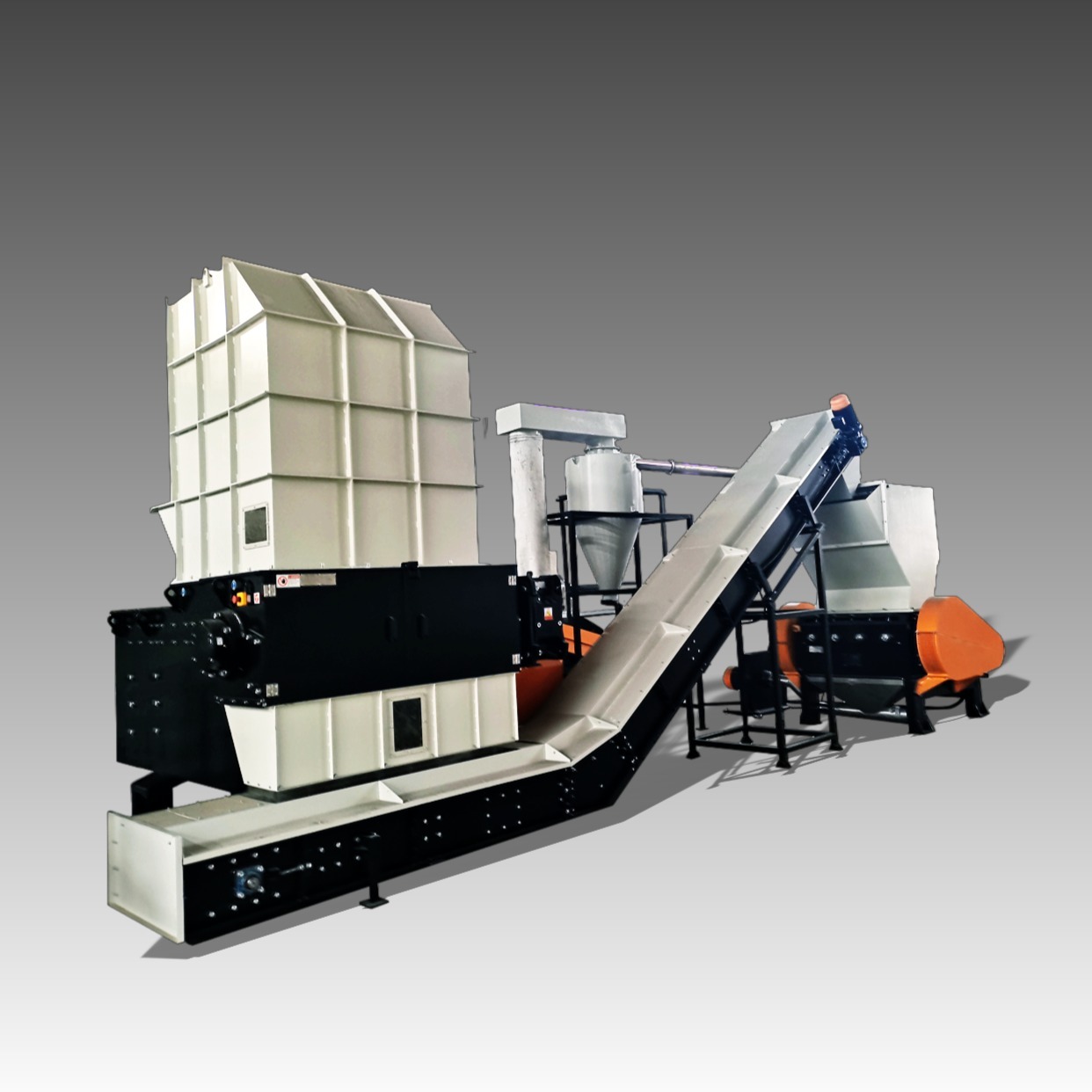
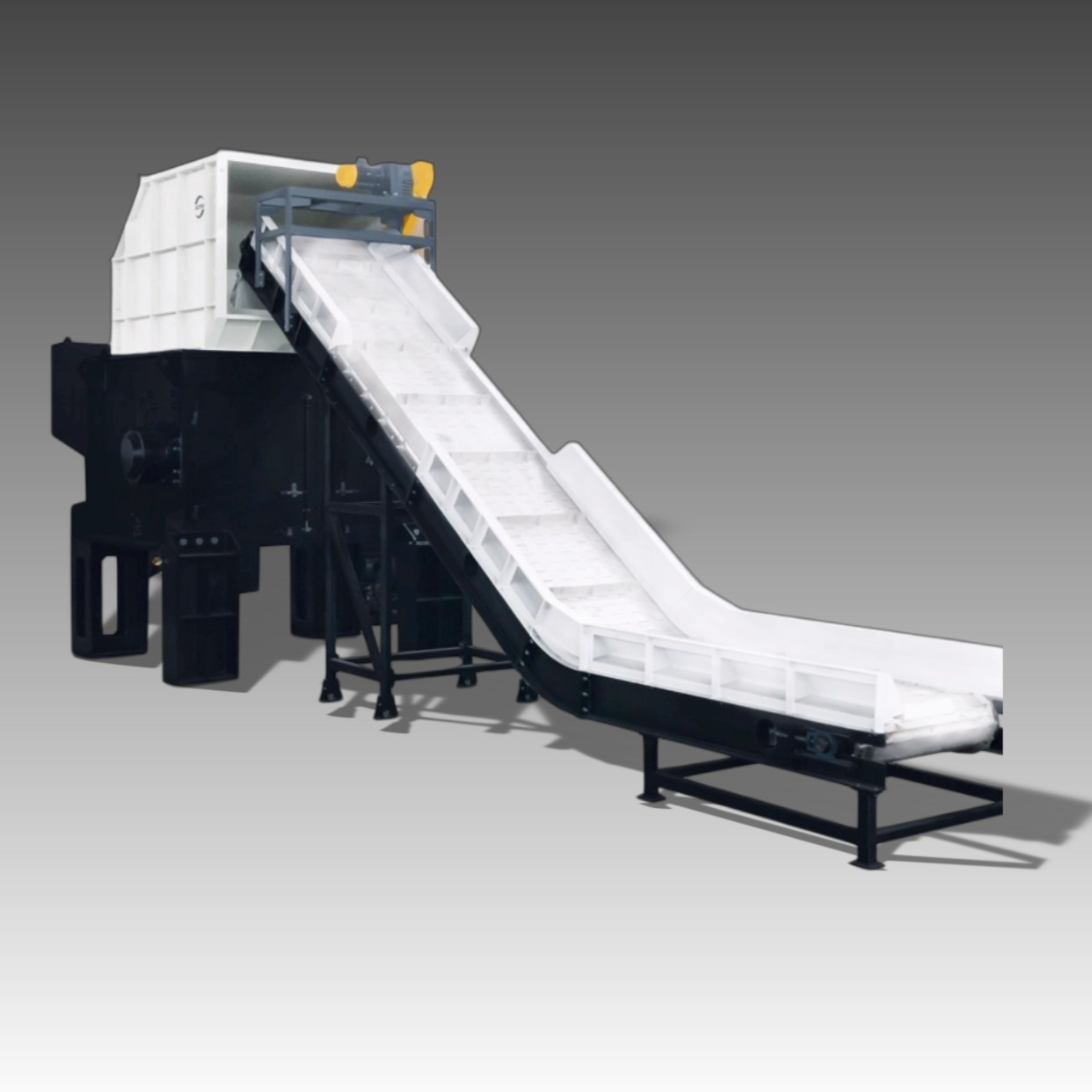
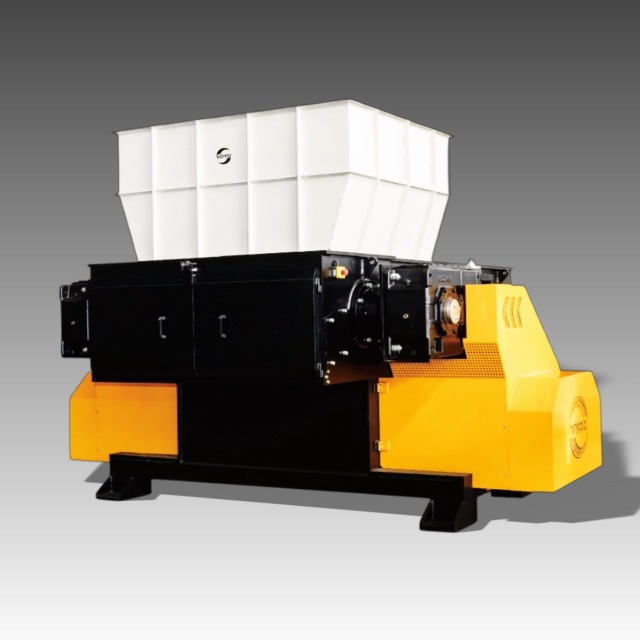
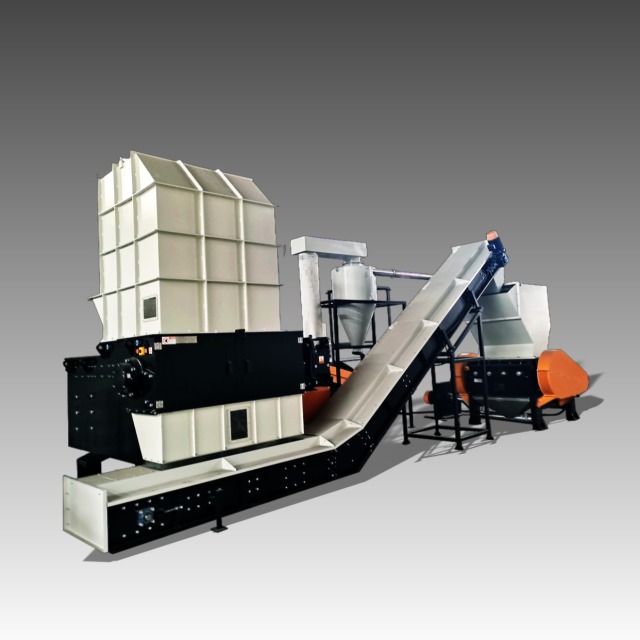
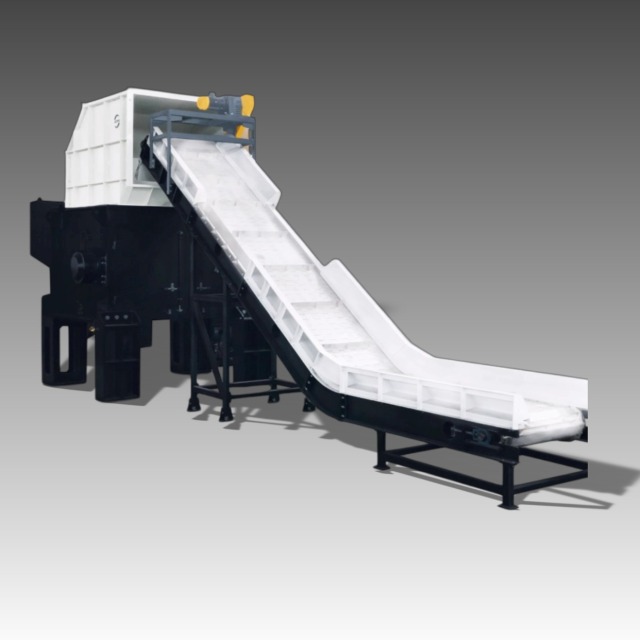
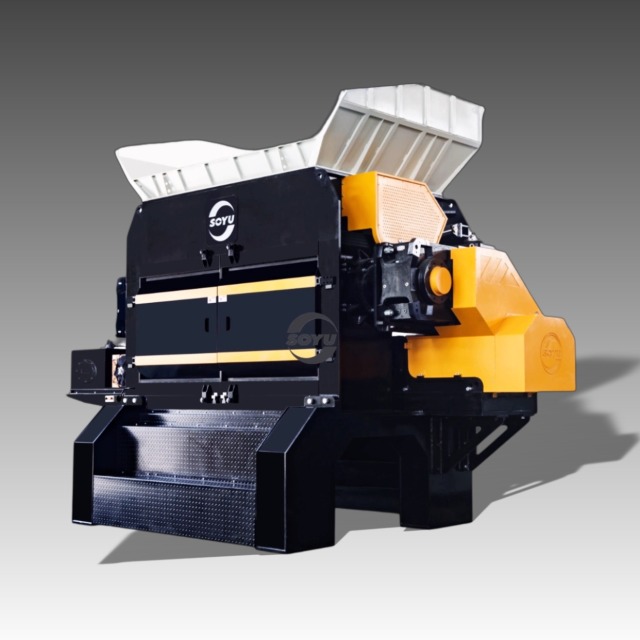
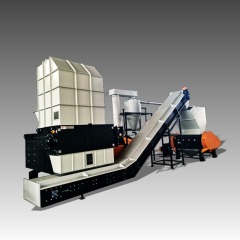
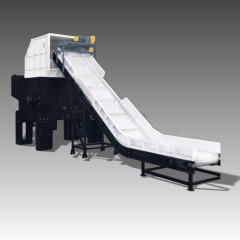
Installation cases include inclined conveyors, open feed hoppers with reinforced walls and connected processing units. These arrangements illustrate project layouts rather than a standard package of included equipment. Mixed materials may also need separation after shredding to produce useful recovered fractions.
Metal and metal chips, electronic scrap, RDF and municipal solid waste involve different material compositions and treatment routes. Metal-heavy loads require a different shredding assessment, while mixed electronic or municipal streams need examination for hard components, batteries and other unsuitable inclusions before feeding. RDF preparation also depends on the requirements of the following fuel-production process; shredding alone does not establish fuel quality or complete waste treatment.
Installation & Maintenance
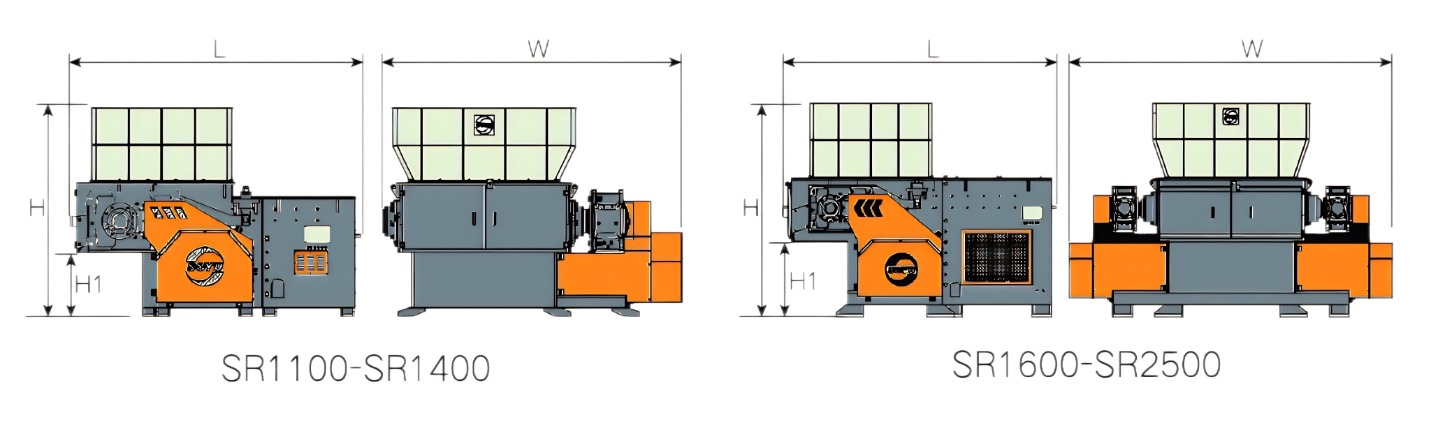
- The overall dimensions of the SR1600 single shaft shredder describe its machine envelope, so allow additional room for loading, access and removal of service components.
- Dimensional drawings use L, W and H for length, width and height; auxiliary labels such as H1 and S need to be read against the drawing for the supplied configuration.
- Incoming pieces need clearance through the hopper and into the cutting chamber.
- Check awkward shapes and long pieces as well as their nominal dimensions, and avoid assuming that a chamber dimension defines the largest acceptable feed item in every orientation.
- Receiving conveyors or collection equipment need clearance below the discharge.
- Check the transfer point for bridging and spillage, and keep the discharge path accessible for inspection without placing personnel beneath moving material.
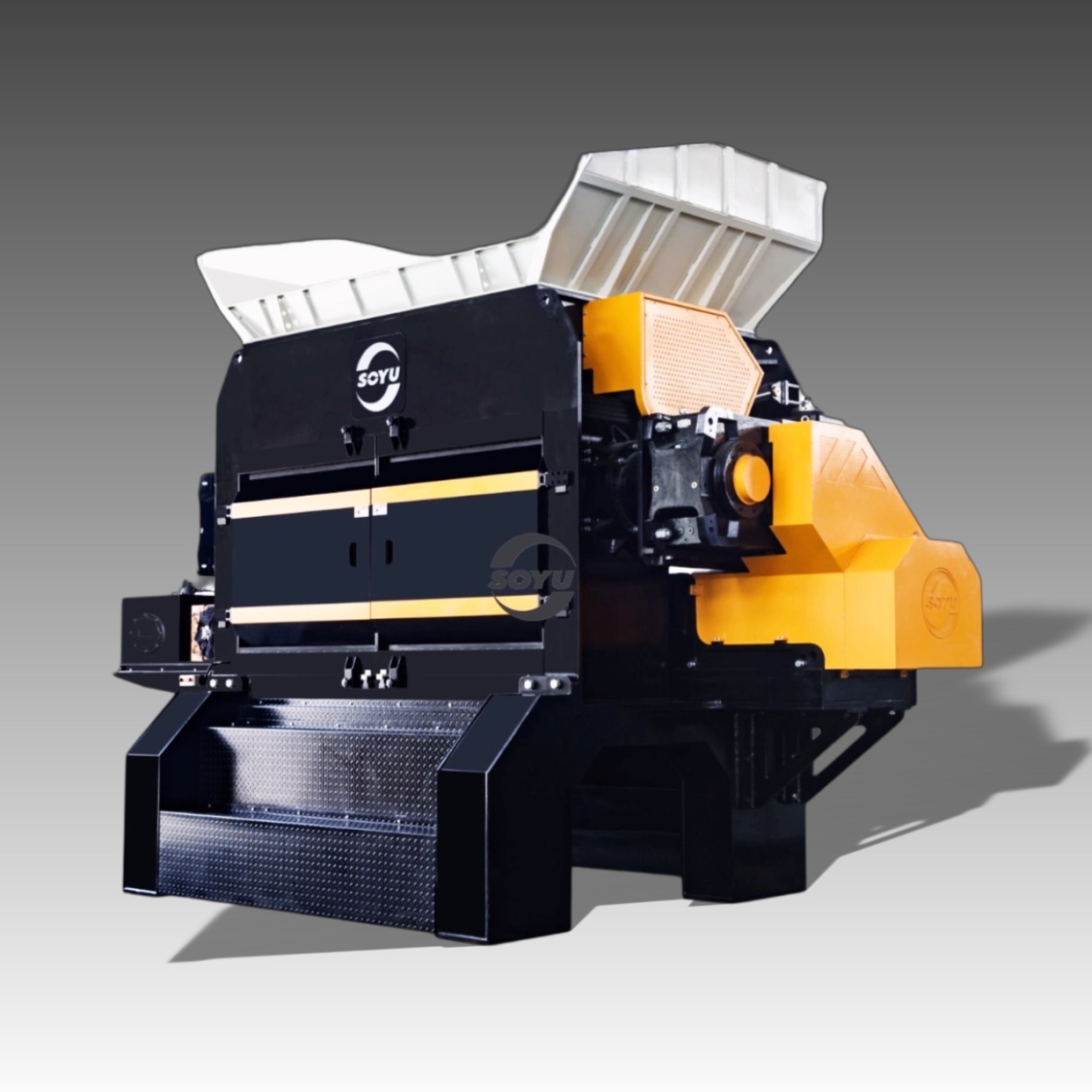
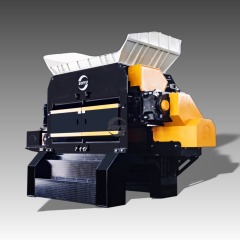
- Hinged access panels and protective drive covers provide distinct access areas around the machine.
- Keep their opening paths clear, leave vented covers unobstructed and isolate electrical and hydraulic energy before opening or servicing equipment.
- Cutter edges, fasteners and screen surfaces need regular visual inspection for damage, looseness and trapped material.
- Base servicing on their condition and the machine instructions rather than assuming a fixed replacement interval for every waste stream.
- Residue from one material can contaminate the next recovery batch.
- Remove retained material using the prescribed cleaning procedure, and investigate unexpected noise, vibration or repeated feeding interruptions before returning the unit to normal operation.
Warranty & Spare Parts
- As a single shaft plastic shredder supplier and SR1600 single shaft shredder manufacturer, we keep original spare parts available at cost after the warranty period ends.
- Retain the machine identification details so replacement requests can be matched to the correct build.
- Replacement requests should include the component description and any part number recorded in the machine documentation.
- A clear photograph of the component can help distinguish items that look similar but have different fittings.
- Parts received for replacement need to be checked against the intended assembly before fitting.
- Keep the component identification with the maintenance record to make subsequent replacement requests more precise.
Product Overview
Bulky production scrap needs preparation before it can return to a useful recycling process. CHANGSHU SHI SHOUYU MACHINERY CO., LTD. (SOYU) designs and manufactures the SR range for this work within our 3E Series technology platform, established in 2009. Whether your operation needs a scrap wood shredder or equipment for another suitable recovery stream, the machine must match the incoming material and the process that follows. Our single-shaft design brings cutting, feeding and discharge control together for industrial scrap preparation.
Professional Certification
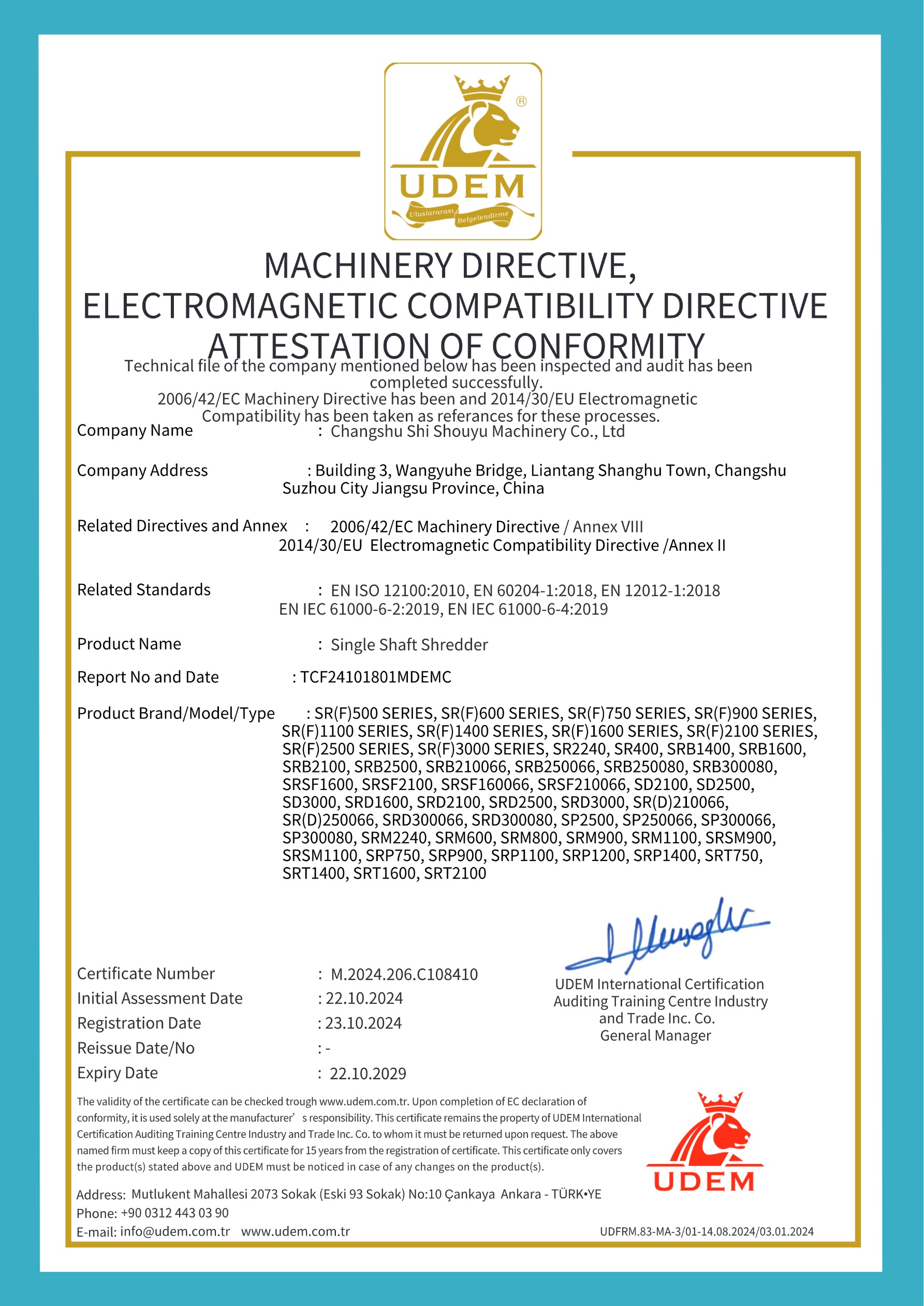
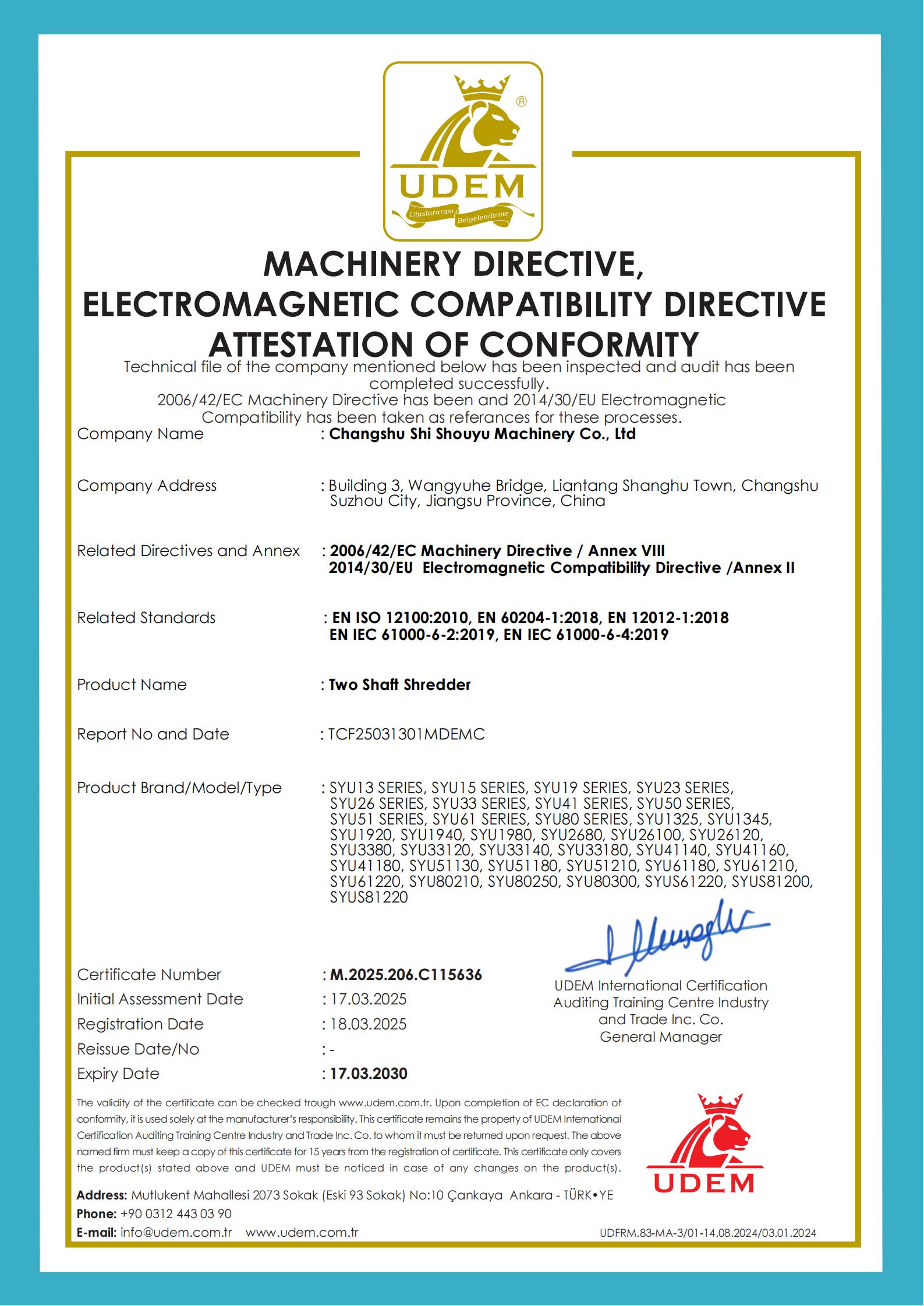
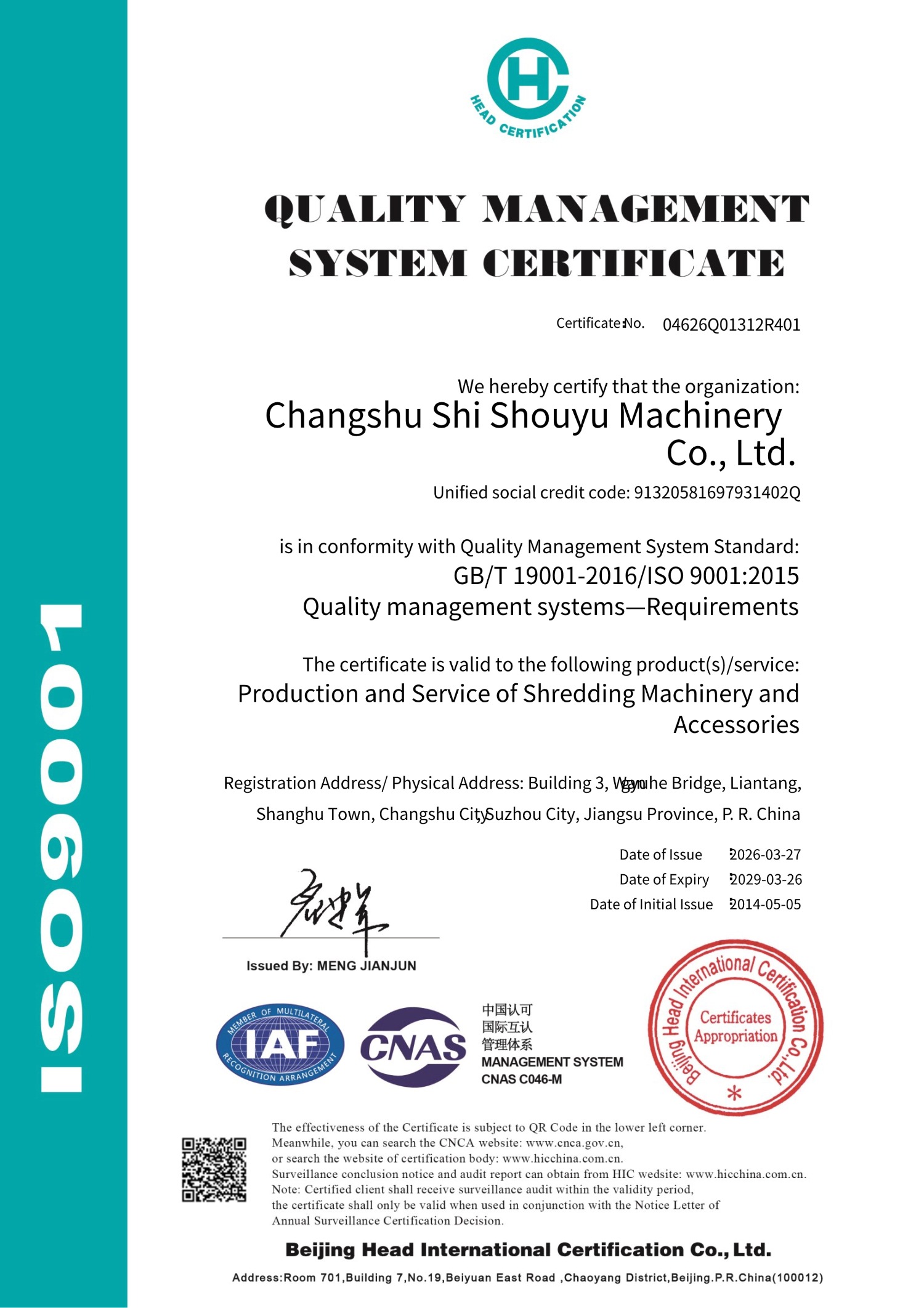
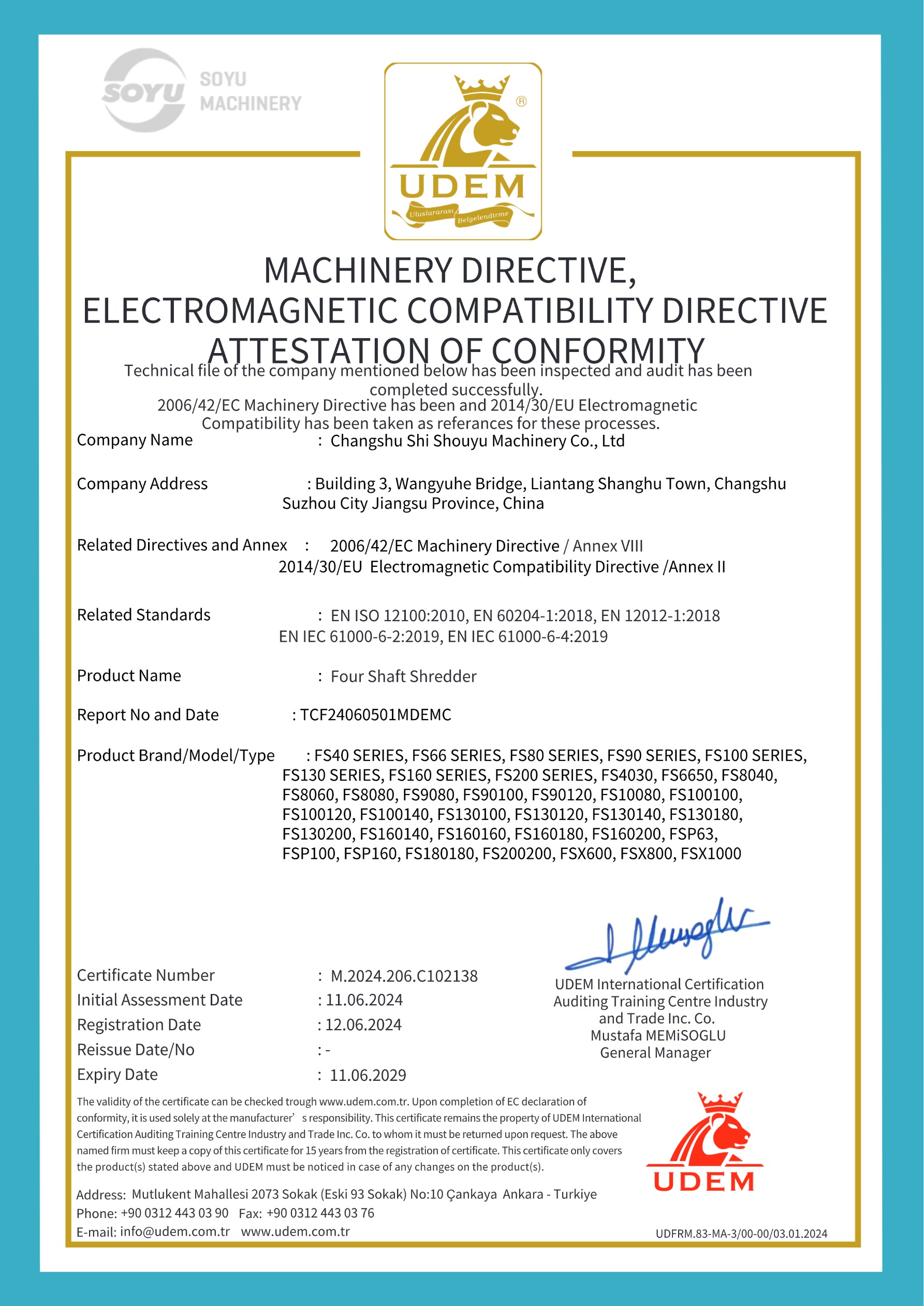
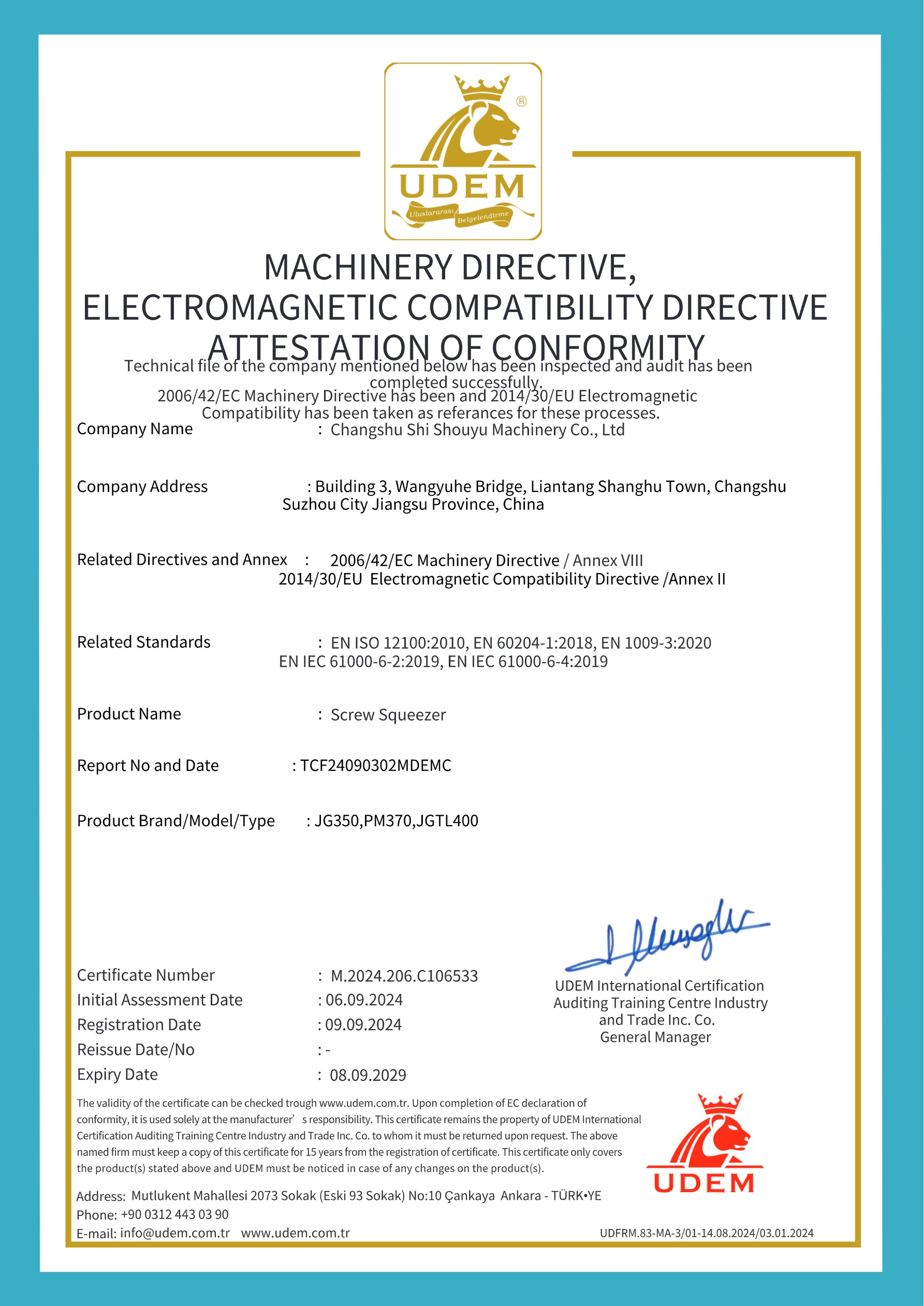
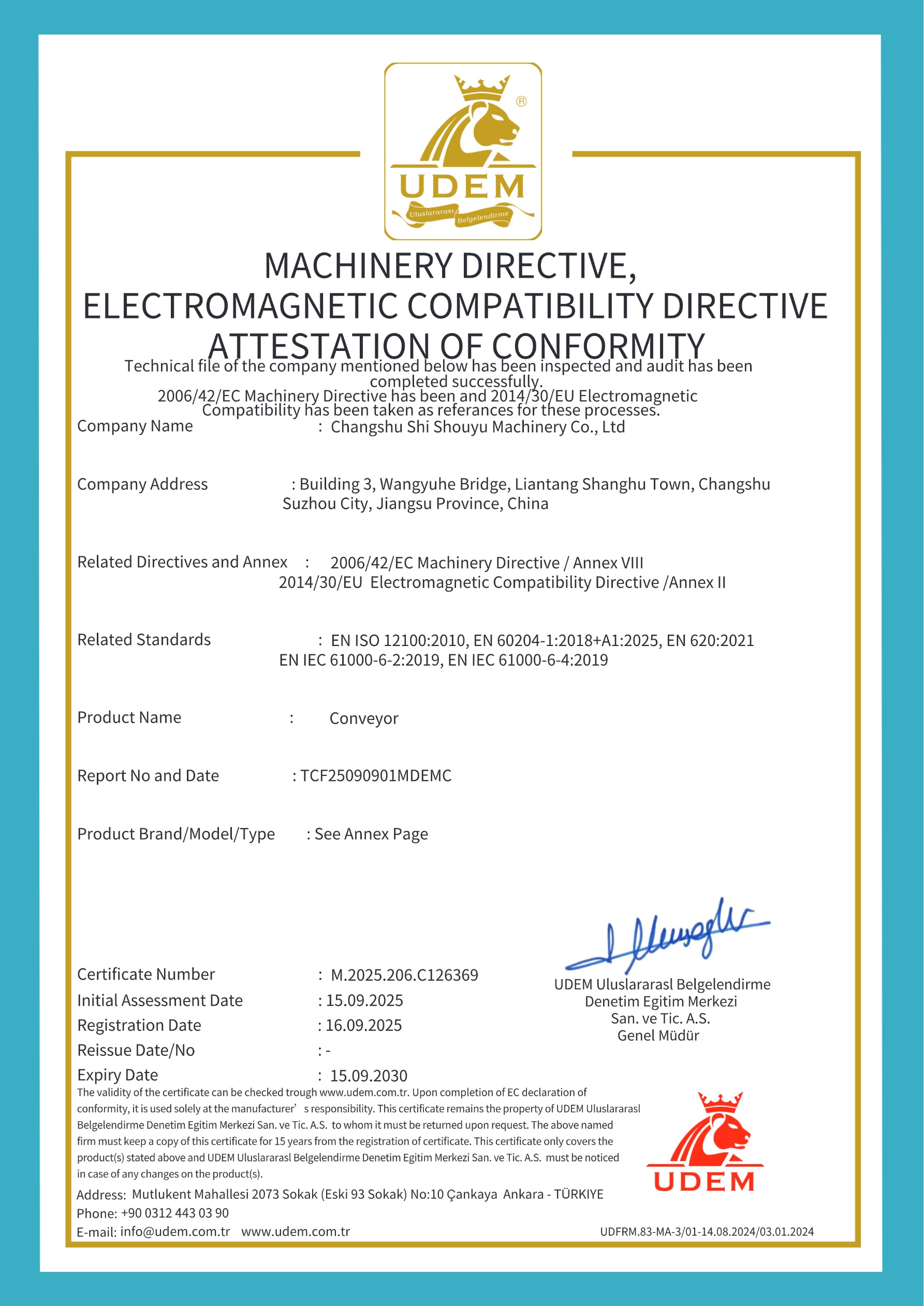
- ISO 9001 certification supports SOYU's quality-management practices for manufacturing shredding and separation equipment. It addresses management processes rather than providing a throughput rating for an individual application.
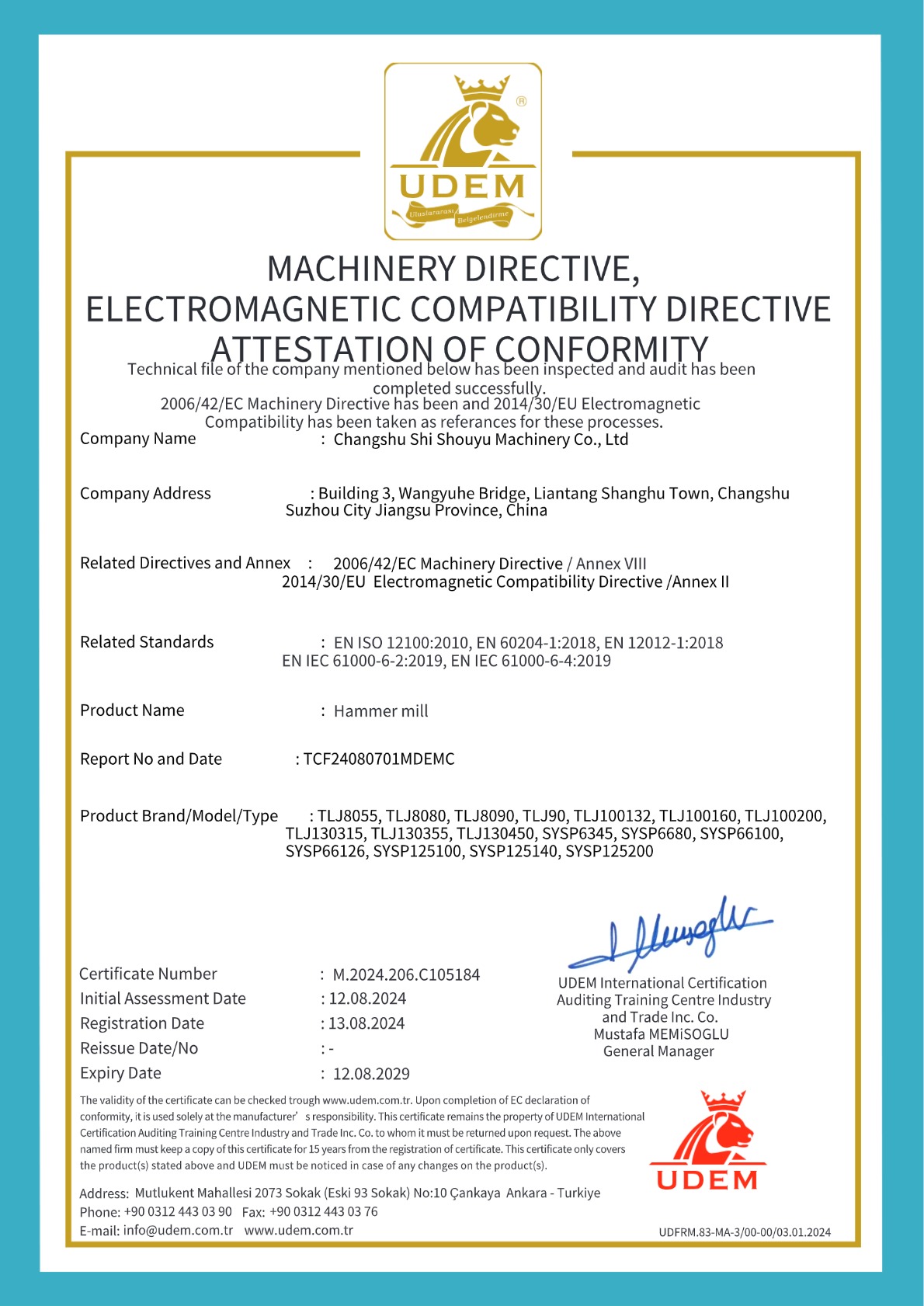
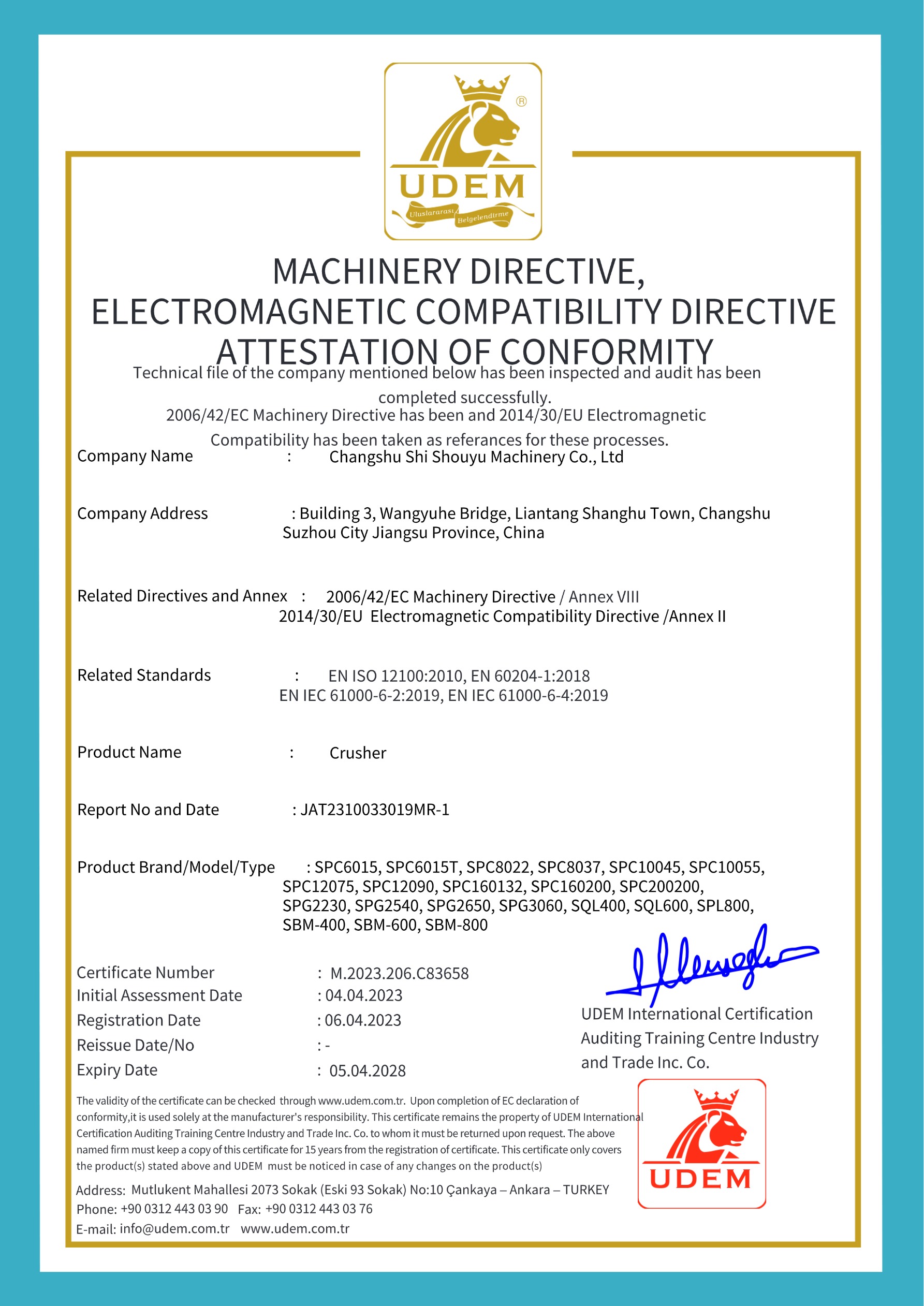
- CE compliance forms part of our equipment manufacturing framework.
- The relevant declaration and supporting documentation need to correspond to the machine configuration and destination requirements.
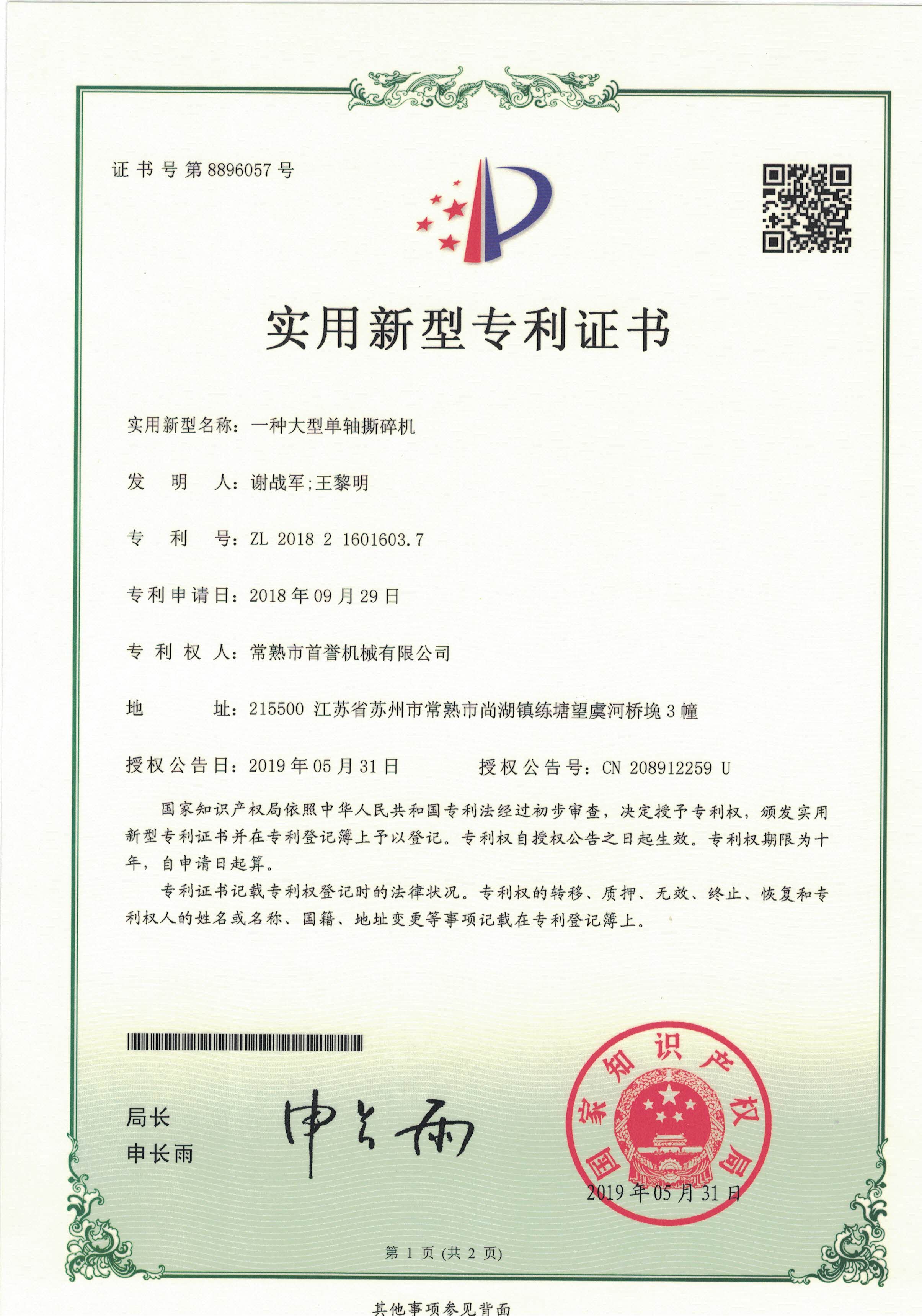
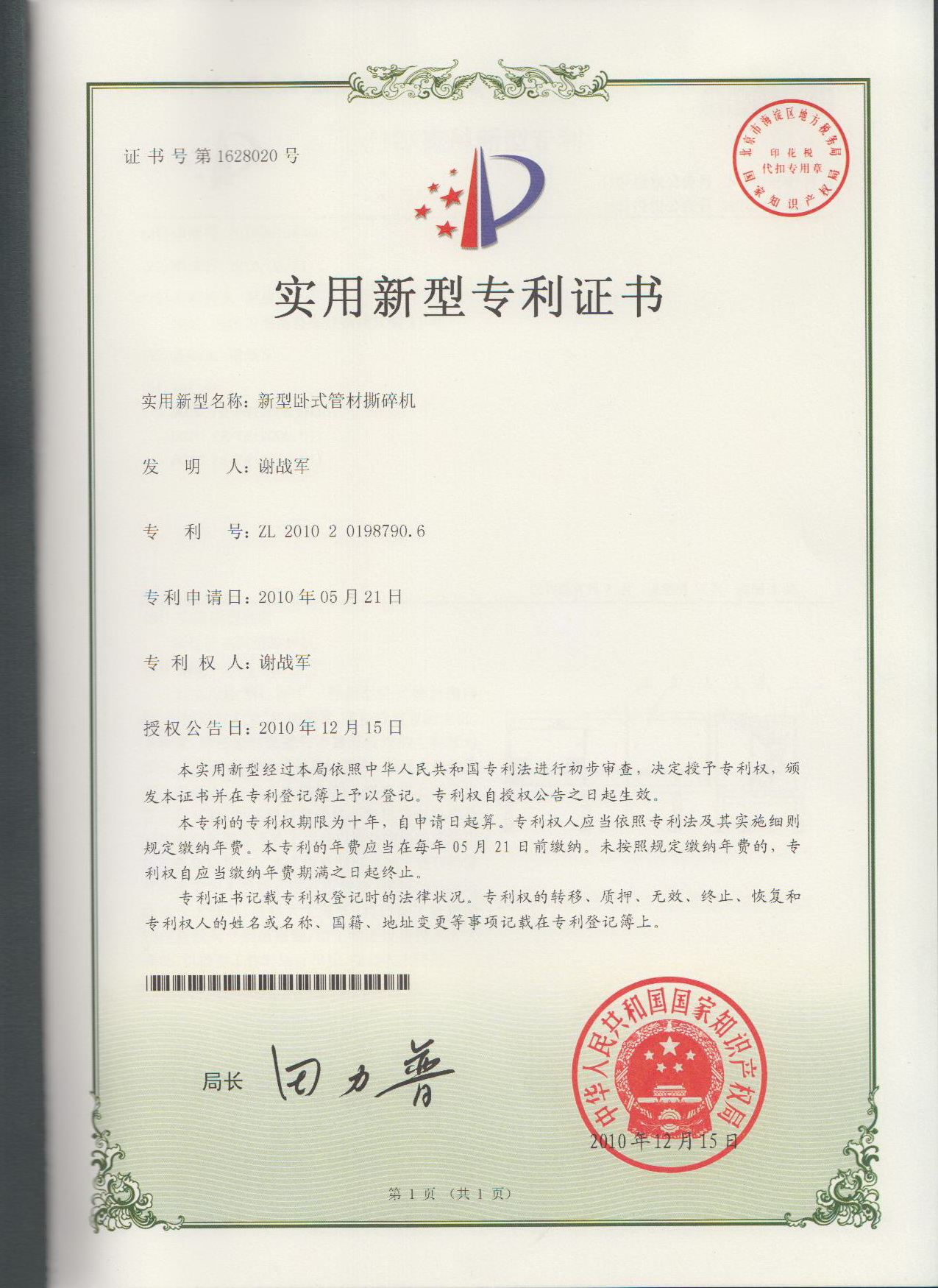
- More than 80 national patents have been granted for our core technologies.
- These cover company technology development and do not mean every patented feature is fitted to every machine.
- Machine identification and configuration details connect technical documents to the equipment supplied.
- Keep these records together so electrical, mechanical and operating information can be checked against the same machine.
- Site acceptance should address the installed arrangement as well as the individual shredder.
- Feeding equipment, guarding, discharge access and the surrounding process each affect how the complete installation is operated.
Technical Support & Model Matching
Choose equipment matched to your operating requirements with technical support from SOYU. We review your material characteristics, target throughput, site conditions and environmental requirements to recommend suitable models and configurations. Our support covers installation, commissioning and operator training to help your team prepare for operation. Overseas customers can access remote technical assistance for troubleshooting, while maintenance and original spare parts support continue after delivery. Original spare parts remain available at cost after the warranty period ends.
FAQ
Does the scrap wood shredder use single-edged cutters?
Double-sided edge cutters form part of the rotor’s cutting arrangement, so inspection should cover both cutting edges rather than just the face that is easiest to see. Look for local chips, cracks and uneven edge damage; a cutter can appear serviceable from one angle while damage remains hidden on the opposite side. During cutter servicing, also check the seating surfaces and securing components according to the maintenance instructions, because edge condition alone does not establish whether a cutter is ready for use. Before planning to turn or reposition a cutter, confirm the permitted procedure for the fitted cutter design. Double-sided edges do not by themselves establish how the cutter may be reused or sharpened. For replacement orders, identify the machine and fitted cutter arrangement so the replacement parts match the installation. Keeping a maintenance record of cutter positions and damage patterns can also help technicians investigate recurring problems in a particular part of the cutting chamber.
What happens when the screen unit is opened?
Opening the screen unit automatically stops the shredder. Treat this as a protective stop, and allow all moving parts to come to a complete standstill before approaching the cutting area. Cleaning, blockage removal and screen servicing require the prescribed isolation procedure before anyone reaches inside; an automatic stop is not a substitute for securing the machine against unexpected movement. Where hydraulic pressure or other stored energy could cause movement, maintenance personnel should follow the machine instructions for releasing or securing it. Keep the screen unit’s protective stopping function active during use, and never bypass it to continue production with the unit open. If opening the unit fails to stop the machine, take the shredder out of service and have qualified personnel investigate. Before returning to operation, check that tools and loose servicing materials have been removed and that the screen unit is properly closed and secured.
How does the pusher respond to brittle and tough material?
The hydraulic cylinder runs at maximum speed when processing easily broken material, while the pusher slows for tough material to help prevent rotor overload. This response adjusts feeding to the cutting load rather than applying the same pusher speed to every material.
What electrical controls support daily operation?
An integrated electrical control system supports daily operation of the SR series. During operator training, review the available commands, control labels and operating indications on the supplied machine so staff understand how to use them during normal production. For shift handovers, record any unusual control response or unresolved warning, giving the next operator a clear account of what happened. When an interruption occurs, follow the prescribed fault-handling procedure and investigate its cause before restarting. Recording the operating condition and any displayed message can help maintenance personnel diagnose the issue; repeated resetting should not replace that investigation. For an installation connected to conveyors or other equipment, confirm how start and stop commands will be coordinated across the line and where operators will control each machine. Before purchase, ask which control modes, fault indications and external connections are included in the proposed configuration. Also establish the prescribed response after a power interruption so operators understand the checks required before production resumes.