Product Overview
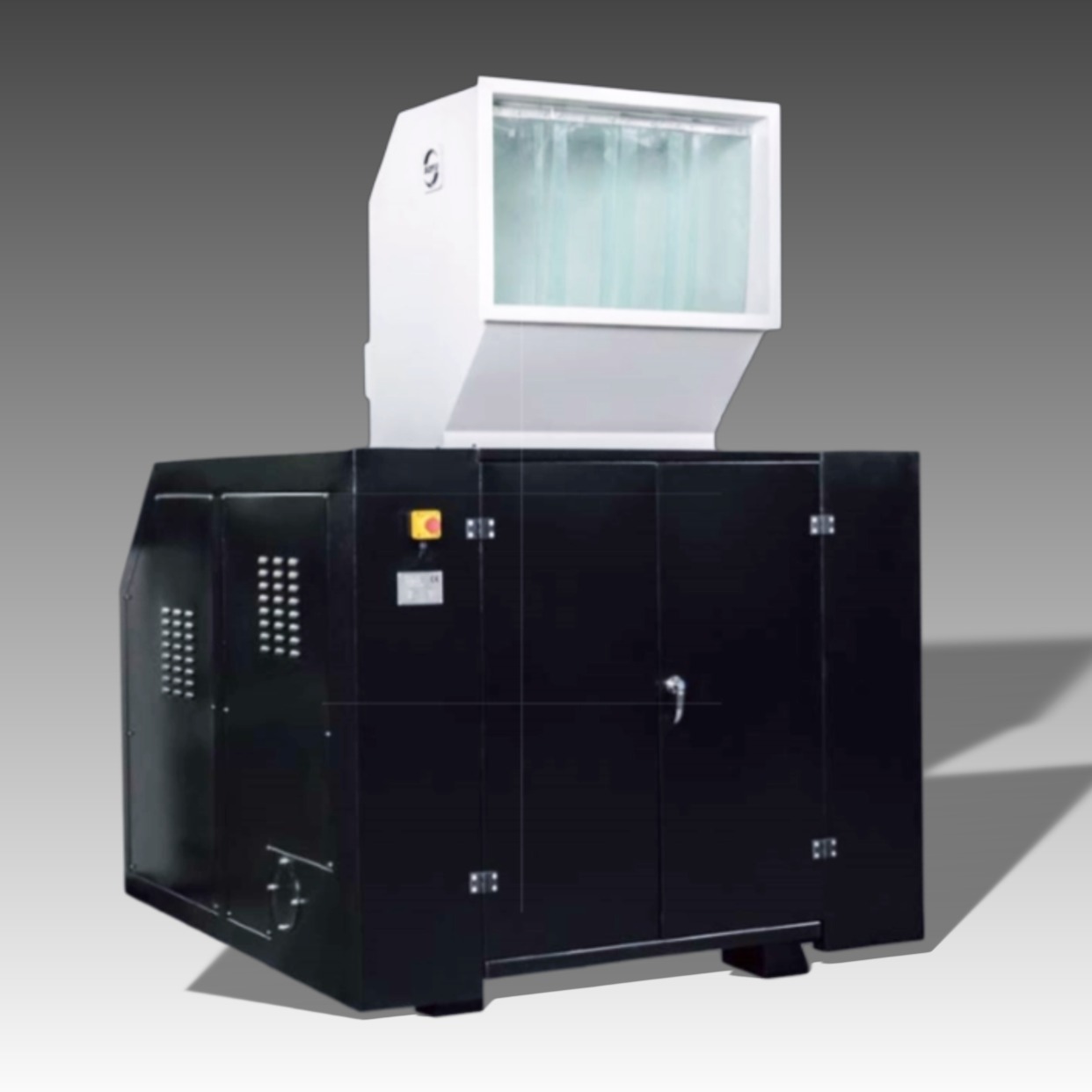
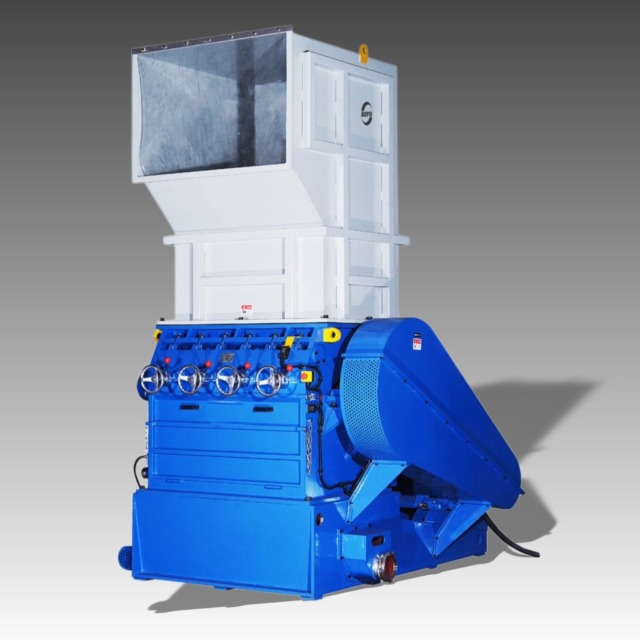
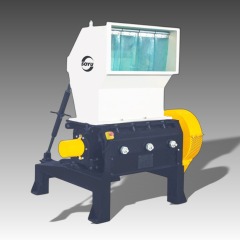
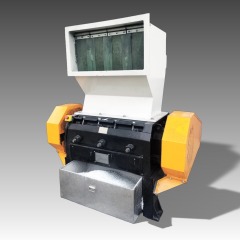
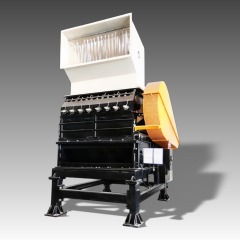
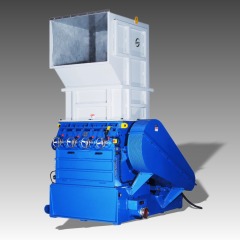
Demanding plastic size reduction calls for a crushing stage matched to the material entering it and the process that follows. Our spc series heavy crusher supports industrial recycling and in-house waste recovery with configurations for different feeding and output requirements. CHANGSHU SHI SHOUYU MACHINERY CO., LTD. (SOYU) designs and manufactures the series within our 3E technology platform, established in 2009. Working directly with a plastic crusher machine manufacturer brings the cutting arrangement, operating conditions and maintenance needs into the same technical discussion.
Basic Structural Features
- As a heavy duty plastic crusher supplier, we use thickened steel plate to form a fully welded, reinforced structure that supports the crushing assembly under heavy loads.
- The rigid construction helps maintain a stable mechanical foundation during demanding operation.
- Moving and fixed blades use heat-treated CrMoV wear-resistant alloy steel.
- The material and treatment support cutting performance and resistance to wear, while actual blade life depends on feedstock and operating conditions.
- V-shaped blade geometry promotes effective shearing as material passes through the cutting zone.
- The arrangement supports progressive cutting rather than relying on frame strength alone to reduce difficult feed.
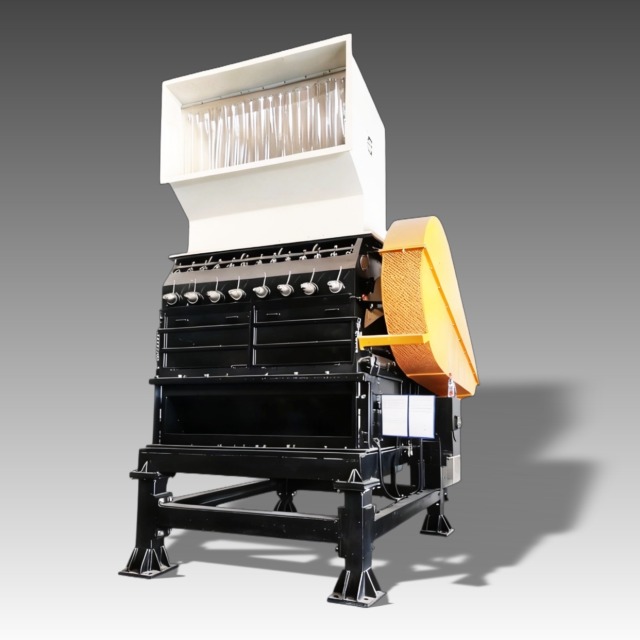
- A split crushing chamber provides access for inspection, cleaning and blade replacement.
- Opening the chamber exposes the working area so maintenance personnel can reach the cutting components more directly.
- Replaceable wear-resistant plates protect both sides of the chamber.
- Worn contact surfaces can be renewed separately, helping protect the main frame from direct abrasion.
- Additional wear protection is available through optional hardened-surface rotors and key components made from wear-resistant steel.
- These options suit applications where abrasive material would place greater demands on exposed working surfaces.
Parameters
| Parameter | SPC8022 | SPC8037 | SPC10045 | SPC10055 | SPC12075 | SPC12090 | SPC160132 | SPC160160 |
|---|
| Rotor diameter (mm) | 320 | 420 | 420 | 520 | 520 | 660 | 600 | 860 |
| Rotor speed (rpm) | 580 | 530 | 530 | 462 | 462 | 462 | 415 | 415 |
| Rotor knives (pcs) | 3*2 | 3*2 | 3*2 | 5*2 | 5*2 | 5*2 | 5*4 | 7*4 |
| Fixed knives (pcs) | 2*2 | 2*2 | 2*2 | 2*2 | 2*2 | 2*3 | 2*4 | 2*4 |
| Screen diameter (mm) | 12 | 12 | 12 | 12 | 12 | 12 | 12 | 12 |
| Inlet size (mm) | 800*400 | 1000*500 | 1000*500 | 1000*700 | 1200*700 | 1200*900 | 1600*900 | 1600*1000 |
| Cutting chamber (mm) | 800*320 | 1000*420 | 1000*420 | 1000*520 | 1200*570 | 1200*660 | 1600*660 | 1600*1000 |
| Overall dimensions, LWH (mm) | 1750*1650*1900 | 1780*1650*2400 | 1780*1900*2400 | 2070*2050*3000 | 2070*2250*3000 | 2450*2350*4200 | 2450*2850*4300 | 3000*2900*4800 |
| Power (kW) | 22 | 37 | 45 | 55 | 75 | 90 | 132 | 160 |
| Weight (kg) | 1750 | 2900 | 3300 | 4300 | 5500 | 7800 | 10000 | 12000 |
Model Configurations
Rotor and hopper options allow the crushing arrangement to follow the physical behavior of the feed. Tough, compact pieces and lightweight, irregular waste place different demands on how material enters and meets the cutters. As a plastic crusher machine manufacturer, we match the rotor and structural configuration to those characteristics rather than treating every model as the same machine with a different motor.
Screen structures and mesh sizes are available as optional configurations for the waste plastic crusher machine. Aperture size influences material retention and passage through the chamber, but the resulting particle shape also depends on the plastic and the way it breaks. Downstream requirements should include acceptable oversize and fines, rather than a nominal size alone.
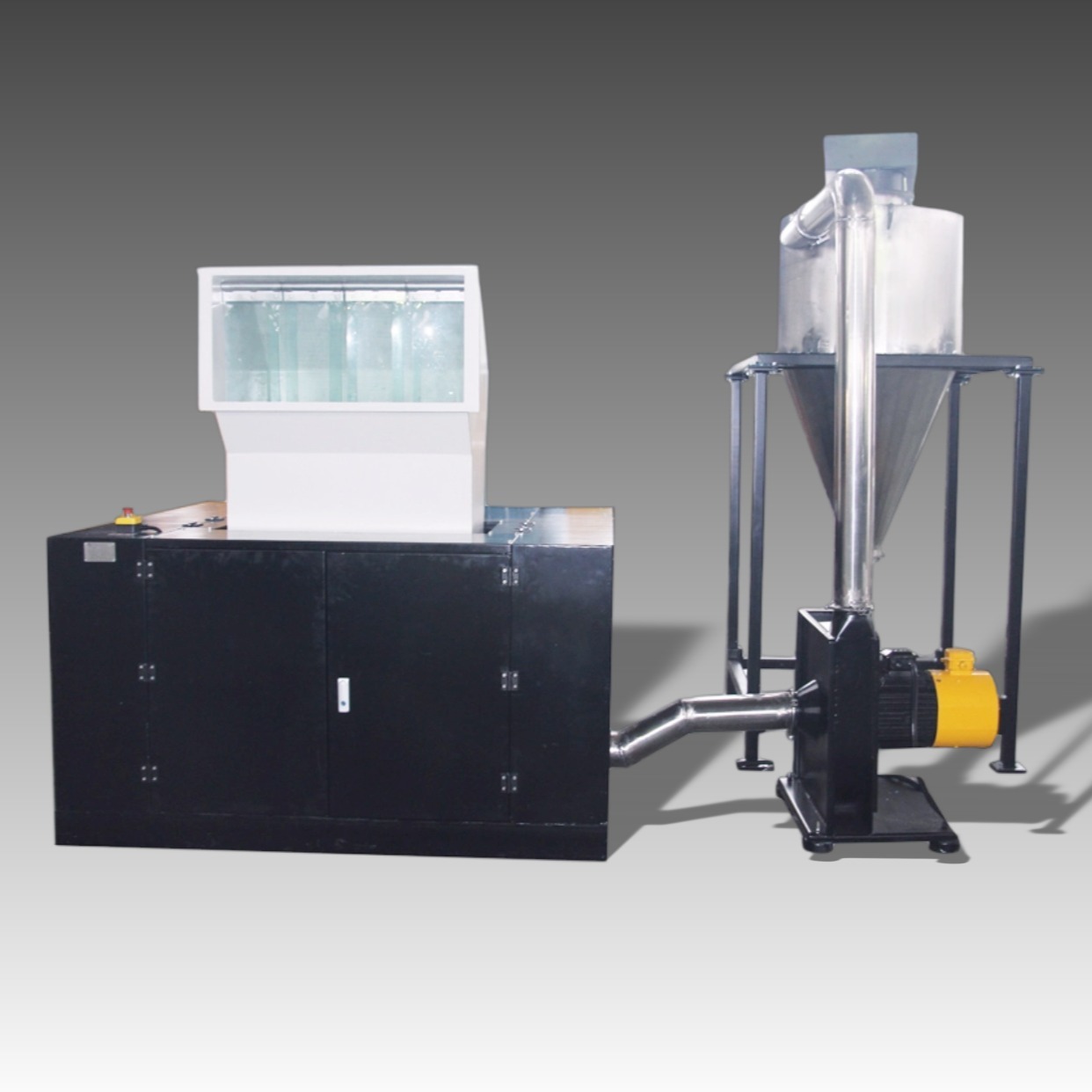
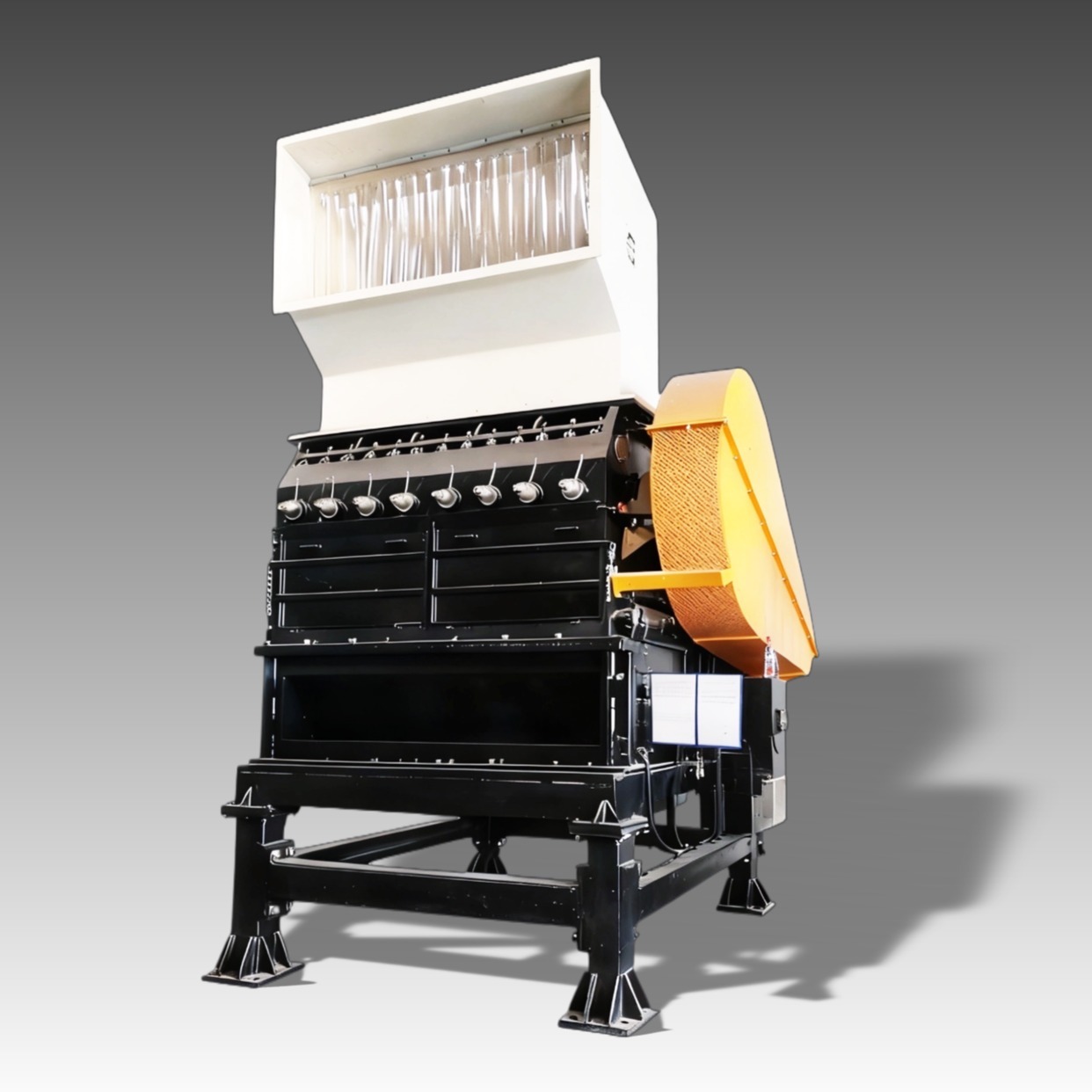
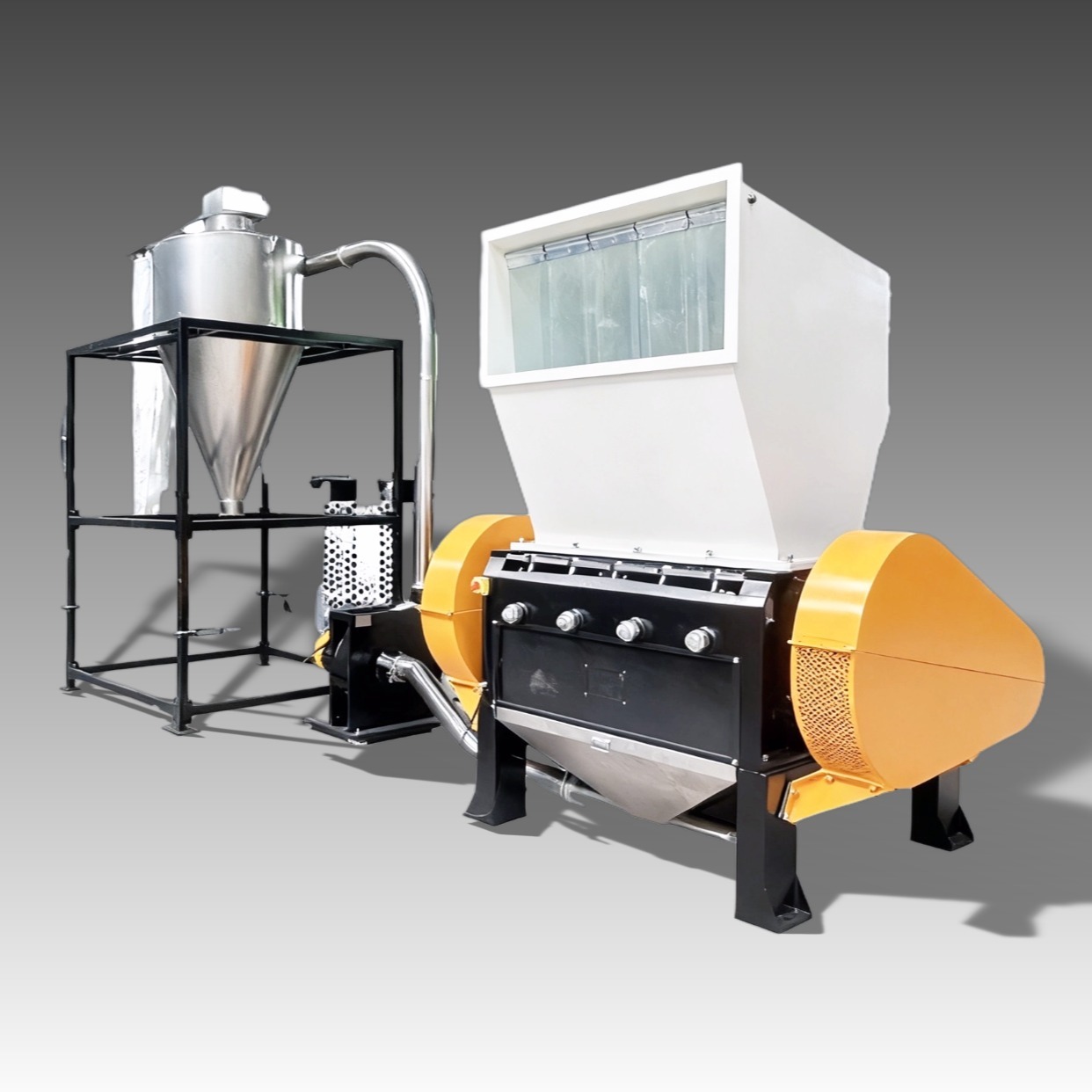
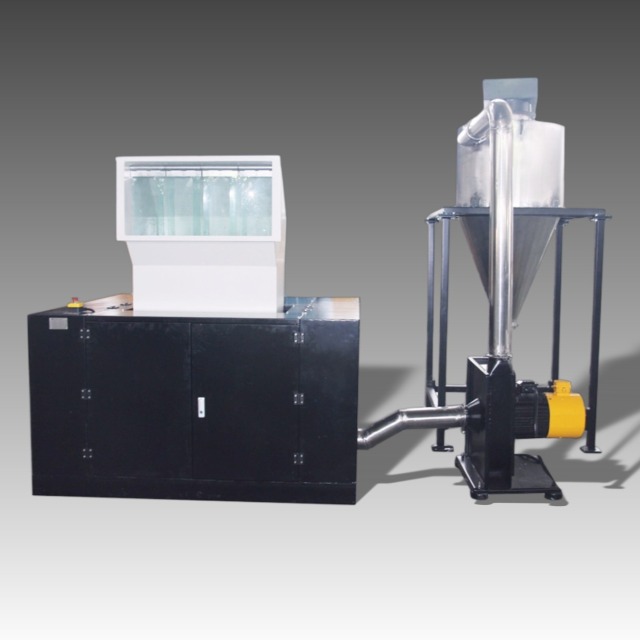
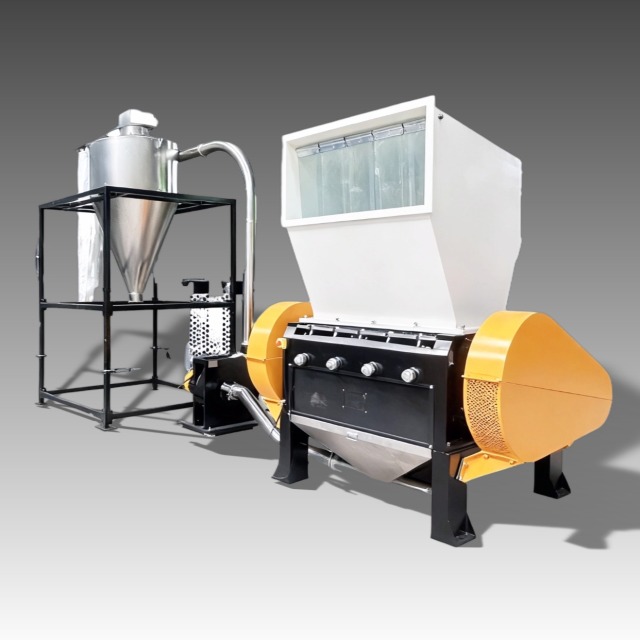
Customized discharge systems accommodate different collection and transfer arrangements. Illustrated installations include an external blower connected to an elevated cyclone collector; that arrangement is configuration-dependent and does not establish the supplied equipment for every machine. Discharge routing needs to suit the receiving container or downstream equipment.
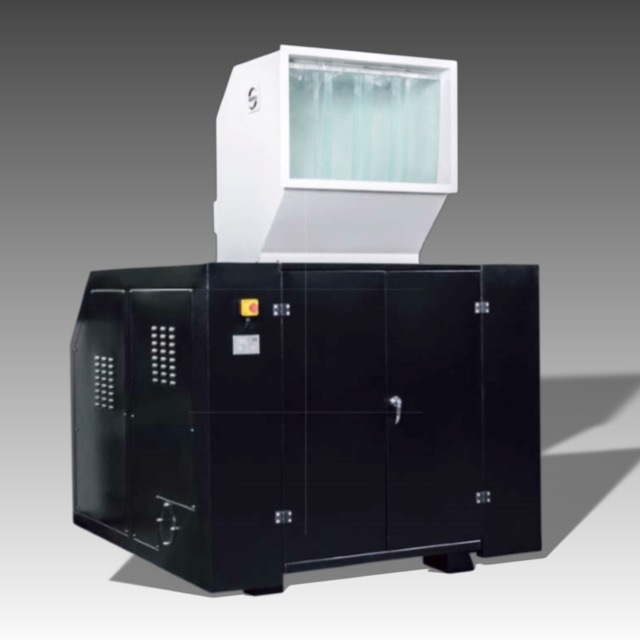
Noise-reduction systems are optional where the crushing area requires additional acoustic treatment. Their suitability depends on the installation and surrounding equipment, so an acoustic requirement needs to be considered together with the machine arrangement.
Overall machine dimensions describe the equipment envelope, while practical installation also requires room for hopper opening, service access and material handling. Floor loading, access routes and any separate collection equipment need to be checked against the final arrangement. SOYU supplies these configurations as a heavy duty plastic crusher supplier focused on the complete crushing stage.
Performance & Safety Features
- Sealed outboard bearings sit outside the crushing area to limit dust intrusion and reduce the risk of lubricant contamination.
- Keeping the bearings separated from the material stream supports reliable operation in dusty processing conditions.
- An automatic power-off function protects hopper access, with multiple safety switches providing additional access protection.
- These safeguards support controlled operation and must remain functional rather than being bypassed during production.
- Electrically or hydraulically driven opening devices are available for access during maintenance.
- The opening arrangement should suit the machine configuration and the working space around the hopper and chamber.
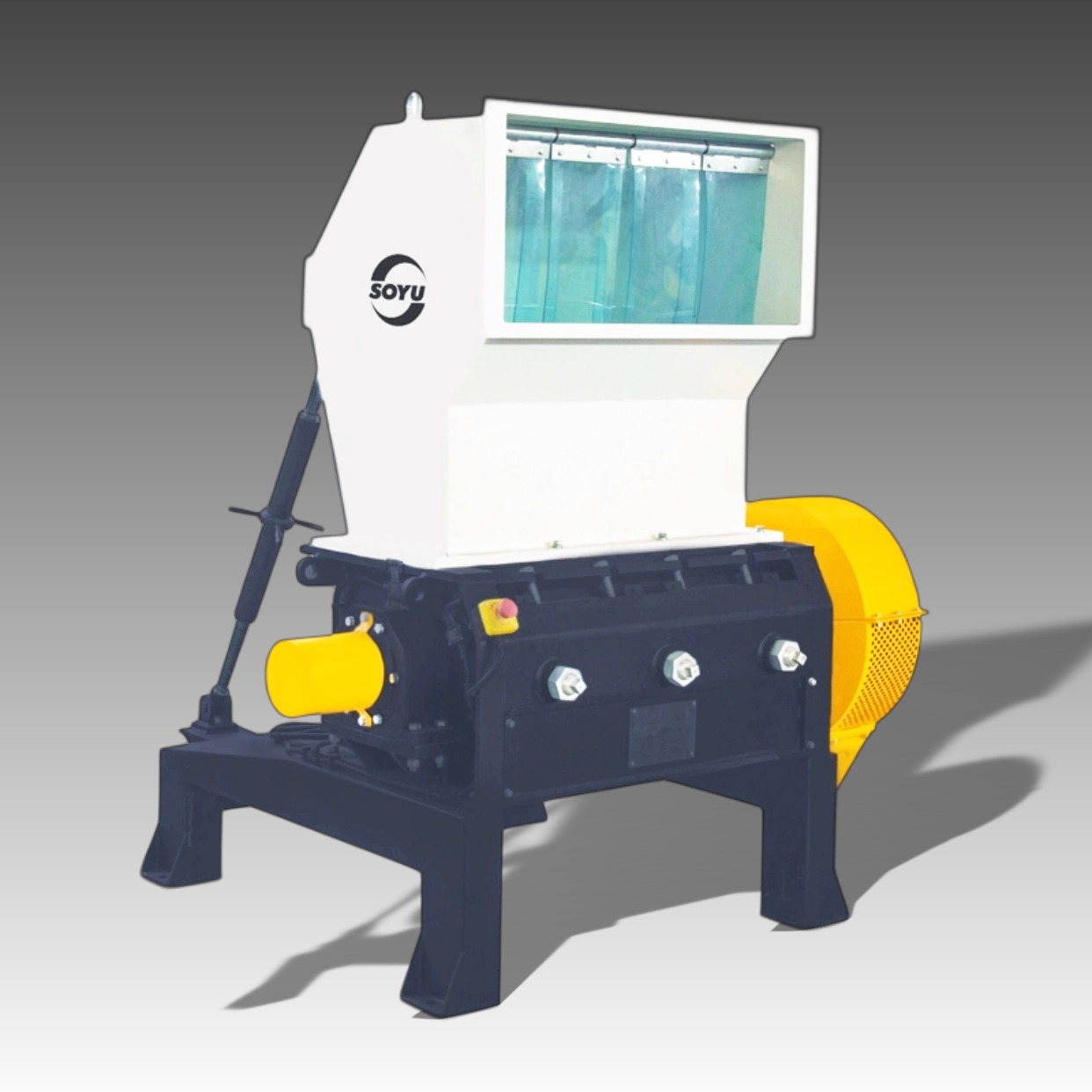
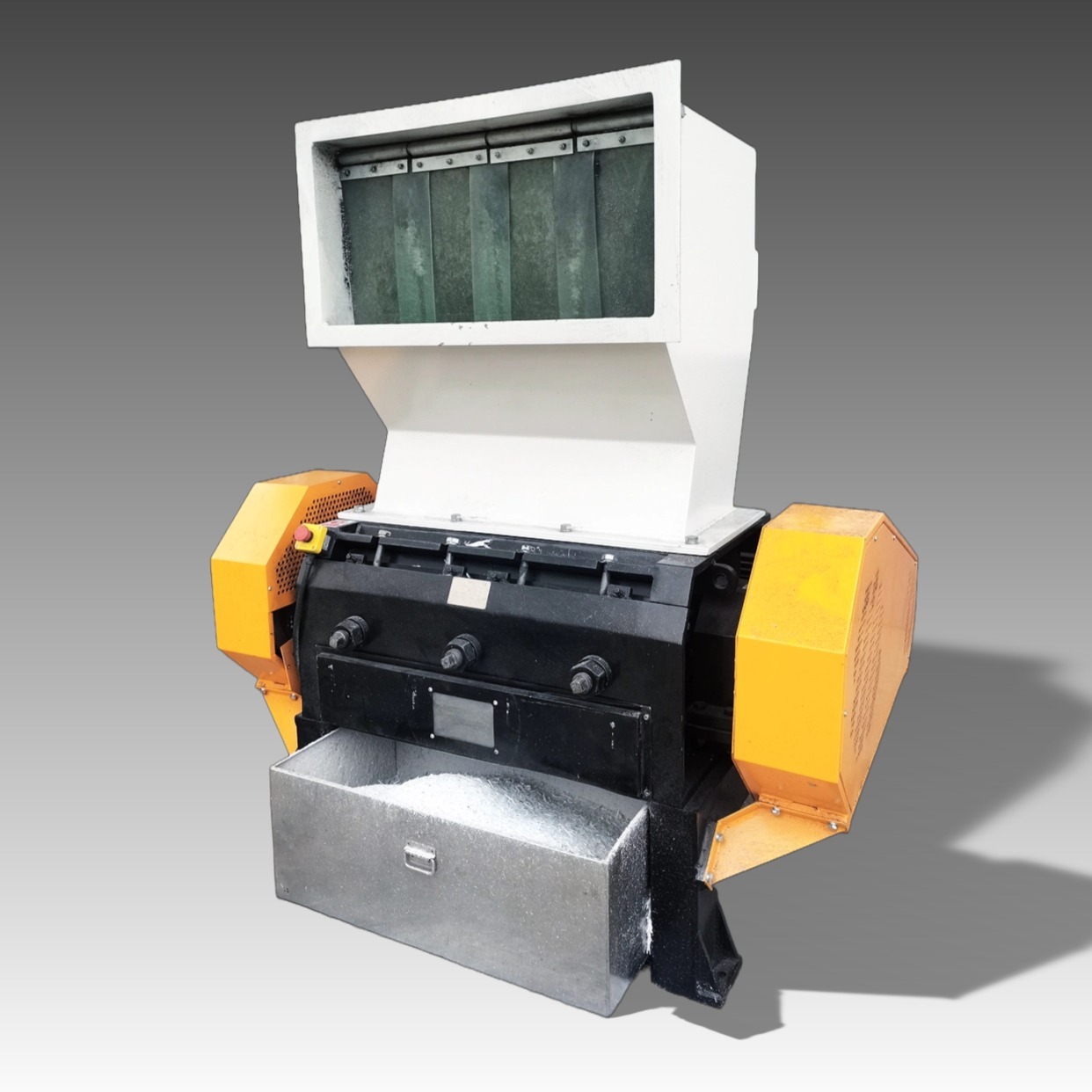
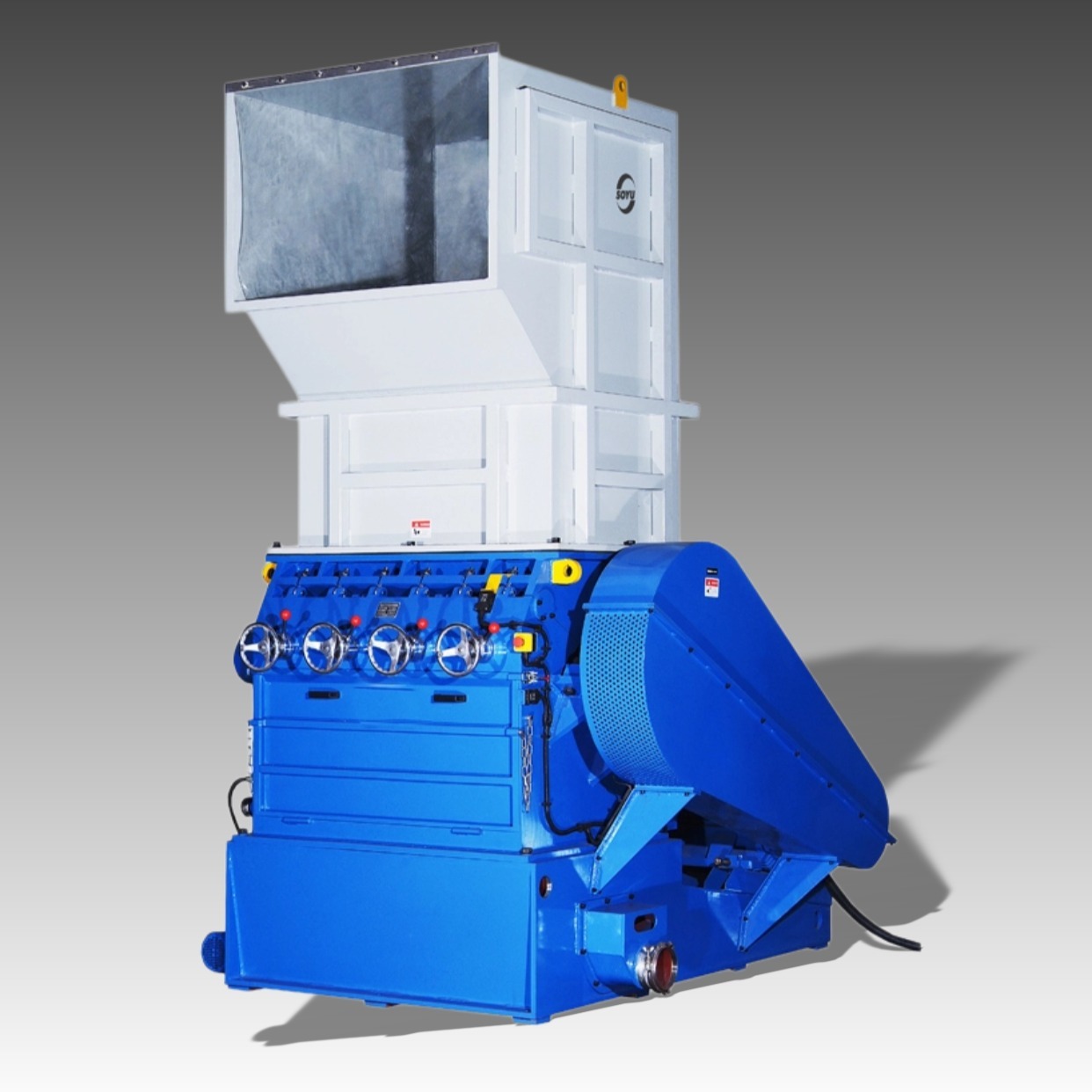
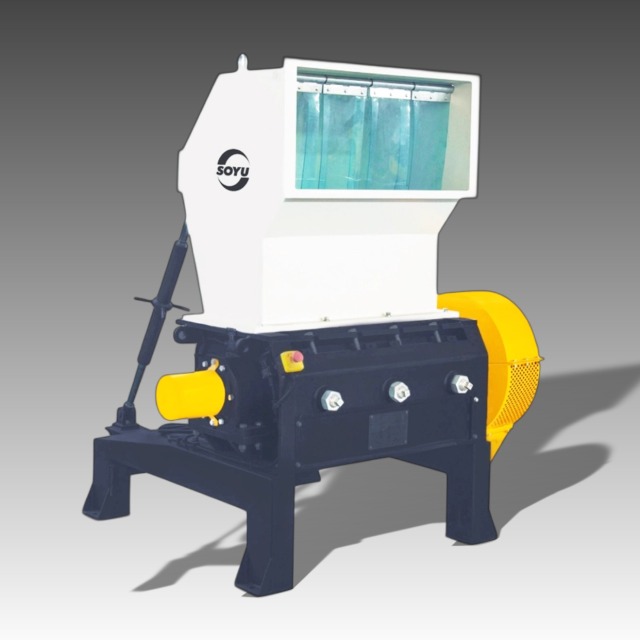
- Illustrated machines include an externally accessible emergency stop button and guarded drive components.
- Operators need clear access to the stop control, and guards must remain in place while the machine runs.
- Safe servicing requires the machine to stop completely and its energy sources to be isolated before anyone enters the working area. An access interlock is an operating safeguard, not a substitute for the machine's isolation procedure.
- Routine inspection should cover the condition of blade edges, blade security, screen damage, bearing condition and unusual vibration.
- Changes in output or operating sound can indicate a need for inspection; maintenance intervals should follow the machine instructions and actual operating conditions.
Material Applications
- Plastic & Film covers the main processing focus, including bulky plastic waste, hollow containers and tough engineering plastics. For film, sheet and irregular scrap, the waste plastic crusher machine needs a feeding and cutting arrangement suited to flexibility, bulk density and the tendency of the material to fold or wrap.
- Wood & Wood Pallet applications require attention to the condition of the timber and the presence of nails, screws or other embedded objects. Suitability depends on the actual feed and crushing configuration; a plastic-processing arrangement should not automatically be used for intact pallets.
- Paper & Cardboard applications involve lightweight feed that may arrive folded, compacted or in mixed shapes. Moisture, coatings and attached materials can change how it feeds and breaks, so the condition of the incoming paper matters as much as its category name.
- Metal & Metal Chip applications require a specific assessment of metal type, hardness, thickness and chip form. This category does not mean every crusher configuration can accept solid metal pieces or metal contamination in a plastic stream.
- Electronic Scrap may combine plastics with metal parts, wiring and other components.
- Feed preparation must identify batteries and hazardous components, while the crushing arrangement needs to suit the remaining material and the intended recovery process.
- RDF & MSW applications contain variable mixtures rather than a uniform feedstock. Material composition, foreign objects and preprocessing requirements determine whether an SPC crushing stage is appropriate; suitability for one prepared fraction does not establish suitability for unsorted waste.
Crushing Cases & Trials
- A useful trial of a waste plastic crusher machine starts with representative plastic waste.
- A trial batch should reflect the normal mix of shapes, material grades and contamination, rather than only the easiest pieces in the feed.
- Processing capacity and energy consumption can be included in SOYU material-test reporting.
- Installed motor power alone does not establish hourly output, because cutting resistance, feed behavior and screen configuration all affect the operating result.
- Final particle-size analysis can show how the crushed material compares with the intended downstream process.
- A physical output sample also allows assessment of particle shape and fines that a machine specification cannot describe on its own.
- High-definition video or live-streamed testing can support review when a visit is impractical.
- The most useful footage shows feeding, sustained crushing and discharged material so the operating behavior can be considered together.
- Comparable crushing cases need to involve similar feedstock and a similar processing task.
- When discussing an spc series heavy crusher application, distinguish a demonstrated material result from expectations for a different waste stream, and agree any trial scope and conditions in advance.
Ordering & Spare Parts
- Original spare parts remain available at cost after the warranty period ends.
- This continuing parts support helps maintain the machine with components matched to its original construction.
- Replacement-part requests should identify the machine, the installed component and any relevant configuration details.
- Blade arrangements, screens and other working components can differ, so matching the actual assembly is more reliable than relying on appearance alone.
Professional Certification
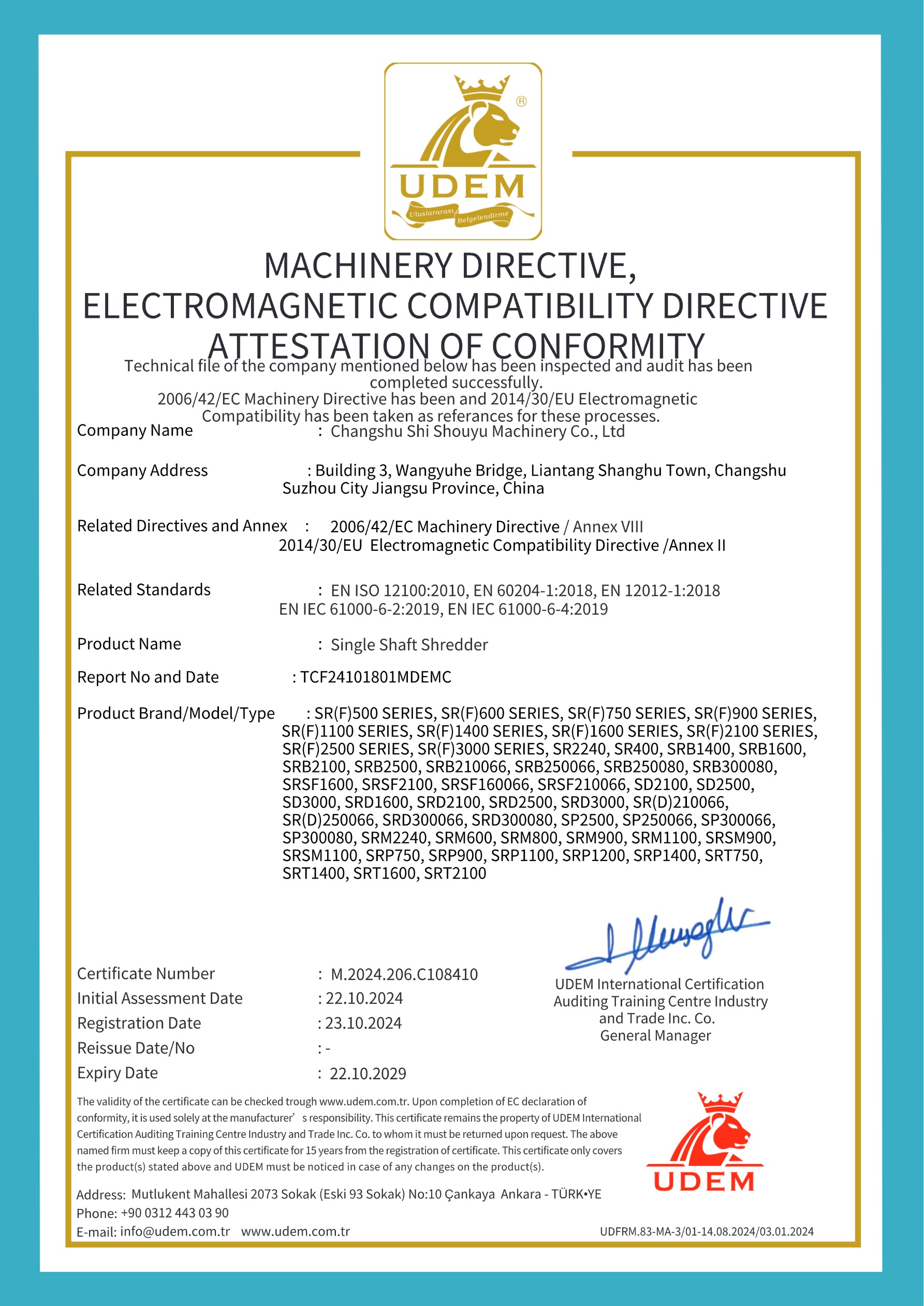
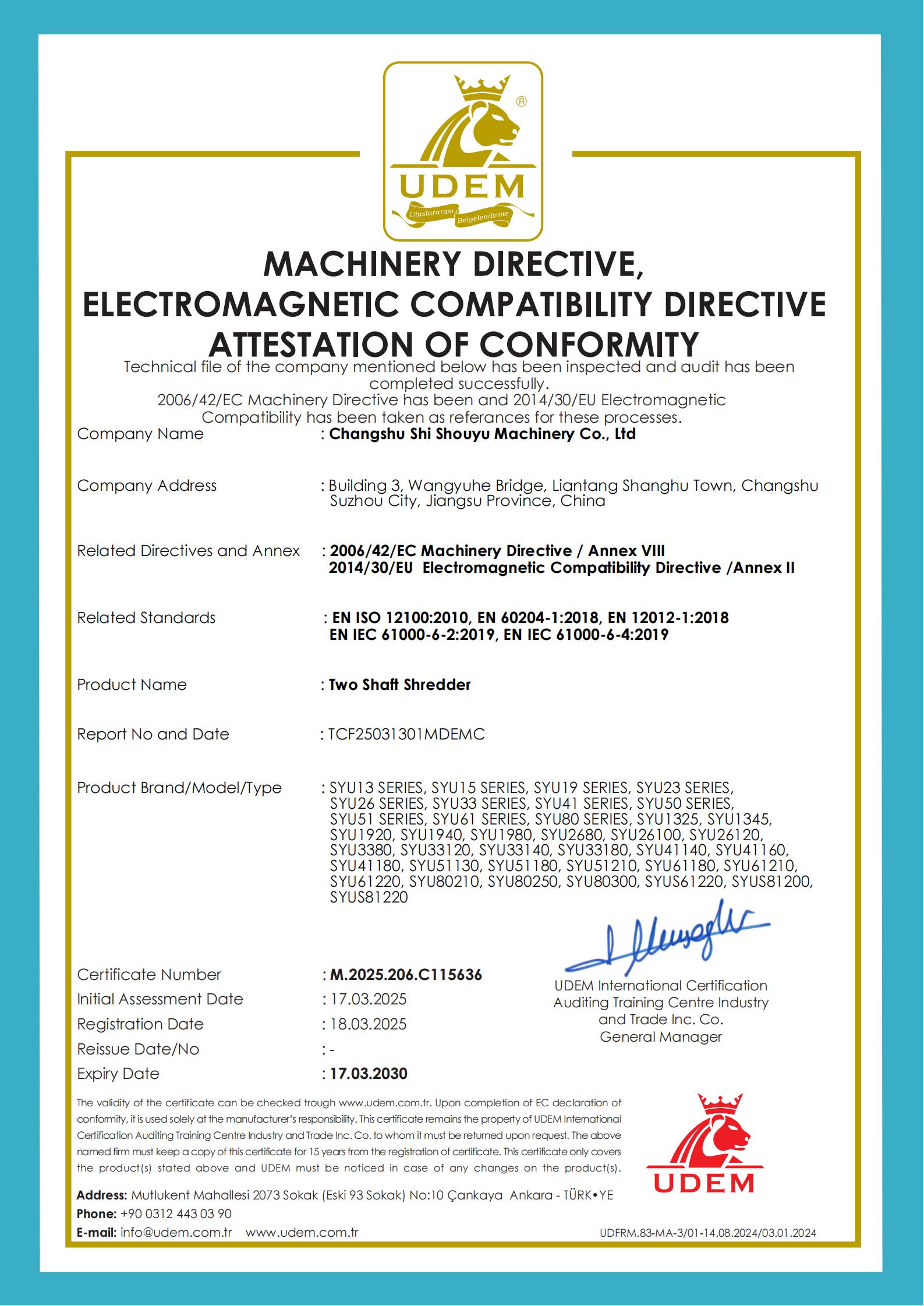
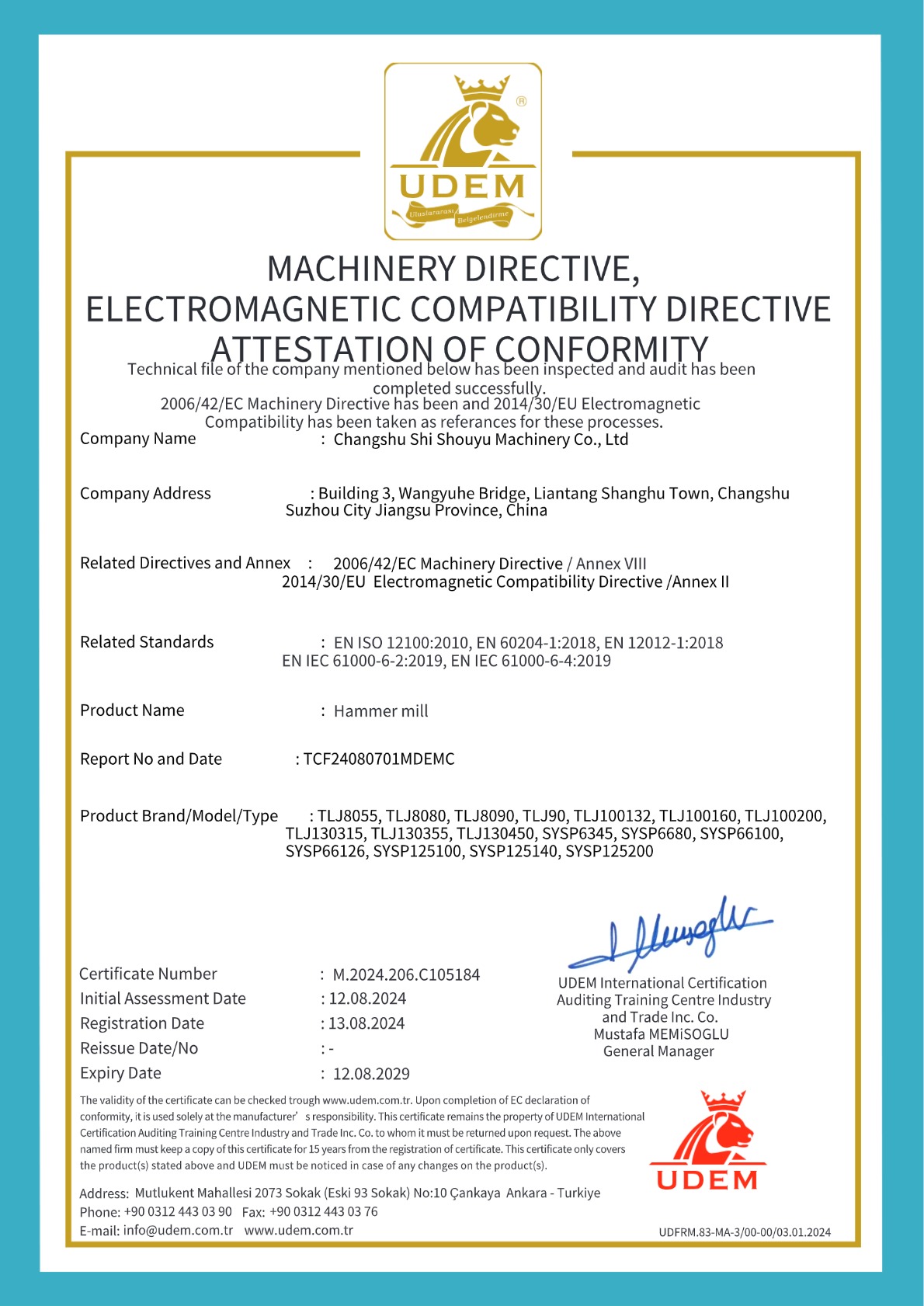
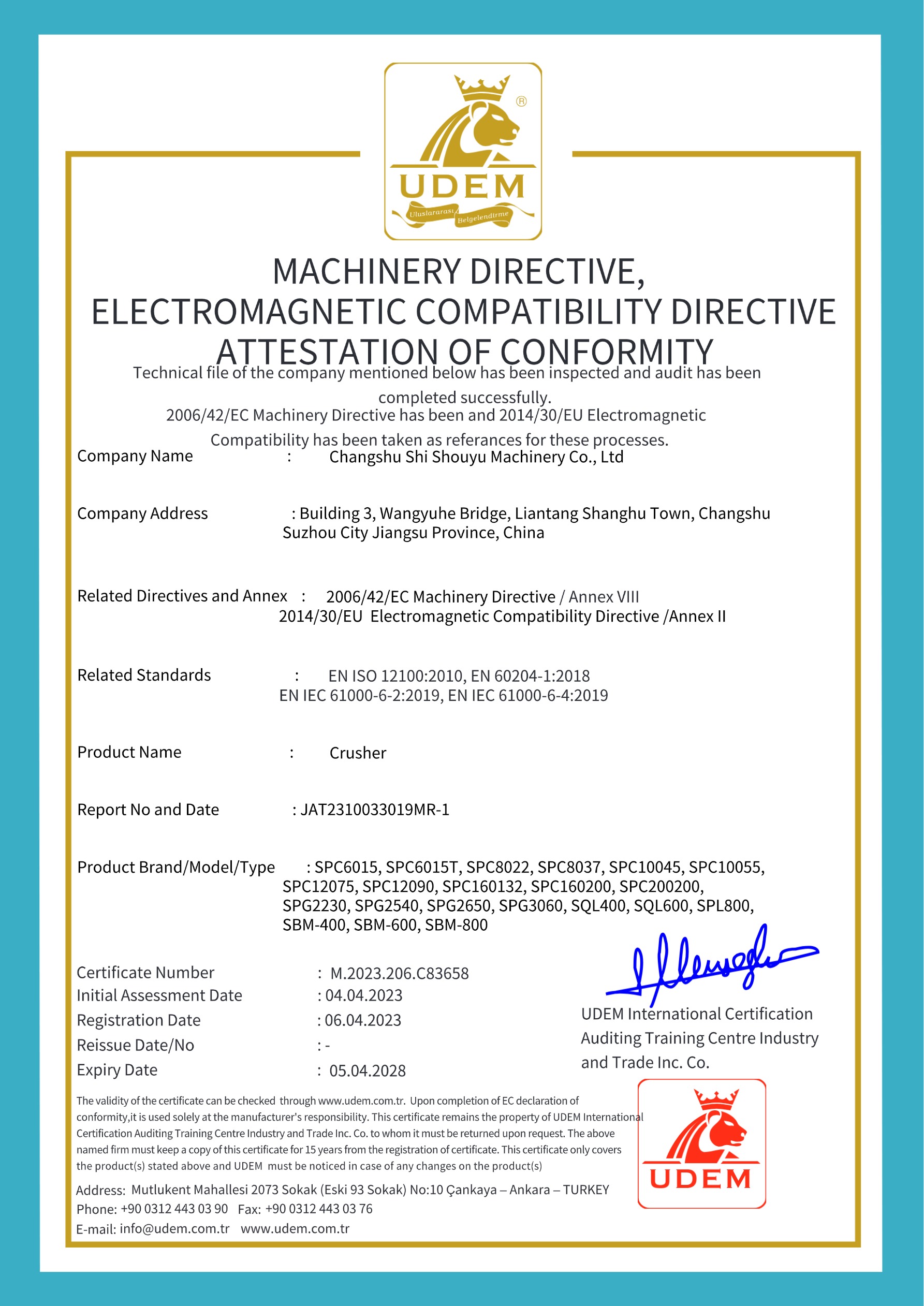
CE safety compliance forms part of the SPC machine design, including the protective arrangements used around operation and access. Compliance relates to the machine and its safety provisions; it does not establish how much of a particular waste stream the crusher will process.
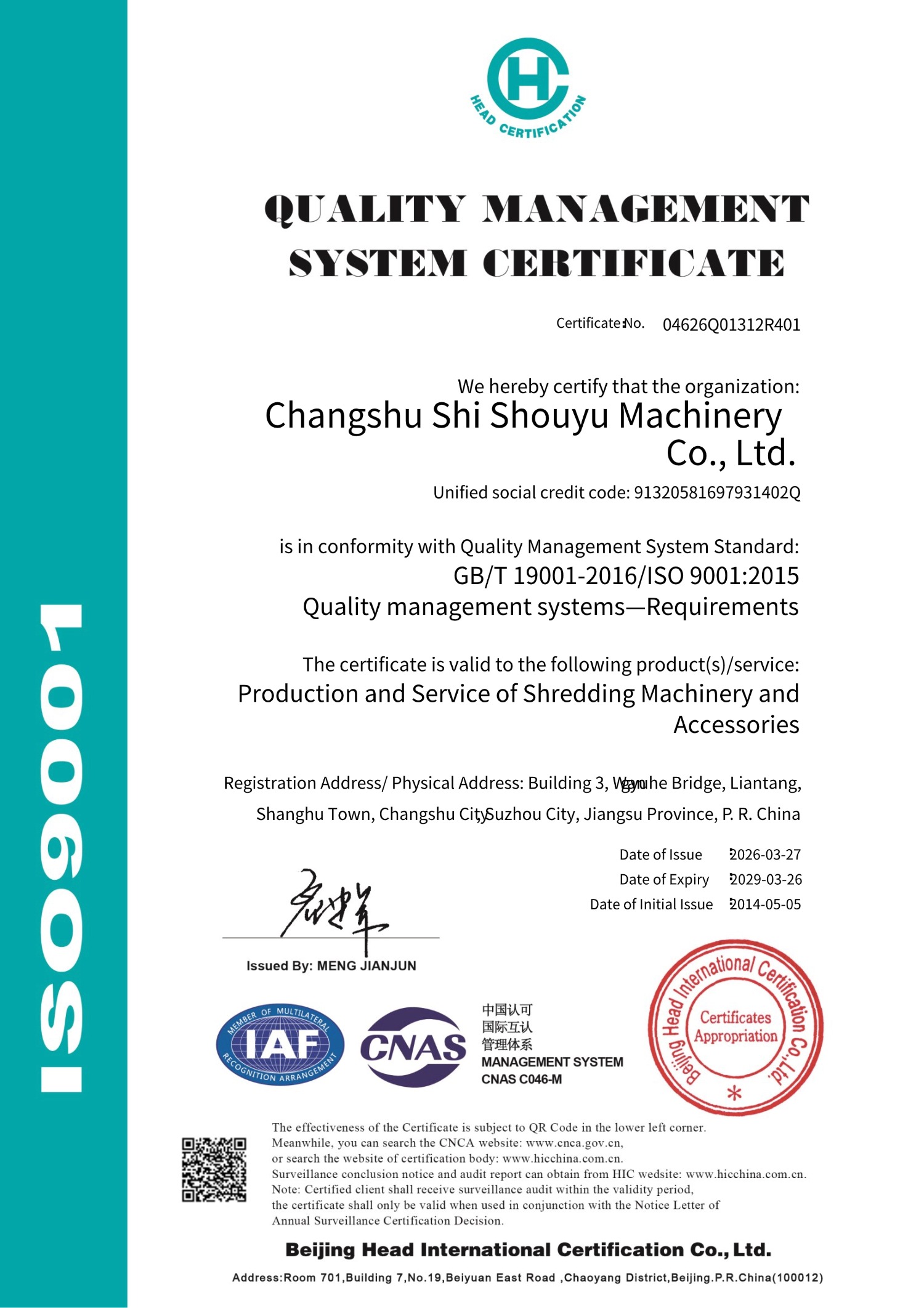
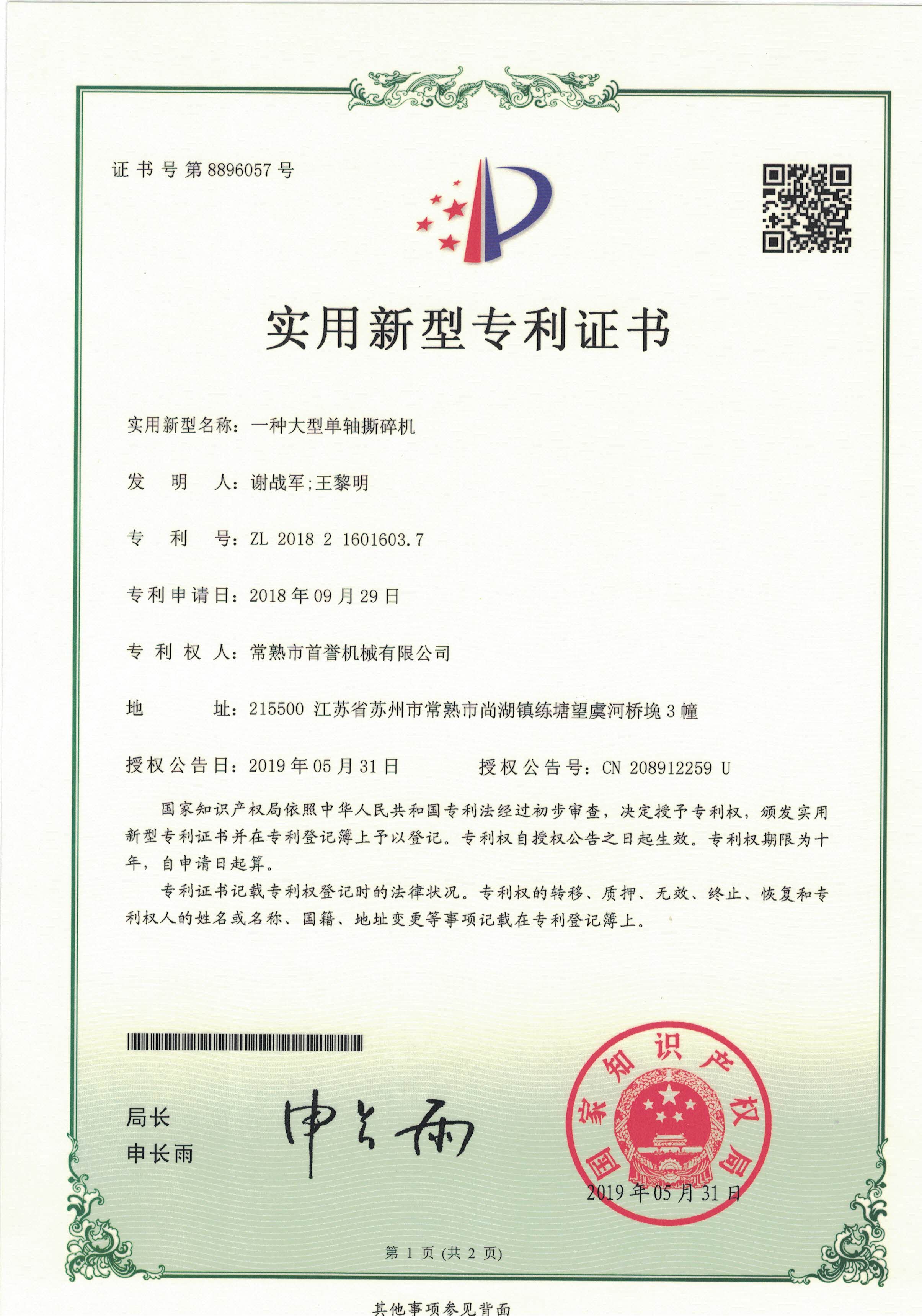
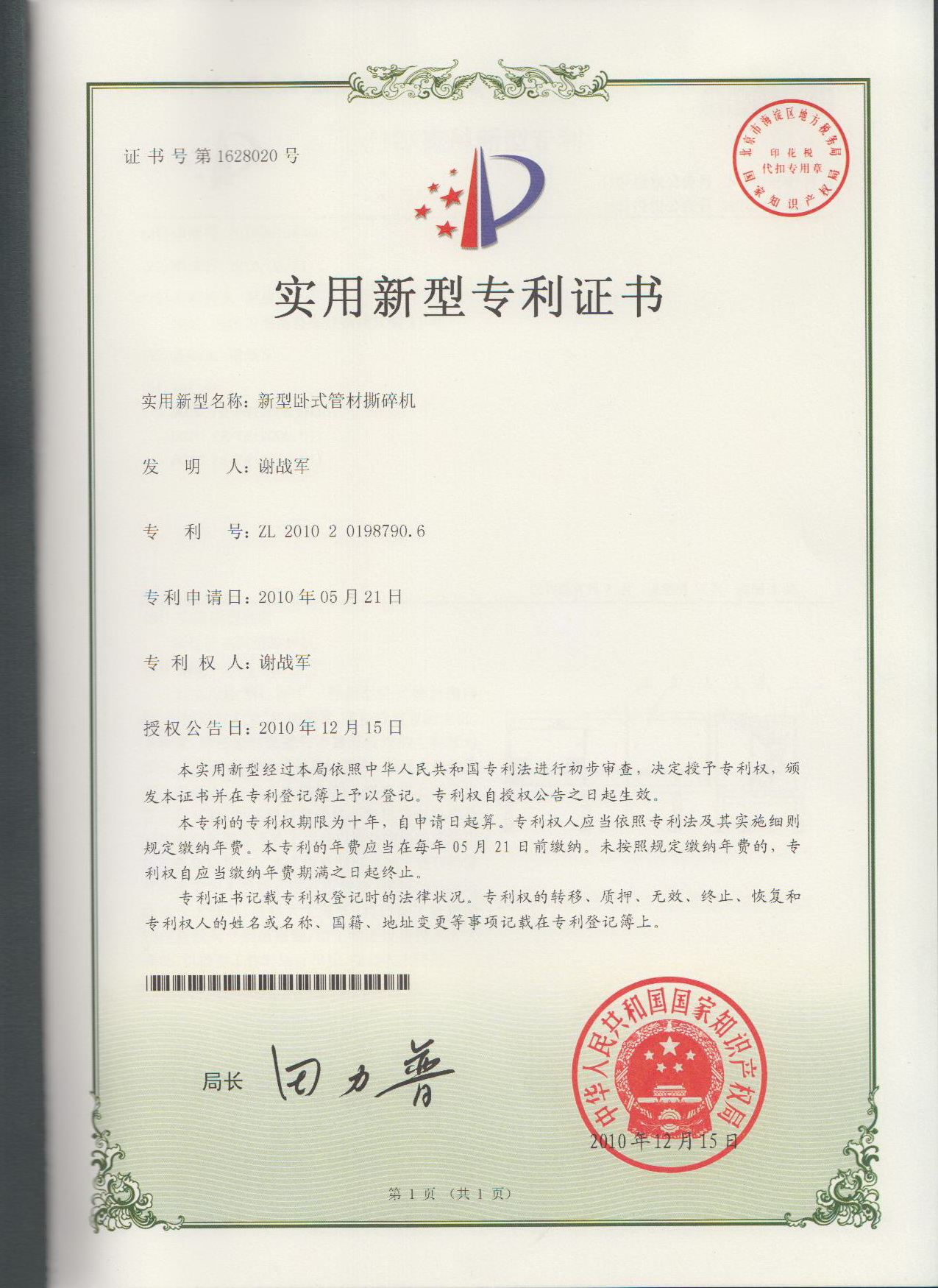
SOYU holds ISO 9001 quality management certification. That certification concerns the manufacturer's quality management system and should be distinguished from a material-specific performance test. Our core technologies also hold more than 80 national patents at company level; the total applies across our technology base rather than to this crusher alone.
Machine documentation should correspond to the actual configuration, including any powered opening or discharge equipment. Installation and operating requirements remain important alongside certification, particularly when the crusher becomes part of a larger processing system.
Technical Support & Model Matching
Choose equipment matched to your operating requirements with technical support from SOYU. We review your material characteristics, target throughput, site conditions and environmental requirements to recommend suitable models and configurations. Our support covers installation, commissioning and operator training to help your team prepare for operation. Overseas customers can access remote technical assistance for troubleshooting, while maintenance and original spare parts support continue after delivery. Original spare parts remain available at cost after the warranty period ends.
FAQ
Does the cutting design eliminate dust?
V-shaped cutting helps reduce dust generation during crushing, but it does not make the operation dust-free. Dust behavior also depends on the feedstock, so the installation still needs suitable dust handling for the material being processed.
Can the crusher wash plastic or separate mixed materials?
Washing and material separation require dedicated process stages; the crusher does not perform these functions on its own. The equipment needed alongside it depends on what enters the line and how the recovered plastic will be used.
For plastic carrying dirt, oil or product residue, consider a washing stage suited to the contamination. Check whether the residue can be removed by the proposed washing process before selecting the line arrangement.
For loads containing different plastics, sorting may be needed before crushing to keep incompatible polymers apart. Breaking mixed plastics into smaller pieces does not make them suitable for reuse together.
Metal fasteners and other unwanted objects need particular attention before feeding. Magnetic separation can address ferrous contamination, while nonferrous metals require a different approach; the protection required should be assessed for the actual feed.
Labels, coatings and bonded layers present a separate challenge. Crushing may leave these materials attached, so a representative material trial is useful when recovery depends on separating them from the plastic.
Where washing is included, downstream dewatering or drying may also be necessary. The acceptable residual moisture depends on the requirements of the next process, such as extrusion.
Share the feed composition, likely contaminants and intended use of the recovered material with us. These details help establish which sorting, washing and separation stages need to accompany the crusher.
Will a hollow container fit if its width is smaller than the inlet?
The inlet dimensions describe the feed opening, not an unrestricted size allowance for every object. A container's depth, shape, rigidity and feeding orientation also affect whether it can enter and reach the cutting area safely.
Are the hopper curtains a substitute for a guard?
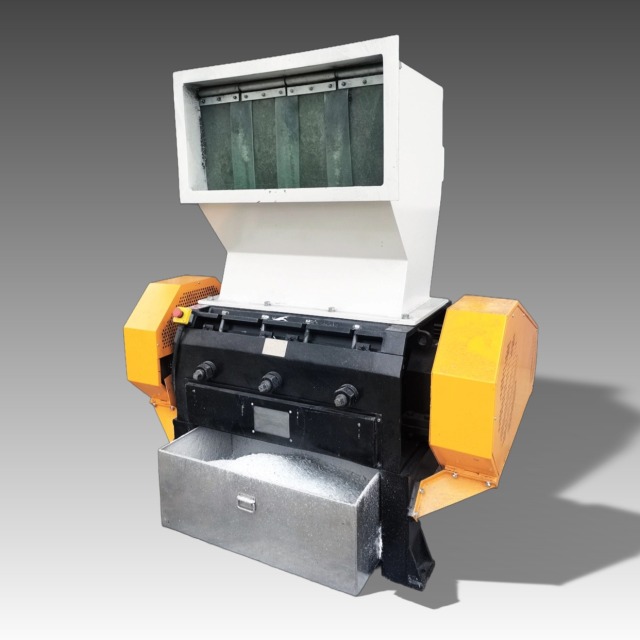
Overlapping translucent strip curtains at the hopper inlet are flexible barriers, not a substitute for the machine's designated guards. Their presence does not make reaching through the inlet safe.
Operators must keep hands and tools outside the opening and follow the prescribed feeding procedure. Material that does not enter freely should be handled through the approved procedure rather than pushed toward the cutting area by hand.
A blockage requires a controlled stop and energy isolation before anyone attempts to clear it. Wait for all movement to stop and follow the machine's instructions for securing stored energy; switching off alone is not a substitute for isolation.
Check the curtains for missing strips, tears or displacement during routine inspections. Report damage and follow the specified replacement procedure instead of tying the strips back or removing them for easier feeding.
Keep guards and safety switches in their intended operating condition. Do not bypass a switch or assume that a protective device removes the need to control access to the inlet.
Before commissioning, review the supplied hopper arrangement, feeding method and protective devices with the people who will operate the machine. Operator training should cover normal feeding, rejected material, blockages and the conditions that require the machine to be stopped.