Product Overview
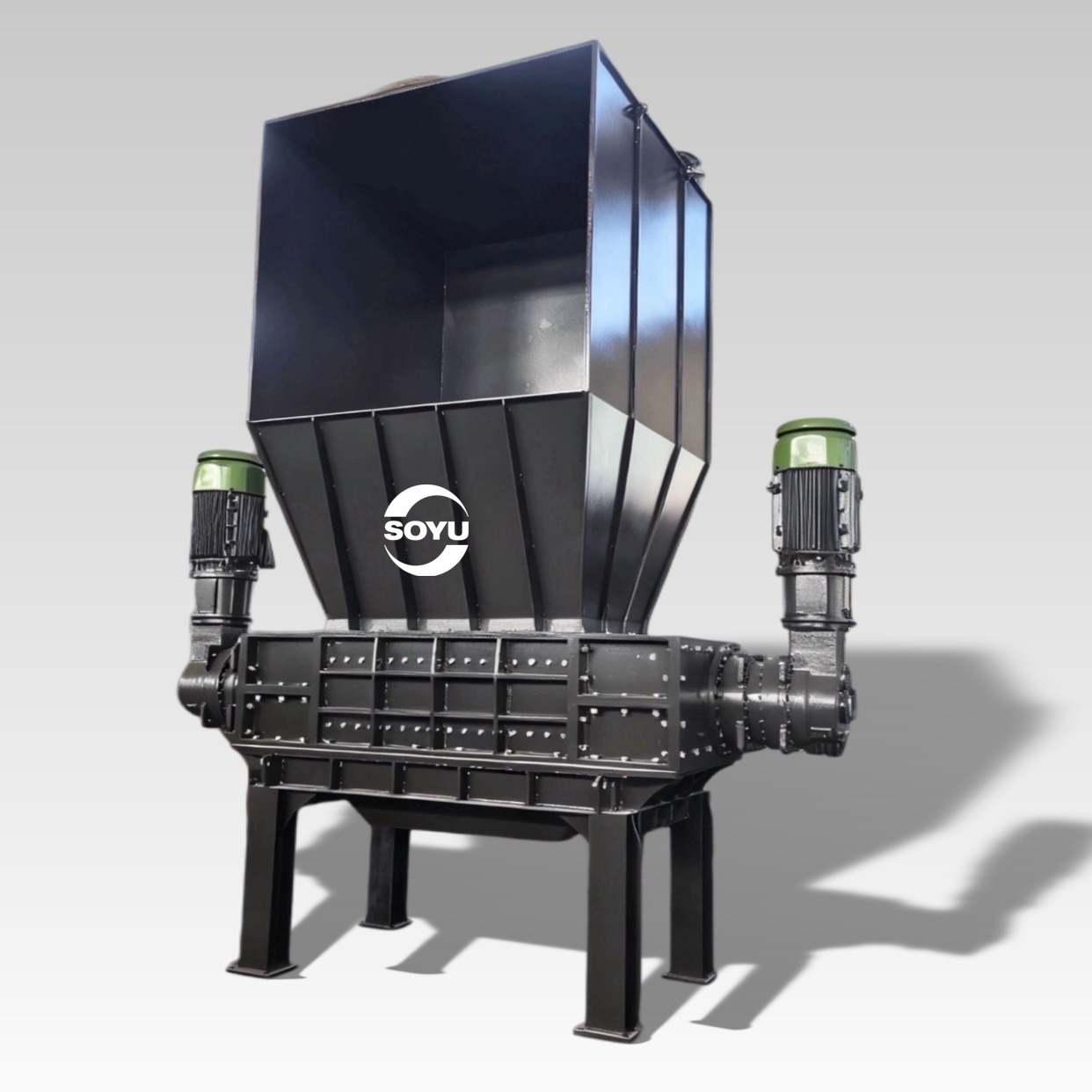
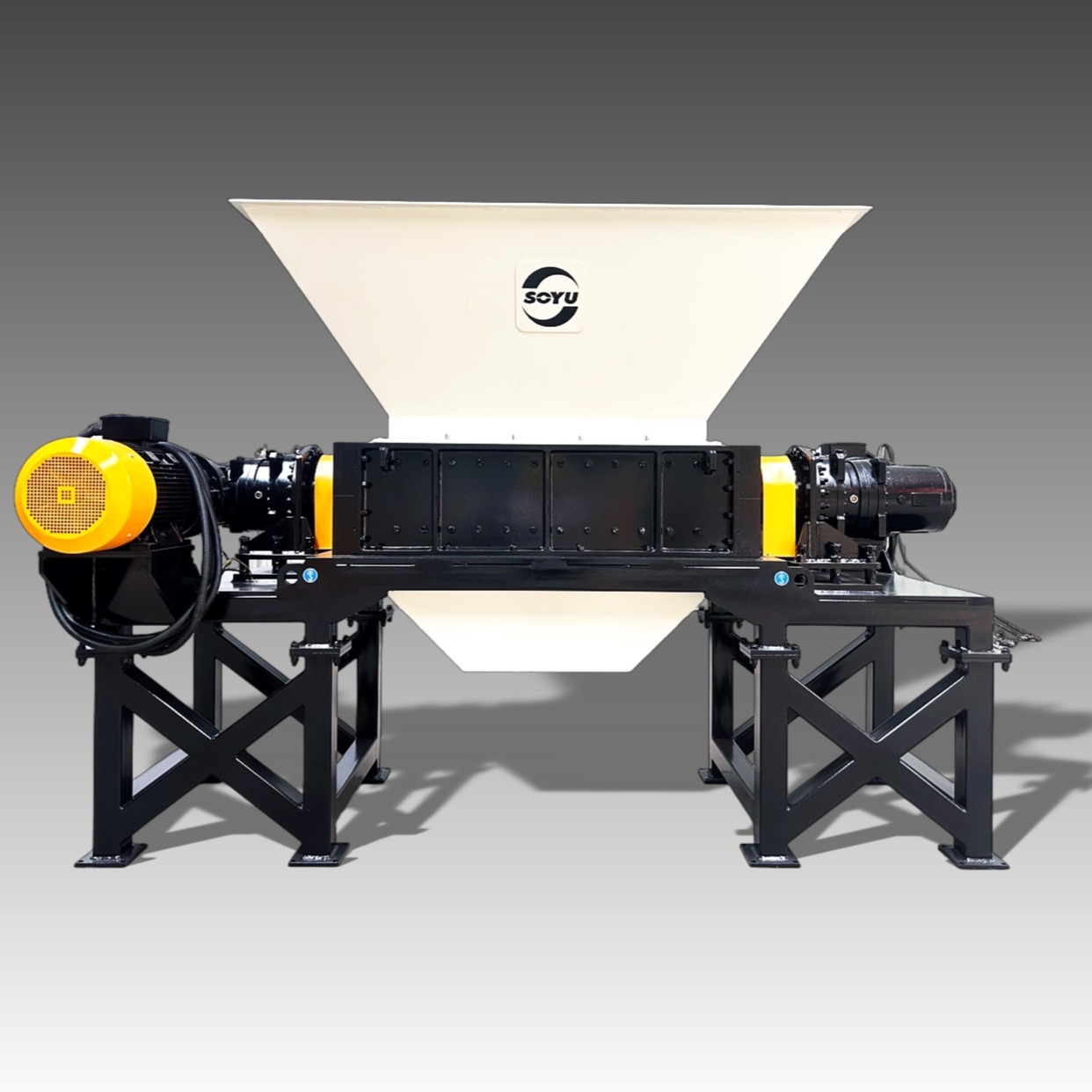
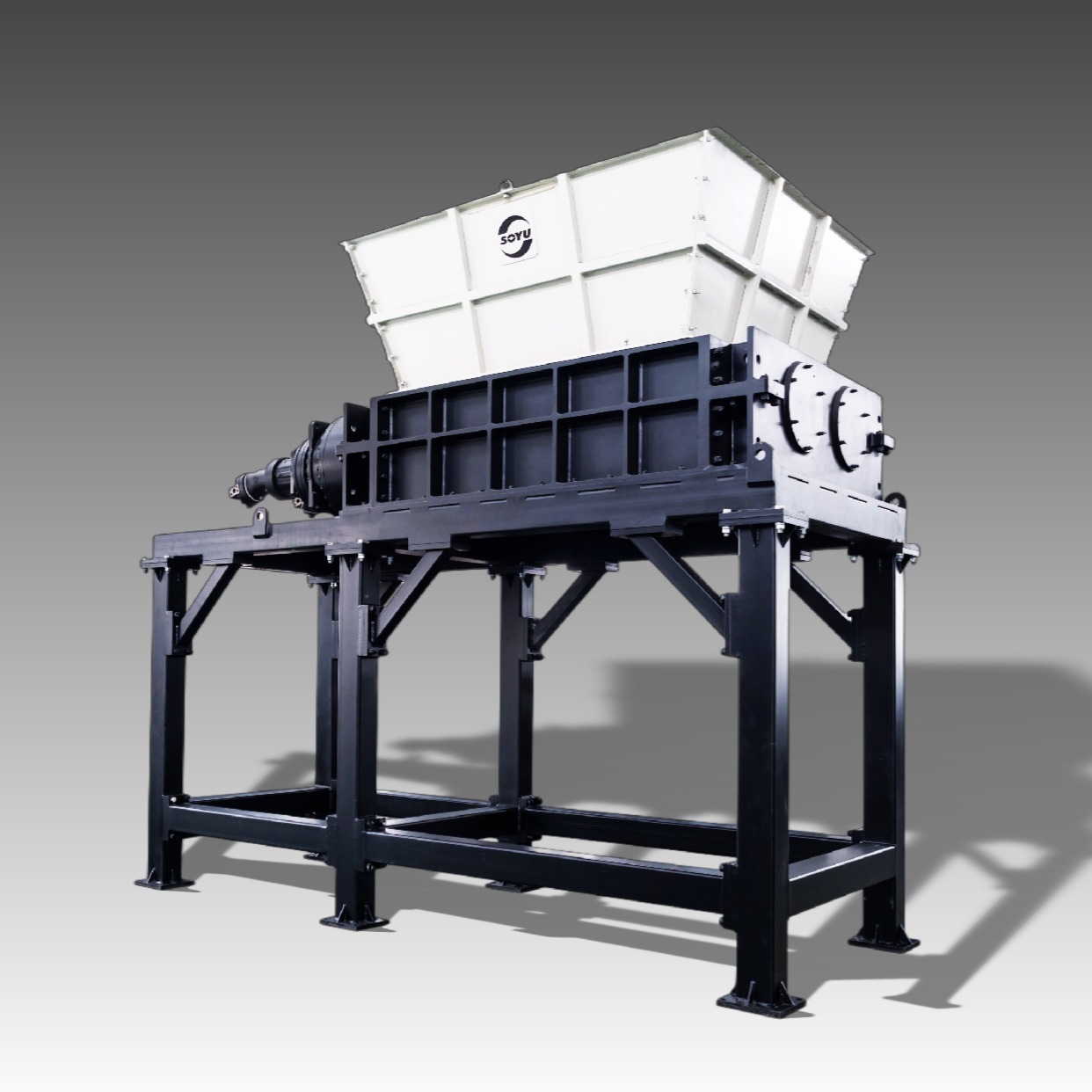
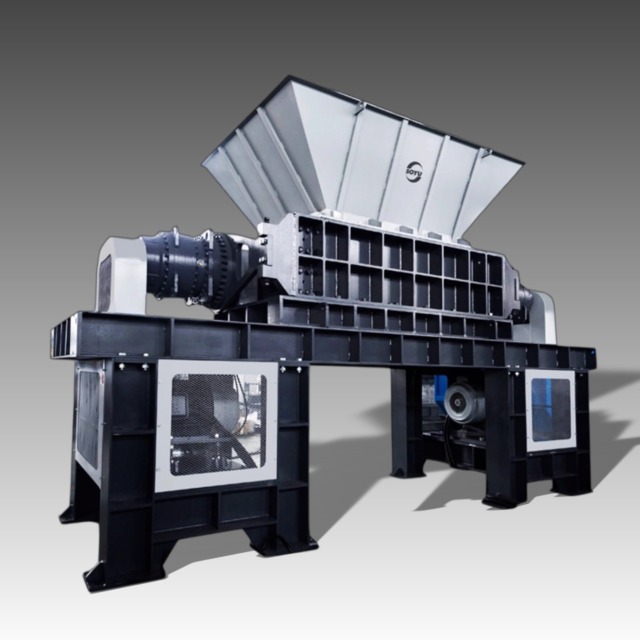
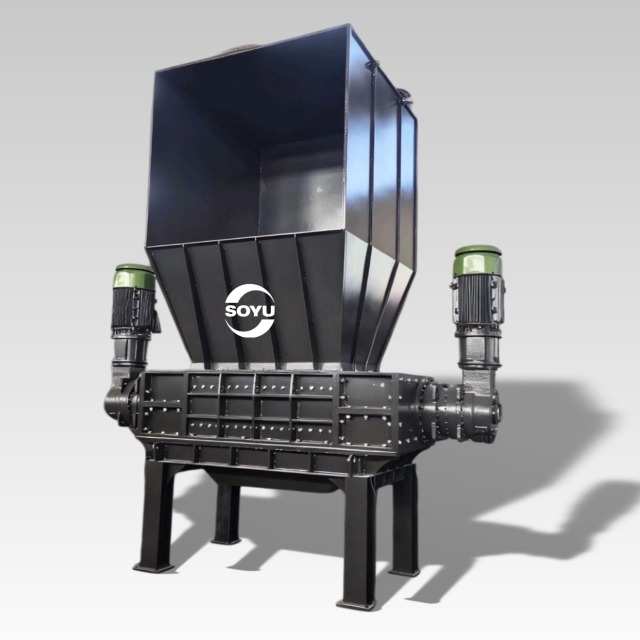
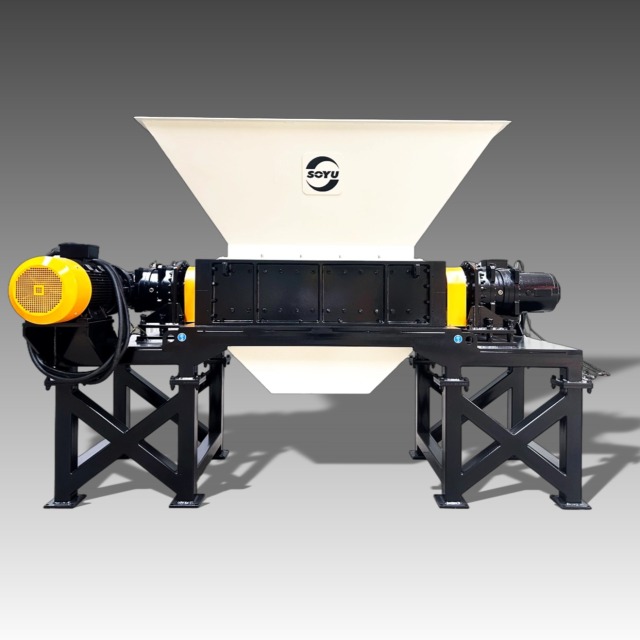
Bulky, tough industrial waste needs dependable size reduction before it can move through a recycling process. Built by scrap metal double shaft shredder manufacturer SOYU, CHANGSHU SHI SHOUYU MACHINERY CO., LTD., this industrial double shaft shredder machine brings demanding metal and plastic duties into one configurable processing platform. It belongs to our 3E Series technology range and supports material preparation in recycling plants, manufacturing operations and solid-waste facilities. Match the machine to the way your waste arrives, how it behaves under load and the requirements of the process that follows. Mechanical and electrical overload protection help safeguard the machine and operators against unexpected operating stresses. The Siemens PLC control system provides precise process control, real-time fault detection and a user-friendly operating interface.
Industrial Operating Teams
- Manufacturing plants can use the machine to prepare production rejects and accumulated process waste for recovery. Operators need a feed routine that fits the factory's own waste-generation pattern rather than an assumed uniform incoming stream.
- Recycling-center operators handling deliveries from different sources need to distinguish familiar feed from unexpected material.
- Separate incoming batches make it easier to recognize changes that affect processing behavior.
- Bulk-waste processors need mechanical reduction of awkward items that are difficult to handle in their original form.
- Their operating arrangements should account for unloading, temporary holding and controlled movement toward the machine.
- Processing-line engineers can incorporate the unit into a wider recovery installation. Their work includes coordinating the shredder's operating sequence with the equipment around it.
- Plant supervisors and maintenance technicians share responsibility for keeping the installation usable throughout its working life.
- Accessible inspections, clear operating instructions and an organized maintenance record help connect production decisions with equipment condition.
SYU33 Specifications
| Property | SYU3380 | SYU33100 | SYU33120 |
|---|
| Motor power | 2 × 22 kW | 2 × 30 kW | 2 × 30 kW |
| Blade dimension | 50 mm | 50 mm | 50 mm |
| Blade rotation diameter | 430 mm | 430 mm | 430 mm |
| Main blade quantity | 16 | 20 | 24 |
| External dimensions | 3000 × 1250 × 2150 mm | 3000 × 1250 × 2150 mm | 3000 × 1250 × 2150 mm |
| Equipment weight | 4700 kg | 5200 kg | 5700 kg |
Drive Train Options
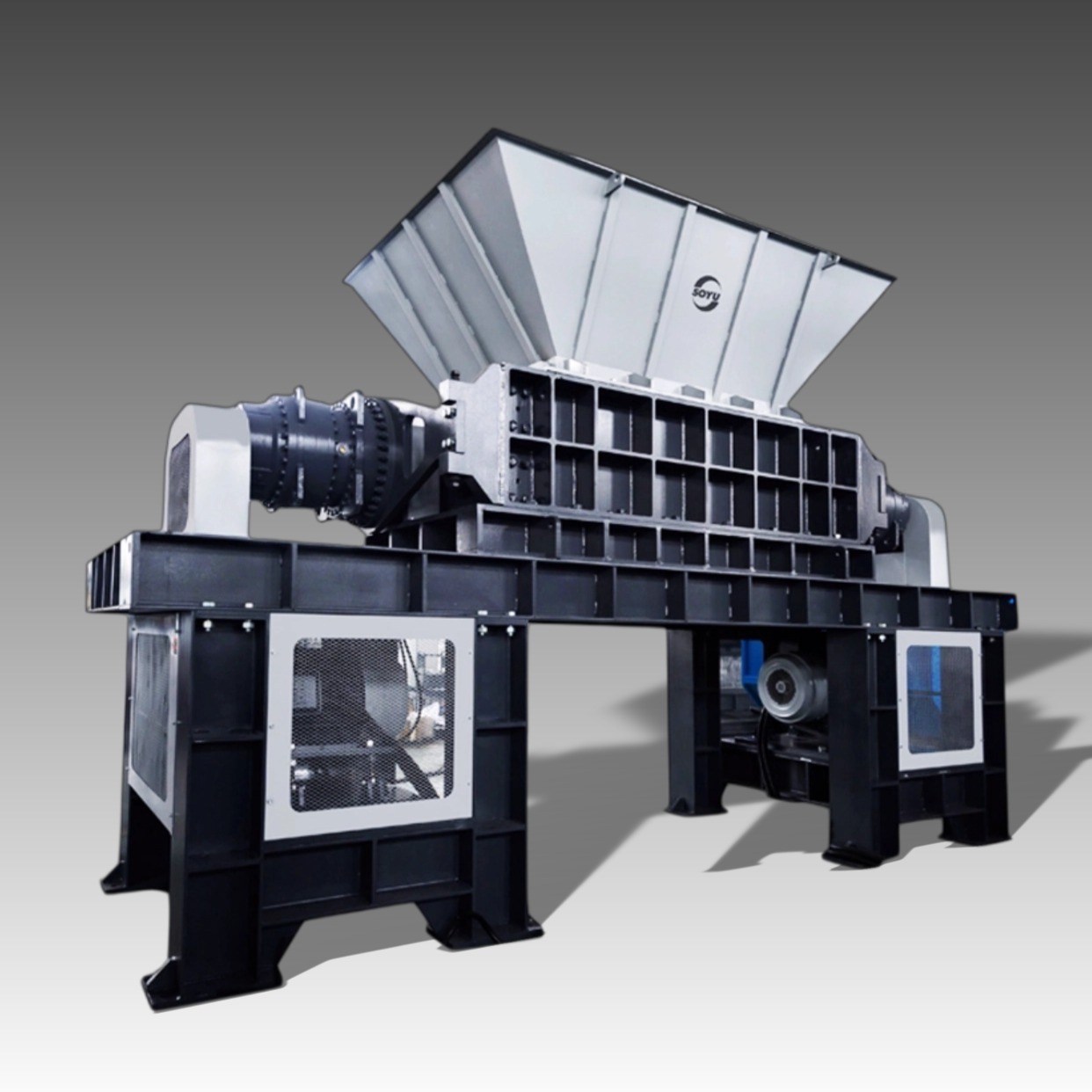
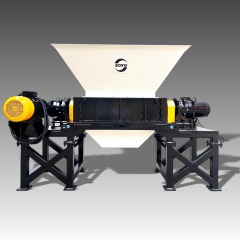
Our double shaft shredder machine factory offers electric motor and hydraulic drive options to match the drive train to different industrial duties. Both require an understanding of how resistance changes during feeding: a steady stream of similar pieces behaves differently from intermittent loads containing dense or awkward objects.
Electric drive suits installations organized around an electrical power supply and motor-driven transmission. For this arrangement, the electrical connection, starting conditions and control interfaces need to fit the rest of the line.
Hydraulic drive introduces a hydraulic power circuit into the installation. Its suitability depends on the required operating response, the available space for the hydraulic equipment and the site's ability to maintain that circuit; it should not be assumed to improve every application.
Planetary gearing supports low-speed, high-torque processing, while DIN 5480 splined shafts connect the reducer and rotor for reliable torque transmission. These connections carry the cutting load through the drive assembly rather than relying on motor power alone to explain machine behavior.
On a heavy duty plastic shredder machine, installed power describes the drive input, not a guaranteed production rate. Actual throughput depends on the material, its dimensions, the way it is fed and the required discharge condition, so comparable operating trials provide a more useful basis for assessing the proposed arrangement.
Rotor And Frame
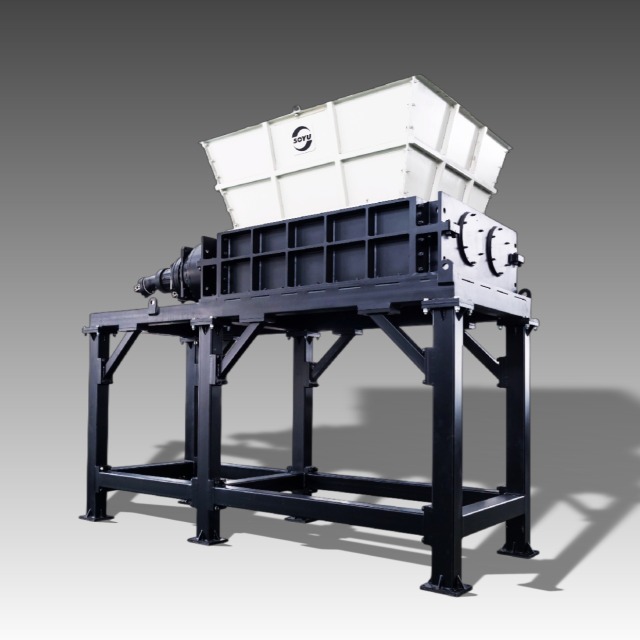
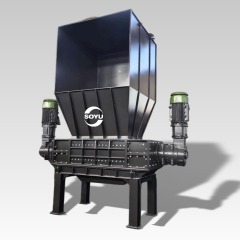
As a scrap metal double shaft shredder manufacturer, we use V-arranged cutter blades to distribute shredding force across the rotor assembly. This layout promotes a more uniform cutting action and helps avoid concentrating the entire material engagement at one point along the cutting zone.
CrMoV alloy steel cutters provide a wear-resistant cutting option for demanding duties. Our double shaft shredder machine factory can adapt blade material and configuration to the application, allowing the cutting assembly to address differences in abrasion, toughness and the form of the incoming waste.
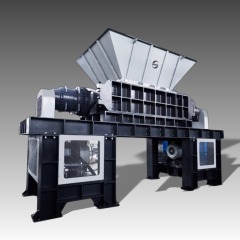
HARDOX™ wear-resistant steel plates form the double-sided walls around the working area. Abrasion resistance is particularly useful where material repeatedly rubs against the chamber surfaces during reduction.
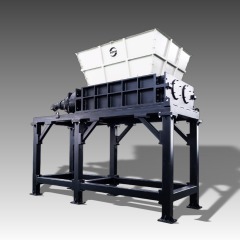
The thickened frame resists the forces generated by high-torque processing. Structural rigidity supports the relationship between the rotor, chamber and drive when large or resistant pieces enter the machine.
Wider SYU configurations also use DC53/D2 high-alloy moving blades with multiple regrindable faces. The fitted steel grade, blade section dimensions and permitted regrinding geometry need to match the approved cutter drawing; cutter assemblies should not be treated as interchangeable simply because they belong to the same range.
Operating Controls
Siemens PLC control provides automatic fault detection, process control and an operator interface for managing the machine. Diagnostic information helps operators identify an abnormal condition and respond to its cause rather than repeatedly attempting to continue production.
Mechanical and electrical overload protection address unexpected operating stresses. These protective functions help safeguard the equipment, but an overload event still calls for an appropriate operator response and an investigation of the material involved.
Operating parameters can be adjusted to suit different processing duties within the supplied control configuration. Changes should follow the machine instructions and remain tied to observable material behavior, rather than being used to force unsuitable feed through the chamber.
For an industrial double shaft shredder machine, productive operation depends on coordination between feeding and the cutting load. A machine receiving irregular surges can spend more time under stress without producing a corresponding improvement in useful output.
Energy-efficient processing is a design objective, while actual consumption depends on the duty. Track electricity use against accepted processed material, and include wear parts, cleaning labor and maintenance effort when assessing running cost; no single motor rating establishes the cost of a working shift.
Process Advantages
- Reduced bulk makes processed material easier to transfer between operations.
- The practical benefit is greatest where the original pieces occupy excessive handling space or cannot move conveniently through the next transfer point.
- Opened-up material can make constituent parts more accessible to later recovery stages.
- Shredding prepares the feed for separation, while the downstream equipment determines how those constituents are actually recovered.
- More manageable fragments can support a steadier supply to subsequent equipment.
- The receiving process still needs to accept the actual range of shapes and sizes produced under the agreed operating conditions.
- Production rejects processed with a heavy duty plastic shredder machine can become more convenient to handle within a recovery route.
- Reuse depends on the cleanliness and composition of that material as well as on its reduced size.
- Mechanical preparation can reduce the amount of manual breaking or dismantling needed for compatible waste.
- Hazardous components and items requiring deliberate separation still need their own preparation method rather than being left for the cutters to resolve.
Plant Use Scenarios
- New recycling lines need a coordinated operating sequence from incoming feed to final discharge.
- Include startup, normal running and stopping conditions when connecting the shredder to the surrounding machinery.
- Replacement installations need more than a comparison of floor dimensions. Existing loading equipment, service access and discharge connections may impose constraints that the previous machine's footprint does not reveal.
- Campaign processing allows a plant to handle different waste streams in separate runs.
- A deliberate changeover routine helps prevent remnants from one campaign affecting the material recovered in the next.
- Changes in incoming waste can alter the duty even when the nominal material category stays the same.
- A new component shape, denser packing or a different reinforcement can justify revisiting the operating setup.
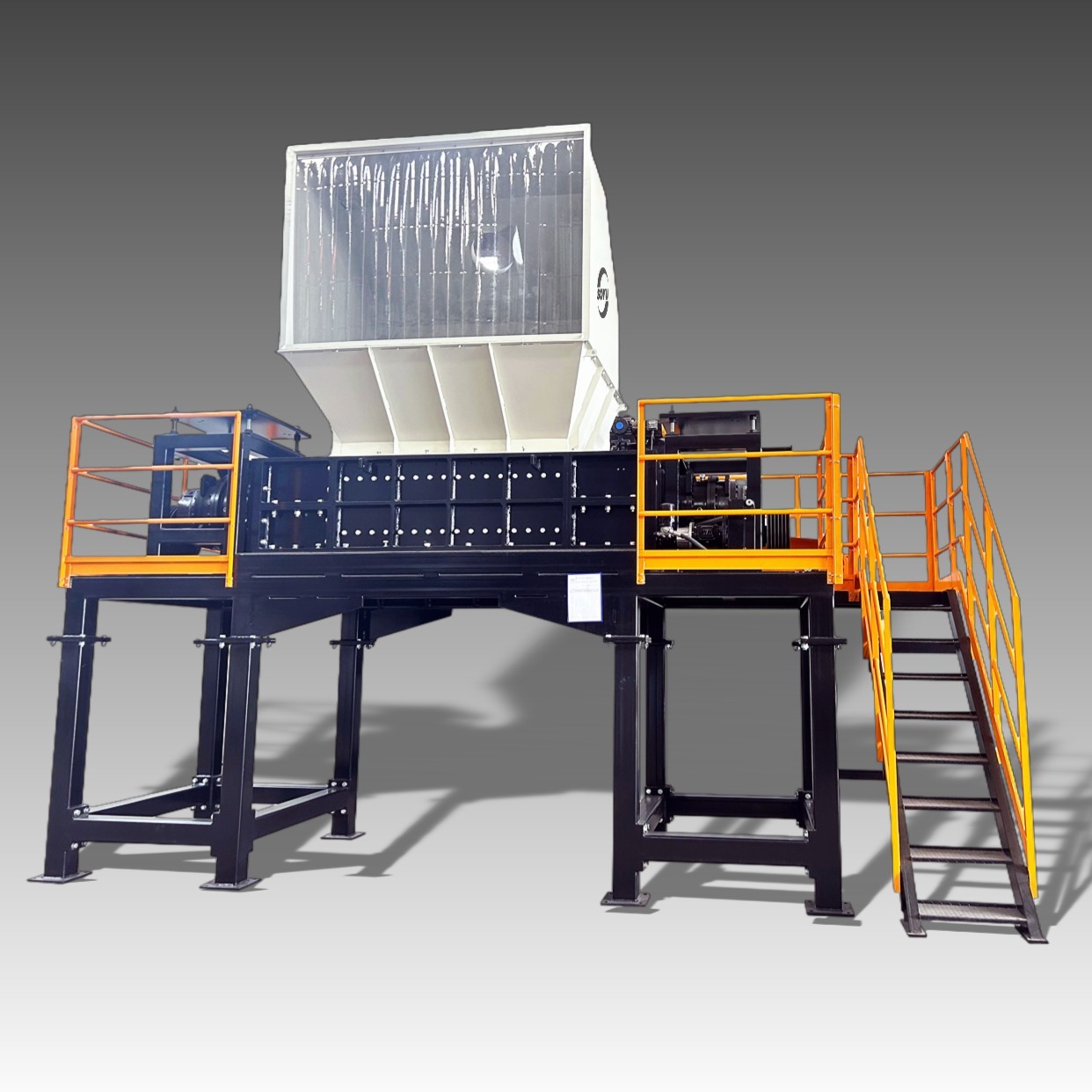
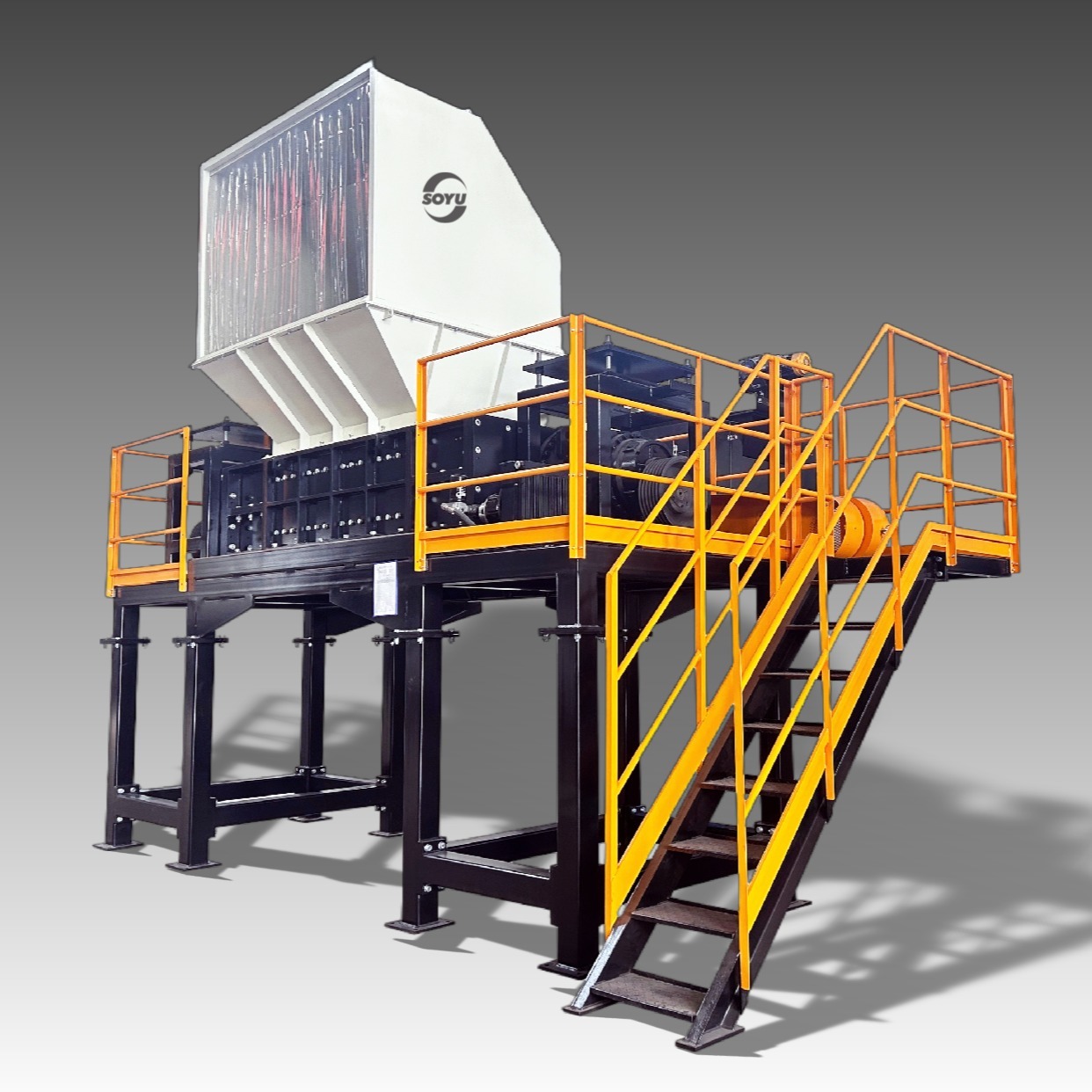
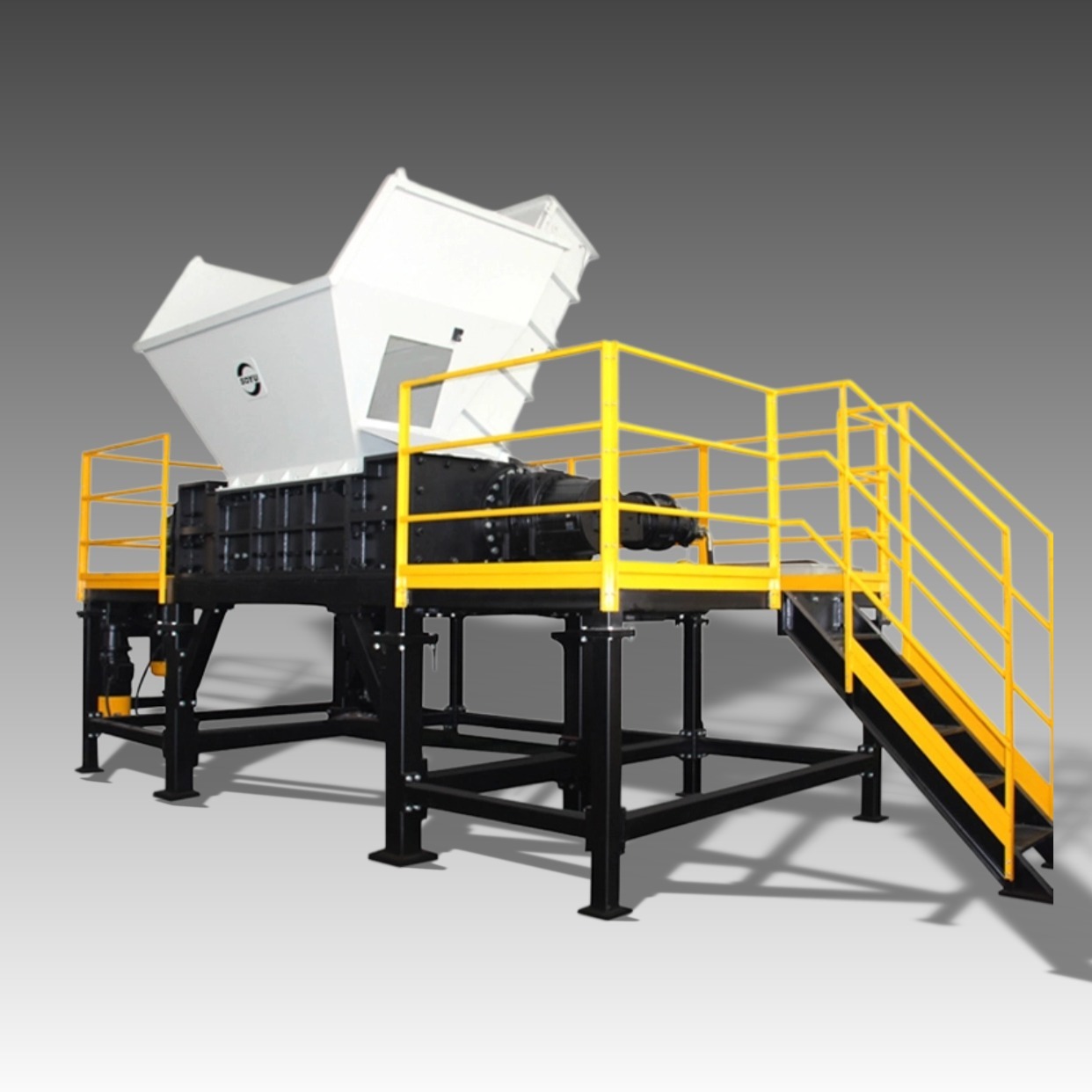
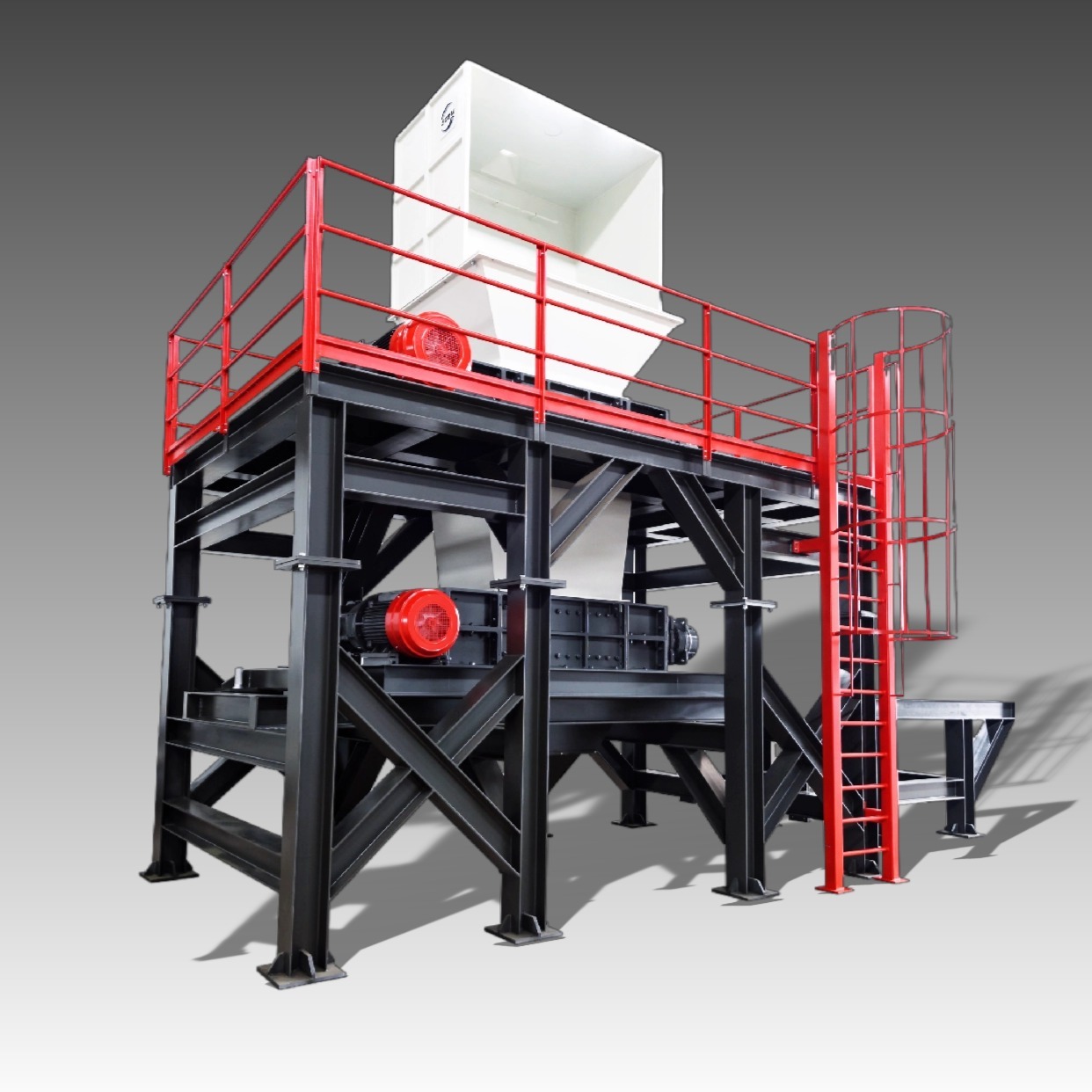
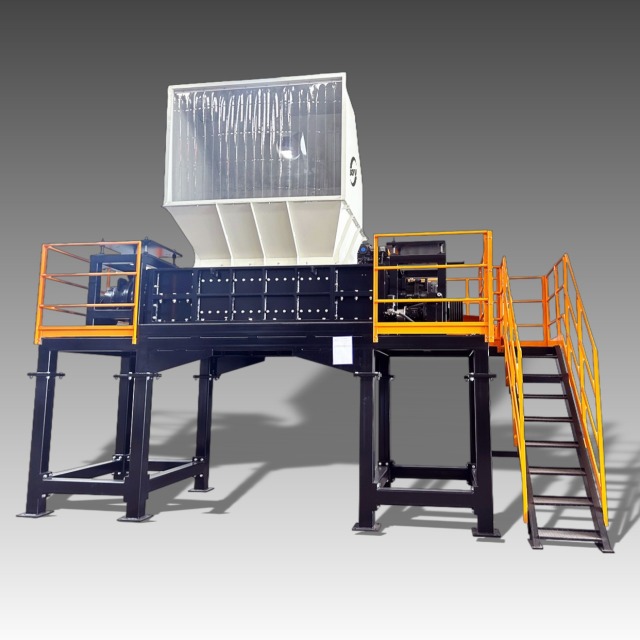
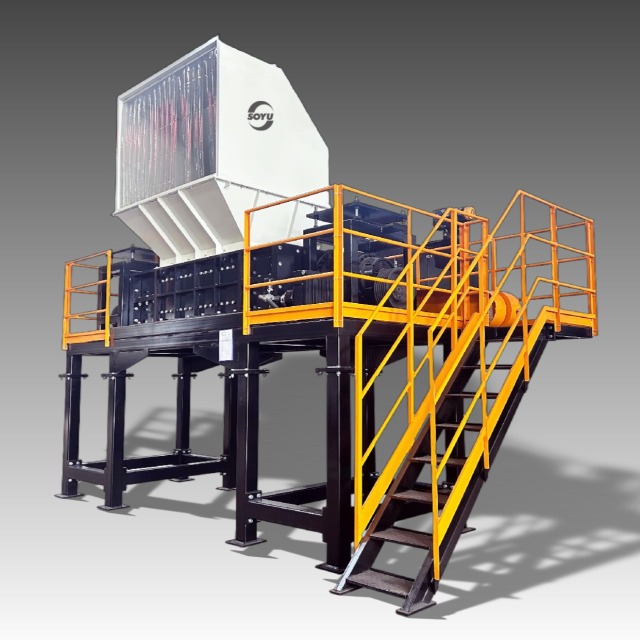
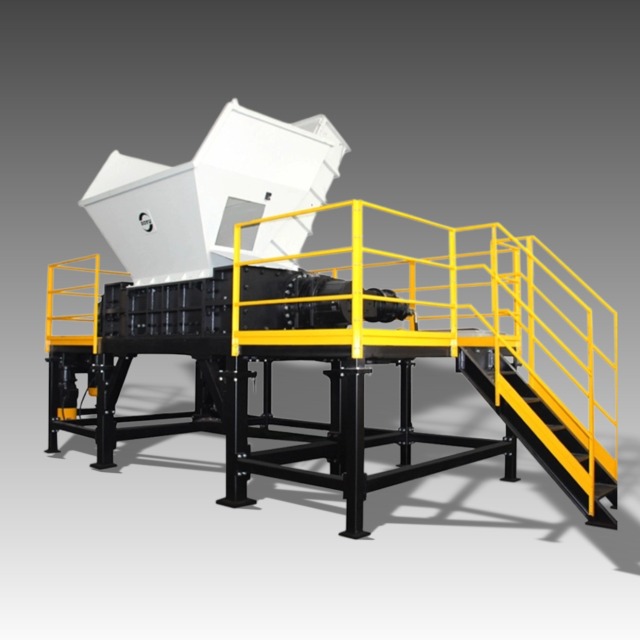
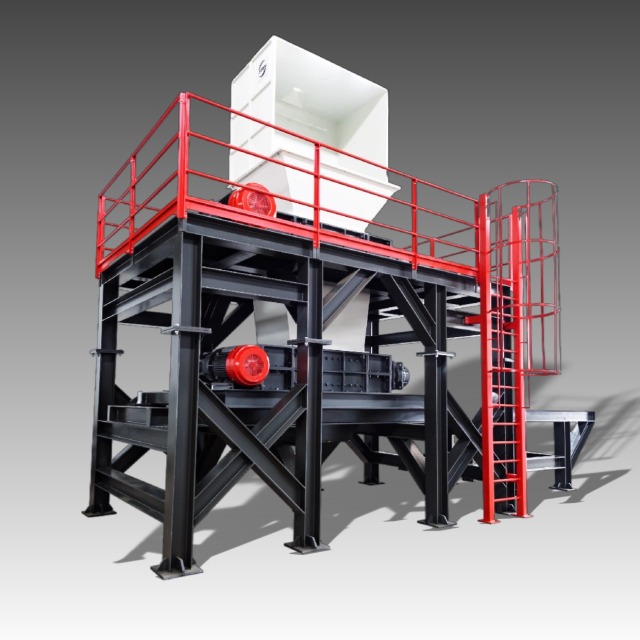
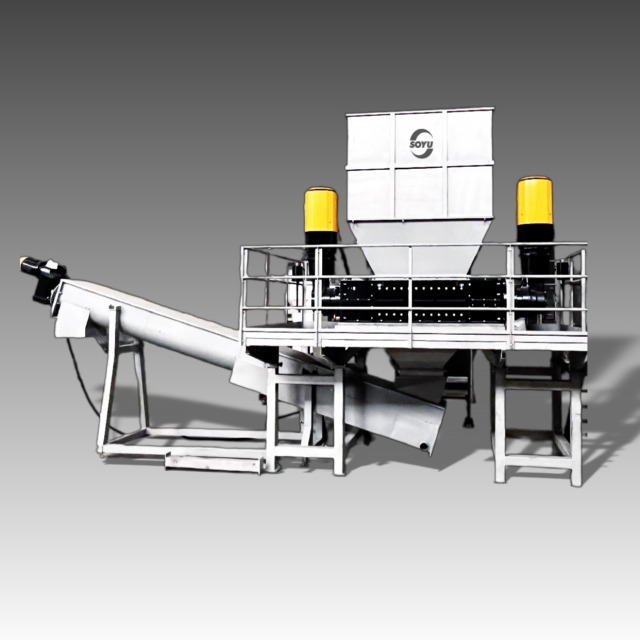
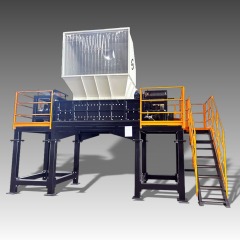
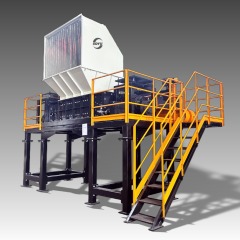
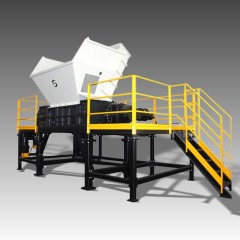
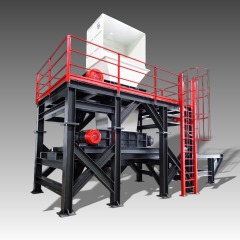
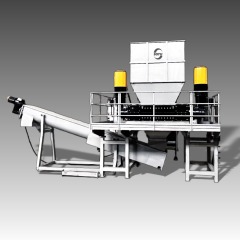
- Elevated assemblies can combine a white flared hopper, support frame, access stairs, railings and mesh-covered drive compartments.
- The installation drawing needs to distinguish the complete assembled arrangement from the machine dimensions listed in the specifications.
- Expansion projects need room for material movement as well as machinery.
- Keep the loading approach, discharge collection and maintenance working area usable when adding surrounding equipment.
Scrap Metal Processing
Decommissioned drums and fabricated metal scrap need preparation that reflects their previous use and physical condition. Containers must be made safe for processing, including the removal of residual contents and stored pressure where applicable.
Closed shapes, nested pieces and long projecting sections can present different loading problems. Presenting them in a controlled orientation helps prevent an apparently manageable batch from becoming an awkward mass at the hopper.
Metal section and construction govern cutting resistance. A broad description such as steel scrap does not establish that every thickness, solid section or hardened component belongs in the same operating duty.
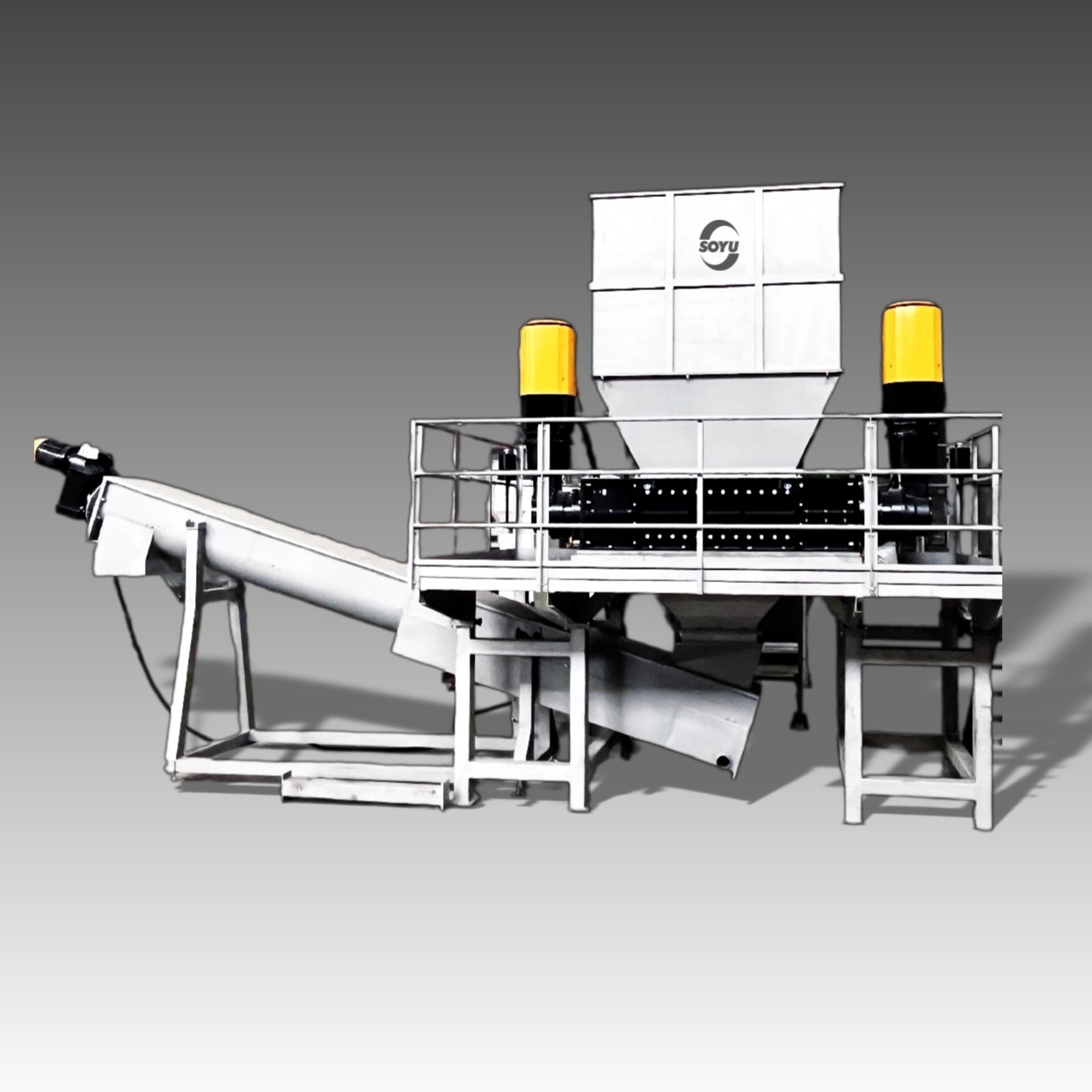
Discharged metal needs a clear route away from the machine. Conveyor transfer points should accommodate sharp edges, irregular fragments and possible material snagging without allowing an accumulation beneath the cutting chamber.
Screens and separation stages must work with the material that actually leaves the unit. Their acceptance limits should govern the required preparation outcome, rather than assuming that a nominal cutter dimension defines the complete discharge distribution.
Scrap preparation remains distinct from producing a specified steelmaking charge. Any later requirements for density, coating removal or furnace acceptance belong to the appropriate downstream process.
Plastic Recycling Operations
- Bulky industrial plastic fed to a heavy duty plastic shredder machine needs sufficient engagement with the cutting zone.
- Hollow shapes, compact rejects and irregular molded pieces should be considered separately when establishing the loading routine.
- Flexible film can fold, stretch and gather during handling.
- Feed presentation needs to address that behavior; a material application listing alone does not establish resistance to wrapping under every condition.
- Composite plastic waste can contain reinforcements or bonded layers that remain mixed after shredding.
- The intended recovery route needs to accept that composition rather than relying on size reduction to separate it automatically.
- Washing equipment requires fragments that can move through its own transfer and treatment stages. Compare processed material with the washer's intake and retention requirements before treating the line as a continuous process.
- Wet or contaminated incoming plastic changes the balance between useful polymer and unwanted material.
- Track the accepted recovered fraction separately from the gross mass entering the shredder.
- Consistent recovered material depends on keeping incompatible polymers and unwanted attachments under control upstream.
- Adjusting the cutting process cannot by itself correct a mixed stream that the subsequent recycling operation cannot use.
Product Videos And Cases
Metal drum demonstrations illustrate how a bulky container enters and breaks down in the cutting zone. Watch the orientation and loading pattern as well as the visible reduction, because those conditions influence how representative the demonstration is of your own material.
Tire demonstrations address resilient, reinforced feed. Their useful detail is the interaction between the tire structure and the cutting action, rather than an assumed result for every tire type.
Paper demonstrations show a different material response from rigid scrap. Observe whether the feed is loose, folded or compacted when comparing the demonstration with a planned duty.
Scrap electric motorcycle demonstrations concern complex assemblies containing different components. Such applications require prior preparation, including the removal of batteries and other items that must not enter the shredding process.
FRP demonstrations cover reinforced composite parts, while PCB board demonstrations cover electronic composite material. These are separate application examples with different recovery and handling requirements.
A relevant project case connects the incoming material, supplied configuration and processed result. Demonstration footage should therefore be read in its operating context; it does not establish an unstated capacity, cutter life or customer production result.
SYU19–26 Specifications
| Model | Motor power | Blade dimension | Blade rotation diameter | Main blades | External dimensions | Weight |
|---|
| SYU1940 | 7.7 kW | 18.5 mm | 245 mm | 20 | 1860 × 900 × 1800 mm | 1400 kg |
| SYU1960 | 2 × 7.5 kW | 18.5 mm | 245 mm | 30 | 1950 × 900 × 1800 mm | 1600 kg |
| SYU1980 | 2 × 11 kW | 18.5 mm | 245 mm | 42 | 2180 × 900 × 1800 mm | 1800 kg |
| SYU2360 | 18.5 kW | 25 mm | 290 mm | 24 | 2300 × 1000 × 1950 mm | 3000 kg |
| SYU2380 | 22 kW | 25 mm | 290 mm | 32 | 2500 × 1000 × 1950 mm | 3500 kg |
| SYU23100 | 22 kW | 25 mm | 290 mm | 40 | 2700 × 1000 × 1950 mm | 4000 kg |
| SYU2680 | 18.5 kW | 40 mm | 320 mm | 20 | 2410 × 1100 × 2050 mm | 4200 kg |
| SYU26100 | 22 kW | 40 mm | 320 mm | 25 | 2810 × 1100 × 2050 mm | 4600 kg |
| SYU26120 | 22 kW | 40 mm | 320 mm | 30 | 3010 × 1100 × 2050 mm | 5000 kg |
Cleaning And Maintenance
- Retained material around the cutting chamber needs to be removed using the machine's prescribed safe-access procedure. Trained personnel must isolate power and address stored hydraulic energy before entering a hazardous working area.
- Inspect cutter edges and surrounding wear surfaces for damage or unusual wear patterns.
- A localized defect can indicate an unsuitable object or an operating condition that needs attention beyond the cutter itself.
- Check mechanical fasteners, drive connections and visible seals as directed by the operation and maintenance manual.
- Follow the specified settings rather than applying a general tightening or adjustment method to every component.
- Maintain lubrication according to the instructions for the fitted bearings and drive equipment.
- Lubricant type and service intervals belong to the installed components, so a universal schedule should not replace the machine instructions.
- Record recurring fault conditions, cleaning effort and changes in operating sound or vibration.
- Comparing these observations over time can reveal deterioration before it becomes an unexpected interruption.
- Restore guards and clear tools before returning the machine to operation.
- A controlled restart after maintenance allows the operator to check that the equipment and surrounding material-transfer system are ready to run together.
SYU41–80 Specifications
| Model | Motor power | Blade dimension | Blade rotation diameter | Main blades | External dimensions | Weight |
|---|
| SYU41100 | 2 × 30 kW | 50 mm | 534 mm | 20 | 3660 × 1700 × 2650 mm | 9000 kg |
| SYU41140 | 2 × 37 kW | 50 mm | 534 mm | 28 | 3660 × 1700 × 2650 mm | 10000 kg |
| SYU41160 | 2 × 45 kW | 50 mm | 534 mm | 32 | 3660 × 1700 × 2650 mm | 11000 kg |
| SYU50130 | 2 × 55 kW | 50 mm | 650 mm | 32 | 4200 × 2100 × 3000 mm | 13000 kg |
| SYU50180 | 2 × 55 kW | 50 mm | 650 mm | 36 | 4200 × 2100 × 3000 mm | 14000 kg |
| SYU50180 | 2 × 75 kW | 75 mm | 800 mm | 24 | 5400 × 2400 × 3700 mm | 20000 kg |
| SYU61210 | 2 × 90 kW | 100 mm | 800 mm | 21 | 5400 × 2400 × 3700 mm | 23000 kg |
| SYU80210 | 2 × 225 kW | 150 mm | 980 mm | 14 | 7100 × 2900 × 4200 mm | 26000 kg |
| SYU80250 | 2 × 225 kW | 150 mm | 980 mm | 17 | 7100 × 2900 × 4200 mm | 29000 kg |
| SYU80300 | 2 × 225 kW | 150 mm | 980 mm | 20 | 7100 × 2900 × 4200 mm | 32000 kg |
Professional Certification
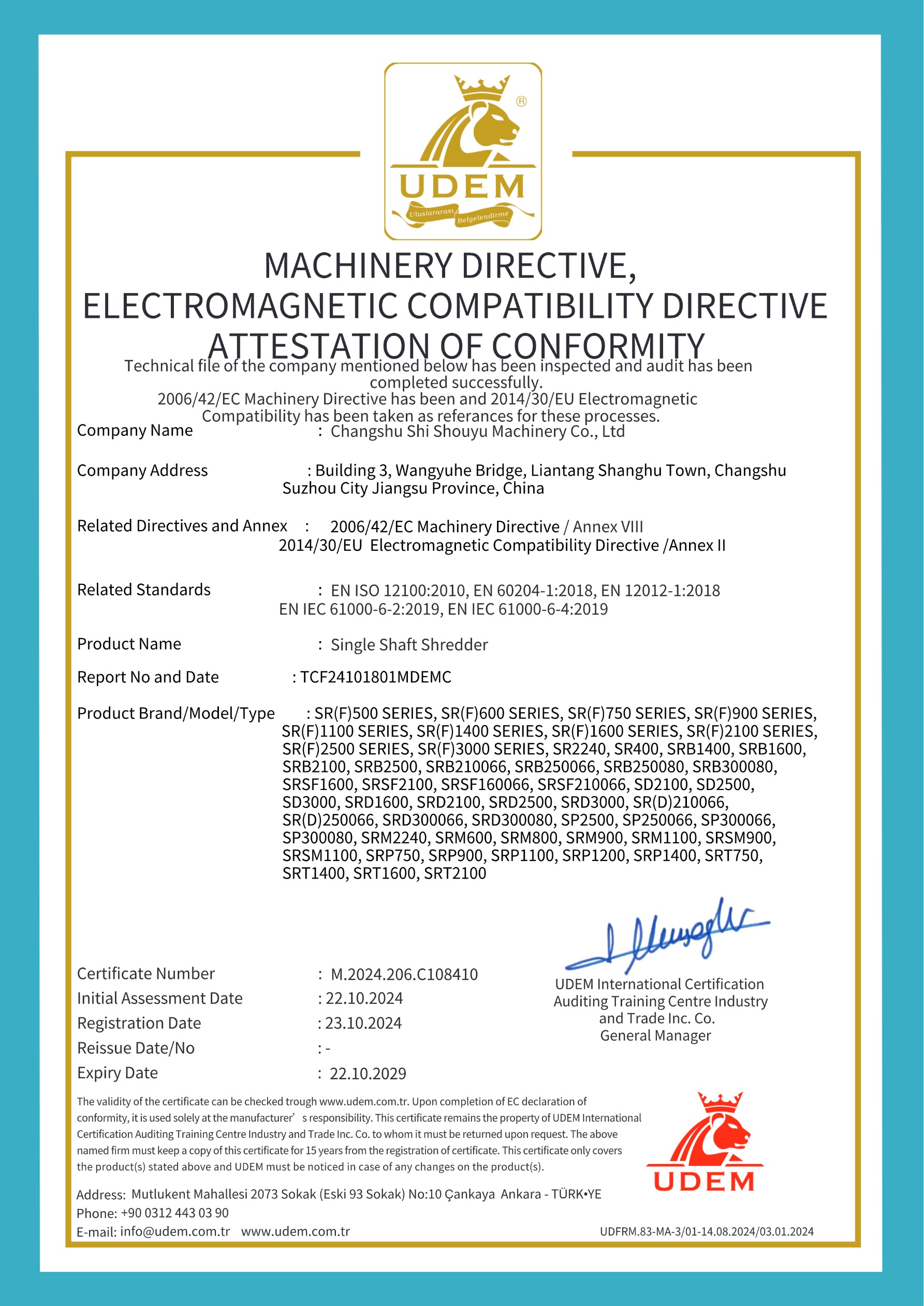
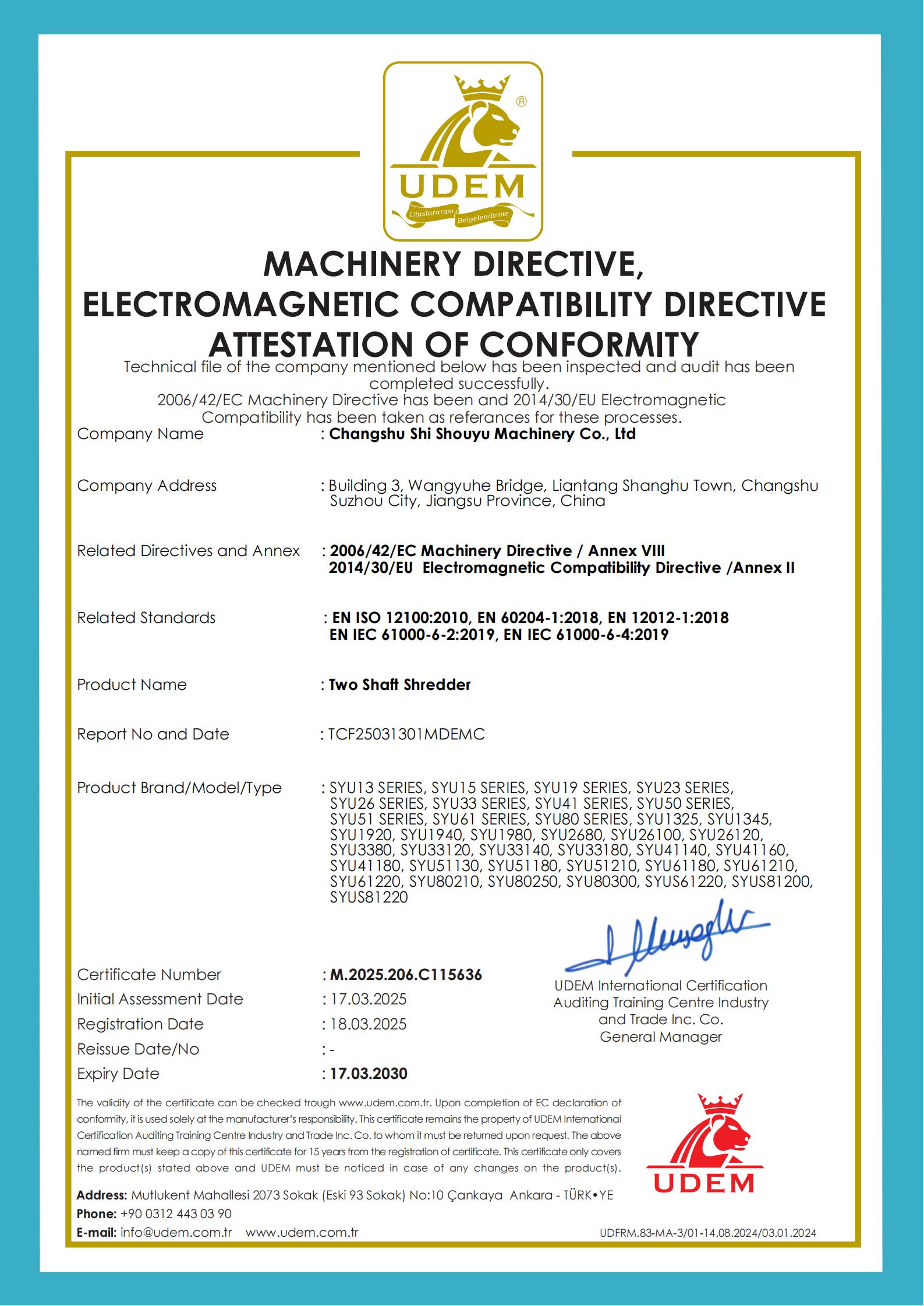
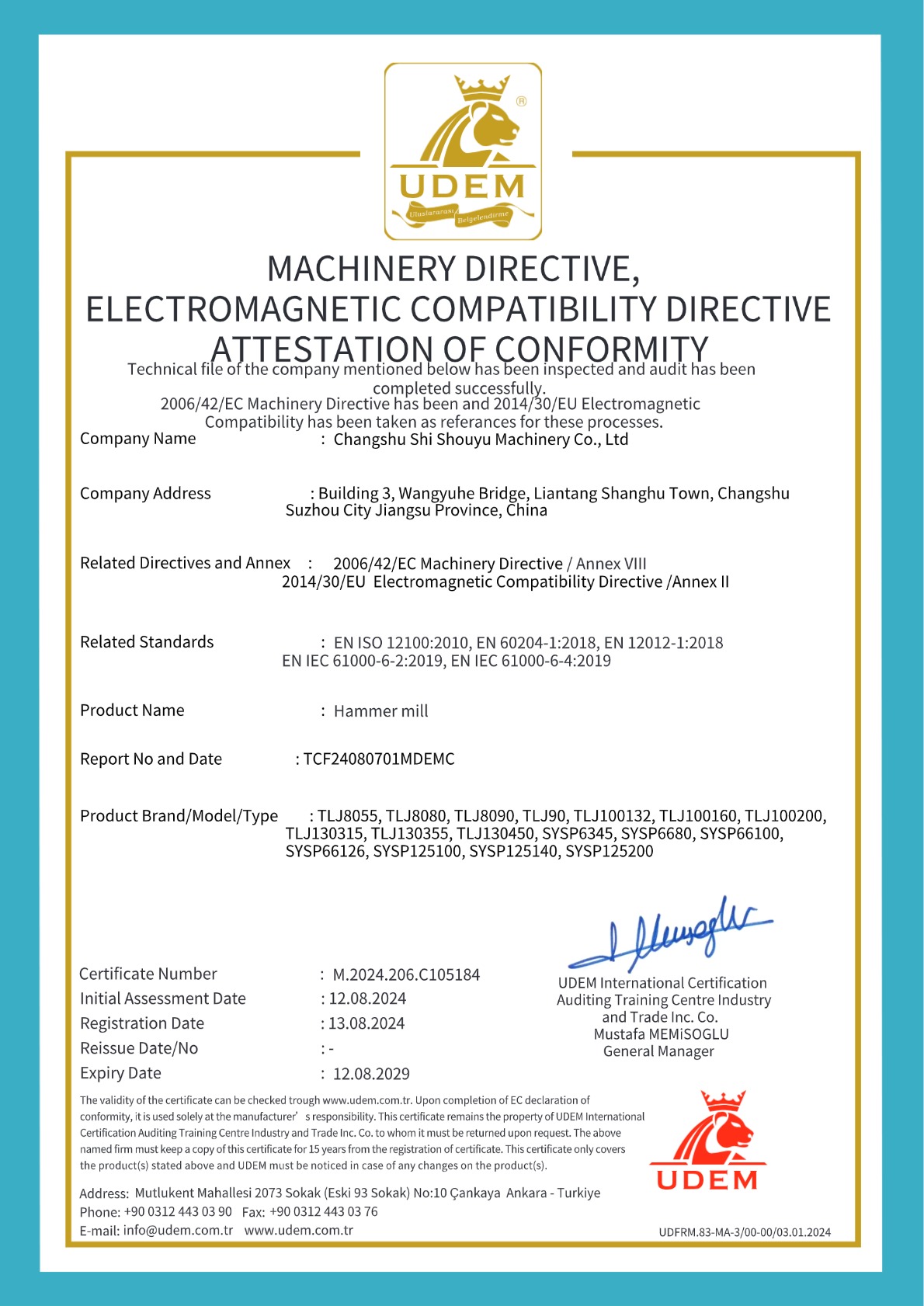
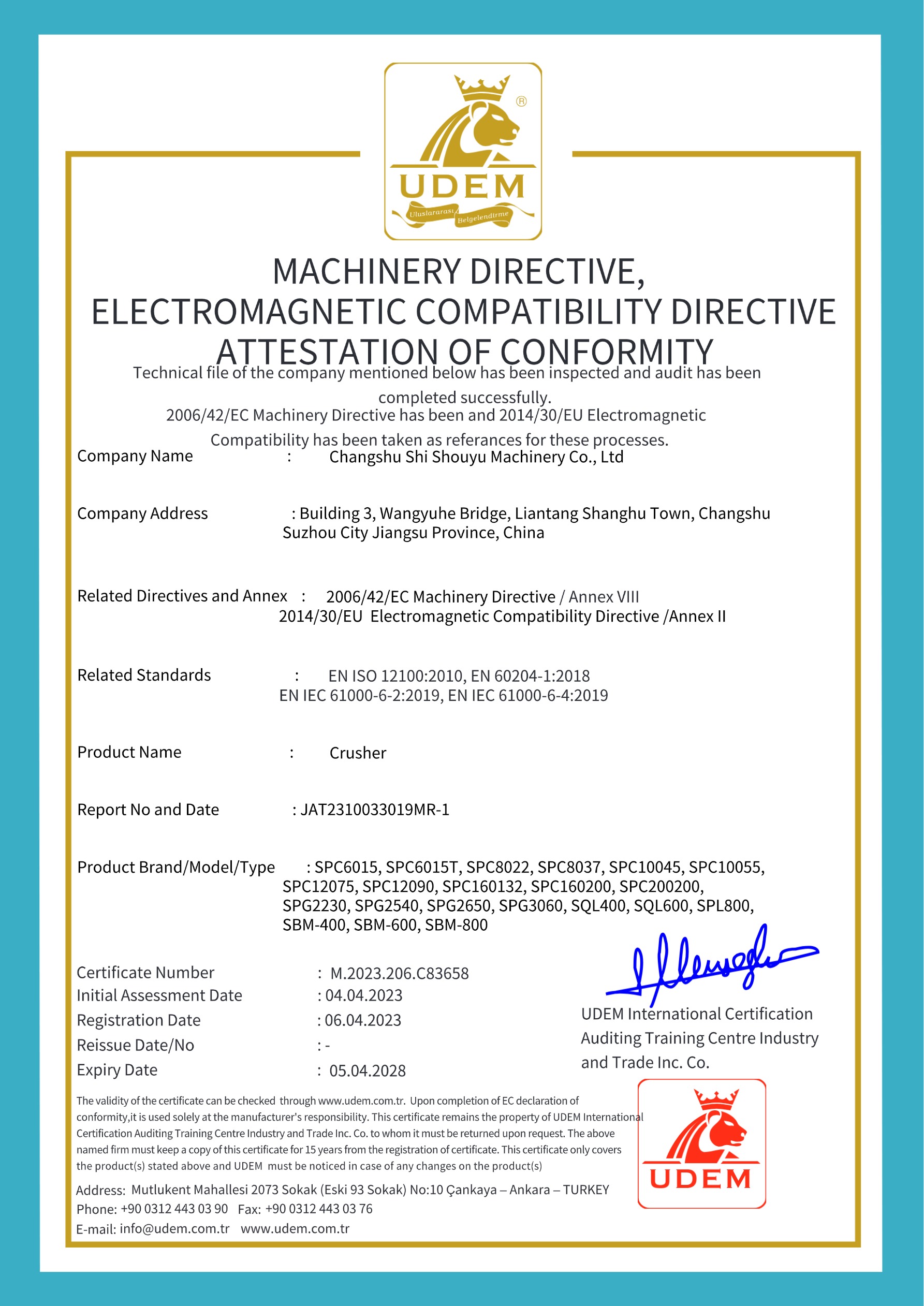
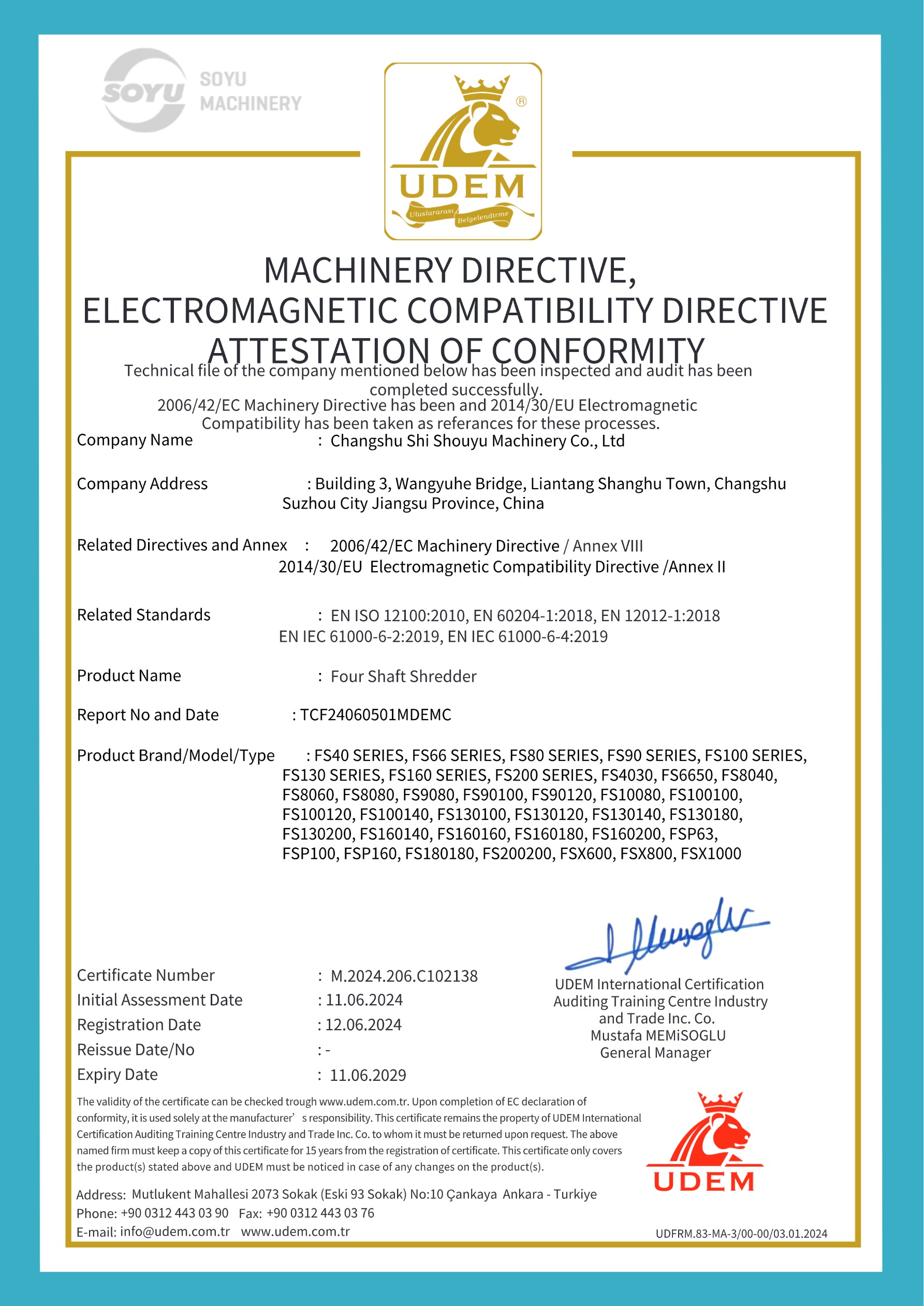
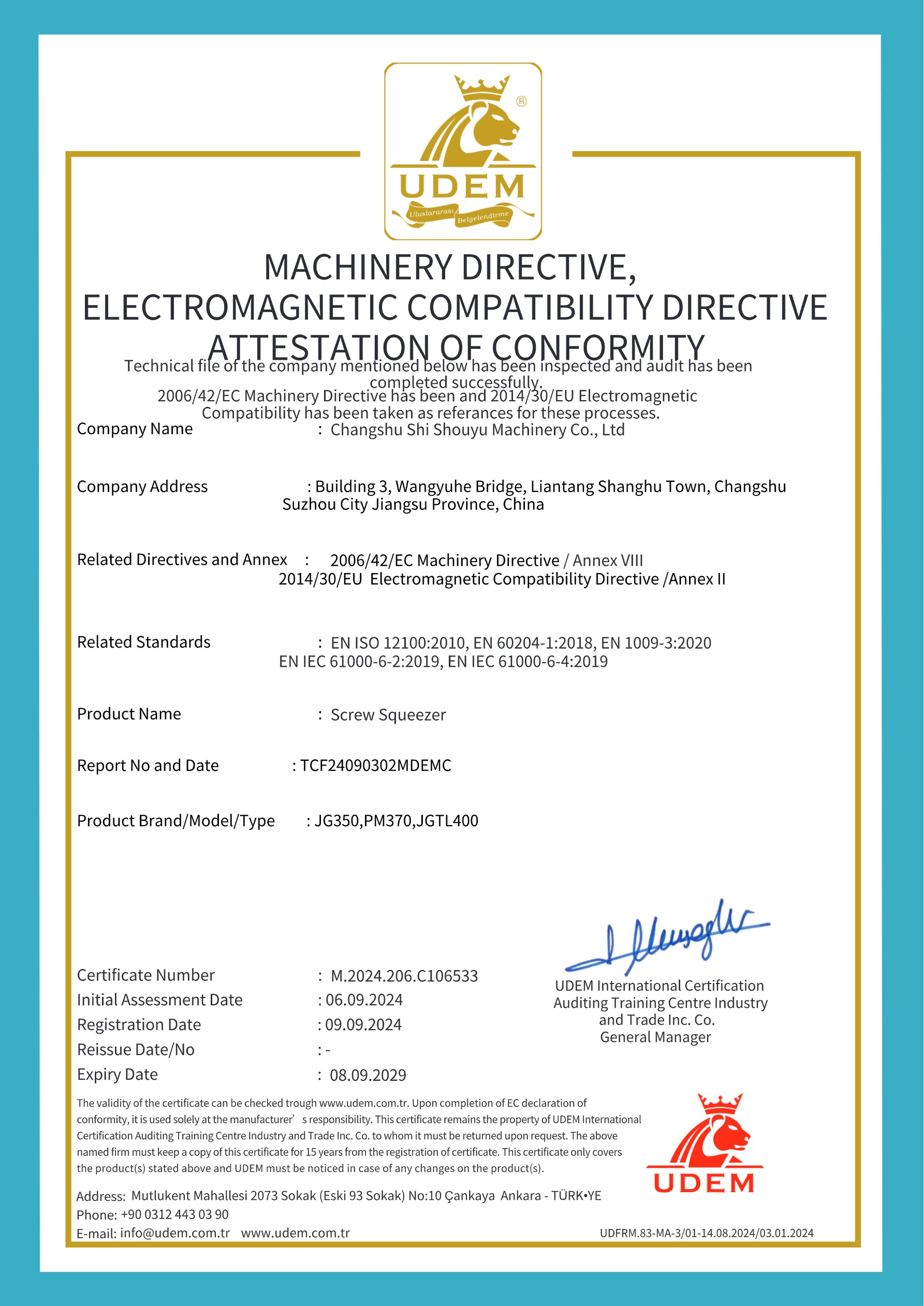
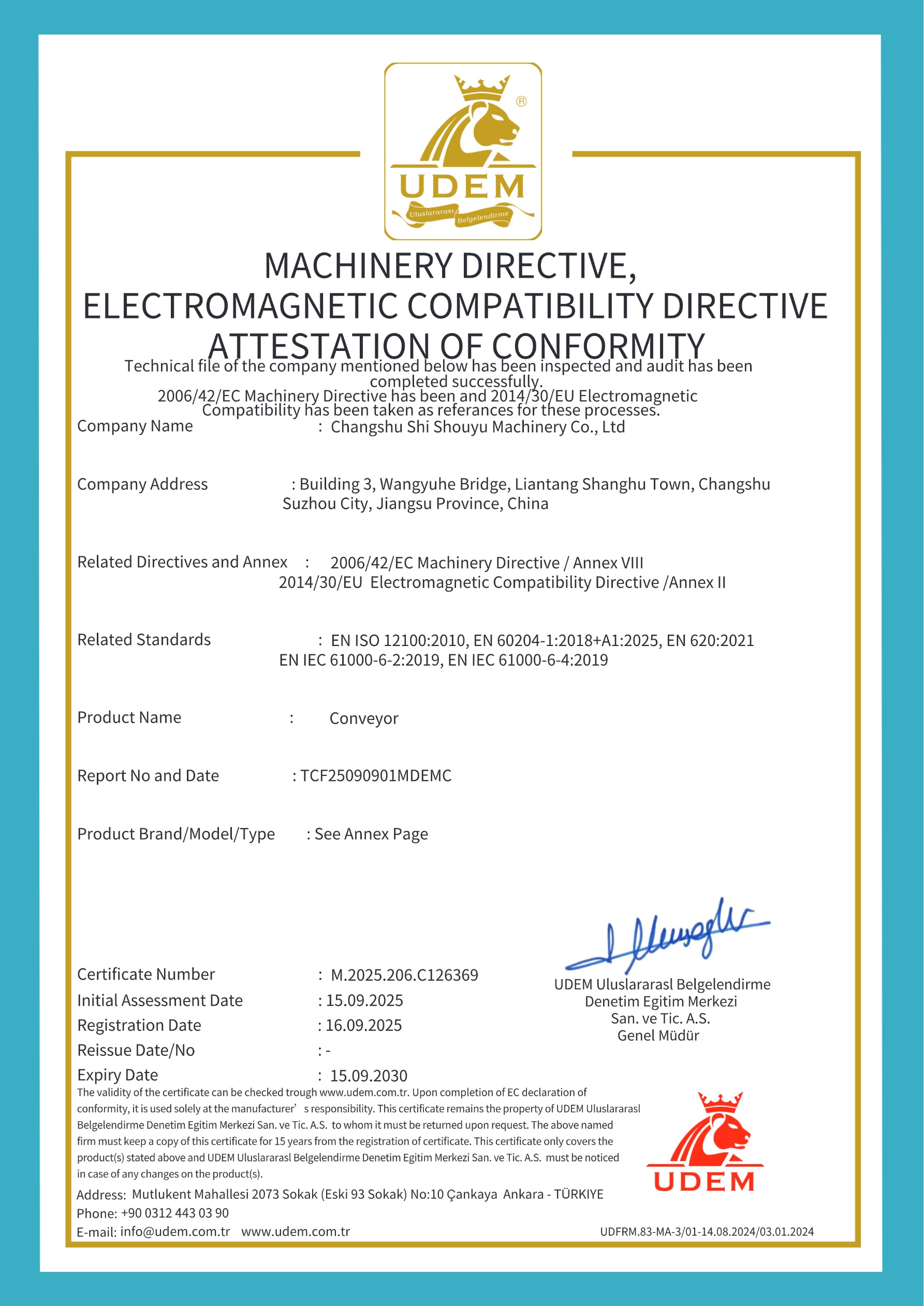
EU CE certification supports the machine's stated safety and conformity credentials. The accompanying documentation needs to identify the supplied equipment and configuration so it remains connected to the machine installed at your site.
Machine identification, technical documentation and operating instructions should be retained together. This gives operators and technicians a consistent basis for understanding the equipment throughout operation and maintenance.
Integration into a larger line introduces interfaces beyond the individual machine. Feeding equipment, discharge machinery, guarding and the overall stopping arrangement need to work together within the complete installation.
Later modifications can change the installation's safety requirements. Added handling devices, altered access arrangements or changes to the control sequence need appropriate technical review before operation resumes.
Dust and noise depend on the processed waste, the surrounding installation and local limits. Machine conformity supports safe equipment use, while environmental controls and any wider waste-treatment obligations remain requirements of the complete operating process.
Ordering And Parts
- Original spare parts remain available at cost after the warranty period ends.
- Keep the machine identification with replacement-part records so orders relate to the installed equipment.
- Cutter orders need the details of the fitted assembly, including any application-specific changes.
- A machine model alone may not distinguish a modified cutter arrangement.
- Drive-component orders should identify the installed motor, reducer or hydraulic assembly concerned.
- Clear component identification helps avoid treating different drive configurations as equivalent.
- Replacement requests are easier to check when accompanied by the component marking and photographs of its installation.
- Include any relevant drawing details already held with the machine documents.
- Parts records should be updated after an approved component change.
- This keeps later replacement orders aligned with the machine as maintained rather than only with its original configuration.
Hydraulic Feeding Arm
- Awkward material that does not settle readily into the cutting zone may benefit from an optional hydraulic processing arm.
- SOYU can configure this assistance for special material-handling requirements; it is not an automatic inclusion with every machine.
- Observe whether the feed bridges, rolls or remains above the cutters during normal loading.
- That behavior helps establish whether mechanical assistance would improve engagement rather than simply adding pressure to an unsuitable load.
- Coordinate arm movement with the incoming loading method. The arm's working area needs to remain clear of loaders, lifting attachments and other equipment approaching the hopper.
- Match the arm arrangement to the material's form and resistance. Its purpose is to assist controlled feeding, with any improvement in production depending on the actual obstruction it resolves.
- Include the arm in operator instructions and access procedures.
- Moving hydraulic equipment creates an additional working envelope that trained operators must understand before loading or clearing the machine.
Industrial Material Applications
- Metal and metal chips are established application categories, with configuration governed by the metal's section, shape and accompanying contamination. Loose chips and rigid fabricated pieces can behave very differently when fed into a cutting chamber.
- Electronic scrap can contain a mixture of housings, conductors and composite parts.
- Incoming material needs appropriate preparation so components requiring separate removal do not enter with the general feed.
- Paper and cardboard require attention to how loose, folded or compacted material reaches the cutters.
- Labels, binding materials and mixed attachments can change the behavior of an otherwise familiar paper stream.
- Plastic and film applications include both bulky industrial waste and flexible material.
- Their different bulk densities and shapes make feeding behavior as important as the polymer name.
- Refuse-derived fuel preparation and municipal solid waste processing involve variable mixtures.
- RDF and MSW duties therefore require an agreed incoming-waste specification and a defined route for unsuitable objects.
- FRP and fiberglass waste introduce reinforced composite material into the process.
- Fiber content and resin structure affect both cutting behavior and the handling of the resulting fragments.
- Wood and wood pallets vary with construction, embedded hardware and surface contamination.
- Sorting out incompatible attachments before processing helps keep the intended wood stream distinct from unrelated waste.
Technical Support & Model Matching
Choose equipment matched to your operating requirements with technical support from SOYU. We review your material characteristics, target throughput, site conditions and environmental requirements to recommend suitable models and configurations. Our support covers installation, commissioning and operator training to help your team prepare for operation. Overseas customers can access remote technical assistance for troubleshooting, while maintenance and original spare parts support continue after delivery. Original spare parts remain available at cost after the warranty period ends.
FAQ
Which waste materials can the two-shaft machine process?
Metal, plastic, rubber, paper and composite waste are supported application groups when the cutting and feeding configuration matches the material. An industrial double shaft shredder machine needs an agreed feed specification, particularly where mixed loads contain difficult components or contamination.
Can the feeding arm and cutters be adapted to our industrial waste?
Hydraulic feeding arms and application-specific cutter materials or configurations are available. Our engineers can review whether an arm would help press bulky or hollow pieces into cutter engagement, particularly where items tend to bridge over the cutting chamber.
Cutter selection takes account of the difference between tough material that resists cutting and abrasive material that wears cutting edges. Describe any reinforcement, coatings or embedded components so we can assess the demands on the blades.
Long strips, film and fibrous waste also need attention because they can wrap around rotating components. Photographs or representative samples help us assess whether a different cutter arrangement is appropriate for these shapes.
The desired discharge matters as well. Explain whether you need rough pieces for further shredding or material that must meet a particular downstream requirement; the cutting arrangement alone should not be treated as a guarantee of uniform particle size.
For ongoing cutter care, ask which sharpening or replacement approach applies to the proposed blade option. We can clarify whether regrinding is appropriate and which replacement components belong with that configuration.
Before ordering, agree on the arm arrangement, blade specification and any material restrictions in the proposed configuration. If the waste is difficult to characterize, ask whether a material trial is available to help resolve the remaining questions.
What makes bearing service and chamber cleaning easier?
Split bearing seats simplify access to the bearing assembly, and a hydraulically operated flap door provides access for chamber cleaning. These features make planned servicing more convenient, while the work itself must follow the instructions for the fitted components.
Does SOYU help with installation and safe operation?
SOYU supports installation, commissioning and operator training. The arrangements should be agreed for your project, including how support will be delivered and which tasks your site team or local contractors will carry out.
Before the machine arrives, review its foundation, anchoring and lifting requirements with us. Planning access for unloading and role helps avoid handling difficulties when the equipment reaches your premises.
Commissioning should establish that the installed machine responds correctly before routine production begins. Agree on the checks for rotation direction, control functions, emergency stops and any fitted protective interlocks, together with the conditions for the initial trial run.
Operator training should cover normal starting and stopping, interpreting control messages and responding to an overload or unexpected stoppage. Operators need to understand when they may resume operation and when the machine requires attention from authorized personnel.
Safe intervention requires isolation of every relevant energy source before anyone clears trapped material or enters a hazardous area. Where hydraulic equipment is fitted, the procedure must also address stored pressure; stopping the motor alone does not establish that the equipment is safe to access.
Ask us to define the training coverage, commissioning responsibilities and any associated travel or service charges in the quotation. Identifying who will attend from each shift also helps ensure that the people expected to run the machine receive the agreed instruction.